Frankfurt Attractions: The 15 Top Highlights
Banks, bridges, botany: Frankfurt is far more than skyline. These 15 highlights are the ones to know — with directions, prices and the honest verdict on what's really worth it.

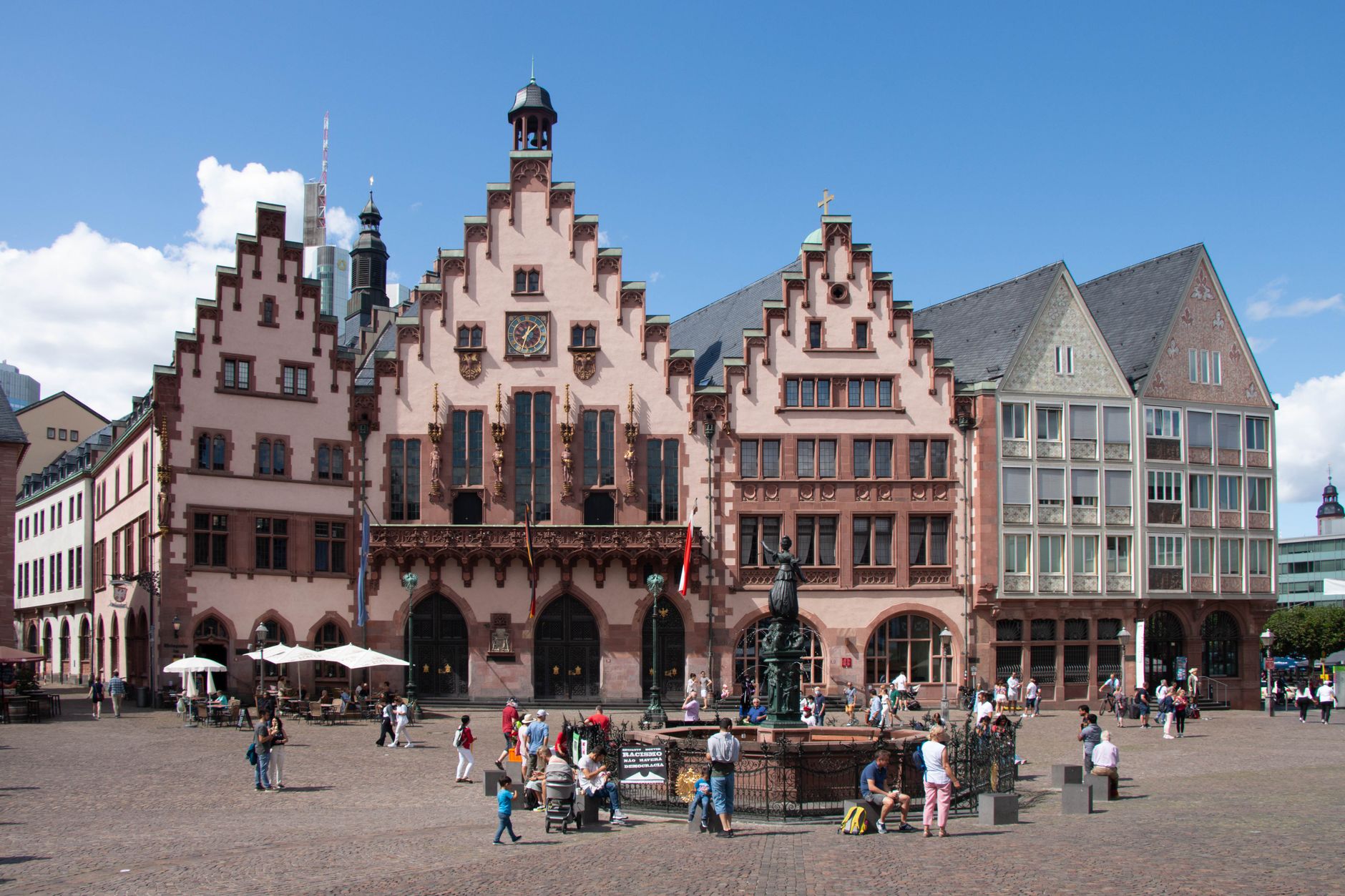
To many people Frankfurt is a pure banking city — sober, businesslike, without a heart. I live here, and I can promise you: that’s simply not true. Among the towers of the banking district sit a medieval imperial cathedral, one of the densest museum miles in Europe, a botanical garden of world rank and apple-wine taverns where time has stood still. The best part is that the historic core is small. From the Römer to the riverbank, from the cathedral to the Zeil, you can walk everywhere, and for the destinations further out a few U-Bahn stops will do. Here are my 15 highlights — in an order that joins up nicely into a walking route, and with the honest verdict on where the queue is worth it and where the bustle sometimes outweighs the pleasure.
1. Römerberg and the Römer
The Römerberg is Frankfurt’s grand parlour and the logical place to start. The famous row of houses with the three pointed stepped gables has been the city hall since 1405 — named after the middle house, “Zum Römer”. You may enter the courtyard and the staircase for free; on the first floor, in the Kaisersaal (Emperor’s Hall), hang the 52 portraits of the Holy Roman emperors from Charlemagne to Franz II. In the middle of the square the Fountain of Justice trickles beneath a statue of Justitia, and facing her stands the half-timbered Ostzeile, reconstructed after the war — the classic postcard image. Getting there: U4/U5 to “Dom/Römer”. If you enjoy the history behind the façades, follow my historic old-town walk. My tip: come early in the morning or on a weekday — at midday and at weekends the square overflows.
2. Kaiserdom St. Bartholomäus
A few steps further stands the cathedral of red Main sandstone, with its distinctive tower of around 95 metres — one of the few large Gothic churches to survive the war at its core. This is no ordinary house of worship: from 1356 the prince-electors chose the German kings here, and between 1562 and 1792 ten emperors were crowned inside. Entry to the church is free. If you’re sure-footed, the roughly 328 steps up the tower are worth it — for a few euros (about €3, as of 2026) you get the finest close-up view of the old-town rooftops with the skyline rising behind them. The small cathedral museum in the cloister shows liturgical treasures and coronation robes.
3. The new old town (DomRömer quarter)
Between the Römer and the cathedral lies the city’s youngest chapter: the DomRömer quarter, opened in 2018 on the historic ground plan of the old town destroyed in 1944. Thirty-five houses went up here, fifteen of them faithful reconstructions such as the “Haus zum Goldenen Lämmchen”. The heart of it is the Hühnermarkt, with its fountain honouring the much-loved dialect poet Friedrich Stoltze. Car-free lanes, small shops and studios rather than big chains — fiercely controversial at first, today a genuinely lively quarter and a delightful contrast to the high-rise backdrop. For why the rebuild stirred such emotion and which houses reward a closer look, see my piece on the new old town.
4. Paulskirche
A short walk on, at Paulsplatz, stands the neoclassical round church where, in 1848, the first freely elected German national assembly convened — the “cradle of German democracy”. The bright, deliberately plain rotunda is used today for ceremonies and commemorations; admission is free. It is a place without pomp, and that is exactly why it moves you: stand here and you understand why the city is so proud of this chapter. A comprehensive restoration is being prepared for the coming years, so check briefly whether it’s open before you go.
5. Main Tower — the view from above
If you choose only one viewpoint, make it this one. The Main Tower on Neue Mainzer Straße is one of the very few Frankfurt high-rises with a publicly accessible viewing platform — and up there, at around 200 metres, you really stand out in the open, in the heart of the banking district. Two express lifts take you up in under a minute. It’s open daily (as of 2026): Sunday to Thursday from 10 a.m. to 9 p.m., Fridays and Saturdays until 11 p.m. Admission for adults is around €9; with the Frankfurt Card you save 20 per cent. My advice: go up shortly before sunset, so you catch the city in daylight and as a sea of lights at once. For the free alternatives and the smarter ones — from rooftop bars to a view with no ticket at all — I’ve gathered everything in my skyline guide.
6. The Eiserner Steg and the skyline
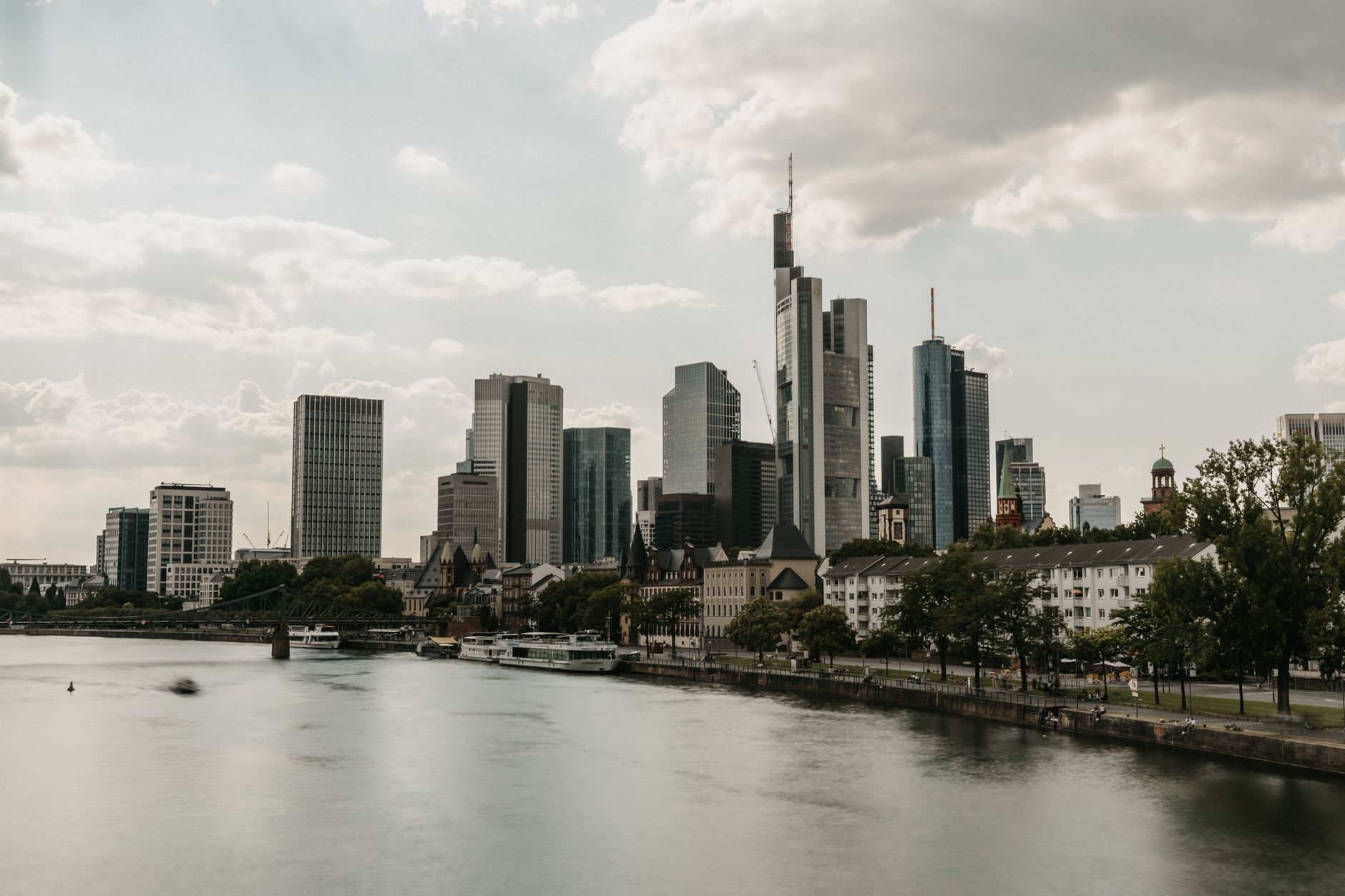
Frankfurt is the only German city with a real skyscraper silhouette — not for nothing do we fondly call it “Mainhattan”. But you get the iconic picture not from above, but from the water: from the Eiserner Steg, the pedestrian bridge first opened in 1869, linking the old town with Sachsenhausen. A quotation from Homer in Greek is set into the steel arch, and thousands of love padlocks hang from the railings. Stand in the middle of the bridge, look upstream to the north — and you have exactly the Frankfurt everyone pictures in their mind. From here it’s only a few minutes across to the Museumsufer.
7. Museumsufer and the Städel Museum
The Sachsenhausen bank of the Main, the Schaumainkai, lines up around a dozen museums along just a few hundred metres — one of the densest museum miles in Europe. Its centrepiece is the Städel Museum (Schaumainkai 63), founded in 1815 as a civic endowment by Johann Friedrich Städel, which makes it one of the oldest art museums of its kind in Germany. Seven hundred years of European art hang here: Botticelli and Dürer, Vermeer’s “The Geographer”, Tischbein’s famous “Goethe in the Roman Campagna”, plus a strong holding from Beckmann to contemporary art in the underground Garden Halls. Prices (as of 2026): adults €19, reduced €17, children under 12 free; on Tuesdays from 3 to 6 p.m. admission is just €10. It’s open Tuesday to Sunday 10 a.m. to 6 p.m., Thursdays until 9 p.m., closed on Mondays. For the collection, the highlights and tickets in full, see my Städel guide and the overview of the whole Museumsufer. Come on a weekday and book an online time slot to skip the queue.
8. Palmengarten
The Palmengarten in the genteel Westend is, at around 22 hectares, the largest botanical garden of its kind in Germany, and it has been delighting visitors since 1871. From the historic Palm House of 1869 and the Tropicarium with its climate zones to sweeping open grounds with a pond and rose garden, the variety is remarkable; in summer there are regular concerts, and in winter the illuminated “Winterlichter” draw the crowds. Admission is €9 for adults, while children and young people up to 17 get in free (as of 2026). Getting there: U6/U7 to “Westend”. Do plan half a day — all the details, prices and my personal walking route are in the Palmengarten guide.
9. Frankfurt Zoo
In the heart of the city, in the Ostend, lies one of Germany’s oldest zoos, founded in 1858. It’s compact but scientifically highly regarded — famous for the Grzimek House for nocturnal animals, the Exotarium with its aquarium and terraria, and the Borgori-Wald for the great apes. By U-Bahn (U6/U7, “Zoo” station) you’re right at the entrance on Bernhard-Grzimek-Allee. A reliable tip for rainy days and for families; which houses are best with small children is covered in my zoo guide.
10. Senckenberg Natural History Museum
One of Germany’s largest natural history museums and a dream for families: at the Senckenberg on Senckenberganlage, close to the Bockenheimer Warte and the university, huge dinosaur skeletons greet you the moment you enter — among them a mighty Diplodocus. It’s open Monday and Tuesday 9 a.m. to 5 p.m., Wednesday until 8 p.m., Thursday and Friday again until 5 p.m., and at weekends and on public holidays 9 a.m. to 6 p.m. (as of 2026). The long Wednesday evening is a real insider tip if you have no time during the day. More on the exhibition, prices and getting there in the Senckenberg guide.
11. Alte Oper
On the Opernplatz stands the magnificent Alte Oper (Old Opera), opened in 1880, gutted by fire in 1944 and only reopened in 1981 after a long dispute. One thing to know: today it is a concert and conference hall, not a working opera house — opera itself is staged at the Oper Frankfurt on Willy-Brandt-Platz. The façade alone, with its inscription “Dem Wahren, Schönen, Guten” (to the true, the beautiful, the good), is worth the stop, and the fountain in front is a popular summer meeting spot. From here the smart Fressgass’ runs straight to the Hauptwache and the Zeil.
12. Goethe House
Frankfurt is the birthplace of Johann Wolfgang von Goethe, born in 1749 in the Goethe House on Großer Hirschgraben. Destroyed in the war and rebuilt faithfully afterwards, the patrician house shows across several floors how a well-to-do bourgeois family lived in the 18th century — with the famous astronomical clock in the stairwell and the room where the young Goethe wrote “Götz von Berlichingen” and “The Sorrows of Young Werther”. Next door, the Frankfurt Goethe Museum rounds out the collection. A must for literature lovers, and for everyone else a vivid glimpse into the Goethe era — opening hours and tickets in the Goethe House guide.
13. Kleinmarkthalle
For me, the culinary heart of the city. In the market hall on Hasengasse, near Konstablerwache, Frankfurters buy their food for the weekend: fresh fish, meat, fruit, cheese, olives and spices at around 150 stalls. Upstairs on the wine terrace people enjoy a glass in the late afternoon — wine as well as apple wine. Try a hot sausage right at the counter, or pick up the fresh herbs for “green sauce”. A simple lunch here costs around €10. Open Monday to Friday 8 a.m. to 6 p.m. and Saturdays until 4 p.m.; closed on Sundays. You won’t eat more authentically anywhere in the city centre.
14. Sachsenhausen and the apple wine
On the other side of the Main lies Alt-Sachsenhausen, the heart of Frankfurt’s apple-wine culture. In the traditional taverns, “Äppelwoi” is served in the Bembel, the grey-and-blue stoneware jug, and drunk from the ribbed glass (the “Geripptes”) — alongside Handkäs mit Musik or green sauce with egg and potatoes. Dependable addresses include Apfelwein Wagner on Schweizer Straße and the Fichtekränzi in the lanes. Yes, it’s touristy — but find the right tavern away from the noisiest corners and you experience the genuine Frankfurt way of life. For what makes the national drink and which taverns are worth it, see the Sachsenhausen guide and the portrait of Frankfurt apple wine.
15. The Zeil — shopping and MyZeil
The Zeil, between the Hauptwache and Konstablerwache, is Frankfurt’s great shopping mile and one of the highest-turnover in Germany. The architectural highlight is the MyZeil centre with its spectacular funnel-shaped glass façade by the architect Massimiliano Fuksas — worth a look inside even if you’ve no intention of buying. If you want more choice and more calm, you’ll find it at the Skyline Plaza by the Europaviertel. My tips on the best addresses, arcades and viewpoints are gathered in the shopping guide.
How to join the highlights into a route
The lovely thing about Frankfurt is how short the distances are. When I show friends how to see a lot in a day without rushing, it looks like this: start at the Römerberg (1) with the cathedral (2), the new old town (3) and the Paulskirche (4) — all on foot. Then down to the Main, across the Eiserner Steg (6) and along the Museumsufer (7); if you have time, go into the Städel. Back on the north bank, a short walk brings you to the Main Tower (5) for the view from above, then on past the Alte Oper (11) and along the Fressgass’ to the Zeil (15). Round off the evening with a Bembel in Sachsenhausen (14). The Palmengarten (8), zoo (9) and Senckenberg (10) sit a little further out — save those for a second day or for wet weather. If you only have a few hours, my ready-made, tested route in Frankfurt in one day does the planning for you.
A few practical notes: between the Römer and the Zeil you can walk everywhere, while for the Palmengarten and the zoo you’ll want the U-Bahn and S-Bahn — the network is dense and reliable. If you plan several paid attractions, the Frankfurt Card often works out cheaper, combining free local travel with discounts on many admissions. For rainy days the museums, the Senckenberg and the zoo houses are the answer; sunny days belong to the skyline, the riverbank and the Palmengarten. And because prices and opening hours change, it’s worth a quick look at the relevant official site, especially around public holidays.
Frankfurt rewards anyone who looks more closely. Few other German cities pack medieval history, a skyline without equal, first-class museums and such down-to-earth food culture into so small a space. Start at the Römer, let yourself drift among the towers, treat yourself to the view from the Main Tower and end with a glass of Äppelwoi in Sachsenhausen — and you’ll have seen the real Frankfurt, beyond all the clichés. And if you come in Advent, the Römerberg transforms all over again; for how the Christmas market looks then, see the Christmas market guide.
Keep reading
Attractions
Frankfurt Skyline: Best Viewpoints & Photo Spots
Where to see and photograph the Frankfurt skyline at its best: the Main Tower deck (€9, as of 2026), rooftop bars, and the finest free views from the Eiserner Steg, Deutschherrnufer and Lohrberg — with the best times and photo tips.
Katharina Vogt16 June 2026
Attractions
Frankfurt for Couples: The Loveliest Ideas for Two
Romantic Frankfurt for couples: sunset from the Main Tower, love locks on the Eiserner Steg, dinner at Seven Swans, wine on the Lohrberg and a day in the Rheingau — with addresses and prices.
Katharina Vogt9 July 2026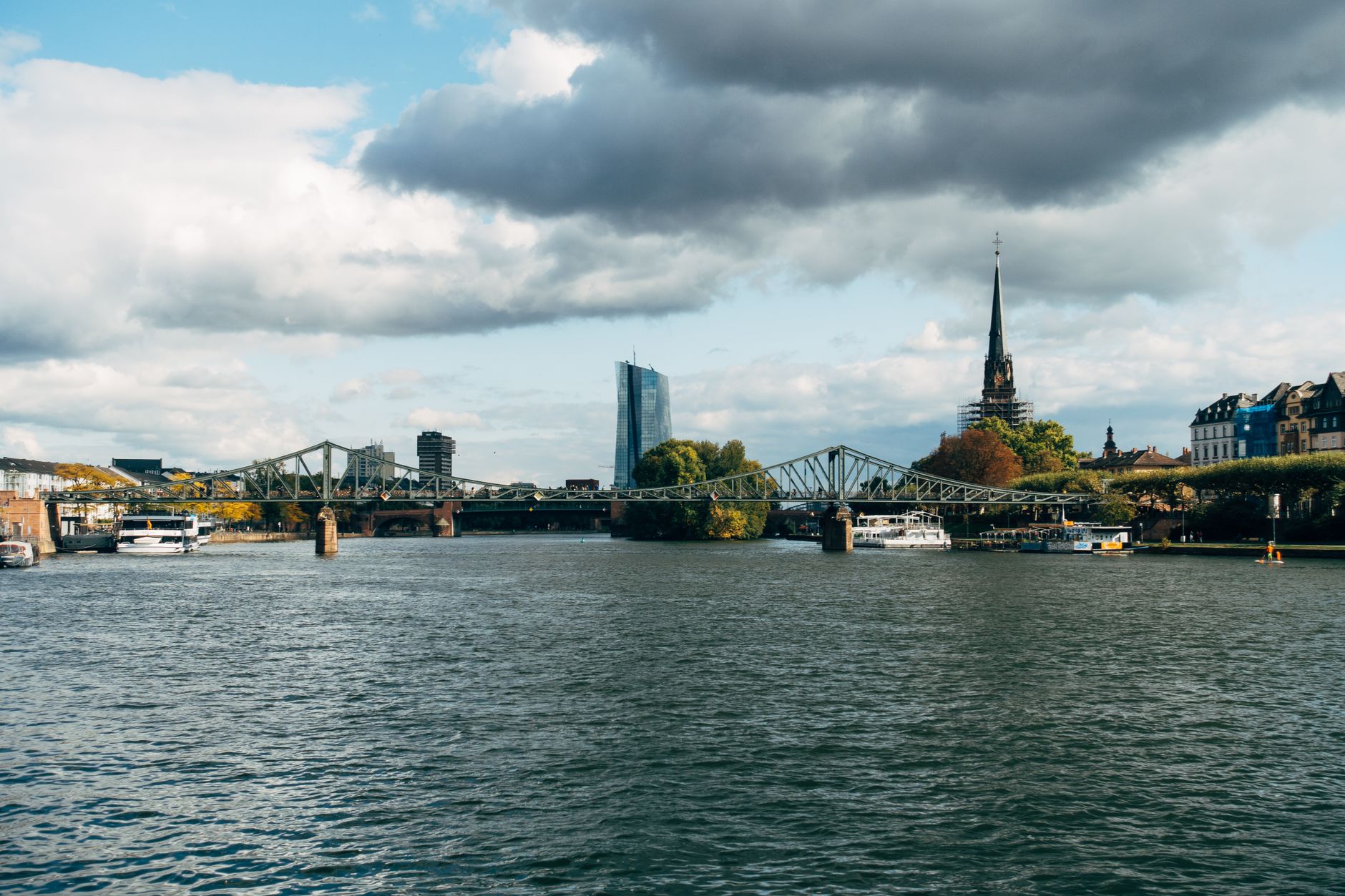
Attractions
The Museumsufer & Städel: Frankfurt's Museum Mile
Frankfurt's Museumsufer at a glance: some three dozen museums along the Main — from the Städel and the Film Museum to World Cultures. With the MuseumsuferTicket, MuseumsuferCard, the Museumsuferfest and my route for a relaxed museum day.
Katharina Vogt16 June 2026
Attractions
Hotels with a Skyline View in Frankfurt: Towers, Floors & the Real View
Hotels with a skyline view in Frankfurt — from the JW Marriott and the INNSiDE in the Eurotheum to the NFT skybar in the ONE tower: which hotels are genuinely high up, and which floor and orientation to book.
Katharina Vogt6 July 2026