Palmengarten Frankfurt: Tickets, Highlights & Tips
22 hectares of botany in the heart of the Westend: what the Palmengarten has to offer, what admission costs — and when to get in most cheaply and most peacefully.

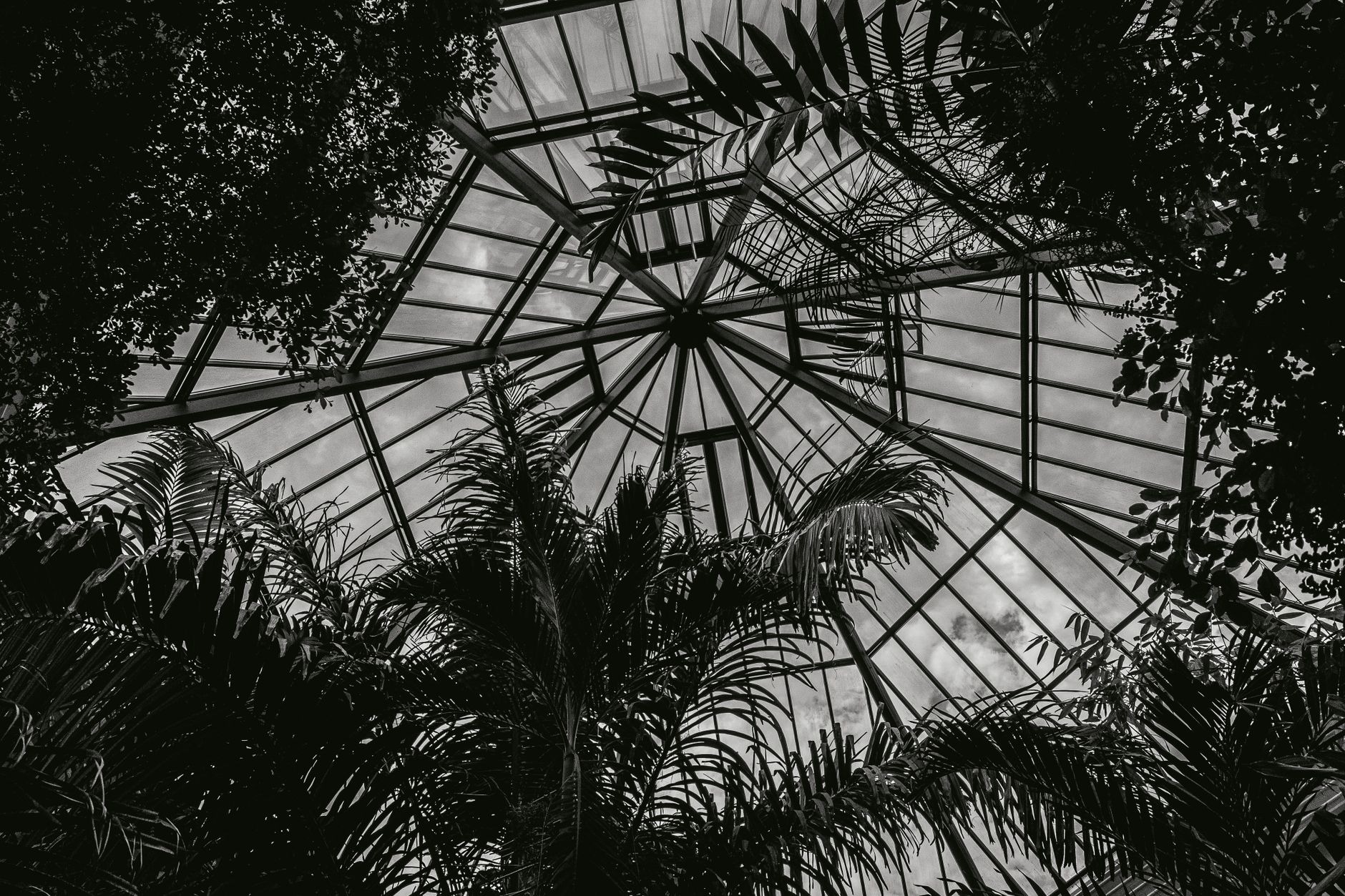
There are few places in Frankfurt where you leave the banking towers behind as completely as in the Palmengarten. The moment you step through the gate on Siesmayerstraße, the traffic noise disappears behind old trees and the air smells of damp earth and blossom. I’ve been coming here since I was a child — in high summer and in the depths of winter — and I still haven’t exhausted every corner of this garden. In the lines below you’ll learn what makes the Palmengarten so special, what a visit costs and how to plan it so you get the most out of it.
A botanical garden with 150 years of history
The Palmengarten opened in 1871 — and that’s not just a date. Its founding goes back to a happy accident: when Duke Adolph of Nassau had to sell his famous plant collection from the Biebrich winter garden after his duchy was annexed in 1866, a consortium of Frankfurt citizens simply bought the lot and opened it to the public. The grounds were designed by the garden architect Heinrich Siesmayer, after whom the street at the main entrance is still named.
From that civic beginning has grown, at around 22 hectares, the largest botanical garden of its kind in Germany. It is run by the City of Frankfurt, and you feel this blend of historic stock and modern horticulture at every turn: magnificent 19th-century show houses stand beside sober concrete buildings from the 1980s, and between them lie lawns, ponds and beds that look different throughout the year.
What awaits you in the glasshouses
The heart of the garden — and my favourite refuge in bad weather — is the glasshouses. The historic Palm House of 1869 is the garden’s grand parlour: an airy hall full of mighty palms, with a small artificial lake and tropical humidity that fogs up your glasses on sight in winter.
Right beside it, the Tropicarium leads you through very different climate zones. In a single walk you move from the steaming rainforest section with orchids and carnivorous plants across into the dry desert world with metre-high cacti and bizarre succulents. In my experience this is the most exciting part for children, because the temperature and smells change noticeably from room to room. The houses are complemented by, among others, the Subantarctic House, where a cool, misty landscape from the southernmost tips of the earth is recreated — a welcome contrast on a hot summer’s day.
Outdoors: ponds, a rose garden and a little railway
Lovely as the houses are, in fine weather life happens outdoors. On the sweeping lawns families spread their blankets in summer, on the large pond you can hire rowing boats in the warm season, and the rose garden is in full bloom from June. If you prefer things more structured, there are rock gardens, a rosarium and constantly changing, lovingly planted seasonal beds.
A classic for families in particular is the Kleine Palmengartenbahn, a miniature railway that does its rounds on fine days — often the highlight of the visit for the little ones. The large playground is another crowd-puller; it is, however, being renewed in stages, so check briefly in advance whether it’s currently open if it’s the main reason for your outing.
Flower shows, winter lights and concerts
What sets the Palmengarten apart from an ordinary park is its dense events programme. In late winter the spring flower show draws thousands, when tulips, daffodils and hyacinths are already blooming indoors while it’s still grey outside. Over the summer the garden regularly turns into a concert stage — from classical to jazz.
My personal favourite, though, is the Winterlichter (winter lights): on several evenings between January and February the garden is artfully illuminated after dark, with trees and glasshouses glowing in shifting colours. These have their own tickets and time slots that sell out early — if that appeals, sort it out in good time.
What admission costs — and how to save
For what’s on offer, the prices are fair (as of 2026):
- Adults (18 and over): €9.00
- Reduced: €5.00
- After-work ticket (Mon–Fri from 6.30 p.m.): €5.00
- Children and young people up to and including 17: free
- Annual pass: €79.00
That children and young people get in entirely free is a real boon for families — elsewhere you pay a small fortune for half the family. If you only have time in the evening during the week, use the after-work ticket from 6.30 p.m.: five euros, and the garden lies almost empty before you in the soft evening light. With two or three visits a year the annual pass already pays off. Special events such as the Winterlichter carry their own, higher prices.
Opening hours and the best time of day
The opening hours change with the season. In the summer half of the year the garden is open until early evening; from November to February the ticket desks close as early as 4 p.m., so you should be there by early afternoon at the latest to still catch some daylight. On 24 and 31 December the garden stays closed. As times can shift on public holidays and in winter, it’s worth a quick look at palmengarten.de before you set off.
My recommendation on timing: come either right at opening or in the late afternoon. The popular houses are emptier then, and the light on the open grounds is at its loveliest. Sundays and the first warm spring weekends are, in my experience, the busiest.
How to get there
The Palmengarten is at Siesmayerstraße 61, 60323 Frankfurt am Main, in the genteel Westend. The easiest way to arrive is by U-Bahn: from Westend station (U6/U7) it’s about a five-minute walk to the main entrance, and Bockenheimer Warte (U4/U6/U7) is within easy walking distance too. I’d advise against the car — parking spaces in the Westend are scarce and expensive, and the short U-Bahn hop saves you the search.
My personal walking route
When friends ask me how best to spend half a day here, I recommend this order: start in the Palm House while you’re still fresh and can enjoy the tropical air. Move on to the Tropicarium — take your time over the desert section. Then head outside to the pond, a loop across the lawns, perhaps a boat in summer. Finish with a coffee: right on Siesmayerstraße is Café Siesmayer with its well-known patisserie, ideal for a slice of cake after the walk. And if you still fancy some green, simply keep walking — the neighbouring Botanical Garden and the sprawling Grüneburgpark adjoin directly.
The Palmengarten is, for me, one of the most honest places in Frankfurt: no thrill rides, no admission price that hurts, no staging — just 22 hectares of calm that are differently beautiful in every season. Come during the week, take your time, and you’ll understand why Frankfurters have loved their garden for over 150 years.
Keep reading

Attractions
Frankfurt Zoo: Tickets, Animals & Visitor Tips
Your visit to Frankfurt Zoo: current admission prices (as of 2026), opening hours and the highlights from the Grzimek House and Exotarium to the Borgori-Wald, Cat Jungle and Ukumari-Land — with tips from a local.
Katharina Vogt16 June 2026
Attractions
Senckenberg Natural History Museum Frankfurt: Dinos, Messel & Tips
From the 18-metre Diplodocus and a genuine dinosaur mummy to the world-famous Messel fossils: current admission prices, opening hours, highlights and family tips for the Senckenberg Natural History Museum — from a local.
Katharina Vogt19 June 2026
Attractions
Struwwelpeter Museum Frankfurt: Heinrich Hoffmann, Tickets & Tips
The Struwwelpeter and Heinrich Hoffmann Museum in Frankfurt's New Old Town (Hinter dem Lämmchen 2–4): how the world's most famous shock-headed boy was created in 1844, what the exhibition shows, plus admission, hours and how to get there (as of 2026).
Katharina Vogt11 July 2026
Attractions
Museum of Communication Frankfurt: Behnisch Building, Tickets & Tips
The glass Behnisch building on the Museumsufer, Nam June Paik's robot Pre-Bell-Man and hands-on stations for children: admission, opening hours and tips for the Museum of Communication Frankfurt.
Katharina Vogt23 June 2026