Sachsenhausen: Apple Wine, Green Sauce & Museums
„Dribbdebach“ south of the Main, rustic apple-wine lanes meet one of Europe's densest museum miles. A stroll from Alt-Sachsenhausen along the Schaumainkai out to the herb fields of Oberrad.

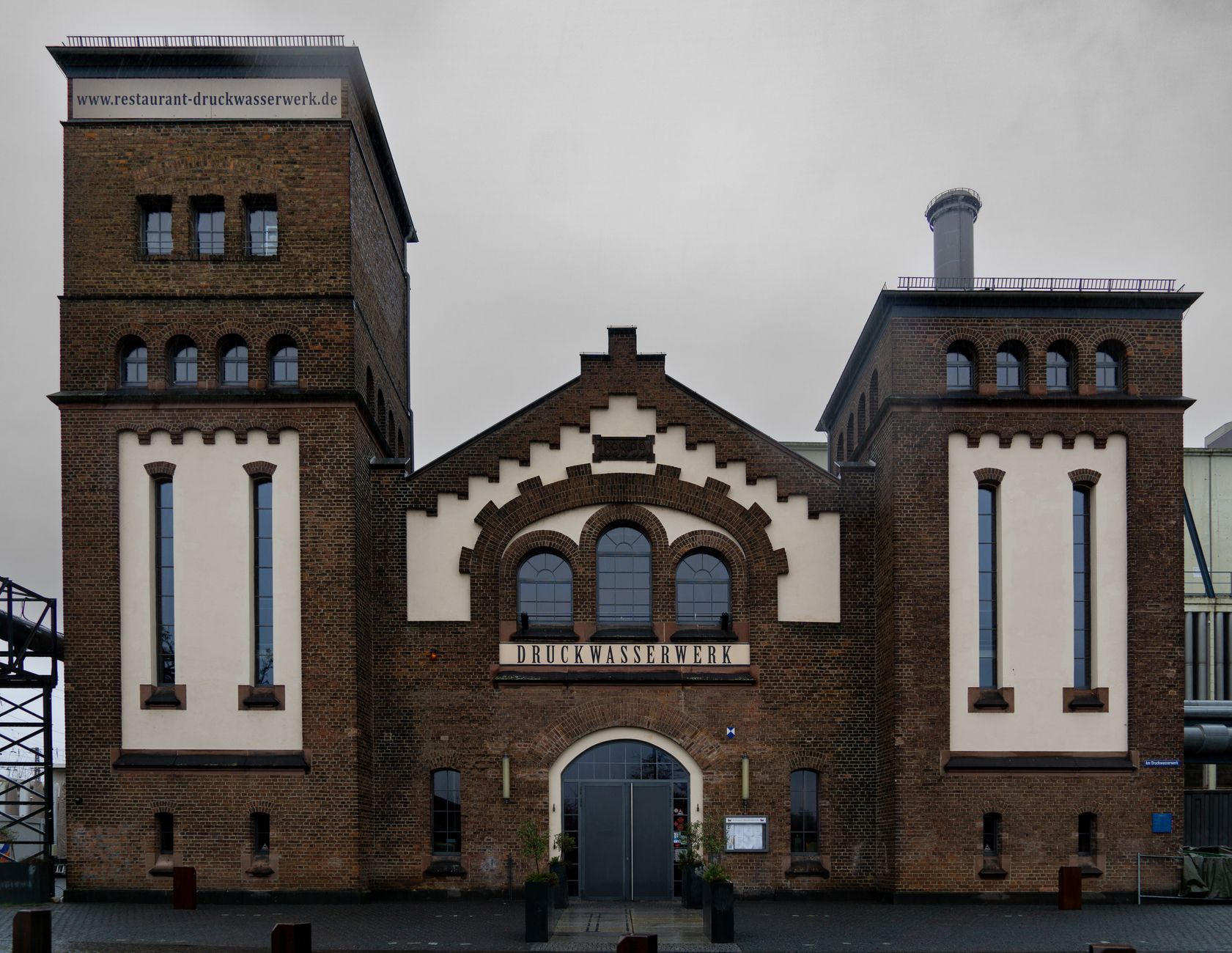
We Frankfurters split our city into “hibbdebach” and “dribbdebach” — this side of the Main and the far side. Sachsenhausen is the great “dribbdebach”, the district south of the river, and when I have visitors from abroad and only an afternoon to spare, this is where I take them. No other quarter tells the whole story of Frankfurt in a single loop: on one hand the cobblestones of Alt-Sachsenhausen with its apple-wine taverns, on the other the museum mile along the bank, one of the densest cultural landscapes in Europe. Only a few minutes’ walk separates the Bembel from the fine arts — and that short distance is exactly what makes the district so appealing to me. Come along for a stroll, from the river out to the herb fields on the edge of town.
Alt-Sachsenhausen: two faces on one pavement
The historic heart of the district is Alt-Sachsenhausen, the oldest part south of the Main. Around Klappergasse, Große Rittergasse, Dreieichstraße and Frankensteiner Platz, half-timbered and rubble-stone houses crowd narrow cobbled lanes — a medieval street plan you’d hardly expect in this otherwise very modern banking city. In its midst stands the Kuhhirtenturm (Cowherd’s Tower), the last surviving tower of the old Sachsenhausen city wall. Built around 1390, it owes its name to the town herdsman who once drove the cattle out to pasture from here, and from 1923 to 1927 it was home to the composer Paul Hindemith, who wrote his opera “Cardillac” in the upper floor, among other works. Since 2011 the tower has been a memorial run by the Hindemith Foundation — a quiet counterpoint to the bustle around it.
Because Alt-Sachsenhausen has two faces. By day it is a tranquil, almost dreamy grid of lanes where you can photograph in peace and watch the taverns waiting to open. After dark, some of those lanes turn into the loudest nightlife quarter in the city — the “Ebbelwoi quarter”, which became famous after the war partly thanks to the American soldiers stationed here. If it’s the traditional, cosy side you’re after, come in the early evening or on a weekday and steer clear of the pure party lanes.
Äppelwoi: Frankfurt’s liquid landmark
No visit to Sachsenhausen without “Äppelwoi”. The tart, slightly sour apple wine is traditionally brought to the table in the grey-blue “Bembel” jug and drunk from the “Geripptes”, a ridged glass whose diamond pattern once stopped it slipping out of greasy fingers. I’ll keep this brief here, because I’ve given the drink itself and the best taverns their own articles: how apple wine is made, why it’s Frankfurt’s national drink and how to order it “sour” (with sparkling water) or “sweet” (with lemonade) are all in my portrait of apple wine. Which taverns still take the craft seriously is covered in my guide to the best apple-wine taverns. And if you’d rather experience the taverns while rolling past them, hop aboard the nostalgic Ebbelwei-Express, the jingling apple-wine tram.
Green sauce: Frankfurt’s green treasure
What lands on the plate in Sachsenhausen is as much a cult as what goes in the glass. The most famous Frankfurt speciality is “Grie Soß”, green sauce — a cold sauce made from seven herbs: borage, chervil, cress, parsley, salad burnet, sorrel and chives. These seven, and no others. Finely chopped, they’re stirred with soured cream, crème fraîche or yoghurt, often enriched with hard-boiled egg, and served chilled — classically with jacket potatoes and eggs, or with boiled beef (Tafelspitz). Fresh, herby and wonderfully unfussy.
How seriously Frankfurters take their sauce is clear from its legal status: since 2016 “Frankfurter Grüne Soße” has been a Protected Geographical Indication under EU law. Only herbs grown and bundled by hand in the defined origin region — Oberrad and a few neighbouring communities — with no single herb making up more than 30 per cent of the mix, may officially bear the name. By tradition the season begins on Maundy Thursday, before Easter. I’ve given the sauce, its seven protected herbs and the festival their own green sauce guide if you’d like the full story.
The herbs’ true homeland lies just east of Sachsenhausen: the market-gardening village of Oberrad, where the seven herbs are still grown in inner-city fields. It’s also home to my favourite culinary detour on a walk — the Green Sauce Monument by the artist Olga Schulz, unveiled in 2007: seven small, greenhouse-like polycarbonate structures, each a different shade of green, one for each of the seven herbs. It stands freely accessible at the edge of the Oberrad herb fields near Kochstraße and Speckgasse, and shortly after sunset the little houses glow from within — and the skyline shimmers through the green glass. A lovely, little-known spot.
The Green Sauce Festival
Once a year the sauce is celebrated in style — oddly enough not in Sachsenhausen, but “hibbdebach” on the Roßmarkt in the city centre. At the Green Sauce Festival some 56 restaurants enter their own version, and the public crowns the city’s best sauce in a competition, alongside evening shows and the traditional opening ceremony in which gardeners tie the seven herbs into bunches live. In 2026 the festival runs from 2 to 9 May (the festival market opens earlier, in late April). If you’re in Frankfurt in spring, it’s worth the hop across the river.
The Museumsufer on the Schaumainkai
As down-to-earth as one side of Sachsenhausen is, the other is high culture. Along the Schaumainkai, the riverside street right on the Main, around a dozen museums line up within a few hundred metres — the famous Museumsufer, one of the most significant concentrations of museums in Europe. They include the Städel Museum (Schaumainkai 63), with art from the Middle Ages to the present; its immediate neighbour the Liebieghaus with its sculpture collection; the Museum Angewandte Kunst (applied art); the German Film Museum (DFF); the Museum für Kommunikation; the Weltkulturen Museum (world cultures); the German Architecture Museum; plus smaller houses such as the Icon Museum and the Bibelhaus.
My advice from experience: don’t try to do it all in one day — it’s overwhelming and no fun. Pick one or two houses that genuinely interest you and take your time. Which museum suits which interest, what tickets exist and how the Frankfurt Card helps, I’ve set out in detail in my article on the Museumsufer and the Städel. One nice extra: on Saturdays (alternating with a site in the Ostend), the flea market spreads out along the Schaumainkai between the Eiserner Steg and the Holbeinsteg — rummaging with a skyline view.
Museumsuferfest
The high point of the cultural calendar is the Museumsuferfest on the last weekend of August — in 2026, from 28 to 30 August. Both banks of the Main turn into an enormous festival strip with more than 25 participating museums, over a dozen stages and around 400 stalls; hundreds of thousands celebrate over three days. It traditionally closes with a music-accompanied fireworks display over the Main — in 2026 on the Sunday evening, between the Holbeinsteg and the Untermainbrücke. If you’re in Frankfurt then, don’t miss it, but be prepared for crowds.
Schweizer Straße: strolling and enjoying
If you want things quieter than on the riverbank, turn into Schweizer Straße, Sachsenhausen’s central shopping street. Over a good kilometre it links the Museumsufer in the north, via Schweizer Platz, with the Südbahnhof in the south. Late-classical residential and commercial buildings and plenty of street trees still give it a special flair. Unlike the big, bustling Zeil on the other side of the Main, Schweizer Straße is upmarket and cosy: lots of owner-run shops, delis, cafés and restaurants where you can take a relaxed break. For me it’s one of the most agreeable streets in the city for a wander — and the perfect bridge between a morning of museums and an evening of apple wine.
Along the Main: the Eiserner Steg and the riverbank
The link between Frankfurt’s two banks is the Eiserner Steg, the roughly 170-metre pedestrian bridge that has connected the old town with Sachsenhausen since 1868/69 (rebuilt in 1946 after being blown up in the Second World War). From here you get the classic postcard view of the skyline. On the Sachsenhausen side, the riverside promenade invites you to walk — in summer the bank is one of the city’s most popular meeting spots, and on warm evenings Frankfurters simply sit down by the water. If you’re after more greenery, the south of the district has extensive woodland and parks where you can escape the bustle entirely.
Getting there — and onward
Sachsenhausen is very well connected, and depending on what you want to see first, you’ll aim for a different stop:
- On foot: from the Römer, cross the Eiserner Steg and you’re at the Museumsufer in a few minutes — the loveliest way in.
- Museumsufer & Schweizer Straße: U-Bahn lines U1, U2, U3 and U8 to Schweizer Platz; trams 15, 16 and 19 also stop above ground here.
- Alt-Sachsenhausen: the nearest tram stops are Frankensteiner Platz and Lokalbahnhof; from either it’s just a few steps into the lanes.
- Südbahnhof (Frankfurt Süd): the district’s big hub — S-Bahn, U-Bahn (U1/U2/U3/U8), several tram lines and regional and long-distance trains all meet here. Ideal if you’re arriving from out of town.
As almost everywhere in Frankfurt, I’d advise against the car: parking is scarce, and the short distances are far more relaxing on foot and by train.
Sachsenhausen is Frankfurt in miniature, and its charm lies in its contradictions: here the medieval cobbles and the Bembel, there the world-class art on the bank; here the gardeners’ village with its herb fields, there the skyline glowing green through the monument’s glass. My favourite day starts with a museum on the Schaumainkai in the morning, runs on through a wander down Schweizer Straße and along the Main, and ends in the evening with a Bembel of Äppelwoi and a plate of green sauce in one of the quieter taverns. That way you experience both faces of the district in a single day — and you’ll understand why we “dribbdebach” folk are so happy to cross the river.
Keep reading
Neighbourhoods
Hotels in Frankfurt-Sachsenhausen: Staying by the Museumsufer
Hotels in Frankfurt-Sachsenhausen: which location suits you — Alt-Sachsenhausen, Schweizer Straße, the Museumsufer or the Südbahnhof — plus real hotels from The Florentin to budget options, transport links and honest booking tips from a local.
Katharina Vogt23 July 2026
Neighbourhoods
Bornheim & Berger Straße: Frankfurt's Lively Quarter
Bornheim, affectionately called 'Bernem': the nearly 3-km Berger Straße, the market at the Uhrtürmchen (Wed & Sat), apple wine at Solzer and Zur Sonne, and the Günthersburgpark — a local's portrait with travel tips.
Katharina Vogt16 June 2026
Neighbourhoods
Frankfurt Districts: The Big Overview
From the old town and the Bahnhofsviertel via the Westend, Nordend and Bornheim to Sachsenhausen, Ostend and Höchst: the character, landmarks and visitor tips for Frankfurt's key neighbourhoods.
Katharina Vogt19 June 2026
Neighbourhoods
Where to Stay in Frankfurt? The Best Districts & Hotels
Which Frankfurt district suits your trip? The centre, Bahnhofsviertel, Westend, Sachsenhausen, Ostend and the airport honestly compared — with hotel examples, price guidance and the one trade-fair tip that decides your bill.
Katharina Vogt16 June 2026