Frankfurt in One Day: The Perfect Walking Tour
From the medieval Römerberg via a viewing deck 200 metres up to a Bembel of apple wine at dusk: a realistic hour-by-hour plan for a first visit to Frankfurt — on foot, with one or two short U-Bahn hops.

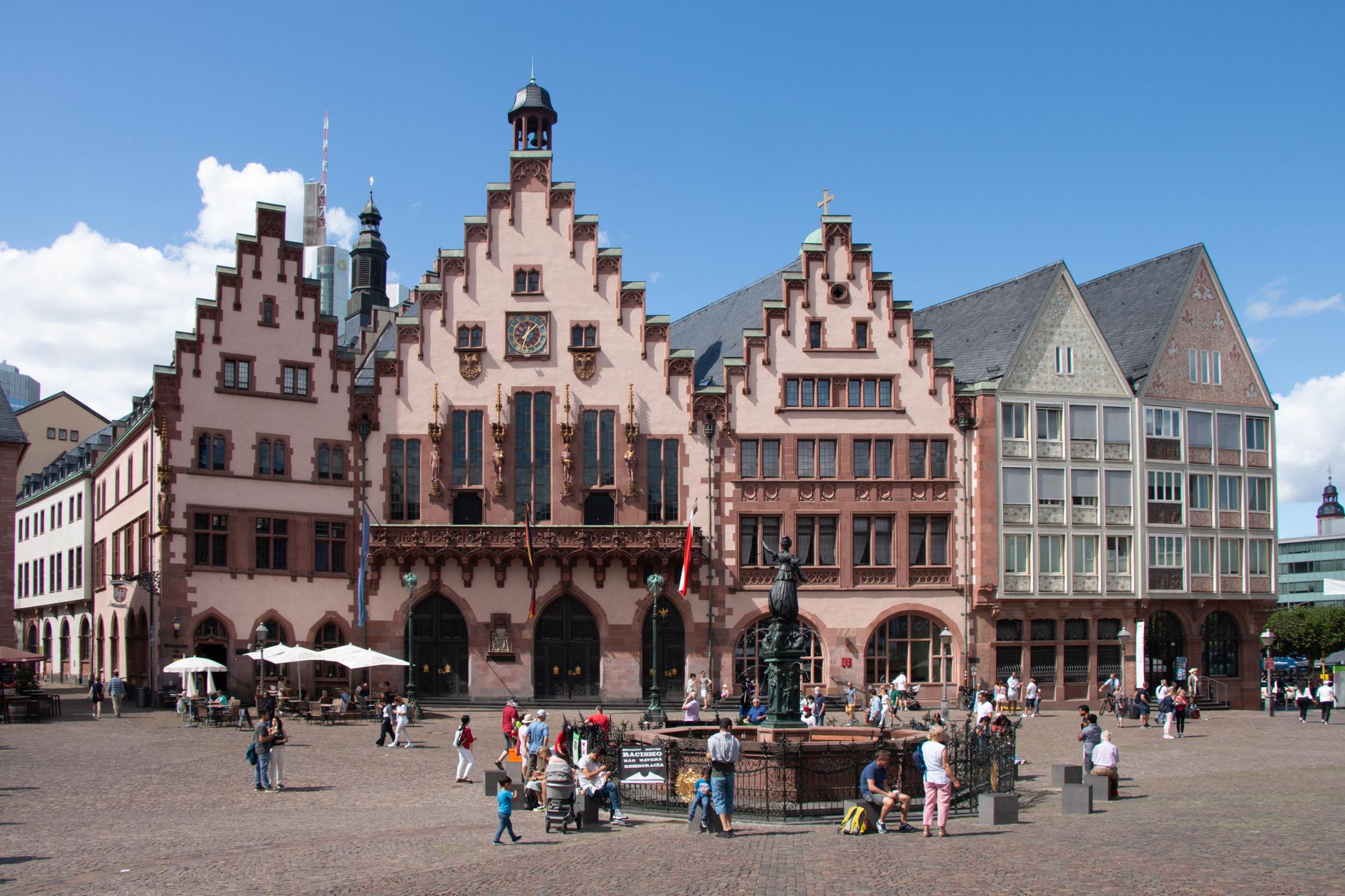
One single day for a whole city — it sounds like a route march. In Frankfurt it isn’t. Few large German cities pack their highlights so tightly together: from the half-timbered gables of the Römerberg to the glass towers of the banking district is barely a ten-minute walk, and the River Main divides everything so clearly that you can hardly get lost. I’ve run through this itinerary countless times over the years — with relatives from abroad, with colleagues on business trips, with friends who were “only popping by for a bit”. It works because it shows the city in its three faces: modern, historic and down-to-earth. You need no car for it, just comfortable shoes and a little curiosity.
Why one day here really is enough
The actual city centre, between Hauptwache, the Main and the station quarter, is surprisingly small. The whole route below adds up to a good five or six kilometres on foot, spread across the entire day — manageable for anyone who isn’t nursing a fresh injury. I even leave out the one real U-Bahn ride: the stations sit so close that you’ll usually walk it faster than you’d wait for the train. Only if you’re tired, or in a hurry come evening, hop one or two stops on the U4 or U5.
One tip that will make or break your day: come between Tuesday and Saturday if you possibly can. On Mondays the Städel and most of the Museumsufer houses are closed; on Sundays the Kleinmarkthalle shuts (and with it almost all the shops). The “perfect” day is therefore a weekday that isn’t a Monday. For getting around, a single RMV day ticket for the city zone is plenty; if you plan several admissions, look at the Frankfurt Card, which bundles local transport with discounts (prices at rmv.de and frankfurt-tourismus.de, as of 2026). For a fuller run-down of the individual sights I’d point you to my piece on the 15 top attractions in Frankfurt — today, though, we’re sticking to the route.
The day at a glance
- 9.00 a.m. — Römerberg, cathedral and the new old town
- 10.30 a.m. — Up the Main Tower (view from 200 m)
- 12.00 noon — Lunch at the Kleinmarkthalle
- 1.30 p.m. — Across the Eiserner Steg to the Museumsufer and the Städel
- 4.00 p.m. — A stroll along the riverbank
- 6.00 p.m. — Apple wine and green sauce in Sachsenhausen
9.00 a.m.: Römerberg, cathedral and the new old town
Begin in the historic heart. Get off at the Dom/Römer station (U4/U5) and a few steps later you’re standing on the Römerberg — the picture-postcard square with its narrow half-timbered gables and the city hall Frankfurters have simply called the “Römer” since the 15th century. Come deliberately early: before nine the square still belongs to the pigeons and the cafés’ delivery vans, the light falls softly on the Ostzeile, and you get photographs without tour groups. Glance into the freely accessible inner courtyard of the Römer and at the little Alte Nikolaikirche on the south side.
Just one lane further rises the Kaiserdom St. Bartholomäus, where for centuries the German kings were elected and crowned. Entry to the church is free; if you’re early and steady on your feet, for a small fee you can climb the 328 steps of the cathedral tower — up there you’re rewarded with a quite different, tighter view over the old-town rooftops than the one you’ll get later from the Main Tower. Between cathedral and Römer lies the newest chapter: the new old town around the Hühnermarkt, a quarter of reconstructed and reinterpreted townhouses completed in 2018. It looks as though it has always been there, yet it isn’t ten years old — a wander through the narrow lanes is well worth it. If you want to dig deeper into the history of this quarter, my historic old-town walk tells the story behind every house.
10.30 a.m.: Up the Main Tower
From the Römerberg it’s a good ten-minute walk north-west into the banking district — prettiest via the Paulskirche and the Roßmarkt. Your target is the Main Tower at Neue Mainzer Straße 52–58, the only Frankfurt high-rise with a publicly accessible viewing platform. The lift takes you up in about 45 seconds to the open deck 200 metres up — no glass between you and the city, just a wind screen and the full panorama: the Main a silver ribbon, the old town a red-brown island in a sea of buildings, and on a clear day the Taunus hills to the north.
The mid-morning slot is a deliberate choice: the tower opens at 10.00 a.m., and the first hour is the quietest. That way you get a feel for the geography right at the start — from above you immediately grasp how close together everything is that you’ll be walking today. Prices (as of 2026): adults €9.00, reduced €6.00, and a family ticket (two adults plus up to three children aged 6 to 12) €20.00. If it’s hazy or overcast there’s a discounted “poor-visibility” ticket for €4.00 — fair enough, since in mist you see little. In the summer season it’s open Sunday to Thursday 10 a.m.–9 p.m. and until 11 p.m. on Fridays and Saturdays (two hours shorter in winter); the last ascent is 45 minutes before closing. For the other viewpoints worth your time — from the free vantage points to a rooftop bar — see my guide to the Frankfurt skyline.
12.00 noon: Lunch at the Kleinmarkthalle
Now you’ve earned a proper lunch — and in the very place where Frankfurters themselves shop and eat: the Kleinmarkthalle at Hasengasse 5–7, a good ten minutes on foot towards Konstablerwache. Some 150 stalls crowd its two floors: fish counters, cheesemongers, butchers, Italian and Asian delicatessens, fruit in colours you never see in a supermarket. It smells of fresh bread, fried fish and ripe cheese all at once — a feast for the senses.
My fixed ritual: a Rindswurst (beef sausage) at Gref-Völsing, the long-established butcher that invented the sausage in Frankfurt back in 1894 — in a bread roll, standing up, with a dab of mustard. Then up to the wine terrace on the upper floor, where you look out over the bustle with a glass of Rheingau Riesling in hand. A generous lunch runs to roughly €8 to €15 (as of 2026), depending on how much you graze. Important: the hall is open Monday to Saturday and closed on Sundays — precisely why I urge you to pick a weekday. It also thins out in the late afternoon; at midday you get the finest, busiest crush.
1.30 p.m.: Across the Eiserner Steg to the Museumsufer
Refreshed, head for the river, a good ten minutes south. You cross the Eiserner Steg, the delicate iron footbridge of 1868 that half of Frankfurt uses daily. Pause halfway across: from here you have the classic view of the skyline mirrored in the water — the city’s most photographed image. Look closely and you’ll spot a gilded Greek inscription on the upper girder, a line from Homer’s Odyssey: “sailing on the wine-dark sea to men of foreign speech”, added during the 1993 restoration. Along the railings hang the padlocks of lovers.
On the south bank you’re right in the middle of the Museumsufer, one of the densest concentrations of museums in Europe: a good dozen houses stand in a row along the Schaumainkai. You don’t have to see them all — pick one. My classic is the Städel Museum (Schaumainkai 63), Germany’s oldest civic museum, spanning Botticelli and Vermeer through the German Romantics to contemporary art in the underground extension. Admission is around €16 on weekdays and €18 at weekends (as of 2026), children under 12 free; it’s closed on Mondays and open until 9 p.m. on Thursdays. On the way you pass the Deutsches Filmmuseum — a fine alternative if cinema makes your heart beat faster. If you want to explore the full riches of the museum mile, my Museumsufer guide covers every house and its prices.
4.00 p.m.: A stroll along the riverbank
After so much art, some fresh-air movement does you good. Amble back eastwards along the water from the Städel — here the Schaumainkai has become a car-free riverside promenade, lined with plane trees and, on warm days, with Frankfurters simply sitting on the grass. On the opposite side, at the Mainkai, the white fleet of excursion boats casts off: if the weather plays along and you still have energy, a 50-minute skyline cruise is a wonderfully relaxed way to round off the afternoon. Otherwise just settle on a bench, watch the rowers and let the towers slowly sink into the evening light. This is the calmest stretch of the day — and often the one my guests remember most fondly.
6.00 p.m.: Apple wine and green sauce in Sachsenhausen
Let the day wind down where traditional Frankfurt is at home: in an apple-wine tavern in Alt-Sachsenhausen, about ten minutes south of the Museumsufer. Order an “Äppelwoi” — locals also call it “Stöffche” — poured from the grey-and-blue stoneware jug, the “Bembel”, into the ribbed “Geripptes” glass, whose ridges once gave greasy fingers a grip. If you want to soften the tartness, ask for a “sauer Gespritzter”, cut with sparkling water.
With it comes hearty Hessian cooking: green sauce (Grüne Soße) of seven herbs with egg and boiled potatoes (a must in summer), Handkäs mit Musik, whose “music” is the pickled onions, or Rippchen (cured pork) with sauerkraut. My advice: avoid the noisiest party lanes and seek out a long-established tavern with a courtyard. Tried and genuine are the likes of Adolf Wagner and Zum Gemalten Haus on Schweizer Straße, or the cosy Fichtekränzi on Wallstraße. There you sit at long wooden tables beside locals — cosier and more authentic than the slick tourist spots. For just how deeply the apple-wine culture is rooted here, and which taverns are worth seeking out, I go into detail in my piece on Sachsenhausen, apple wine and green sauce.
When it rains: the wet-weather variant
Frankfurt is a joy even in steady rain — you simply shift the weight indoors. See the Römerberg briefly from under an umbrella, but give yourself more time in the cathedral and in the Historical Museum right by the Saalhof, which brings the city’s story vividly to life. Under low cloud, either skip the Main Tower altogether or use that €4 poor-visibility ticket. The Kleinmarkthalle is roofed over anyway and exactly the right thing at midday. Extend the afternoon at the Museumsufer: right next to the Städel, the Liebieghaus with its sculpture collection is just one house along, and if you like modern art the MMK or the Schirn Kunsthalle by the Römerberg will serve you well. The evening stays as it is — a warm apple-wine tavern is doubly welcome in the rain.
And if the sun comes out? Then turn it around: less time indoors, more by the river. Take the boat cruise, spread a blanket on the Sachsenhausen bank, and, if need be, save the museum for another trip.
So in a single day you’ve experienced the three Frankfurts: the glass one from above, the medieval one at your feet, and the sociable one with a Bembel in hand. Start early, stay flexible if the weather turns, and treat yourself to the small pauses in between — the coffee on the wine terrace, the bench by the water. By evening you’ll be amazed how much city fits into twelve hours, and you’ll go home with the good feeling of having got to know the real Frankfurt — not merely ticked it off.
Keep reading
Attractions
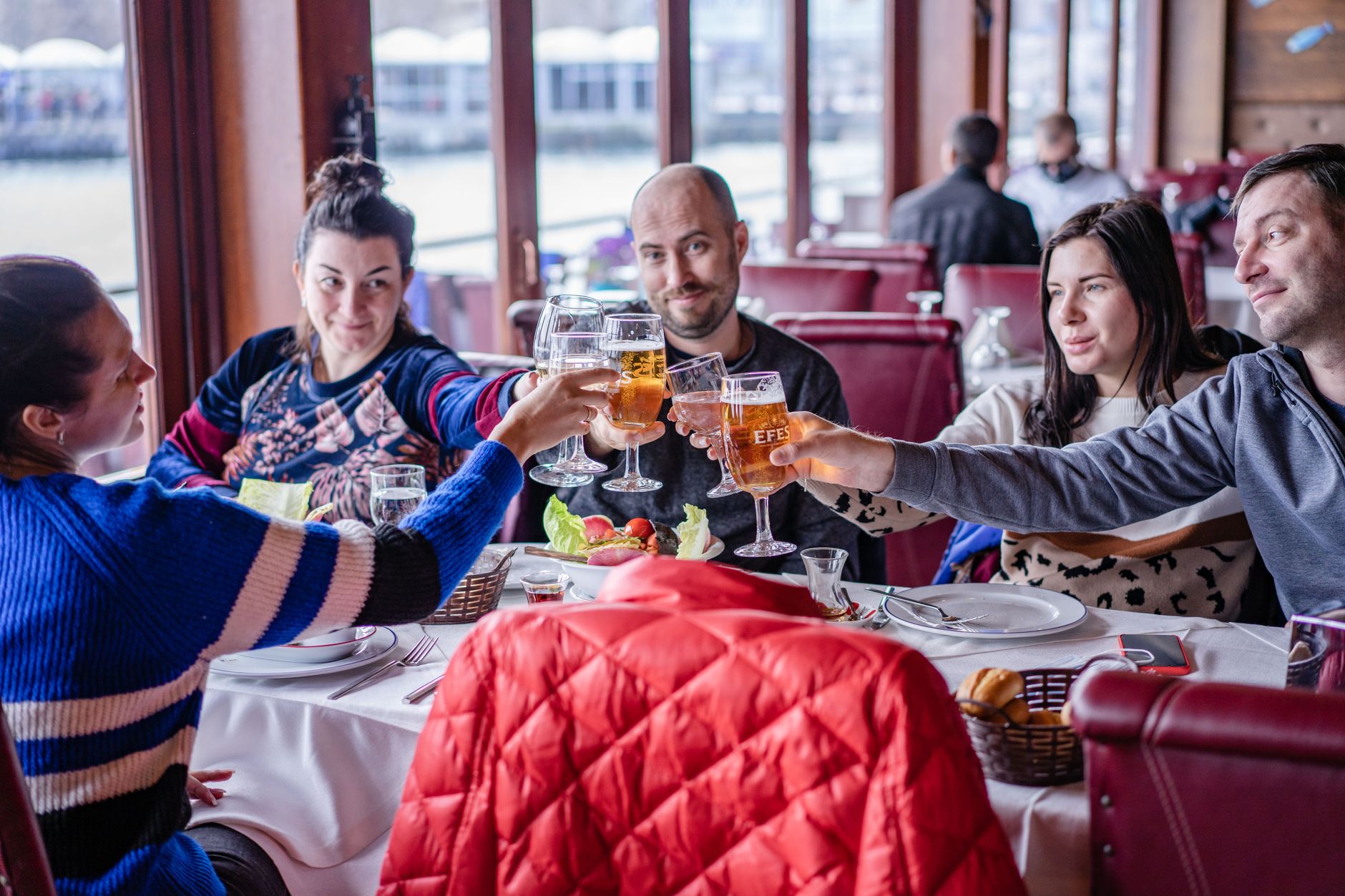
Frankfurt with Friends: Apple Wine, Bar-Hopping & Group Ideas
What to do in Frankfurt with friends: an apple-wine evening in old Sachsenhausen, bar-hopping in the Bahnhofsviertel, the Ebbelwei-Express, bowling, a Main cruise and an Eintracht match — with addresses and prices.
Katharina Vogt25 July 2026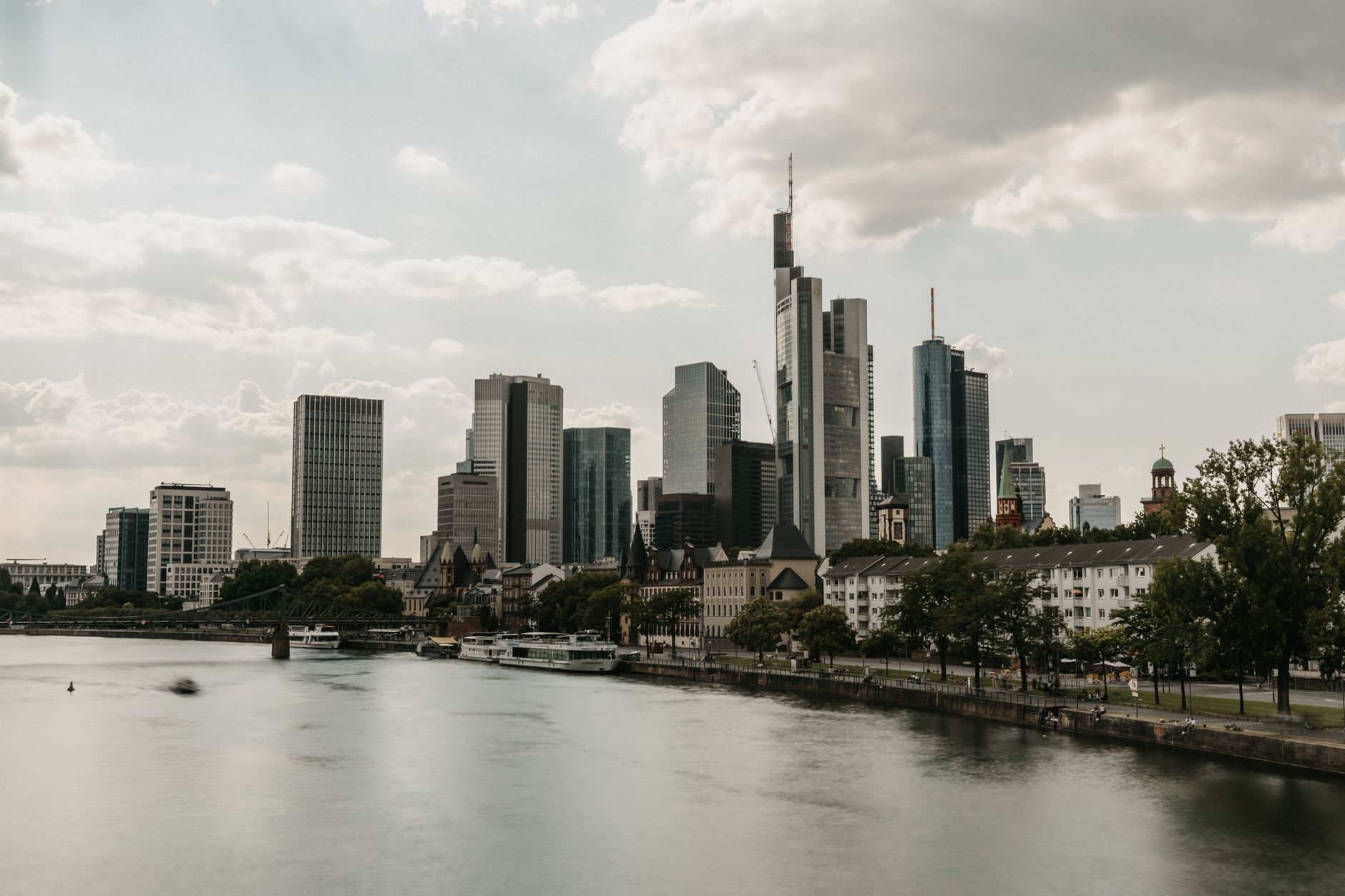
Attractions
Frankfurt Skyline: Best Viewpoints & Photo Spots
Where to see and photograph the Frankfurt skyline at its best: the Main Tower deck (€9, as of 2026), rooftop bars, and the finest free views from the Eiserner Steg, Deutschherrnufer and Lohrberg — with the best times and photo tips.
Katharina Vogt16 June 2026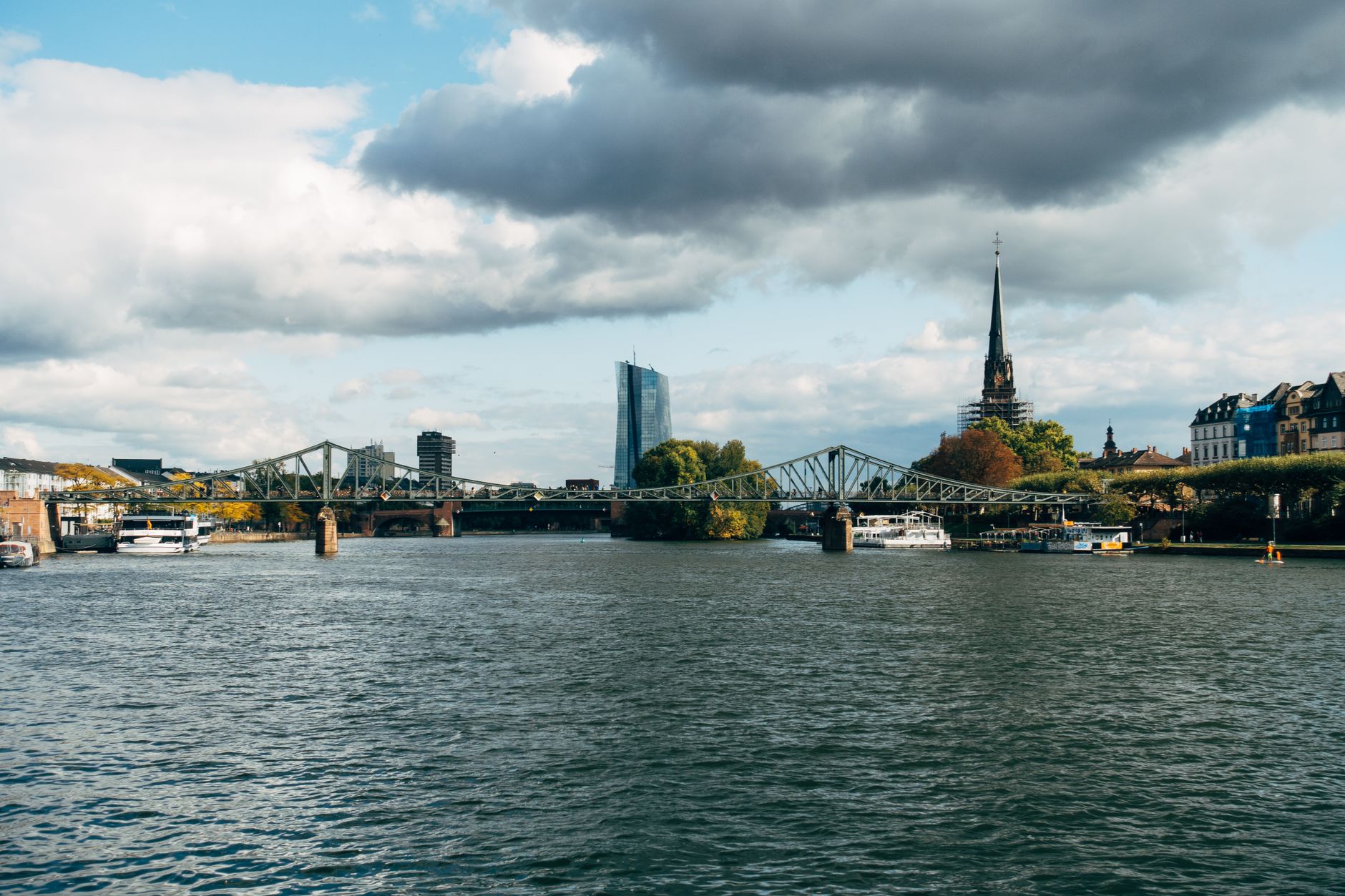
Attractions
The Museumsufer & Städel: Frankfurt's Museum Mile
Frankfurt's Museumsufer at a glance: some three dozen museums along the Main — from the Städel and the Film Museum to World Cultures. With the MuseumsuferTicket, MuseumsuferCard, the Museumsuferfest and my route for a relaxed museum day.
Katharina Vogt16 June 2026
Attractions
Weltkulturen Museum Frankfurt: Collection, Exhibitions & Tips
The Weltkulturen Museum on Frankfurt's Schaumainkai: its ethnographic collection of around 65,000 objects, the no-permanent-display principle, opening hours, admission and tips from a local.
Katharina Vogt14 July 2026