Frankfurt Old Town & Römer: A Historic Walk
Between the Main and the cathedral lies Frankfurt's historic core — barely bigger than a few football pitches. I'll walk you from stop to stop in a good two and a half hours, and tell you honestly what is original and what is rebuilt.

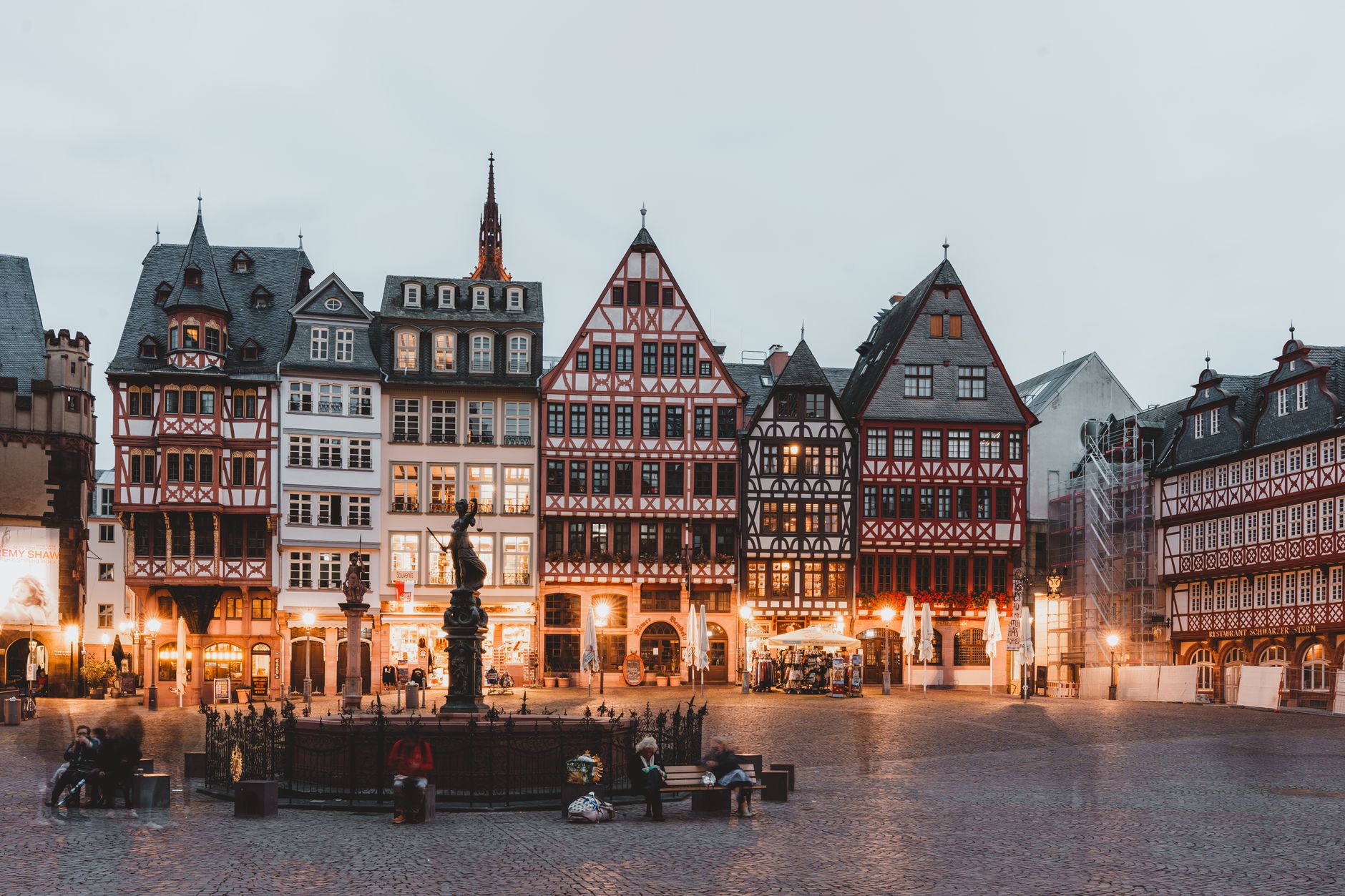
To many people Frankfurt is a banking city and nothing more — a backdrop of glass and steel with a big airport in front of it. Yet between the Main and the cathedral, on an area barely larger than a few football pitches, lies the core from which this city has grown over twelve centuries. I’m Katharina Vogt, born in Frankfurt, and when visitors ask me where to begin, this is exactly where I bring them — because nowhere else is so much history packed into so little space.
This walk follows a fixed route: from the Römerberg through the New Old Town and the Kaiserdom to the Paulskirche, then into the Kleinmarkthalle and finally down to the river. Allow around two and a half to three hours, put on comfortable shoes — and be ready for one honest truth: much of what looks so old here is younger than your grandparents. On 22 March 1944 air raids reduced the old town almost entirely to rubble. What now seems so picturesque is largely reconstruction — sometimes faithful, sometimes freely reimagined. That is precisely what makes the walk so fascinating.
The quickest way to arrive is by U-Bahn: lines U4 and U5 stop right at Dom/Römer station. If you come by S-Bahn, get out at Hauptwache or Konstablerwache and walk five minutes south. One piece of advice up front: come early. Before ten o’clock the Römerberg is almost yours alone; after that it fills quickly with tour groups.
Starting point: the Römerberg
The Römerberg is Frankfurt’s grand parlour and the starting point of every walk. Stand in the middle of the square, the skyline behind you, and let your gaze wander. The famous Ostzeile (eastern row), with its steep-gabled half-timbered houses — the motif on countless postcards — looks medieval, but dates from the early 1980s. The originals burned down in 1944; only in 1981 to 1983 did the city rebuild six of the houses over their old footprints. That takes nothing from the magic the moment the sun catches the red sandstone, but it’s good to know.
In the centre of the square stands the Gerechtigkeitsbrunnen (Fountain of Justice) with its bronze Justitia. Look closely: this Justitia carries a sword and scales but — unusually — no blindfold. She gazes at the town hall with open eyes, a confident image of the free imperial city. The bronze figure was placed here in 1611; the stone basin beneath is older still and the real heart of the fountain. Its finest historic moment, though, came at the imperial coronations, when wine — red and white — flowed from the fountain and the crowds celebrated on the square.
The Römer: city hall since 1405
On the west side stands the building that gives the square its name: the Römer. On 11 March 1405 the city council bought the house “zum Römer” together with its neighbour, the “Goldener Schwan” — and it has governed from here ever since, for more than 600 years. Further merchant houses were added over time, which is why the Römer today is not a single building but a whole terrace, with that unmistakable three-gabled façade.
Step through the portal into the inner courtyard with its Renaissance staircase. From here — provided no official event or wedding is taking place, and for a small fee — you can climb up to the Kaisersaal (Emperor’s Hall). Fifty-two imperial portraits hang in this ceremonial room, from Charlemagne to Franz II, the last emperor of the Holy Roman Empire. It’s an ancestral gallery of power painted in the 19th century, and you can stand before it and let a good thousand years of German history pass in front of you.
The Alte Nikolaikirche: the survivor
Right on the south side of the Römerberg, unassuming between its larger neighbours, stands the Alte Nikolaikirche (Old St Nicholas Church). Take note of this one, because it is special: while almost everything around it was destroyed, it came through the bombing with only minor damage. It is therefore one of the very few genuinely old buildings whose real medieval fabric you can still touch. The first chapel on this spot was built in the mid-12th century, the present church around the mid-15th, and for a long time it served the council as its court chapel.
From outside the slender tower with its saddle roof catches the eye; inside the church is plain and calm. Its acoustic signature is the carillon: several times a day, chorales ring out across the square. If you’re there at the right moment, stop and listen — it’s one of those Frankfurt moments you can’t plan.
Through the New Old Town to the Hühnermarkt
Now we leave the Römerberg to the east, into the youngest and most hotly debated part of the old town: the New Old Town, officially the DomRömer quarter. In doing so you roughly follow the historic “coronation route” (Krönungsweg) that newly crowned emperors walked from the cathedral back to their banquet in the Römer — a good 250 metres that rank among the most history-laden in the country.
Until 1944 this was the densest, oldest residential quarter in the city. After the war the site lay derelict, and then the brutalist Technical City Hall (1972–1974) rose here, a grey concrete slab that few people missed. From 2010 it was demolished, and the city dared the seemingly impossible: rebuilding an entire quarter. “Disneyland”, the critics scoffed at the time. Since its completion in 2018 my own view has shifted. Thirty-five houses now stand here — 15 creative reconstructions of historic models and 20 modern new buildings that fit in with restraint.
The heart of the quarter is the Hühnermarkt with the Stoltze fountain, named after the dialect poet Friedrich Stoltze. Around it hide little gems such as the sumptuous “Haus zur Goldenen Waage” or the “Goldenes Lämmchen”. There are no big chains here, but narrow lanes, studios and cafés. Just how controversial — and how carefully considered — this project really was I’ve described in my full article on the New Old Town; here it’s best simply to walk slowly and look up.
The Archaeological Garden: Frankfurt’s Roman roots
At the eastern edge of the New Old Town, right in front of the cathedral, you pass a spot many people overlook: the Archaeological Garden, now sheltered by the glass Stadthaus am Markt. Beneath the roof lie exposed wall remains from two eras, one above the other: the foundations of a Roman military bath from the 1st century and, over it, the royal palace of the Carolingian and Ottonian rulers.
This is no minor matter. It shows that politics was being made here more than 1,200 years ago: in 794 Charlemagne summoned a great imperial synod “in villa Franconofurd” — which is also the very first documentary mention of Frankfurt. Admission to the garden is free, and it is one of the few places where you can look, quite literally, beneath the city’s skin.
The Kaiserdom St Bartholomew’s
A few steps further rises the mighty red sandstone bulk of the Kaiserdom St Bartholomew’s (Dom St. Bartholomäus). Strictly speaking it isn’t a cathedral at all, since Frankfurt was never a bishop’s see — the Dom is a collegiate church. But for us Frankfurters it always was and remains “the Dom”, and its significance is greater than any title anyway: this is where the heart of the empire beat.
Ever since the Golden Bull of 1356 the prince-electors chose the kings of the Holy Roman Empire in this building; the Wahlkapelle (election chapel) on the south side of the choir was built specially for the purpose in 1425. And from 1562 to 1792 ten emperors were crowned here. Step inside and let the sweep of the Gothic space work on you; worth seeking out above all are the election chapel, the late-Gothic choir stalls and the tomb of King Günther of Schwarzburg.
If you’re steady on your feet, climb the 95-metre tower: 328 steps of a tight spiral staircase lead up to the viewing gallery at around 66 metres. The ascent costs only a few euros (as of 2026), but it’s hard work and, depending on season and weather, not always open. The reward: a view straight onto the rooftops of the old town, the Römer and the skyline behind it. If you prefer something gentler, visit the small cathedral museum with its treasury.
A detour to the Paulskirche
From here a detour to the north-west is worthwhile, around five to six minutes’ walk across the old town to the Paulsplatz. Among all the Gothic spires the round, neoclassical Paulskirche (St Paul’s Church) looks almost austere — and yet it is one of the most important places in German history. Built between 1789 and 1833 to designs by Johann Friedrich Christian Hess, in 1848/49 it became the seat of the Frankfurt National Assembly, the first freely elected German parliament. Here they wrestled over a constitution for a united Germany — a dream that failed at the time, but whose ideals still resonate today.
The Paulskirche too burned out in 1944. Because it meant so much to Germans, it was the first building Frankfurt rebuilt after the war; in 1948, on the centenary of the National Assembly, it reopened. Today it is no longer a place of worship but a venue for ceremonies — among them the awarding of the Peace Prize of the German Book Trade during the Book Fair. Inside, the bright, unadorned oval hall is a deliberate counterpoint to baroque pomp; in the ambulatory below, Johannes Grützke’s mural “The Procession of the People’s Representatives” draws the eye. Anyone taken with bourgeois Frankfurt is only a few minutes from here to the Goethe House on the Großer Hirschgraben, the poet’s birthplace.
A lunch stop at the Kleinmarkthalle
Time for a bite — and please, not at the tourist restaurants right on the Römerberg. Instead, walk about five minutes up the Hasengasse to the Kleinmarkthalle (Hasengasse 5–7, 60311 Frankfurt). To me it’s the city’s true good parlour. More than 60 traders here sell fresh fish, meat, cheese, fruit, vegetables and spices from all over the world — open Monday to Friday from 8 a.m. to 6 p.m., Saturday from 8 a.m. to 4 p.m., closed Sunday.
Be sure to try a hot beef sausage (Rindswurst) at Gref-Völsing, a Frankfurt institution, or buy the fresh herbs for the famous “green sauce”. On the gallery upstairs a small wine bar invites you to a glass, happily as early as the afternoon. It’s loud, it’s fragrant, it’s the real Frankfurt: this is where locals buy their weekend food, not souvenirs. A snack will usually cost you between ten and fifteen euros — enough energy for the final stretch.
To the water: the Eiserner Steg and the riverbank
From the Kleinmarkthalle it’s a good ten minutes south again, back through the lanes and down to the river. On the bank you’ll find the Eiserner Steg, the narrow footbridge linking the old town with Sachsenhausen. Here too an honest look pays off: the first bridge was built in 1868, but the Wehrmacht blew it up in March 1945; by 1946 it had already been rebuilt. Along the arch runs a line of Greek from Homer’s Odyssey — “sailing over the wine-dark sea” — and the railings are hung with countless love padlocks.
Walk to the middle of the bridge. From here you have perhaps the loveliest view in the city: the skyline to the north, the river panorama in both directions, and — when you turn round — the towers of the cathedral and the Römer against the backdrop of the high-rises, the classic Frankfurt image. On the northern bank, right by the Saalhof, stands the Historical Museum, which tells the whole story of the city; if you still have the energy, stroll west along the Mainkai to the little Nizza garden with its Mediterranean plants.
And with that the circle closes. In a good two and a half hours you’ve walked through twelve centuries — from a Carolingian palace, past imperial coronations and the first German parliament, to a quarter that was only finished in 2018. Frankfurt’s old town is not an untouched stage set but a place that has reinvented itself again and again, and that is exactly where its honesty lies. If you have more time, combine this walk with my perfect one-day itinerary for Frankfurt or with the 15 most important sights in the city. And then sit down by the Main, look out over the water, and you’ll understand why we love this small, resurrected old town so much.
Keep reading
Attractions
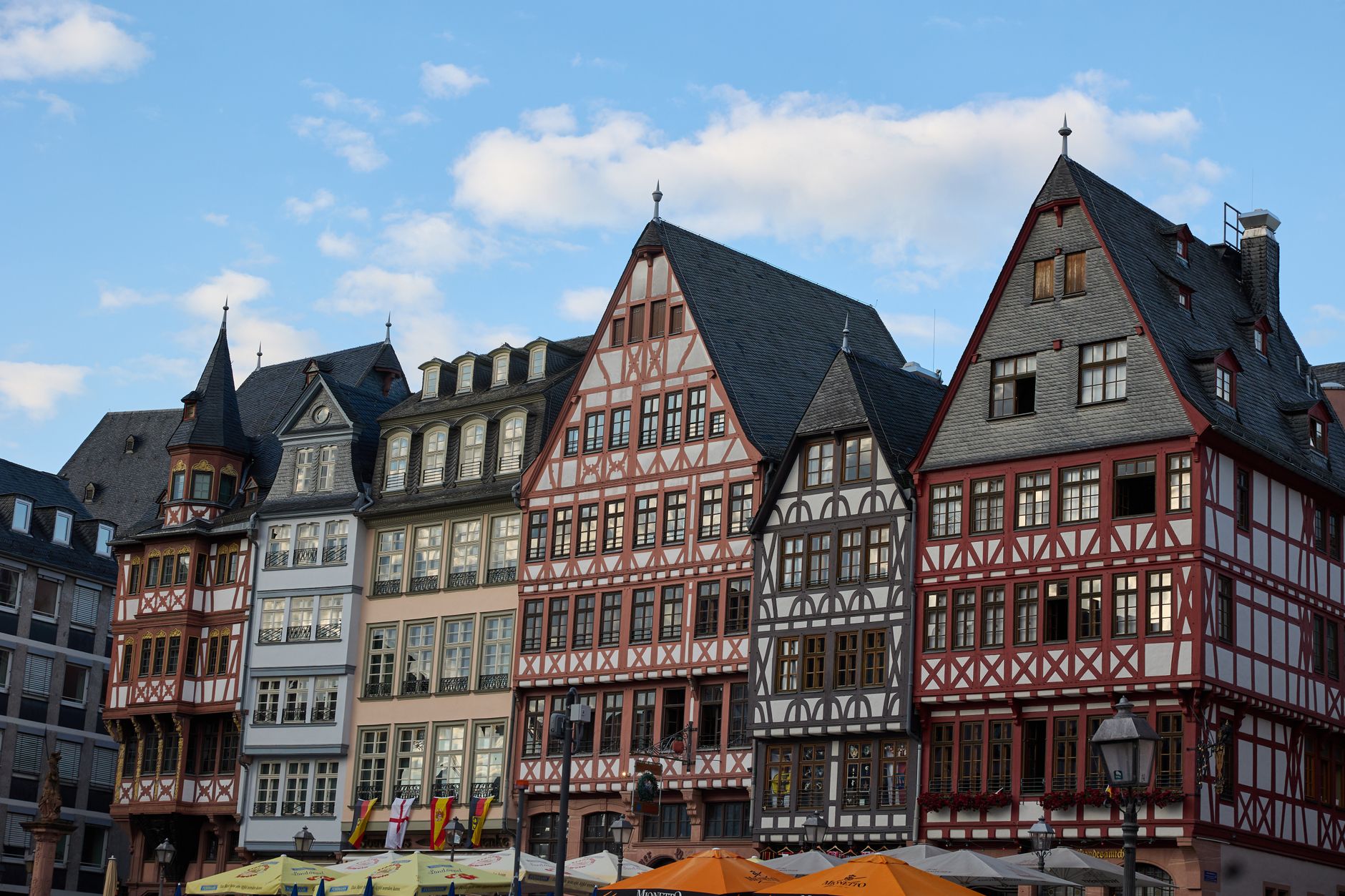
Frankfurt's New Old Town: Dom-Römer Quarter, History & Walk
Frankfurt's New Old Town between the cathedral and the Römer: the history of the Dom-Römer project, the Golden Scales, the Hühnermarkt, the coronation route — and my walking tour of the quarter.
Katharina Vogt21 June 2026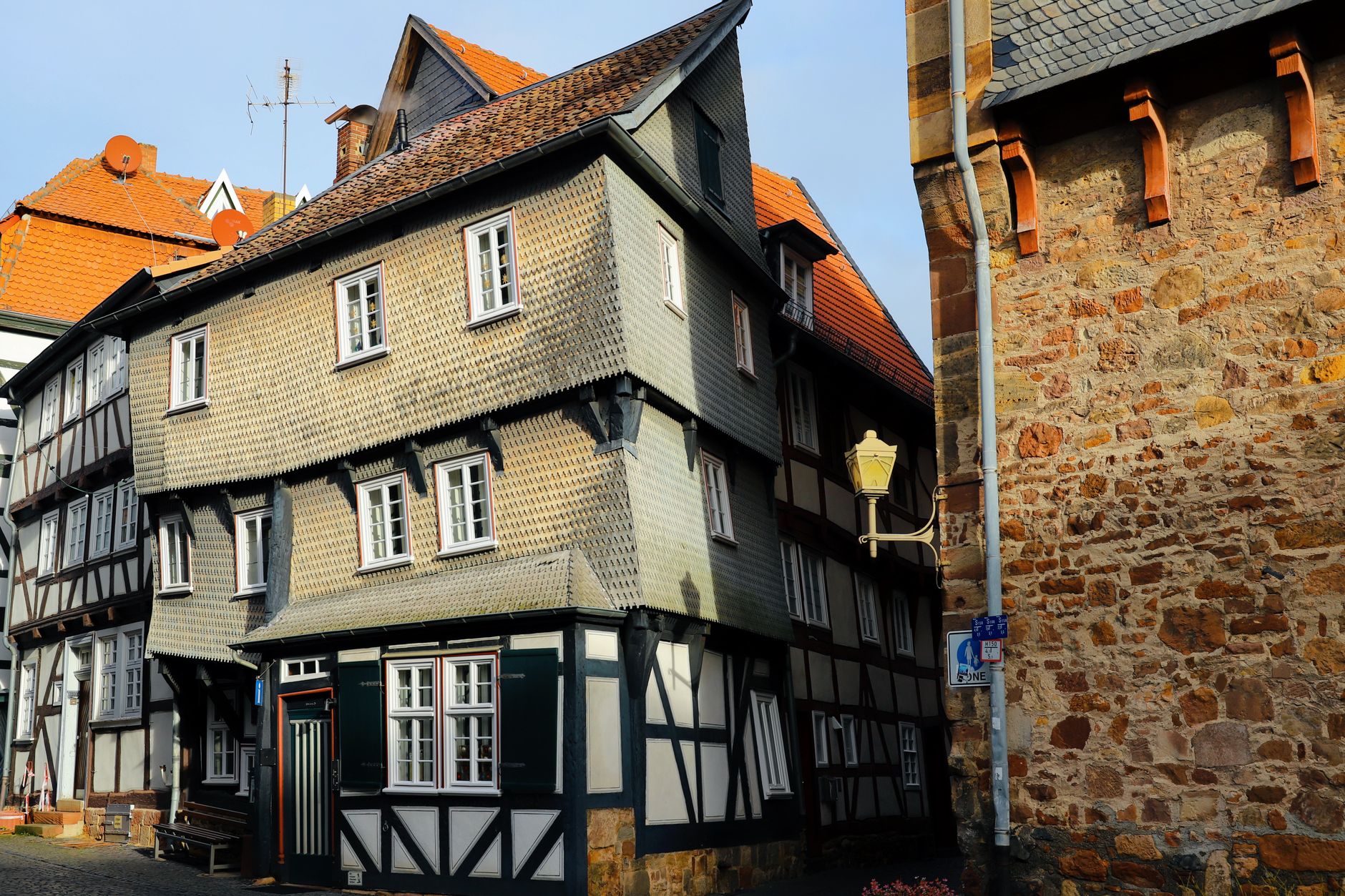
Attractions
Höchst Old Town Frankfurt: Timber-Framing, Castle & Justinus Church
Höchst in Frankfurt's west: the only old town that survived the war — with the Carolingian Justinus Church, the castle on the Main, the Bolongaro Palace and timber-framed lanes. Getting there, the Schlossfest and my walking route.
Katharina Vogt10 July 2026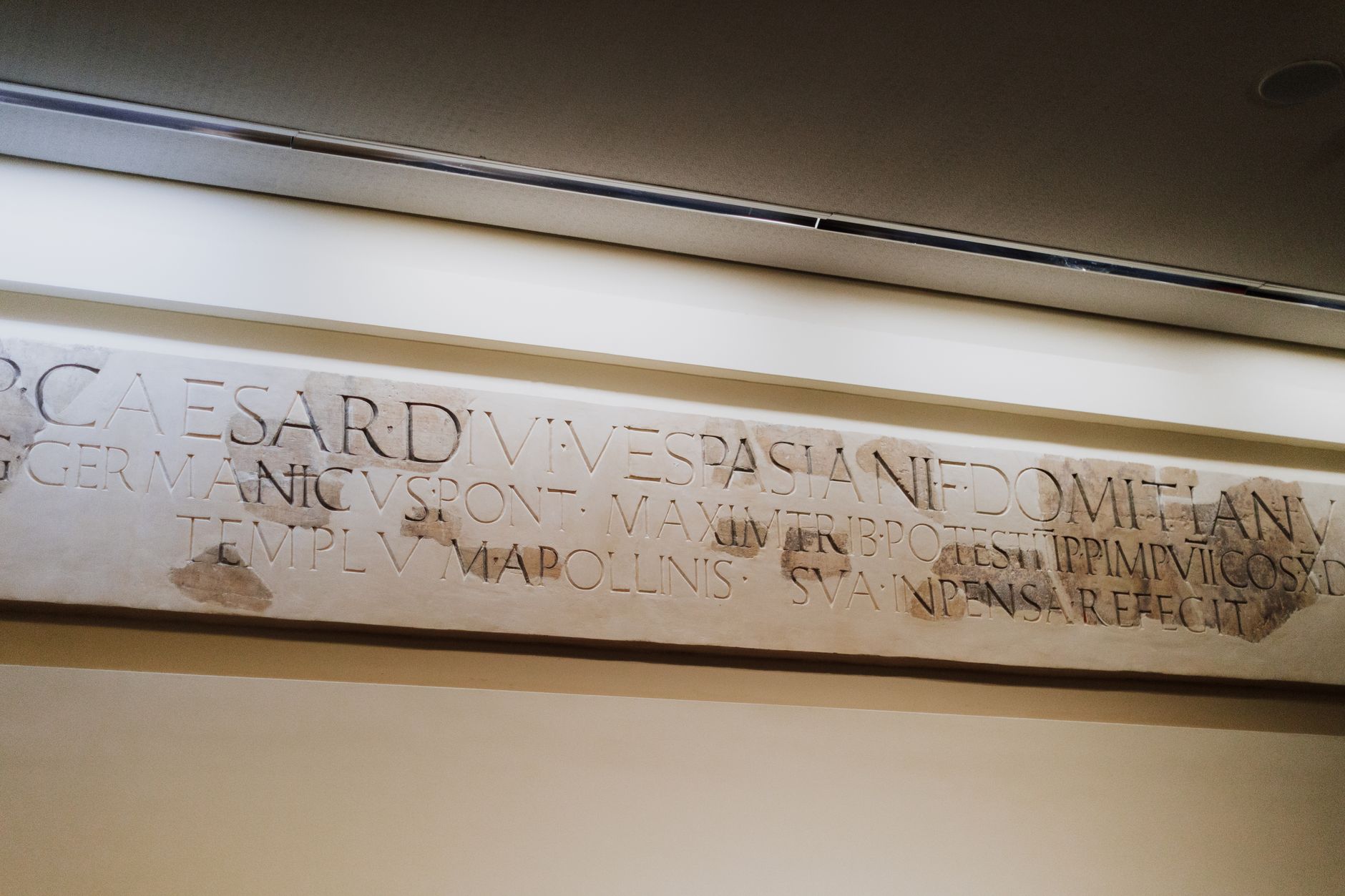
Attractions
Archaeological Museum Frankfurt: Tickets, Highlights & Tips
The Archaeological Museum Frankfurt inside the Gothic Carmelite church: Roman finds from NIDA, Mithras reliefs, the Ratgeb frescoes, the Silver Inscription — plus current prices, opening hours and tips from a local.
Katharina Vogt28 June 2026
Attractions
Struwwelpeter Museum Frankfurt: Heinrich Hoffmann, Tickets & Tips
The Struwwelpeter and Heinrich Hoffmann Museum in Frankfurt's New Old Town (Hinter dem Lämmchen 2–4): how the world's most famous shock-headed boy was created in 1844, what the exhibition shows, plus admission, hours and how to get there (as of 2026).
Katharina Vogt11 July 2026