Frankfurt Cathedral: Election Chapel, the 328-Step Tower and the Dommuseum
Strictly speaking, Frankfurt's most famous church isn't a cathedral at all, yet emperors were crowned here for more than two centuries. A local takes you through the election chapel, the choir and the cloister, and up the 328 steps of the tower.

Frankfurt Cathedral has a problem with its name. It isn’t a cathedral in the church-law sense, because Frankfurt has never been the seat of a bishop; the church belongs to the Diocese of Limburg and was for centuries a collegiate church. Still, no Frankfurter calls it anything but “der Dom”, and its full name, the Kaiserdom St. Bartholomäus, the Imperial Cathedral of St Bartholomew, explains why. In this red sandstone church German kings were elected for centuries, and from 1562 emperors were crowned here too. No other place in the city was bound so closely, for so long, to the Holy Roman Empire.
Most visitors brush past it on the way between the Römer and the New Old Town, glance into the nave and move on. How the quarter in front of it came to be rebuilt is the subject of my piece on Frankfurt’s New Old Town. This one is about the cathedral itself, and about everything you miss if you’re back outside after ten minutes.
Elected in Frankfurt, crowned in Aachen, until 1562
The story starts long before the present building. Excavations inside the church in 1991 uncovered the grave of two children buried here around the year 700, complete with delicate gold jewellery, glass vessels and little toys. In 852 the Carolingian Church of the Saviour was consecrated on this spot, and on 24 August 1239 the church was dedicated to the apostle Bartholomew. His skull relic is still the cathedral’s most precious possession.
Its political weight came with the royal elections. Frederick Barbarossa was elected king in Frankfurt in 1152, and the Golden Bull of 1356 fixed Frankfurt as the place of election. From 1438 the elections were held in the Election Chapel, a small annexe on the south side of the choir that otherwise served as the chapter library. This is where the seven prince-electors withdrew to choose their king.
Coronations, however, happened elsewhere: in Aachen, in Charlemagne’s church. The last one there was Ferdinand I’s in 1531. That the ceremony then moved to Frankfurt was more pragmatism than plan. When Maximilian II was elected in November 1562, a journey to Aachen in midwinter would have been an ordeal, and the Archbishop of Cologne, whose job it was, wasn’t available. So they crowned him on the spot. The exception became the rule: up to 1792, ten emperors were crowned in the cathedral, at the coronation altar in front of the rood screen, the last of them Francis II. If you’re curious about the old route in reverse, the road distance from Aachen to Frankfurt is covered today in a little over two and a half hours of pure driving time; for a coronation procession in the sixteenth century it was a journey of days.
The coronation of Joseph II in 1764 had one of history’s most famous eyewitnesses: the young Goethe watched it as a Frankfurt burgher’s son and later described it at length in his memoir Dichtung und Wahrheit. After the ceremony the emperor processed along the coronation route to the banquet in the Römer, the same route the New Old Town now follows and the one I walk on my historic old-town walk.
What not to miss inside
The cathedral is open daily from 9 a.m. to 8 p.m. and admission is free. During services the rule is: don’t disturb, and no guided tours. On summer weekends, christenings and weddings mean it is sometimes closed to visitors for a while.
The first thing you notice walking in is the height; the choir and transepts rise to just over 23 metres inside. My four stops:
- The Election Chapel. Small, dim, unassuming, and yet the room where the crown of the empire was decided. Since late summer 2026 the large panel painting of Christ the Saviour, from around 1500, is back on its wall after restoration: Christ as Saviour of the World against a gold ground, between Mary and St Anne.
- The choir stalls. Reusing older carved ends from the thirteenth century, four rows of stalls were completed by 1352, funded by Provost Kuno II of Falkenstein. They survived both the fire and the war.
- The legend of St Bartholomew in the high choir. A cycle of wall paintings from the early fifteenth century tells the life of the church’s patron saint. The high choir is best seen on a guided tour.
- The Dormition altar in the Lady Chapel, another stop on the public cathedral tour.
That so much medieval work survives is close to miraculous, because the cathedral has lived through two disasters. In the early hours of 15 August 1867 a fire broke out in a beer tavern on Fahrgasse, directly behind the cathedral; an east wind carried sparks onto the church roof, the roof timbers burned, and the upper half of the tower and its bells were destroyed. The architect Franz Josef Denzinger led the rebuilding, and it was a good ten years before the finial was back on top of the spire. On 22 March 1944 bombs hit the cathedral hard, and restoration dragged on well into the post-war years.
The cathedral tower: 328 steps, 66 metres, no lift
The tower is 95 metres tall and for centuries was the tallest structure in the city. Its foundation stone was laid in 1415, the master builder was Madern Gerthener, and because the money kept running out it was only provisionally finished in 1514, still without its planned lantern. It got its present spire during the rebuilding after the fire of 1867.
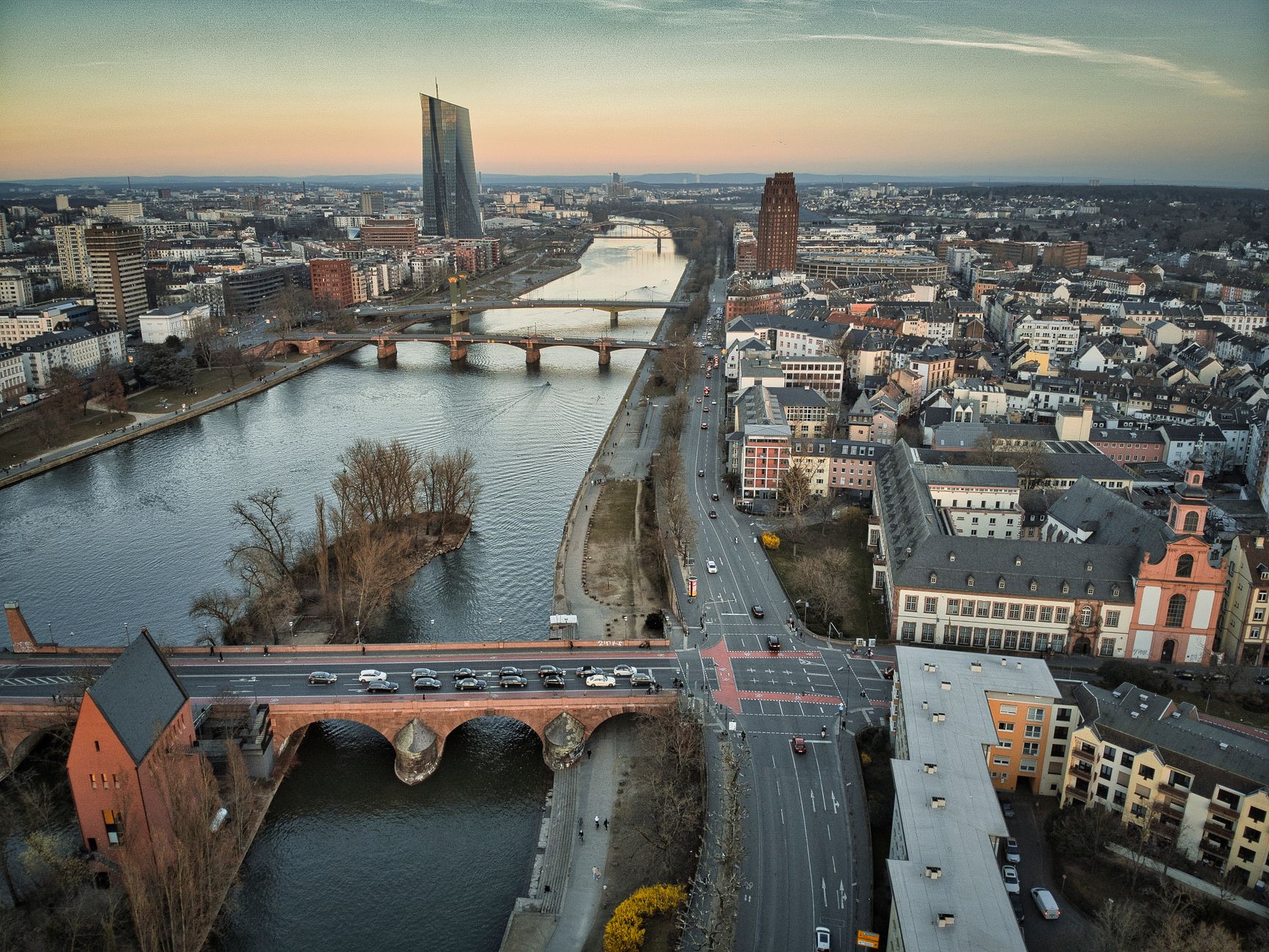
You climb 328 steps to the viewing gallery at 66 metres. The staircase is narrow, there is no lift, and in very bad weather the tower stays shut. From the top you see the Main, the roofs of the New Old Town and the bank towers in a single sweep, and on a clear day as far as the Taunus and Odenwald hills. The Main Tower is higher, but only from the cathedral tower do you look straight down into the old town rather than over it.
What you need to plan (as of 2026):
- Admission: €3, concessions €2. On Saturdays, Sundays and public holidays the exhibition in the tower-keeper’s rooms is open as well, and the climb then costs €5, concessions €3.
- April to October: Monday noon to 6 p.m., Tuesday to Saturday 10 a.m. to 6 p.m., Sundays and holidays 11 a.m. to 6 p.m.
- November to March: Tuesday to Friday 10 a.m. to 5 p.m., Saturdays, Sundays and holidays 11 a.m. to 5 p.m.; closed on Mondays.
- Last ascent 30 minutes before closing.
- Closed on Christmas Eve, Christmas Day and New Year’s Eve. On 28 November 2026, the Saturday before Advent, the tower closes at 4 p.m. because the city’s great bell-ringing takes place.
- Bags: rucksacks and larger bags must be left at the ticket desk, and pets aren’t allowed.
Because the number of people in the tower at any one time is limited, there can be a queue at weekends. My tip: a weekday, right at opening time. If you want to know more, book one of the public tower tours, this autumn on Wednesday 7 October at 5 p.m. and on Wednesday 4 November 2026, each €6 plus admission, registering with the Dommuseum at least 24 hours ahead.
The Türmerstube: where people lived in the tower
If you come at a weekend, don’t miss the Türmerstube, the tower-keeper’s rooms. For generations the tower keepers lived up here with their families, keeping fire watch over the city; from 1880 the Frankfurt fire brigade took over the watch room. The small exhibition Turm und Stadt, “Tower and City, or: What Do You Need a Cathedral Tower For?”, tells 600 years of tower history across three little rooms, with old pictures and audio pieces voiced by, among others, Michael Quast, whom Frankfurt theatregoers know from the Volksbühne; there’s more on his stage in my overview of theatre in Frankfurt. It’s open on Saturdays, Sundays and holidays, from 2 to 6 p.m. between April and October and from 1 to 5 p.m. in winter.
The Dommuseum in the cloister
The Dommuseum occupies the early fifteenth-century cloister; it opened in 1987 and was redesigned in 2017. It shows the cathedral treasury: goldsmiths’ work, medieval and baroque vestments, finds from the excavations, including the grave goods from the children’s burial of around 700, and objects relating to royal elections and imperial coronations. Next door in the Haus am Dom, the “Sakristeum” has displayed the church treasures of St Leonhard and the Liebfrauenkirche since 2006.
It’s open Tuesday to Friday 10 a.m. to 5 p.m. and on Saturdays, Sundays and holidays 11 a.m. to 5 p.m., closed on Mondays. Admission is €4, concessions €3 (as of 2026), and inside that price is the best deal on the Domplatz: the public cathedral tour on Fridays, Saturdays and Sundays at 3 p.m. is included in the museum ticket. It meets in the cathedral porch and takes you into the high choir to see the Bartholomew legend and the Dormition altar. On the last Saturday of each month admission is free, and it’s free with the Museumsufercard too.
One important note for autumn 2026: the Dommuseum closes from 12 October to prepare a new special exhibition. Its own website gives two different reopening dates, 23 October on the visitor page and 18 November on the homepage. If your visit falls in those weeks, ask at the museum desk before you go. The tower isn’t affected.
The cathedral, the Domplatz and the New Old Town
The cathedral doesn’t stand in isolation, and you get most out of it by seeing it with its surroundings. Right in front of the west end lies the Archaeological Garden, with Roman and Carolingian foundations sheltered beneath the Stadthaus am Markt. From there the lanes of the New Old Town lead west to the Römer. If you want the city’s story joined up, go on to the Historical Museum at the Saalhof, where the model of the old town before its destruction stands. And a few steps down towards the river is St Leonhard, another of the city’s old collegiate churches, open Monday to Thursday 3 to 7 p.m. and at weekends 11 a.m. to 6 p.m.
The easiest way to get here is the U4 or U5 to Dom/Römer, or trams 11, 12 and 14 to Römer/Paulskirche. The Dom/Römer underground car park sits right beneath the square, though it only lets cars in until midnight – you can drive out at any hour. Which car parks still take cars overnight is set out in Parkfibel’s comparison of car parks in central Frankfurt.
Transit passengers with a few hours to spare often end up here too. Whether the trip from the airport into the old town is worth it, and how much buffer to allow, is worked out honestly in our partner’s guide to a long layover at Frankfurt Airport. The S-Bahn gets you into town cheaply; if your timing is tight, it helps to know what a taxi from the airport into the city costs.
My order for a morning at the cathedral
This is how I do it when I show friends around. We’re at the tower at ten on a weekday, before a queue forms, and climb first while our legs are fresh. At the top I get them to find the Römer, the Eiserner Steg and the Städel across the river; on a riverbank market Saturday you can see the stalls on the Schaumainkai, and how to catch the Frankfurt flea market on the right week is in a separate piece. Then we go into the cathedral, the Election Chapel first, then the choir stalls. From Friday to Sunday I add the 3 p.m. cathedral tour and take in the Dommuseum at the same time.
And to finish, we sit down in the New Old Town and look back at the tower. Once you’ve been up there, and know that emperors were crowned here for two centuries, you see that red silhouette differently: not as a backdrop to the skyline, but as the real centre the city grew up around.
Keep reading
Attractions
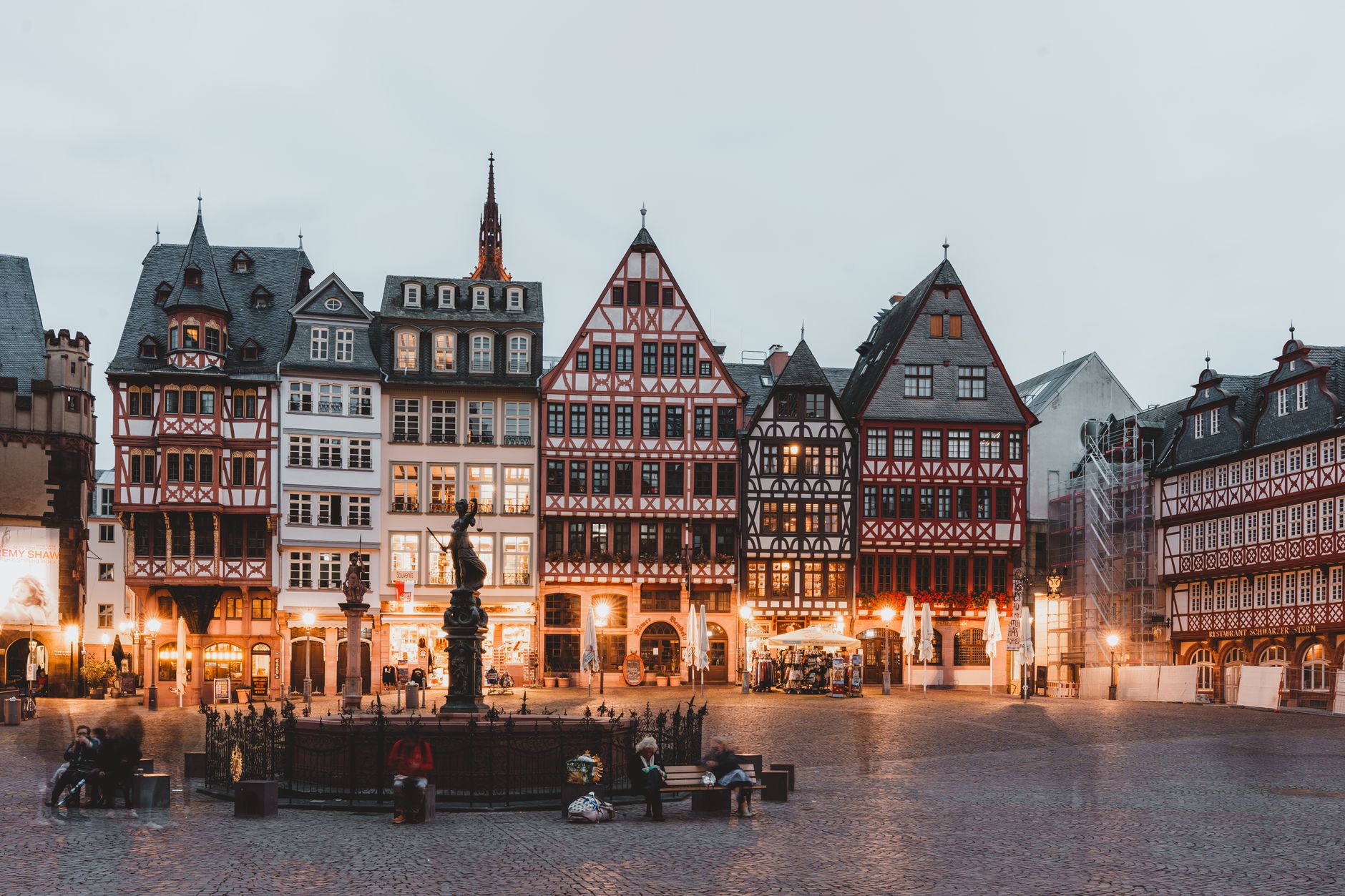
Frankfurt Old Town & Römer: A Historic Walk
A walking route through Frankfurt's old town with fixed stops: the Römerberg, the Römer, the Kaiserdom, the New Old Town, the Paulskirche, the Kleinmarkthalle and the Eiserner Steg — with history, walking times and honest tips from a local.
Katharina Vogt16 June 2026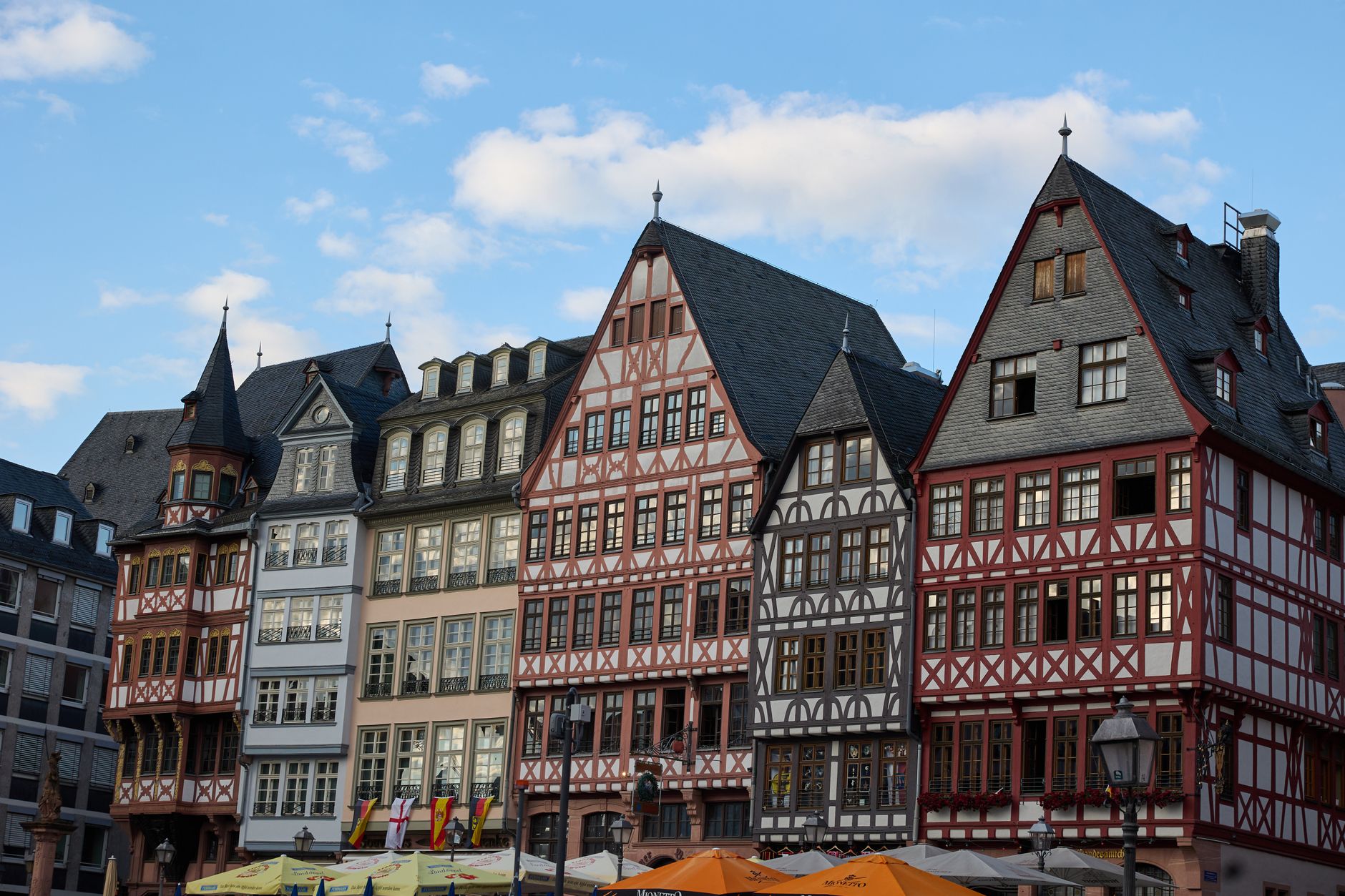
Attractions
Paulskirche Frankfurt: Cradle of German Democracy, the Peace Prize and What to See Inside
Frankfurt's Paulskirche (St Paul's Church), where Germany's first freely elected parliament sat in 1848–49: the foyer, the assembly hall and Grützke's mural, opening hours (daily 10am–5pm, free), the 2026 Peace Prize for Philippe Sands, and where the refurbishment and House of Democracy really stand.
Katharina Vogt25 September 2026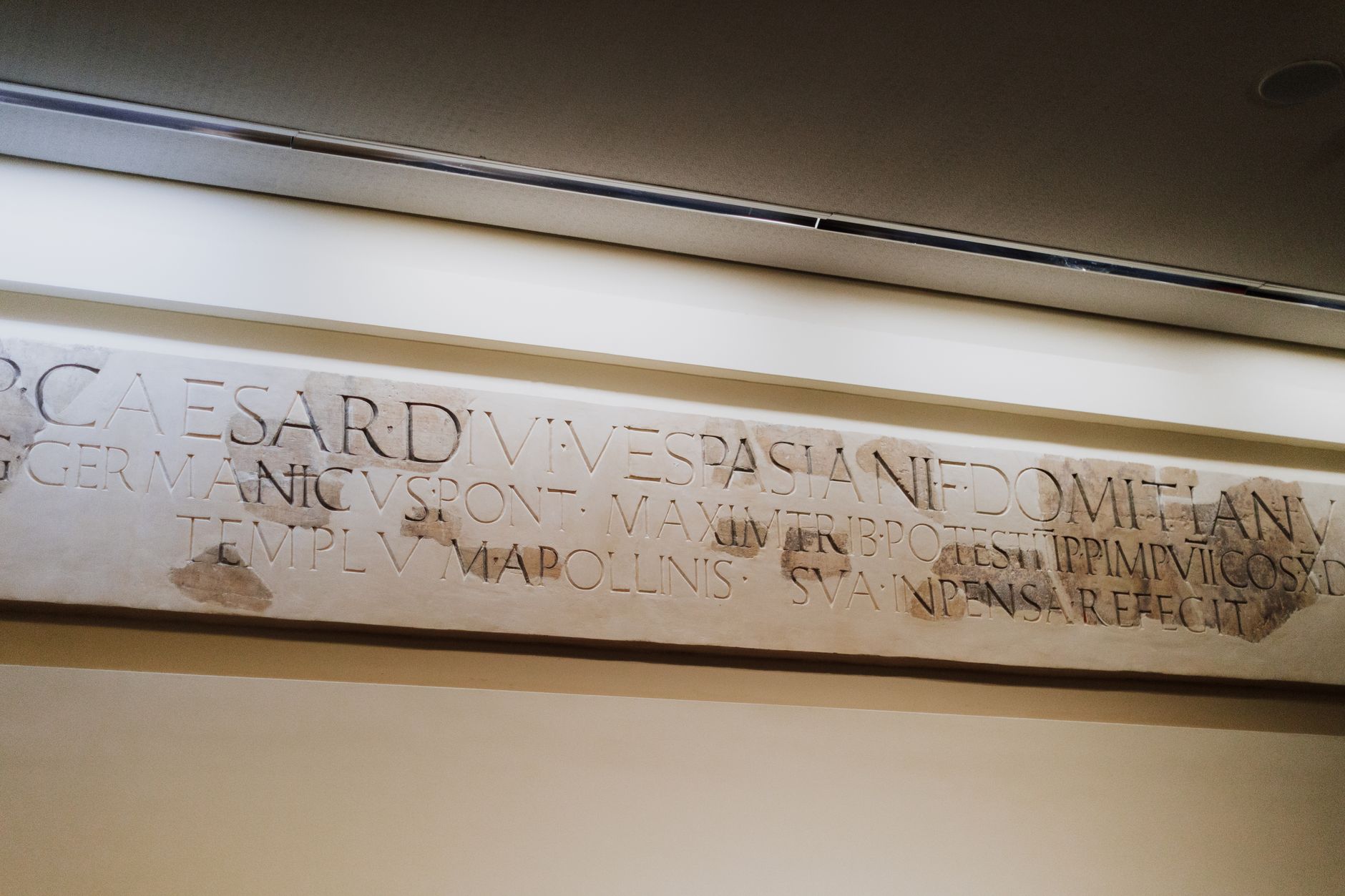
Attractions
Archaeological Museum Frankfurt: Tickets, Highlights & Tips
The Archaeological Museum Frankfurt inside the Gothic Carmelite church: Roman finds from NIDA, Mithras reliefs, the Ratgeb frescoes, the Silver Inscription — plus current prices, opening hours and tips from a local.
Katharina Vogt28 June 2026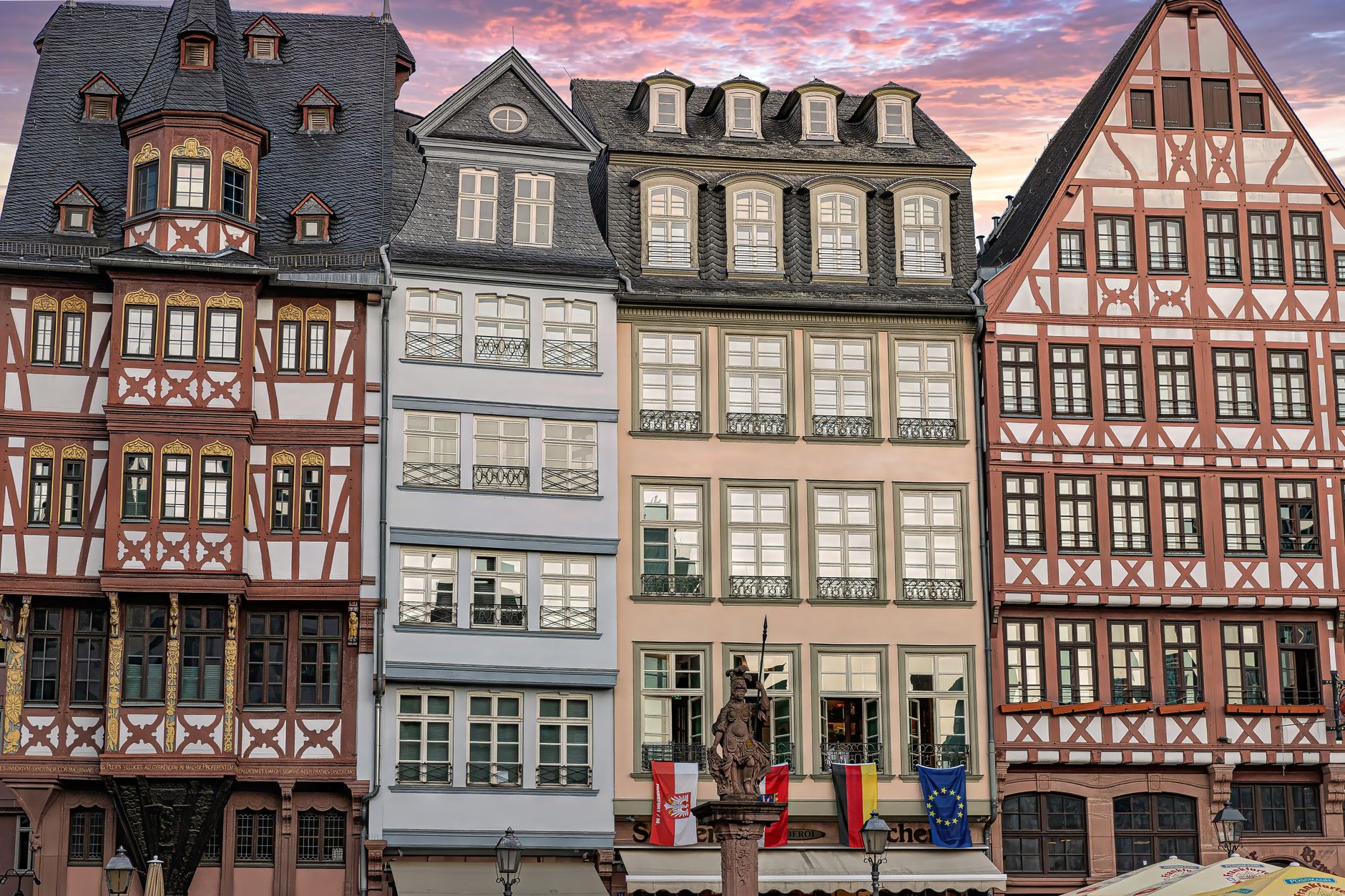
Attractions
Historical Museum Frankfurt: Saalhof, Highlights & Tickets
The Historical Museum Frankfurt at the Saalhof: the Staufer-era old building and the 2017 new building, the Treuner brothers' old-town model, the Snow Globe, the Young Museum, plus current prices and opening hours (as of 2026).
Katharina Vogt20 June 2026