Höchst Old Town Frankfurt: Timber-Framing, Castle & Justinus Church
Just over ten minutes by S-Bahn — and you're standing in the one Frankfurt old town that didn't burn in 1944: a Carolingian church, a castle on the Main, a Baroque palace and crooked timber-framed lanes.

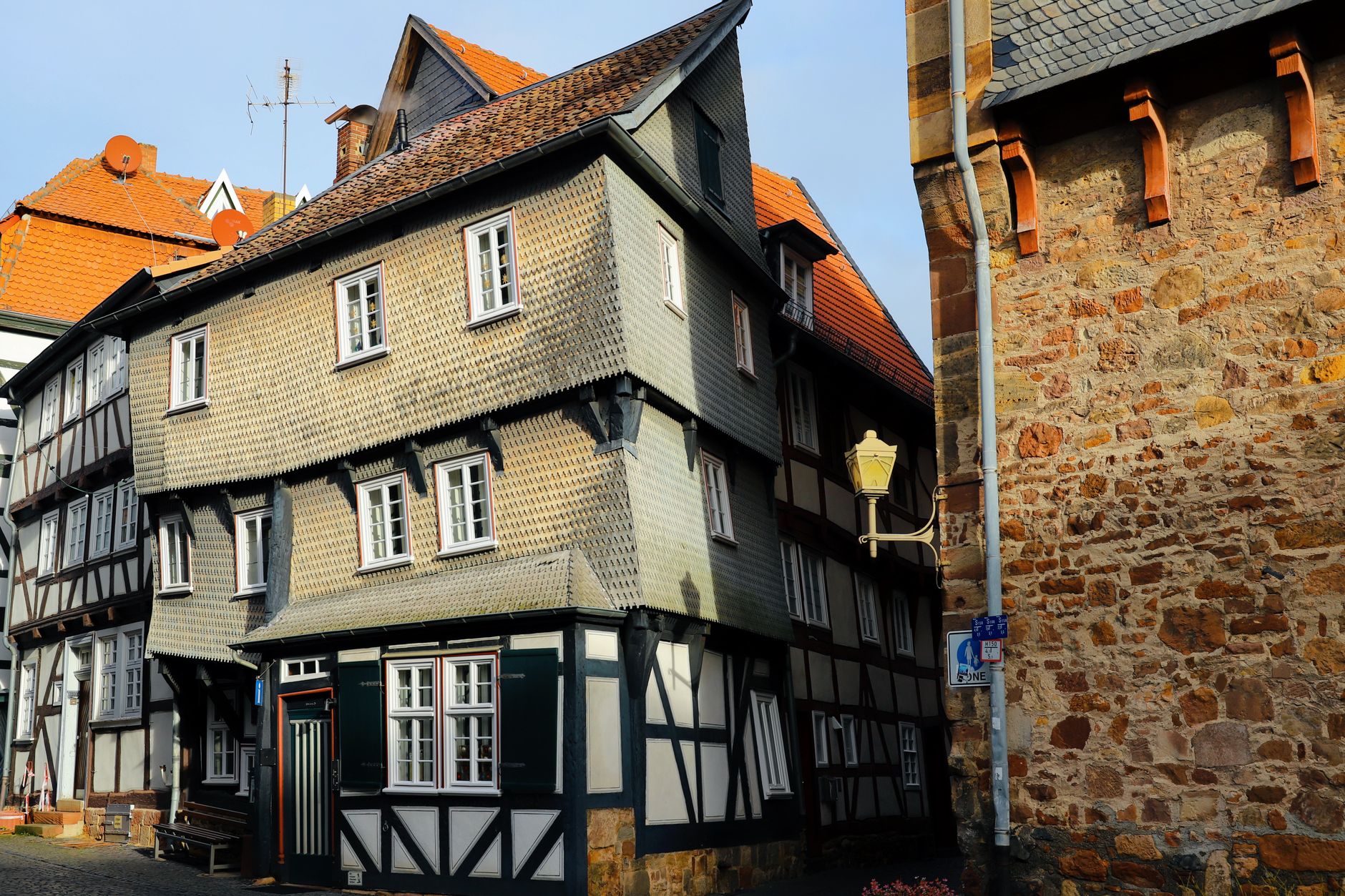
When visitors ask me where to find a real old town in Frankfurt, I have to pause. Because the famous old town around the Römer, lovely as it is, was wiped out in a single night in March 1944 and partly rebuilt afterwards. If you want to see an old town that never stopped existing, you have to leave the centre — head west, to the far end of the city. There, where the Main swings in a wide bend, lies Höchst: an independent town until 1928, today a Frankfurt district, and home to the largest self-contained old-town core the city possesses. I go several times a year, often just for an afternoon, and every time I’m amazed how few travellers to Frankfurt have it on their list.
An independent town at Frankfurt’s gates
Höchst has a longer municipal history than many people realise. Emperor Charles IV granted it town rights in 1355, with market rights following a year later. For centuries Höchst belonged to Electoral Mainz — it was the archbishop’s, not Frankfurt’s — two rival powers separated by just a few kilometres of river. Only on 1 April 1928 was the hitherto independent town of Höchst am Main incorporated into Frankfurt, chiefly to merge the great chemical works into what became I.G. Farben. You can still feel that long independence today: Höchst has its own centre, its own self-assurance and, above all, its own old town.
That this old town still stands at all borders on a miracle. While Frankfurt’s inner city burned almost completely in the bombing war, Alt-Höchst got off lightly — only a handful of houses were destroyed in a raid in 1940. So a whole historic quarter survived intact, not as a stage set but as an organically grown place. In 1972 the city placed the entire old town under heritage protection. If you like comparing the city’s different faces anyway, it’s worth a look at my overview of Frankfurt’s districts — Höchst is the proof that Frankfurt is far more than banking towers.
The Justinus Church: 1,200 years above the Main
Start with the oldest building in the city — and it doesn’t stand at the Römer, but here in Höchst. The Justinus Church is a Carolingian basilica whose core, on current research, dates from around the year 850; a dendrochronological study puts the timber at “850, give or take eight years”. It was consecrated in the mid-9th century, tradition says by Hrabanus Maurus, Archbishop of Mainz and one of the most learned men of his age. That makes the Justinus Church not only the oldest surviving building in Frankfurt but one of the oldest churches in Germany altogether — in continuous use for around 1,200 years.
What makes the interior so special are the columns: a three-aisled, six-bay basilica whose round columns are crowned by Corinthianising capitals. These capitals rank among the most important works of Carolingian stone sculpture north of the Alps — you really are standing before masonry from the era of Charlemagne and his successors. Some six centuries later, from 1441, the Antonite order added a high-Gothic choir with seven tracery windows; the master builder was Steffan von Irlebach. So two worlds meet under one roof: the heavy, clear Carolingian age and the delicate late Gothic.
A detail I like to share with visitors: the church takes its name from Saint Justinus, yet when his relics were carried off in 1298, Saint Margaret of Antioch was chosen as the new patron. The old name stuck all the same — a small proof of how stubbornly habits hold on across the centuries. The church is also a wonderful concert venue; check the opening and concert dates before you set off, as the interior isn’t open continuously.
Höchst Castle and the Schlossplatz
Just a few steps on, right above the water, stands Höchst Castle. It was once the seat of Electoral Mainz officials; after the end of the Mainz diocesan feud, the deposed Archbishop Diether von Isenburg took up quarters here in 1463. The massive tower, some 50 metres high, gives away the building history at a glance: its core is a Gothic keep, crowned by a Baroque cupola from 1681. The imposing gatehouse with its column orders and the Renaissance range beside it are largely from the late 16th century — the Old Castle in its present form was built in 1586.
The castle is heritage-protected today and used for cultural events; you won’t find freely accessible exhibitions everywhere inside, but you will find concerts and festivals throughout the year. Freely accessible — and to my mind the loveliest part — is the Schlossplatz in front of it in any case: a small, cobbled stage on the river from which you look out over the Main. One charming tradition has survived at the tower: at Christmas, trumpeters have played from up there since the 16th century. Sit on the steps for a moment, watch the excursion boats go by, and you’ll understand why the people of Höchst are so fond of their spot by the water.
The Bolongaro Palace: Baroque, tobacco and Napoleon’s last night
Perhaps the most surprising building in Höchst is neither church nor castle, but a palace two Italian merchants had built. The brothers Josef Maria Markus and Jakob Philipp Bolongaro came from Stresa on Lago Maggiore and had built up Europe’s then-largest snuff-tobacco factory in Frankfurt from 1735. Between 1772 and 1774 they had an enormous Baroque palace raised in Höchst: a horseshoe-shaped building with a street front around 117 metres long, 240 rooms and terraced gardens that once reached down to the Main. For a district otherwise made of timber-framing and sandstone, this Italian splendour is a genuine outlier — and the reason the old town’s main street is still called Bolongarostraße.
Its most famous night came in the autumn of 1813. After the lost Battle of Leipzig, Napoleon spent the night of 1–2 November here — his last on what was then German soil — before withdrawing across the Rhine into France. Today the Bolongaro Palace houses the Höchst district administration and a registry office. An honest note for 2026: the palace has been undergoing extensive restoration since 2017, and the works are set to run for some years yet. So reckon with scaffolding and limited access — though the street front hints at the scale even from outside.
Porcelain from Höchst
Höchst is a name in the world of porcelain, too. The Höchst Porcelain Manufactory was founded here in 1746 — after Meissen, the second-oldest porcelain works in Germany and the only one in Hesse. The first good firings succeeded as early as 1750; the manufactory became famous above all for its fine Rococo figurines and for its mark, the Mainz wheel. The first enterprise went bankrupt in 1796, but the tradition was revived in 1947. If delicate figurines and tableware are your thing, pay a visit to the porcelain museum in Höchst — it tells the story of this manufactory on the very spot, only a few lanes from the Justinus Church.
Through the timber-framed lanes
As worthwhile as the great monuments are, the real magic of Höchst lies in the wandering. The old town still follows its medieval street plan, and many houses date from after the great town fire of 1586. Between Königsteiner Straße, Melchiorstraße and the river, narrow, gently sloping lanes press together, gabled timber facades leaning over the cobbles. Take your time, turn off at random, look at the detail: carved beams, crooked rows of windows, small courtyards. Unlike many spruced-up old towns, nothing here feels staged for tourists, because it never had to be rebuilt.
Around the Schlossplatz and Bolongarostraße you’ll find cafés, small shops and taverns for a break. Höchst is no open-air museum but a lived-in quarter — and that’s exactly its appeal. For anyone who loves these quieter sides of the city, I’ve gathered more ideas in my Frankfurt hidden gems; Höchst is, for me, one of the most rewarding of them.
By the Main: the ferry to Schwanheim
Höchst and the Main belong together. There has been a ferry crossing at this spot since the 17th century; today a small passenger-and-cycle ferry takes you to the south bank at Schwanheim. For me it’s one of the loveliest short outings in the whole city: chug across, walk through the meadows on the far side towards the Schwanheimer Düne — real inland sand dunes in the middle of the Rhine-Main region — and come back later. The ferry runs seasonally and weather-permitting, mostly in the summer half of the year, so a glance at the current times before you set off does no harm.
The Höchst Schlossfest
If you can time your visit, aim for the Höchst Schlossfest. It has been held every summer since 1957, runs for around four weeks from mid-June and turns the castle, the Schlossplatz and the old town into one big cultural stage: theatre, concerts, readings and, to close, fireworks over the Main. It’s a likeably unhurried neighbourhood festival with a long tradition, a world away from the din of big funfairs. Visit the old town outside those weeks and you’ll have more peace instead — both have their charm.
How to get there
Getting there is straightforward, and I strongly recommend the train. Frankfurt-Höchst station is the city’s second-largest and the transport hub of Frankfurt’s west. From the main station, S-Bahn lines S1 (towards Wiesbaden) and S2 (towards Niedernhausen) bring you here in just over ten minutes; from Hauptwache in the centre it’s about a quarter of an hour. Numerous regional trains stop in Höchst too. From the station it’s roughly a ten-minute walk down into the old town towards the Main. I’d advise against the car: the narrow lanes are for strolling, not for hunting parking spaces — and you’ll be quicker by S-Bahn anyway.
My afternoon in Höchst
If you ask me for the ideal order: get off at Höchst station and walk down to the Justinus Church — the oldest thing first, while you’re still fresh. On to the castle, a few minutes on the steps of the Schlossplatz, taking in the view over the Main. Then drift through the timber-framed lanes, past the Bolongaro Palace, with a detour to the porcelain. If you like, finish by taking the ferry over to Schwanheim and back before a coffee in one of the cafés on Bolongarostraße. Half a day is comfortably enough for all this; dawdle, and you’ll happily fill a whole one.
Höchst is, for me, the best proof that people underrate Frankfurt as long as they know only the skyline. Here stand the city’s oldest church, a castle on the river and a palace where Napoleon spent the night — and around them a timber-framed quarter that is genuine precisely because it survived the war. Take the S-Bahn, take your time, and you’ll discover a Frankfurt that feels centuries older than the rest of the city.
Keep reading
Attractions
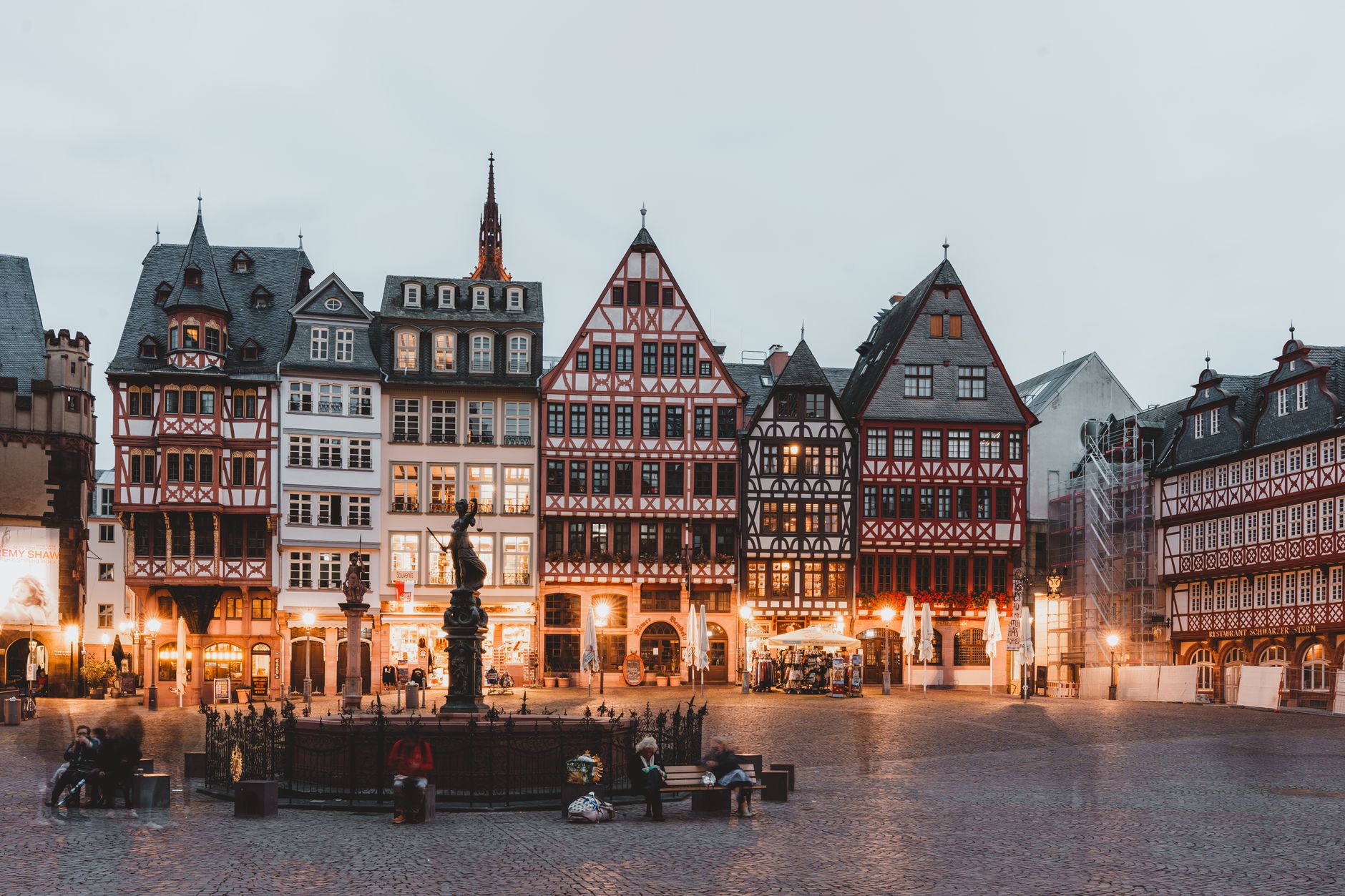
Frankfurt Old Town & Römer: A Historic Walk
A walking route through Frankfurt's old town with fixed stops: the Römerberg, the Römer, the Kaiserdom, the New Old Town, the Paulskirche, the Kleinmarkthalle and the Eiserner Steg — with history, walking times and honest tips from a local.
Katharina Vogt16 June 2026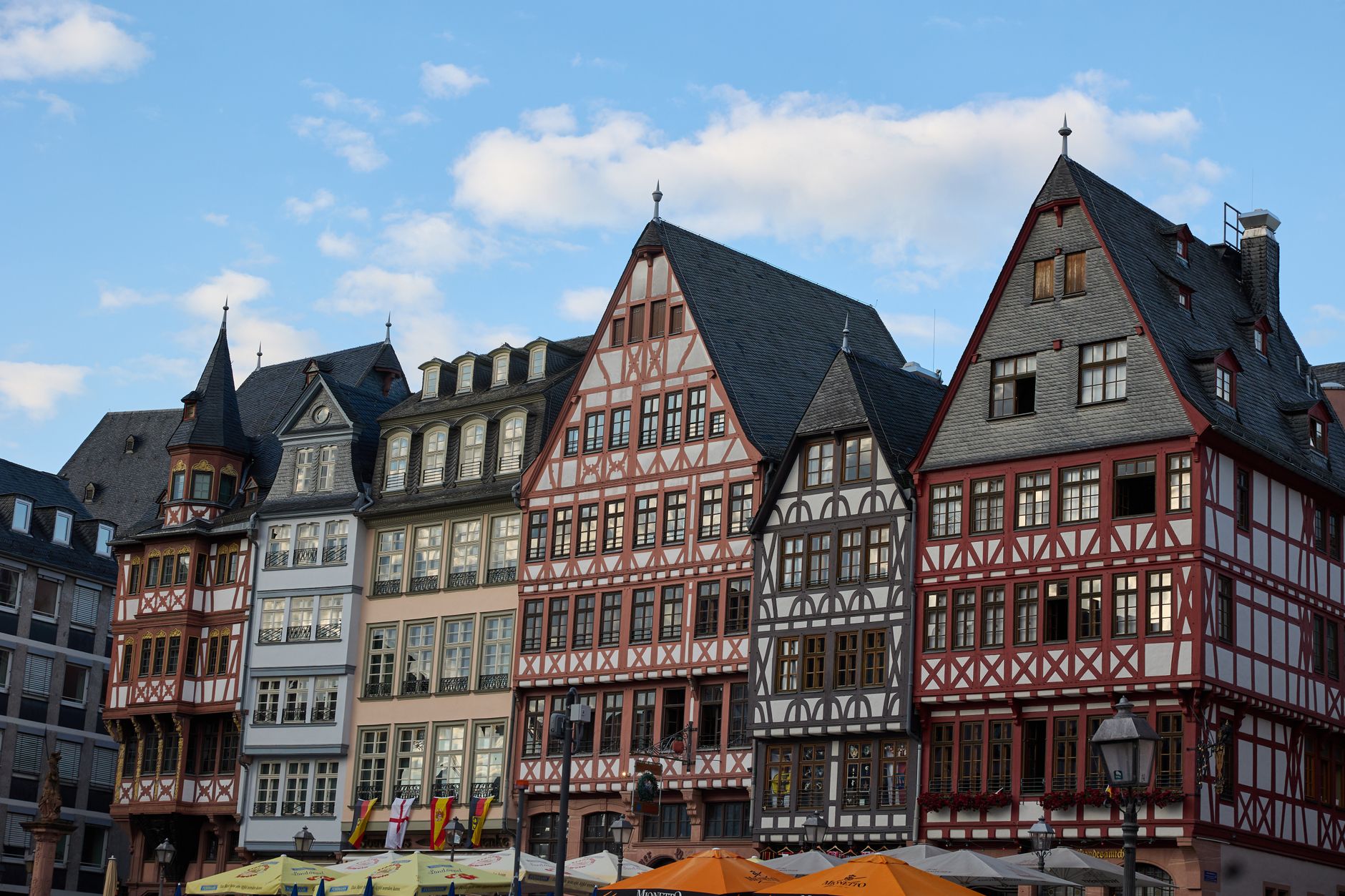
Attractions
Frankfurt's New Old Town: Dom-Römer Quarter, History & Walk
Frankfurt's New Old Town between the cathedral and the Römer: the history of the Dom-Römer project, the Golden Scales, the Hühnermarkt, the coronation route — and my walking tour of the quarter.
Katharina Vogt21 June 2026
Attractions
Porcelain Museum Frankfurt: Höchst Porcelain at the Kronberger Haus
Höchst porcelain in Frankfurt: the story of the manufactory founded in 1746, the Mainz wheel mark, the Rococo figurines — and where to see the collection at the Kronberger Haus in Höchst.
Katharina Vogt21 July 2026
Attractions
Archaeological Museum Frankfurt: Tickets, Highlights & Tips
The Archaeological Museum Frankfurt inside the Gothic Carmelite church: Roman finds from NIDA, Mithras reliefs, the Ratgeb frescoes, the Silver Inscription — plus current prices, opening hours and tips from a local.
Katharina Vogt28 June 2026