Archaeological Museum Frankfurt: Tickets, Highlights & Tips
From Celtic burial mounds and the Roman town of NIDA to one of the oldest testimonies of Christianity north of the Alps — all beneath the vaults of a Gothic monastery church in the heart of the old town.

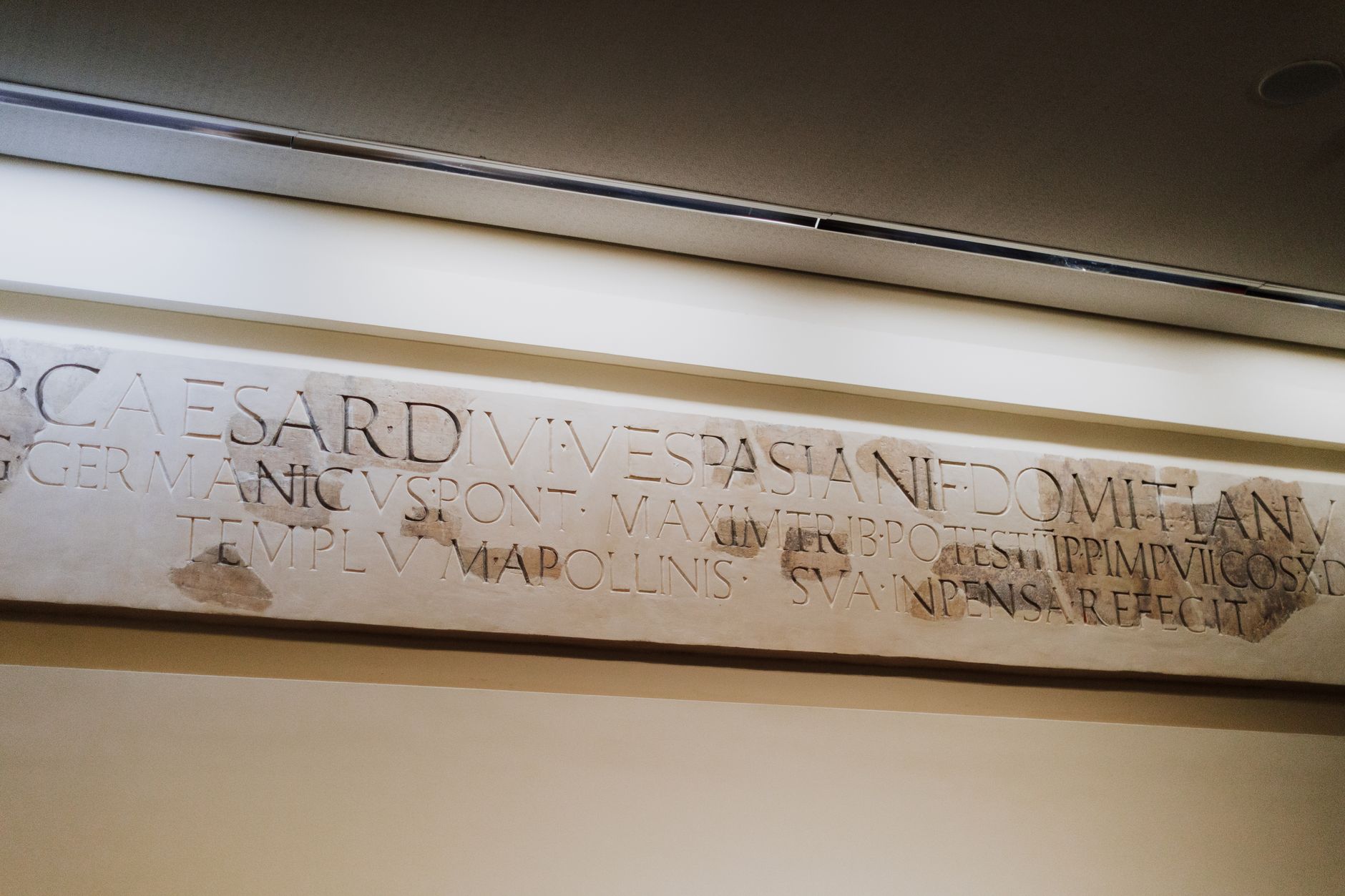
There are museums in Frankfurt you visit with a plan and a pre-booked ticket — and then there is the Archaeological Museum, where I simply wander in on a grey afternoon when I need an hour of quiet. The moment you step through the door on Karmelitergasse, you find yourself standing inside a Gothic monastery church: high vaults, soft light, and beneath them Roman gravestones, Celtic jewellery and display cases that bridge millennia without effort. Few places in this city of glass and steel tell you so casually how old Frankfurt really is — and almost every time, I have the room to myself with surprisingly few other visitors.
A monastery turned museum
The setting alone is half the pleasure. The museum resides in the former Carmelite Monastery (Karmeliterkloster) at Karmelitergasse 1, one of the best-preserved monastic complexes in Frankfurt’s old town. The late-Gothic church, where the Carmelite friars once celebrated Mass, is now the central exhibition hall: the great stone monuments stand beneath the high vaults, and the sheer height of the space lends even a weathered gravestone something solemn. After secularisation in the early 19th century the monastery lost its religious purpose; today the Archaeological Museum and the Institute for City History (Institut für Stadtgeschichte) share the sprawling complex of church, cloister and convent buildings.
This blend of ancient walls and ancient finds is exactly what makes a visit special: you immerse yourself in the past not only through the objects, but literally by standing in a medieval room. If you have only known Frankfurt as a banking city, this is the antidote — one of those quiet places I happily recommend to outsiders as a genuine hidden gem.
The Ratgeb frescoes in the cloister
Before you turn to the display cases, do look into the cloister — it hides one of Frankfurt’s great artistic treasures, one that a surprising number of locals have never seen. Between 1515 and 1520 the painter Jörg Ratgeb covered the cloister walls with around 40 scenes of Christian salvation history, from the creation of the world through Christ’s birth and death to the Last Judgement. The cycle originally ran to some 150 metres in length and covered around 540 square metres of wall — to this day it counts among the largest painted cycles north of the Alps. In the adjoining refectory, the friars’ dining hall, Ratgeb painted a further 110-odd square metres with the history of the Carmelite order and the Old Testament prophets Elijah and Elisha.
Ratgeb did not work in true fresco but al secco, in casein tempera on the dry wall — striking, but fragile. Only part of the original cycle survives today; the bombing of the Second World War tore heavy gaps into it, and what you see is the fruit of painstaking restoration. The painter himself came to a dramatic end: Ratgeb joined the insurgents in the German Peasants’ War and was executed in 1526. Against that background, the faded colours in the silent cloister feel all the more affecting. The cloister belongs to the shared monastery complex, so plan it deliberately into your route and, if in doubt, ask at reception how best to reach it.
NIDA — Frankfurt’s forgotten Roman town
The heart of the collection, for me, is the Roman material. Where the northern districts of Heddernheim and Praunheim now stand, from the 1st to the 3rd century AD there rose NIDA, the capital of the Roman Civitas Taunensium — a proper town of several thousand inhabitants, with streets, baths, temples and pottery workshops, far up on the frontier of the Roman Empire. Above ground almost nothing of ancient NIDA remains; the 20th-century housing estates grew straight over the ruins. But what archaeologists lifted from the soil fills whole halls here: everyday tableware, tools, jewellery, votive stones and sculpture.
Of international importance are the finds from no fewer than four Mithras sanctuaries at NIDA. The cult of Mithras, a mystery religion of eastern origin, was especially popular among Roman soldiers; its intricate reliefs typically show the god Mithras slaying the bull inside a cave. That a single provincial town should have left behind several such cult images is, among specialists, a minor sensation. For children the Romans are almost always the most exciting part of the tour anyway — here the frontier town at the edge of the empire suddenly becomes tangible, through objects that people held in their hands 1,800 years ago.
A silver amulet that touches world history
One find deserves particular attention: the Frankfurt Silver Inscription (Frankfurter Silberinschrift). Archaeologists discovered it in 2018 in a Roman cemetery on Heilmannstraße in Frankfurt-Praunheim, on the north-western edge of former NIDA. It is a silver capsule just 3.5 centimetres long, holding a wafer-thin, badly damaged sheet of silver foil inscribed with 18 lines of Latin. From the grave goods, the burial can be dated to roughly 230 to 260 AD.
The remarkable part: the text was long considered unreadable. Only in spring 2024, using high-resolution computed tomography at the Leibniz Centre for Archaeology in Mainz, could the crumpled foil be virtually unrolled and deciphered. Its purely Christian content makes the amulet one of the earliest material testimonies of Christianity north of the Alps — considerably older than comparable finds previously known from north of the Alps. Since December 2024 the Silver Inscription has been on show in the museum’s permanent exhibition. To stand before this unassuming, thimble-sized object and know the story locked inside it is, for me, one of the most powerful moments in the whole building.
From the Stone Age to the Celts
Chronologically the collection begins long before the Romans: the timeline stretches from the Neolithic to the early modern period. Among the regional highlights are the finds from the Bronze- and Iron-Age burial mounds in the Frankfurt Stadtwald — the large city forest to the south that most people today know only as a place to walk and unwind. The jewellery, weapons and vessels from these graves show that Celtic peoples were settling, trading and elaborately burying their dead here long before the Romans arrived. It is precisely these modest everyday and grave objects that make the region’s earliest era so concretely graspable.
Classical antiquity and the Ancient Near East
Despite its name, the museum does not stop at the region. A separate department is devoted to Classical Antiquity and the Ancient Near East, broadening the view far beyond Frankfurt: objects from the early Italy of the Etruscans and Latins, from ancient Greece and Cyprus, and Old Iranian miniature art make plain how closely the cultures of the Mediterranean and the Near East were interwoven. These cases are quieter and are overlooked by many visitors — all the more reason to give them a few minutes.
Opening hours and admission (as of 2026)
The museum is open Tuesday from 10 a.m. to 6 p.m., Wednesday with extended hours until 8 p.m., and Thursday to Sunday again from 10 a.m. to 6 p.m. Mondays it is closed. The long Wednesday is my favourite: after work you have the church space to yourself even more calmly than during the day. Times can differ on public holidays — a quick look at archaeologisches-museum-frankfurt.de before you set off never hurts.
On admission the house stays pleasingly down to earth (as of 2026):
- Adults: €8
- Reduced: €4
- Children and young people under 18: free
- Every last Saturday of the month: free entry as part of the city’s “Satourday” scheme (certain months such as August and December are excluded)
That under-18s get in entirely free makes the museum one of the most affordable family destinations in the old town. And if you catch the last Saturday of the month, you pay nothing at all — by far the best day for a first visit. Allow one to two hours for a good tour; if the Romans grab you, you’ll happily stay longer.
How to get there
The museum sits in the middle of the old town, just a few steps from the river Main. The easiest way to arrive is by tram: lines 11, 12 and 14 stop right at Karmeliterkloster (Kornmarkt). By U-Bahn, get off at Willy-Brandt-Platz (U1–U5, U8) or at Dom/Römer (U4, U5) and walk a few minutes from there. I’d advise against the car in the old town — parking is expensive and scarce, and tram or U-Bahn will get you there faster and more calmly.
My suggestion for half a day
When visitors ask me how best to combine the museum with the rest of the old town, I recommend this order: start at the Archaeological Museum in the morning, while both your mind and the church space are still fresh — first the cloister with the Ratgeb frescoes, then NIDA, then the Silver Inscription. From there it is only a short walk to the cathedral and the Römerberg; if you like, tack on a proper walk through the old town. And if you still fancy museums afterwards, the great museum mile — the Museumsufer — lies along the far bank of the Main, loud and grand and utterly different from this quiet monastery.
It is precisely that contrast that keeps drawing me back: the Archaeological Museum never shouts for attention. It pairs significant finds — from the Celts through the Roman town of NIDA to an amulet that rewrites the early history of Christianity — with one of the most beautiful historic spaces in the city. Come on the last Saturday of the month if you can, take your time over the monastery church, and you’ll understand just how deep this city’s roots really reach.
Keep reading
Attractions
Historical Museum Frankfurt: Saalhof, Highlights & Tickets
The Historical Museum Frankfurt at the Saalhof: the Staufer-era old building and the 2017 new building, the Treuner brothers' old-town model, the Snow Globe, the Young Museum, plus current prices and opening hours (as of 2026).
Katharina Vogt20 June 2026
Attractions
Caricatura Museum Frankfurt: Comic Art on the Weckmarkt
Cartoons, caricatures and the New Frankfurt School inside the medieval Leinwandhaus: opening hours, admission (€8/€4), highlights and tips for your visit to the Caricatura Museum Frankfurt.
Katharina Vogt25 June 2026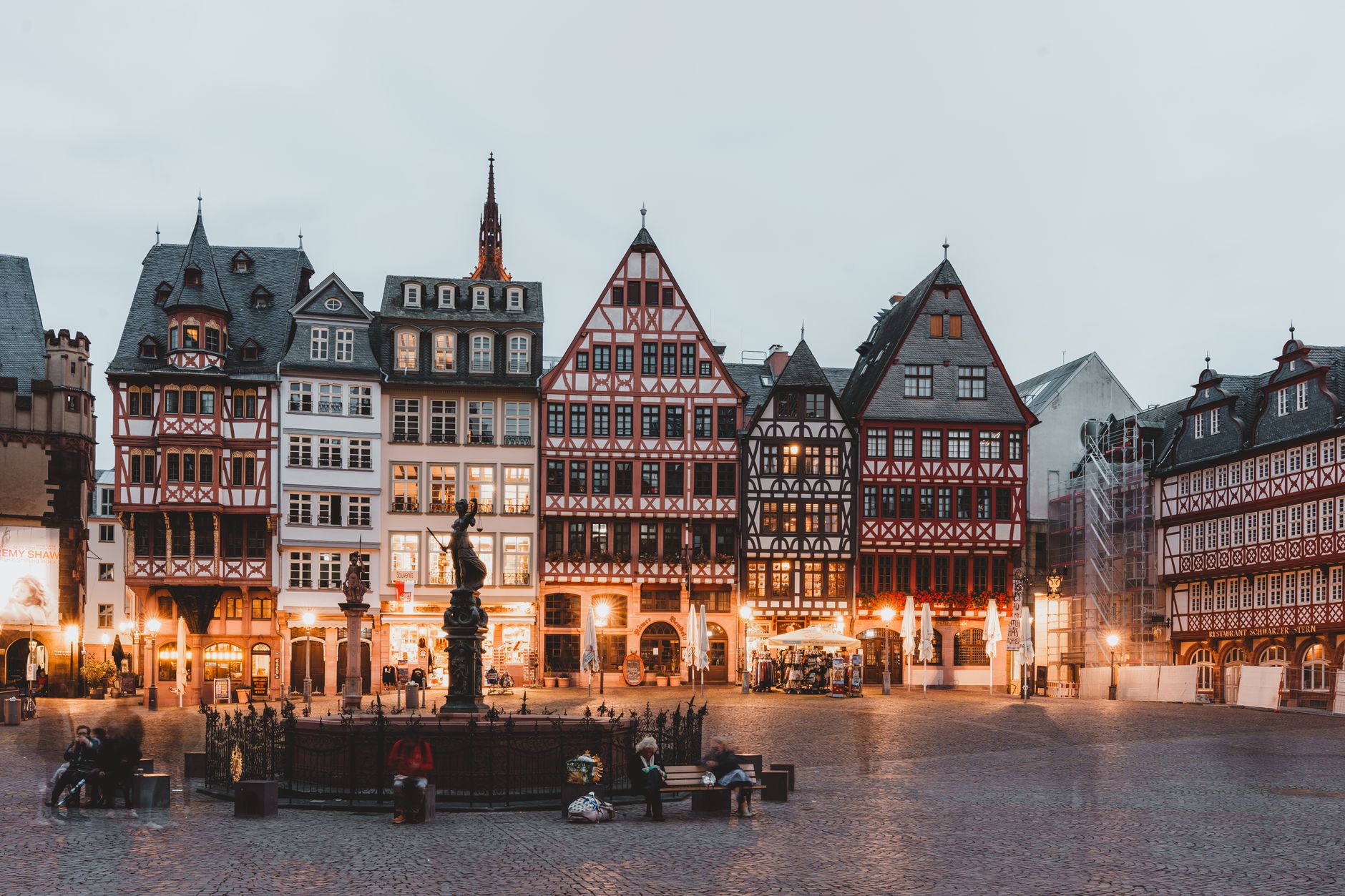
Attractions
Frankfurt Old Town & Römer: A Historic Walk
A walking route through Frankfurt's old town with fixed stops: the Römerberg, the Römer, the Kaiserdom, the New Old Town, the Paulskirche, the Kleinmarkthalle and the Eiserner Steg — with history, walking times and honest tips from a local.
Katharina Vogt16 June 2026
Attractions
Palmengarten Frankfurt: Tickets, Highlights & Tips
Everything for your visit to the Palmengarten in Frankfurt: current admission prices, opening hours, the loveliest glasshouses and exhibitions, plus practical tips from a local.
Katharina Vogt16 June 2026