Frankfurt Districts: The Big Overview
46 districts, 16 boroughs — but Frankfurters think in neighbourhoods. A guide to ten quarters that make the city, from the elegant Westend to the raw Bahnhofsviertel.

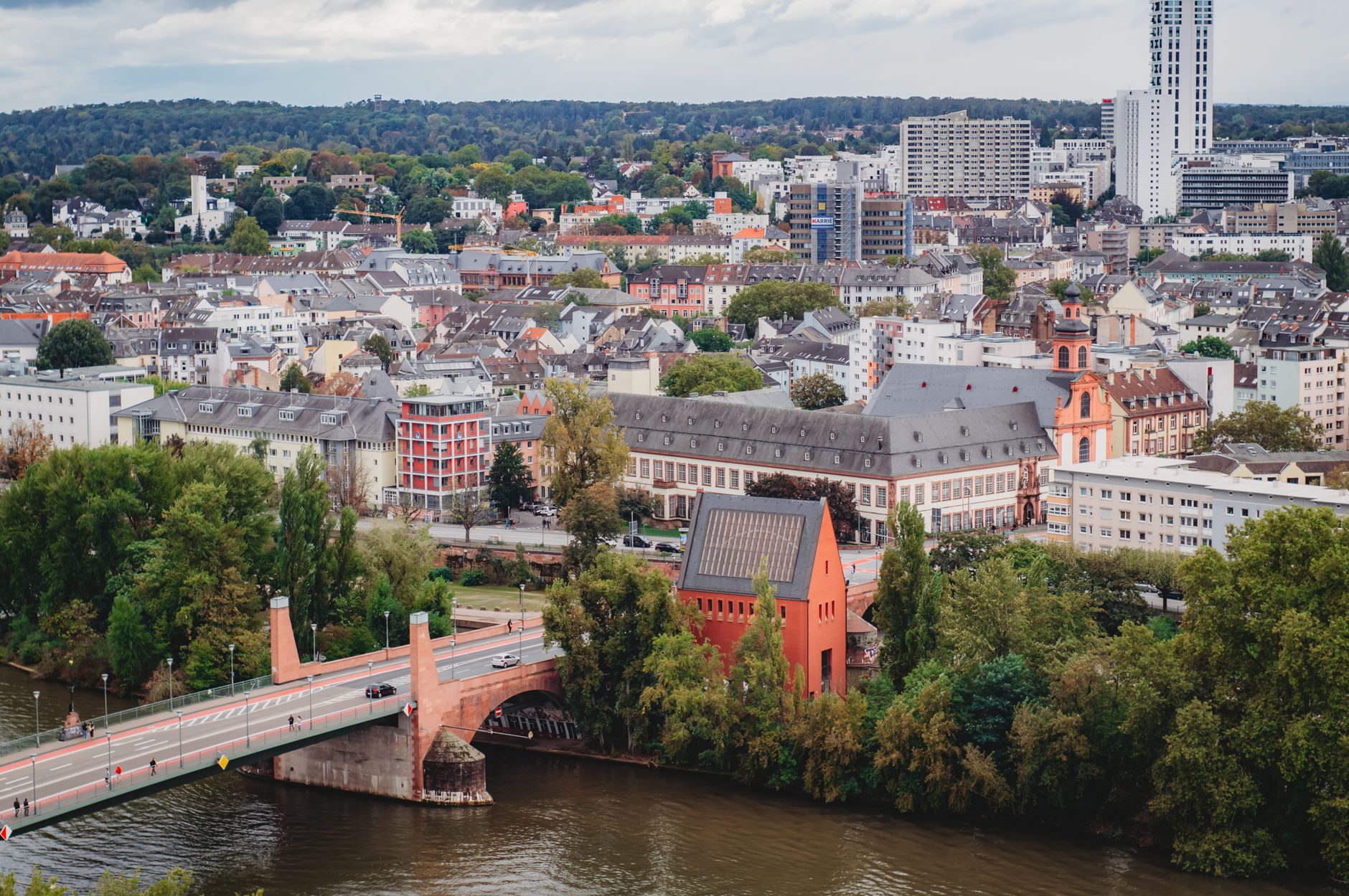
Outsiders love to underestimate Frankfurt. They glimpse the skyline from the train window, think of banks, the trade fair and the airport — and never suspect how differently the city feels the moment you leave the towers behind. Frankfurt is compact but anything but uniform: crammed into a small area are quarters that could hardly be more different. Barely ten minutes on foot separate the grand Westend from the raw Bahnhofsviertel, yet they are two worlds apart. Officially the city is divided into 16 boroughs (Ortsbezirke) and around 46 districts (Stadtteile), but no local would ever say they live in “Borough 3”. We think in neighbourhoods. And it’s those neighbourhoods this guide is about: their character, their landmark, and the question of who would enjoy a visit — or a night’s stay.
One orientation tip first: the river Main splits the city in two. Long-standing residents call everything north of it “hibbdebach” in dialect, and everything to the south “dribbdebach”. The south bank consists essentially of a single large district, Sachsenhausen; almost everything else visitors mean lies north of the river. And because the central quarters sit so close together, you can hop from one to the next in minutes by U- and S-Bahn — though walking is often the nicer option anyway.
Old town and city centre: the historic and commercial heart
This is where the tourist pulse beats. Around the Römerberg square — with its famous “Römer” city hall and stepped gable, the reconstructed Ostzeile row of half-timbered houses and the Kaiserdom, where the Holy Roman Emperors were once crowned — lies the actual old town. Since 2018 the reconstructed DomRömer quarter, with its cosy Hühnermarkt, has closed the gap between the Römer and the cathedral: a stroll through narrow lanes as they were before the destruction of 1944. A few steps away stands the Paulskirche (St Paul’s Church), regarded as the cradle of German democracy as the seat of the 1848 National Assembly.
Right alongside is the city centre, and that is above all one thing: a shopping district. The Zeil is among Germany’s highest-turnover shopping streets — car-free and always busy — while the MyZeil mall catches the eye at once with its spectacular, funnel-shaped glass façade. Everyday life pulses between its two end points, Hauptwache and Konstablerwache; at the latter a producers’ market is held on Thursdays and Saturdays, apple wine served at a stand-up counter included. My tip for escaping the crowds is the Kleinmarkthalle on Hasengasse, Frankfurt’s covered belly, with stalls from handmade sausage to Italian delicacies. If you’re set on shopping, the Zeil and the nearby Skyline Plaza put almost everything under one roof — I’ve written a separate shopping guide for that. Few people actually live in the old town; it’s a stage, not a bedroom.
Bahnhofsviertel: raw, hip and wide awake
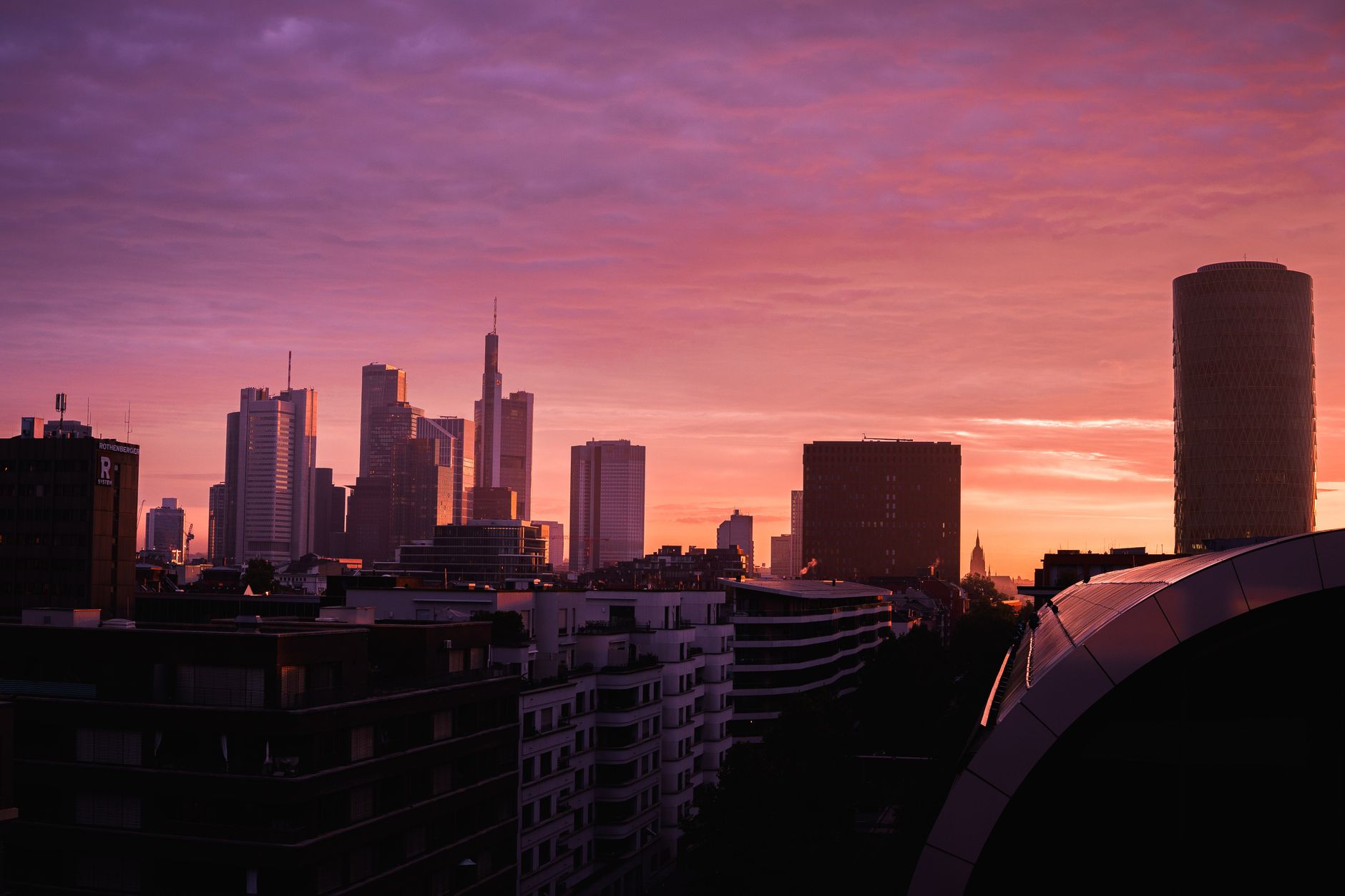
The Bahnhofsviertel between the main station and the banking district is Frankfurt’s most contradictory quarter. On one hand a visible drug and red-light scene on some streets around Elbestraße and Moselstraße; on the other, one of the most exciting nightlife scenes in the city. Along Kaiserstraße and in the side streets, bar follows restaurant today: Korean, Ethiopian, Turkish of course, plus cocktail bars and corner kiosks such as the legendary “Yok Yok”. Once a year the whole quarter celebrates itself at the Bahnhofsviertelnacht. A little fun fact: the main station is, strictly speaking, not in the Bahnhofsviertel at all but in the neighbouring Gallus. If you want nightlife, good food and a bit of big-city edge, you’ll be in your element here — if you’re after peace or a tranquil midnight stroll, less so.
Westend: elegant, green and grand
The Westend is Frankfurt’s smart address: magnificent Gründerzeit villas, wide tree-lined streets and some of the most expensive residential areas in the city. And yet it isn’t a stiff quarter, because several green oases sit right on the doorstep — above all the Palmengarten, Germany’s largest botanical garden of its kind, plus the sprawling Grüneburgpark and the adjoining Botanical Garden. Youthful life comes from Goethe University’s Westend campus, housed in the monumental IG Farben Building (the Poelzig building) of 1930. At the southern edge, on Opernplatz, stands the Alte Oper, and the “Freßgass” tempts with delis and restaurants. If you value elegance, quiet and plenty of green — and like a morning jog among old trees — you’ll love the Westend.
Nordend: the most liveable residential quarter
When friends ask me where in Frankfurt you can live “like a local”, I almost always name the Nordend. It’s the most populous district, built up in the 19th century in the finest Gründerzeit manner, with avenues, boulevards and a varied streetscape. Life happens in the cafés — along the increasingly traffic-calmed Oeder Weg and the lower Berger Straße, for instance. On Friday evenings Friedberger Platz turns into an enormous meeting point as half of Frankfurt gathers for a glass of wine. For a breather there are the Günthersburgpark and the Bethmannpark with its hidden Chinese Garden. A quarter for anyone who doesn’t want to tick off sights but simply live alongside the locals.
Bornheim: “Bernem”, down-to-earth and lively
To the north-east lies Bornheim, affectionately called “Bernem” in dialect — with around 30,000 inhabitants one of the older districts and regularly voted Frankfurters’ favourite place to live. Its backbone is the upper stretch of Berger Straße, which has its cosy focal point at the Uhrtürmchen (little clock tower). Here traditional apple-wine taverns sit beside buzzy pubs, weekly market included (Wednesdays and Saturdays). Bornheim feels almost village-like and yet is thoroughly lively — a rare mix. If you’d like to go deeper, my portrait of Berger Straße in Bornheim has all the addresses. Ideal for anyone after pub evenings, weekly markets and a genuine neighbourhood feel.
Sachsenhausen: apple wine meets the Museumsufer
South of the Main lies Sachsenhausen, one of the oldest and best-known districts — and really two quarters in one. In narrow, cobbled Alt-Sachsenhausen the city’s national drink takes centre stage: in time-honoured taverns the tart apple wine is served from the Bembel (a grey stoneware jug), with Handkäs mit Musik and Grüne Soße (green sauce) alongside. A few streets away, on the elegant Schweizer Straße, people browse and dine well. And right on the riverbank stretches the Museumsufer, Frankfurt’s museum mile, with the Städel, the Liebieghaus, the film museum and many more — on the last weekend of August the city celebrates the huge Museumsuferfest here. For this many-layered quarter I have two detailed guides: one on apple wine, green sauce and museums in Sachsenhausen and one on the Museumsufer and the Städel. Perfect for anyone who wants to combine culture and tradition in a single day.
Ostend: on the rise, with the ECB and the zoo
The Ostend was long a working-class and industrial quarter, and today it’s among the fastest-changing. Its new landmark is the twin tower of the European Central Bank, built right on the Main on the site of the former wholesale market hall (Großmarkthalle). Next door, the Hafenpark with its well-known skate facilities invites you to linger. The real crowd-puller, though, is Frankfurt Zoo, founded in 1858 and thus one of the oldest zoos in Germany. In the evening, revellers head for Hanauer Landstraße with its clubs in old industrial halls. A quarter for anyone who wants to feel the change under way — and for families, all the more so.
Bockenheim: student and multicultural
Bockenheim is colourful, young and unpretentious. Around the old university campus, currently being redeveloped, a studenty, international atmosphere has held on for decades. Leipziger Straße is the shopping and living artery, with shops, snack bars and cafés from all over the world. Its landmark is the U-Bahn entrance at Bockenheimer Warte, where an oversized tram appears to be tipping out of the pavement — a popular photo spot. For culture there’s the Bockenheimer Depot, a former tram depot that is now a theatre and dance stage. A quarter for anyone on a smaller budget who values a multicultural mix and lively street life.
Gallus and the Europaviertel: the new Frankfurt
Hardly anywhere has Frankfurt changed so fast as here. The traditional working-class district of Gallus borders the Europaviertel, built entirely from scratch on the site of the former goods station. Along the ruler-straight Europa-Allee stand modern residential and office buildings, among them the Grand Tower, at around 172 metres the tallest residential high-rise in Germany. Its centrepiece is the Skyline Plaza mall with its planted roof garden and views of the towers. The trade-fair grounds with the Festhalle are right next door — which is why many business travellers base themselves here. And the main station? As mentioned, it officially belongs to Gallus. A quarter for fans of modern architecture, trade-fair visitors and anyone who likes things central and new.
Höchst: the small town within the city
Right out west, about ten kilometres from the centre and reachable in a good 20 minutes by S-Bahn (S1/S2), lies Höchst — an independent town until 1928, and you can still tell. The Höchst old town is among the best-preserved in the region, with dense rows of half-timbered houses, the Höchst Castle and its tower on the riverbank, and the Justinuskirche, whose origins go back to the 9th century — it ranks among the oldest buildings in Frankfurt. The baroque Bolongaropalast, commissioned by two Italian tobacco merchants in the 18th century, is magnificent too. And if you love fine porcelain: the Höchst Porcelain Manufactory of 1746 is, after Meissen, the second-oldest in Germany. There’s more in my guide to the Höchst old town. An outing for anyone after old-town charm without the crowds.
Which district is right for you?
In short: for quiet and greenery I’d suggest the Westend or southern Sachsenhausen; for nightlife and edge, the Bahnhofsviertel; for real Frankfurt everyday life, the Nordend and Bornheim; for tradition and culture, Sachsenhausen with the Museumsufer; for modern new-builds, the Europaviertel — and anyone wanting to tick off central sights and shopping stays in the city centre. Which quarter suits which trip (and which hotel) I’ve set out in detail in my guide to where to stay in Frankfurt.
In the end it’s as it so often is: Frankfurt’s appeal lies not in the skyline but between its neighbourhoods. Pick two or three that match your mood, leave the car behind and explore them on foot. Only then will you understand why this supposedly sober banking city is in truth one of the most varied in Germany.
Keep reading
Neighbourhoods
Where to Stay in Frankfurt? The Best Districts & Hotels
Which Frankfurt district suits your trip? The centre, Bahnhofsviertel, Westend, Sachsenhausen, Ostend and the airport honestly compared — with hotel examples, price guidance and the one trade-fair tip that decides your bill.
Katharina Vogt16 June 2026
Neighbourhoods
Sachsenhausen: Apple Wine, Green Sauce & Museums
A portrait of Frankfurt-Sachsenhausen: the cobbled lanes of Alt-Sachsenhausen, green sauce and its seven herbs, the Museumsufer on the Schaumainkai, Schweizer Straße and the Main — with verified tips from a local.
Katharina Vogt16 June 2026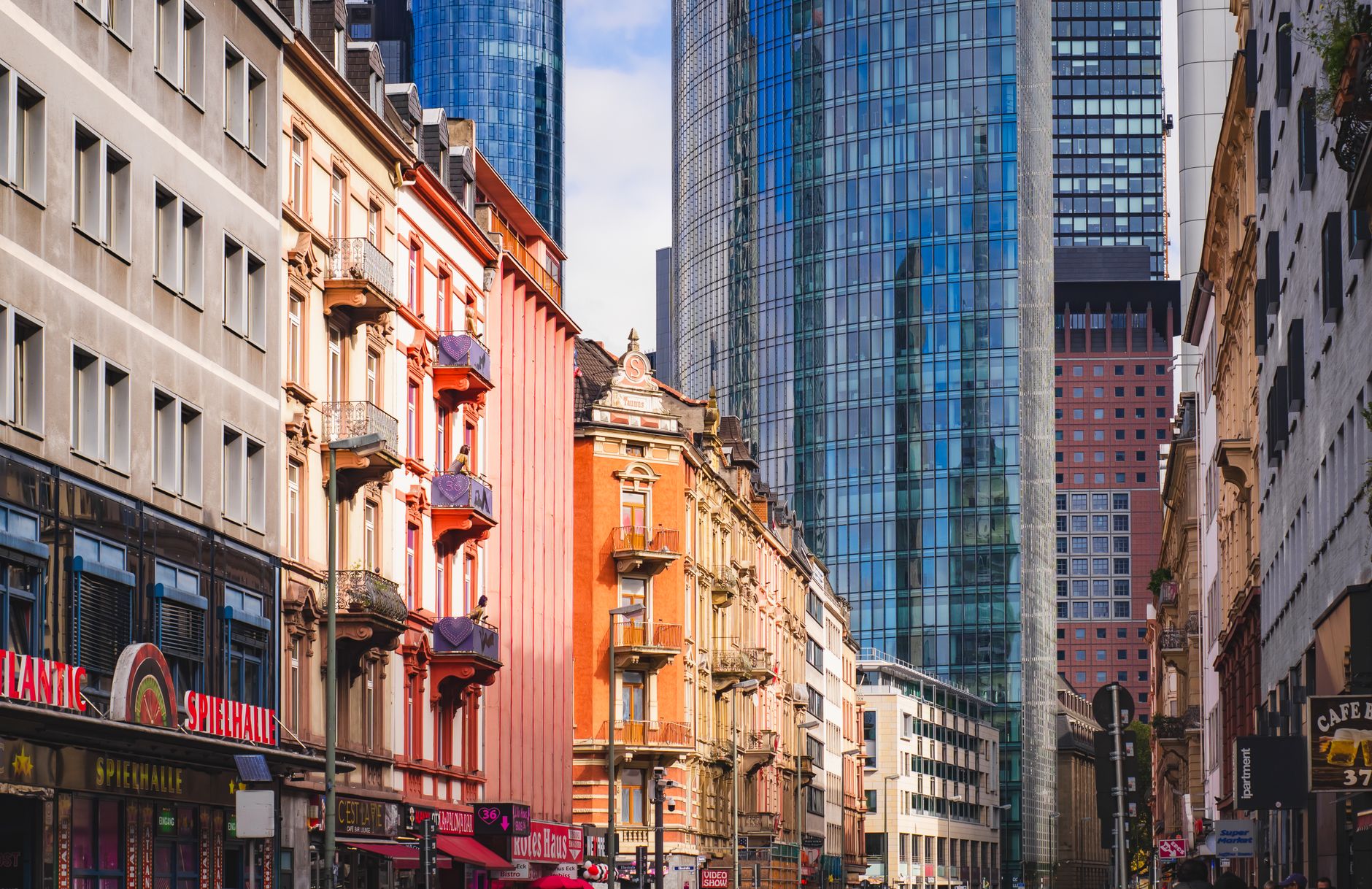
Neighbourhoods
Bornheim & Berger Straße: Frankfurt's Lively Quarter
Bornheim, affectionately called 'Bernem': the nearly 3-km Berger Straße, the market at the Uhrtürmchen (Wed & Sat), apple wine at Solzer and Zur Sonne, and the Günthersburgpark — a local's portrait with travel tips.
Katharina Vogt16 June 2026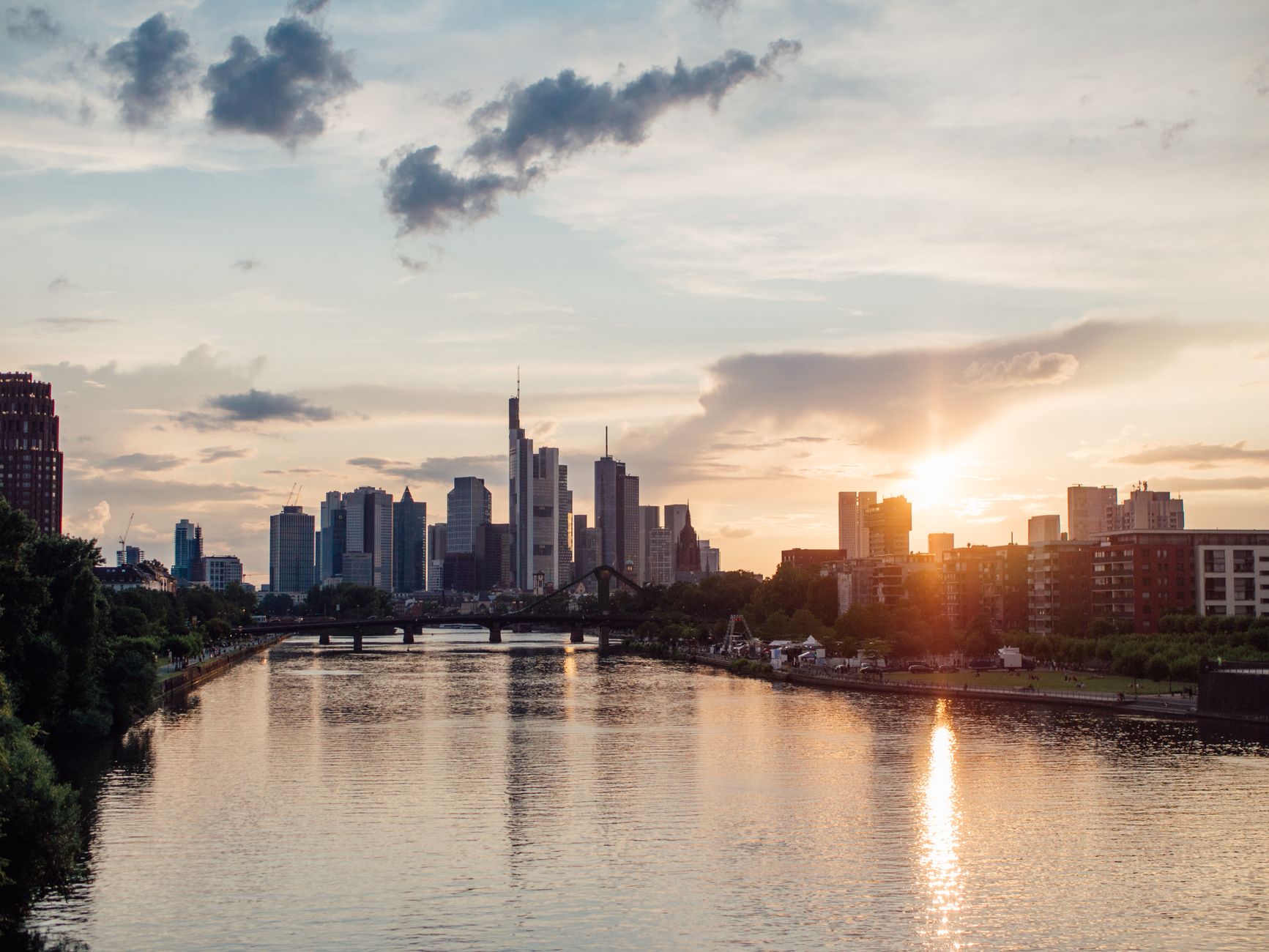
Neighbourhoods
Hotels in Frankfurt-Sachsenhausen: Staying by the Museumsufer
Hotels in Frankfurt-Sachsenhausen: which location suits you — Alt-Sachsenhausen, Schweizer Straße, the Museumsufer or the Südbahnhof — plus real hotels from The Florentin to budget options, transport links and honest booking tips from a local.
Katharina Vogt23 July 2026