Frankfurt's Bahnhofsviertel: What to Actually Expect
No Frankfurt district is googled more often or described more soberly less often. What you will really see between Kaiserstraße, Taunusstraße and Münchener Straße — and which precautions are worth taking.

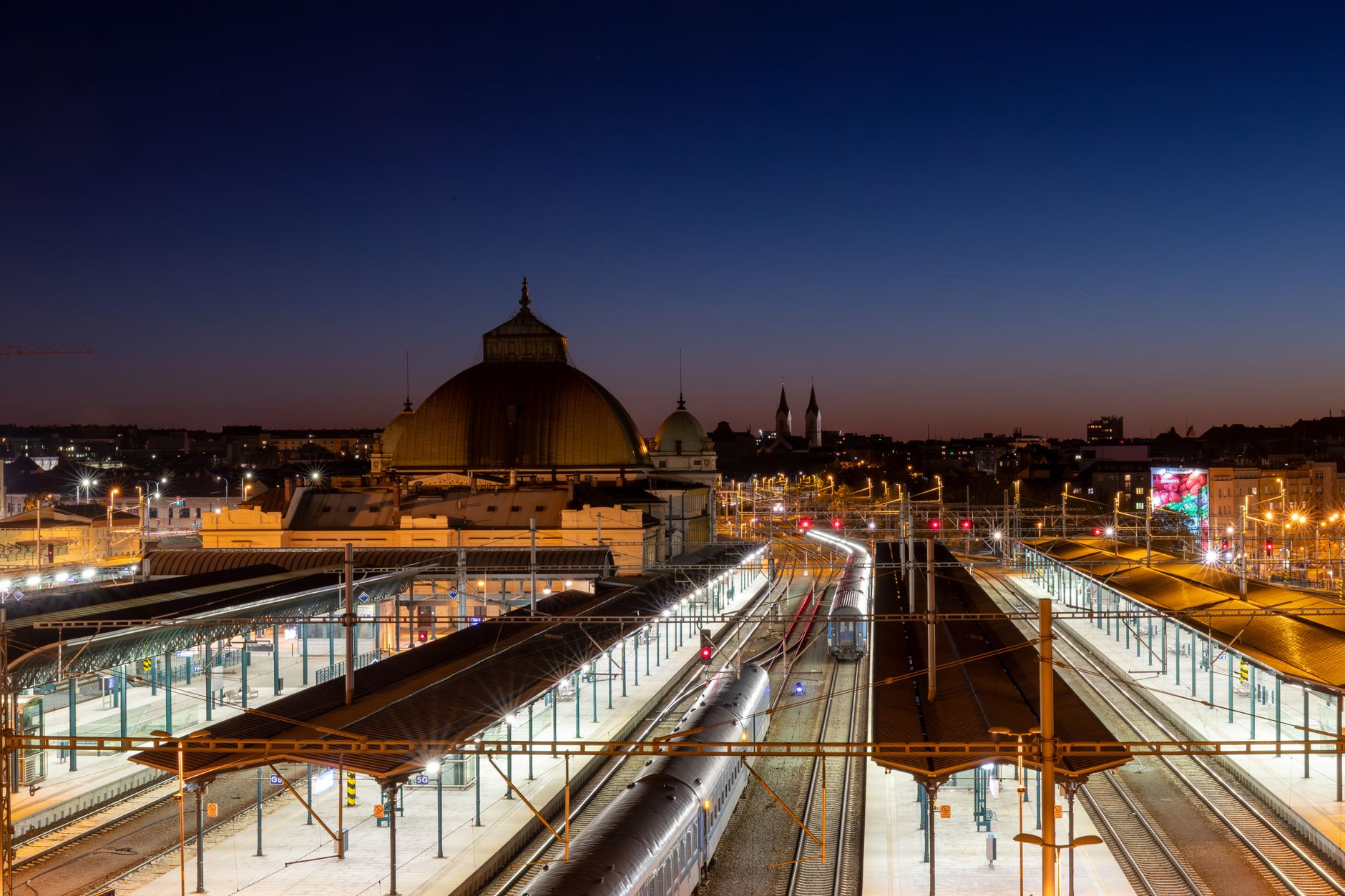
There is no quarter in Frankfurt that is talked about more and described accurately less. Search for the Bahnhofsviertel before a trip and you land either on headlines that read like the end of days, or on travel blogs assuring you it’s all overblown. Neither helps the person who will walk out of the main station with a suitcase in three weeks’ time wanting to know whether this is the right place to be.
I have been walking through this quarter for years: at lunchtime to eat, in the evening to go out, occasionally at two in the morning on the way home. What I have learnt is that the Bahnhofsviertel is not a condition, it’s a grid. An enormous amount depends on which street you are standing in and what time it is — and it can be described without drama and without prettifying the things you will see.
Half a square kilometre, built for a railway station
The Bahnhofsviertel is tiny. At roughly 0.54 square kilometres it is, after the old town, the second-smallest of Frankfurt’s districts, and just under 4,000 people live in it (figure for the end of 2025). It went up from the 1880s onwards on former railway land as the new central station was being built — a planned Gründerzeit quarter drawn on a drawing board, with five broad boulevards running west to east: Nidda-, Taunus-, Kaiser-, Münchener and Wilhelm-Leuschner-Straße. Crossing them are the narrower Weser-, Elbe-, Mosel- and Windmühlstraße. That chessboard explains a great deal, including why very different worlds can sit so close together here: every street has its own character, and it sometimes changes after fifty metres.
The Hauptbahnhof itself, opened on 18 August 1888, does not officially belong to the Bahnhofsviertel at all but to the neighbouring Gallus — a Frankfurt quirk that confuses people reading city maps. With 25 mainline platforms and four underground S-Bahn tracks it is one of Europe’s largest stations; before the pandemic the railway counted around 493,000 travellers a day (2019 figure). That volume tips out every day into a quarter never built for it. High-rises punctuate the grid — the Silberturm, the Skyper, the Gallileo — and, far more discreetly, Max Taut’s trade union building of 1931, Frankfurt’s first substantial high-rise. If you want to place the city’s quarters against one another, that’s what my big overview of Frankfurt’s districts is for.
Is the Bahnhofsviertel in Frankfurt dangerous?
The honest answer: it is unpleasant before it is dangerous — and for visitors it usually stops at unpleasant.
What you will very probably see: people using drugs on the pavement, people in very poor physical condition, occasional loud confrontations, used paraphernalia in the gutter. That is real, it is visible, and for many people it is their first impression of Frankfurt at all, because it starts immediately north of the station exit. What you are considerably less likely to experience is being attacked. The open scene is turned almost entirely inwards, on itself.
There are solid figures, and they are not reassuring. Hessenschau, the regional public broadcaster’s news service, reported on 17 June 2026 that police and social workers counted 311 severely dependent users in the quarter in March 2026, up from 195 in February 2025. The focus is the triangle of Niddastraße, Karlplatz and Moselstraße, where building works — the Karlplatz site runs until 2028 — have squeezed the open scene onto pavements barely two metres wide. Fentanyl has reshaped the market in recent years on top of that. I’m not going to soften any of this, and it is above all a problem for the people caught up in it and for those who live and work there — not for your weekend trip.
Since the early 1990s the city has followed what is known as the Frankfurter Weg: an accepting drug policy with supervised consumption rooms, street work and medical care rather than displacement alone. It is contested, and it is argued about. Alongside it, a weapons ban zone (Waffenverbotszone) has applied in the Bahnhofsviertel since 1 November 2023, was extended to the station building in June 2024, and has been in force around the clock since 1 January 2025. Carrying knives of any kind is prohibited regardless of blade length, and breaches can be fined up to 10,000 euros. Police presence is correspondingly high and visible.
One request all the same: the people you see there are not a sight to be seen. Don’t photograph them, don’t film them, don’t stop and stare. That isn’t a politeness formula — it is also the most reliable way to avoid trouble.
Street by street: where it turns and where it doesn’t
The quarter sorts itself out surprisingly cleanly, and carrying that map in your head is worth more than any general safety advice.
- Taunusstraße and the northern stretches of Elbestraße and Moselstraße: this is where the brothels are, and where the drug scene is densest. The trade is legal, regulated and part of this city — but it is not somewhere to wander aimlessly, certainly not with children, and distinctly less comfortable after dark than by day.
- Niddastraße and Karlplatz: the centre of gravity for the support services and for the open scene. Busy by day, very visible at night. Not a street I would pick as a shortcut.
- Münchener Straße: the eating street, and one of the liveliest in the city. Full of people eating and drinking well past midnight.
- Kaiserstraße: the grand boulevard — shops, restaurants, a lot of through traffic on foot. Busy until late.
- Gutleutstraße and Wilhelm-Leuschner-Straße in the south: quieter, more residential, almost unremarkable as you approach the river.
The rule of thumb I give visitors: stay south of Kaiserstraße and you are in a normal, very international inner-city neighbourhood. Turn north of Kaiserstraße into the cross streets and you know what you are walking into. Both are the same neighbourhood, often the same block — which is exactly why blanket verdicts work so badly here.
Kaiserstraße in Frankfurt: a grand boulevard with fault lines
Kaiserstraße is the spine of the quarter and its finest piece of architecture. It was laid out in two stages between 1874 and 1888, runs about 950 metres, and connects the Roßmarkt in the middle of the city centre dead straight to the main station. It was conceived as a metropolitan showpiece boulevard, and despite the bomb damage of 1944 it remains one of the last surviving grand streets in Frankfurt: five-storey Gründerzeit commercial buildings with bay windows and stucco, between which the banking district’s towers appear without warning.
The appeal lies precisely in that fracture. One block gives you a restored 1890s facade with a jeweller on the ground floor; the next, a phone shop, a late-night kiosk and a restaurant with ten seats. If you want to photograph Frankfurt without producing the same skyline postcard as everybody else, the more interesting subjects are here — best early in the morning, when the street is still empty and the light comes in low along the canyon.
Two Kaiserstraße addresses I’ll name with a clear conscience, because they have been reliably open for years: the South Indian vegetarian Saravanaa Bhavan at Kaiserstraße 68, and the Indian eatDOORI at Kaiserstraße 55, open Monday to Wednesday 11.30am to 10.30pm, Thursdays until 10pm, Fridays until 11pm and from midday at weekends (as of 2026). Otherwise this quarter more than any other rewards a simple habit: trust the street rather than a name you read two years ago. Turnover here is fast.
Eating in the quarter: Münchener Straße and what surrounds it
Münchener Straße is the reason many Frankfurters come into the Bahnhofsviertel at all. Within a few hundred metres you pass kitchens from half of Europe, Asia and Africa: Turkish, Korean, Ethiopian, Indian, Thai, plus bars, wine shops and snack counters with four bar stools. It is not a curated food hall but a street that grew this way, where a two-person operation stands next door to a full house.
The institution is Yok Yok, the kiosk on Münchener Straße, long since more meeting point than off-licence — on warm evenings half the street stands outside it with a bottle in hand. That scene, people of every background and income inside the same semicircle of light, is the Bahnhofsviertel at its best. And it happens, for the sake of completeness, two streets from the open drug scene. Both exist at once. You have to be able to hold that in your head to like this quarter.
A note for early risers: several of the Turkish breakfast places I’ve written about separately are in and around this district — and the quarter in the morning is a completely different place from the quarter at midnight, quieter and almost sedate.
From the Bahnhofsviertelnacht to OPEN VIERTEL
The Bahnhofsviertelnacht is the reason many outsiders know the quarter’s name at all. It began in 2008 for the main station’s 120th birthday: residents, businesses, galleries and institutions opened their doors for one evening so that people could see the quarter from the inside. The idea worked too well. By 2019, the twelfth edition, some 50,000 people came, the cultural evening had become a street party, and costs had risen from about 20,000 euros at the start to roughly 400,000, with up to 280,000 of that going on security alone. In 2023 the city pulled the plug on the format.
What took its place is OPEN VIERTEL, run by the local traders’ association Treffpunkt Bahnhofsviertel e.V. — no longer a municipal festival but one staged by the businesses themselves, and held in daylight rather than at night. In 2026 it ran on Saturday 5 September from 3pm to 11pm: more than 50 participating venues from hospitality, hotels, retail, culture, nightlife and social organisations, five stages, guided tours, free admission (as of 2026). If you can plan your trip around it, that is by far the best day to visit: the quarter presents itself as it likes to be seen, and you get into courtyards and upper floors that are otherwise closed. The date moves, so check the association’s own page before you book.
Is the area around Frankfurt Hauptbahnhof safe — by day, in the evening, at 2am?
Three different questions, three different answers.
By day the station surroundings are simply a very busy, very international piece of city. You will see the scene, but you are moving in a stream of commuters, tourists and people who work here. I would walk this with luggage without a second thought.
In the evening, say between 7pm and midnight, the same holds for Kaiserstraße and Münchener Straße, which are at their busiest then. The cross streets north of them, by contrast, empty of ordinary foot traffic and fill with the scene. The difference between two parallel streets can be stark.
After midnight, and particularly between two and five in the morning, I would not cut across the quarter as a stranger to the city; I’d stay on the busy axes or take a taxi. That isn’t a Frankfurt peculiarity — it is what I’d do in any European station district.
The precautions that actually help are mundane: don’t walk with your phone out, wear your rucksack on your front, don’t hang your bag on the back of a chair. Pickpocketing is the realistic risk, not assault. At the station itself the weapons ban applies, federal police are present at all hours, and the underground B-Ebene concourse is busy around the clock. If you still have plans for the night, my guide to what to do in Frankfurt in the evening has alternatives in other quarters.
Staying here: surprisingly good hotels, mixed surroundings
The Bahnhofsviertel has more hotel beds than any other Frankfurt district, and some of them are genuinely good. The 25hours Hotel The Trip at Niddastraße 56–58, with its BAR SHUKA restaurant, the Japanese SHUKA BAR and a roof terrace complete with sauna, is among the most distinctive houses in the city; at the southern edge, at Gutleutstraße 85, the Roomers Frankfurt Central sits noticeably quieter. For rail travellers the location is unbeatable: five minutes on foot to the platform, ten to the old town. The trade-off is the surroundings — if you are travelling with small children, or would rather not walk past the open scene on the way back to your room, choose Sachsenhausen or the Westend instead.
Arriving, moving on, parking
Most guests reach the quarter through the main station, and most of them come in on the S-Bahn from the airport: eleven minutes, lines S8 and S9, every ten to fifteen minutes. Which ticket you need for that, and why a day pass often works out cheaper, is set out in my piece on public transport in Frankfurt. And if you have time to kill at the airport beforehand, or have to find your way between the terminals, our sister site’s guide to the terminals, security and baggage will get you further than the signage does.
Arriving late and not fancying the walk to your hotel? There are taxis on the station forecourt at any hour. If you’d like to know what a booked ride or transfer really costs before you step into one, the comparison is worth a minute — especially at night, when the meter runs faster than the traffic. For onward journeys into the region, to Wiesbaden or Darmstadt say, road distance, driving time and an indicative fare band are quicker to look up than to guess at.
And by car? Briefly: reluctantly. The quarter is tight, partly one-way, and residents’ parking is scarce. If you drive anyway, put the car in one of the multi-storey car parks around the station and the centre; which one costs what, and what the height restrictions are, is set out in parkfibel’s comparison of car parks in central Frankfurt. Parking on the street here is not something I would recommend.
In the end the Bahnhofsviertel is the most honest part of this city. Frankfurt likes to present itself through towers and balance sheets; here, what that story leaves out stands right beside it, on the same pavement, in the same light. Sit on Münchener Straße on a Friday evening, eat Ethiopian, then walk two streets further and watch how quickly a city can tip, and you will understand Frankfurt better than you would after three days of Römerberg and observation decks. Come with your eyes open, bring the street map in your head — and let yourself be neither frightened nor fooled.
Keep reading
Neighbourhoods
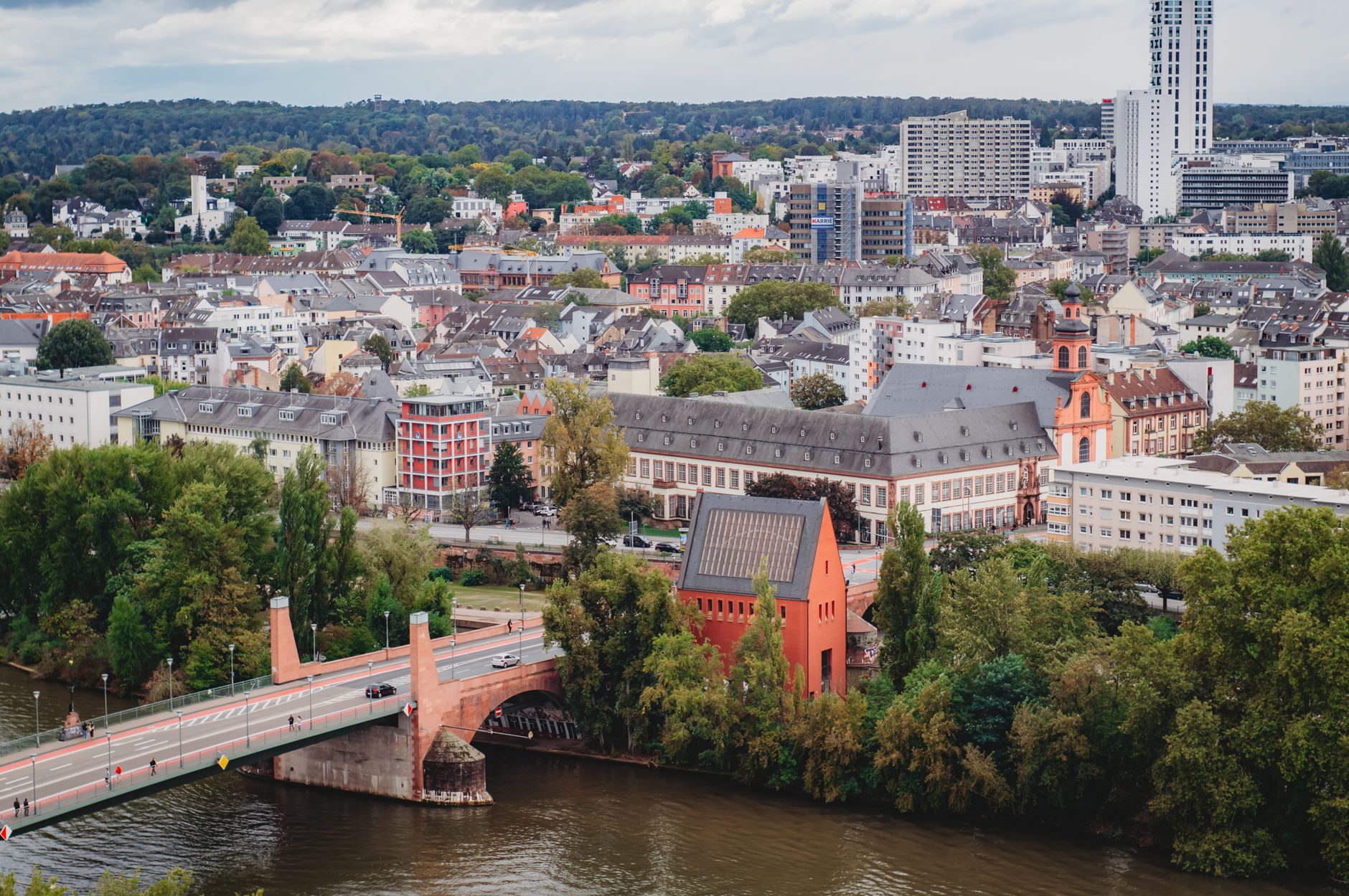
Frankfurt Districts: The Big Overview
From the old town and the Bahnhofsviertel via the Westend, Nordend and Bornheim to Sachsenhausen, Ostend and Höchst: the character, landmarks and visitor tips for Frankfurt's key neighbourhoods.
Katharina Vogt19 June 2026
Neighbourhoods
Where to Stay in Frankfurt? The Best Districts & Hotels
Which Frankfurt district suits your trip? The centre, Bahnhofsviertel, Westend, Sachsenhausen, Ostend and the airport honestly compared — with hotel examples, price guidance and the one trade-fair tip that decides your bill.
Katharina Vogt16 June 2026
Neighbourhoods
Bockenheim: Frankfurt's Old University Quarter, from the Warte to Leipziger Straße
A local's portrait of Frankfurt-Bockenheim: the Bockenheimer Warte and its Thursday market, Leipziger Straße, the old university campus and the planned Kulturcampus, the Schirn in the former Dondorf printworks until around 2028, the Senckenberg and the Bockenheimer Depot, with transport tips and a walking plan (as of 2026).
Katharina Vogt25 September 2026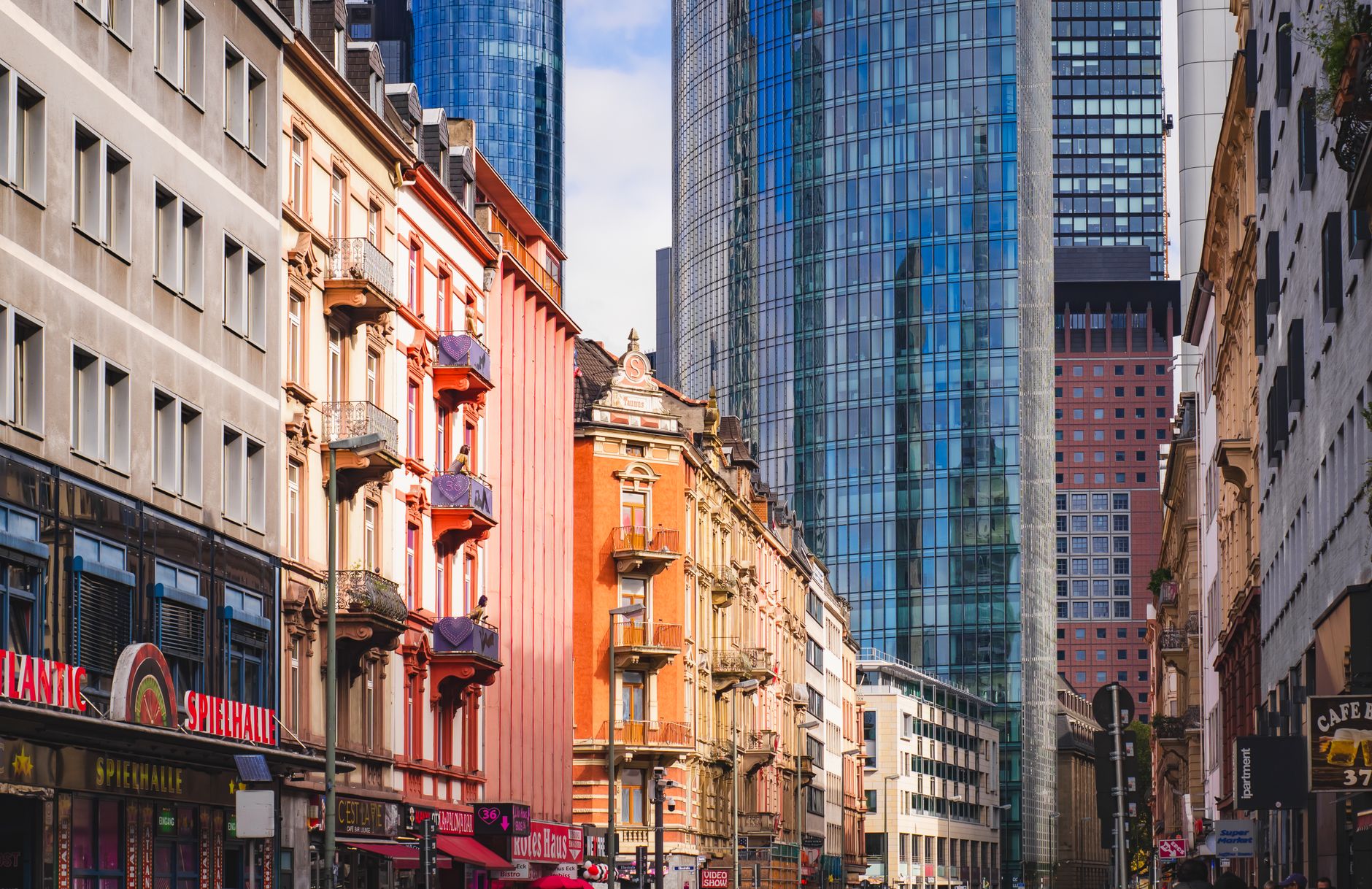
Neighbourhoods
Bornheim & Berger Straße: Frankfurt's Lively Quarter
Bornheim, affectionately called 'Bernem': the nearly 3-km Berger Straße, the market at the Uhrtürmchen (Wed & Sat), apple wine at Solzer and Zur Sonne, and the Günthersburgpark — a local's portrait with travel tips.
Katharina Vogt16 June 2026