Bornheim & Berger Straße: Frankfurt's Lively Quarter
A weekly market, apple wine and buzzy bars on Frankfurt's longest shopping street: why locals so love their 'merry village' — and how to do it all in one Saturday.

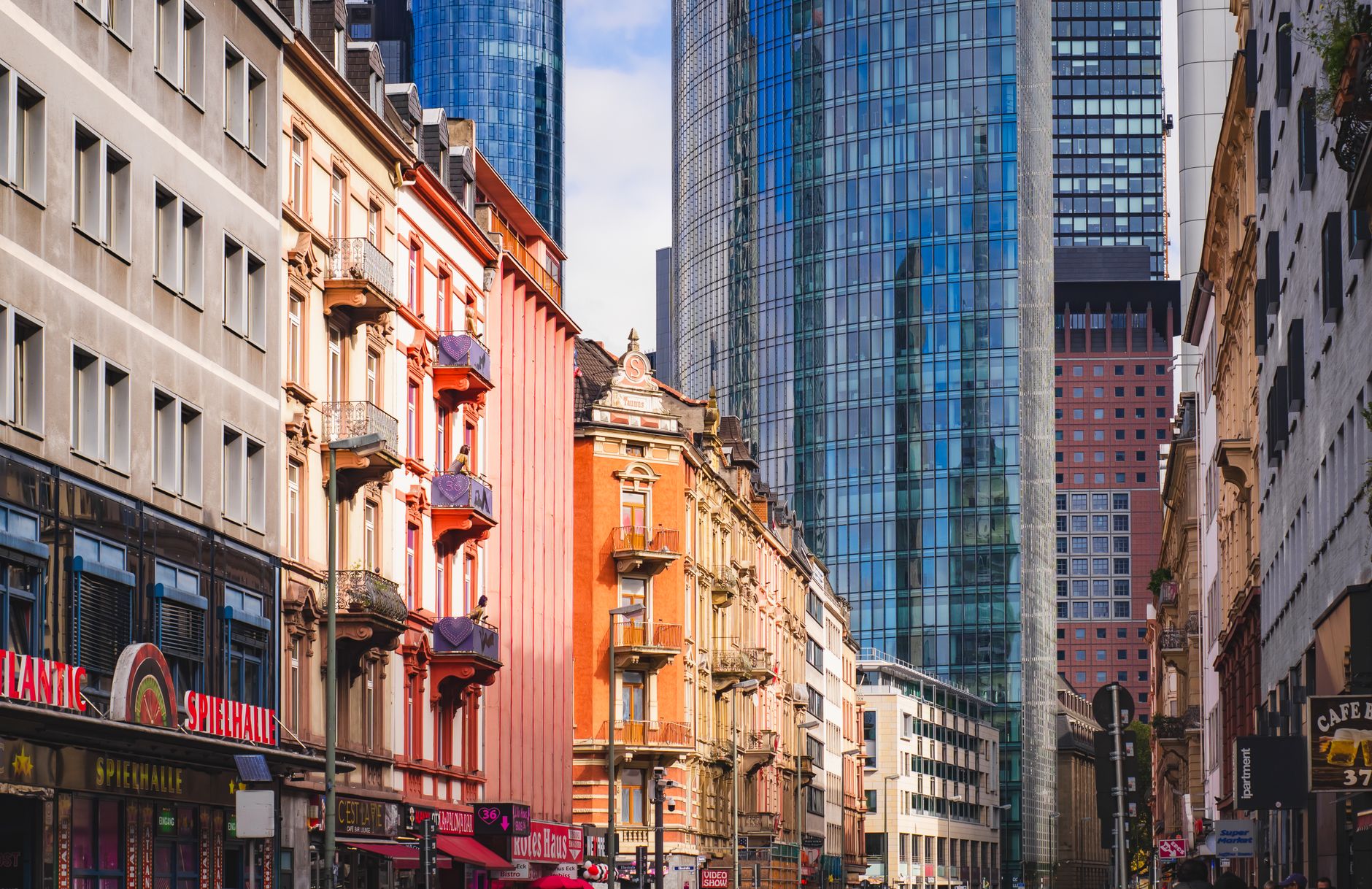
Ask Frankfurters where they’d most like to live and, surprisingly often, the same name comes up: Bornheim. In the local dialect this district in the east of the city is simply called “Bernem”, and anyone who knows it understands the affection at once. Bornheim pulls off the rare trick of sitting in the middle of a banking metropolis while still feeling like a village: you say hello to the baker, you know the greengrocer at the market by name, and in the evening half the neighbourhood is sitting outside the same handful of pubs. I’ve lived within walking distance of Berger Straße for years, and I keep catching myself recommending this quarter to visitors before the Römer or the skyline. Here’s why — from the weekly market at the Uhrtürmchen and the apple wine to the greenery of the Günthersburgpark.
From “the merry village” to everyone’s favourite quarter
For a long time Bornheim wasn’t part of Frankfurt at all but an independent village outside the city gates. It was only incorporated on 1 January 1877. Even before that the village was well known — for its many taverns and day-trip inns, where Frankfurters would head out on a Sunday to make merry. That reputation earned Bornheim its still-fondly-used nickname, “das lustige Dorf” (the merry village). You can feel that past even now: the sociability, the sitting-outside, the fondness for apple wine — none of it is staged for guests here, it’s simply everyday life.
After incorporation, Bornheim grew quickly into a dense Gründerzeit quarter. The handsome period buildings with their stucco façades that you see in the side streets today mostly date from around 1900. It’s precisely this mix — mature building stock, short distances, a real centre of its own — that makes the charm. With just over 30,000 residents Bornheim is one of the more populous districts, and in surveys it regularly comes out on top when Frankfurters are asked where they’d ideally live. If you’d like to place the city’s neighbourhoods side by side, my big overview of Frankfurt’s districts gives you the lie of the land.
Berger Straße: nearly three kilometres of Frankfurt in one go
The backbone of the quarter is Berger Straße — at around 2.9 kilometres, Frankfurt’s longest shopping street. It begins in the Nordend, climbs up through Bornheim and eventually peters out towards Seckbach. Unlike the big, bustling Zeil in the city centre, it has stayed small-scale and personal: owner-run shops, bookshops, boutiques, florists and wine merchants, with cafés, bakeries and the odd rustic pub dotted in between. To be honest, rising rents have squeezed out a few long-established shops in recent years, and a handful of chains have crept in — but the individual, unhurried character of the street remains.
Here’s a detail most people never notice: the U4 underground line runs beneath Berger Straße, and each of its three stations is tiled in its own colour. Merianplatz, at the lower Nordend end, glows green; Höhenstraße is red; and Bornheim Mitte is yellow. So if you’re ever unsure where you’ve surfaced, the colour of the wall gives it away. My advice for the wander: take your time and turn off into the side streets — it’s away from the main axis that you find the small discoveries I also describe in my piece on Frankfurt’s hidden gems.
The Uhrtürmchen and the weekly market
The real focal point of district life stands at Bornheim Mitte station: the Uhrtürmchen, a dainty little clock tower that counts as the quarter’s landmark and serves every local as a meeting place (“am Uhrtürmchen” — at the little clock tower — is understood by everyone here). At its foot the Bornheim weekly market takes place twice a week, on Wednesdays and Saturdays, and it’s far more than mere shopping.
If you want to experience the real Bornheim in an hour, come on a Saturday morning. There’s fresh fruit and vegetables, cheese, bread, flowers and fish, plus stalls where you take a glass of apple wine or a coffee standing up. You meet neighbours, you stop, you chat — the market has an almost Mediterranean charm and is the quarter’s front parlour. For me it’s one of the loveliest weekly markets in the city, precisely because there are hardly any tourists about, just people who actually live here.
Apple wine in Bernem: Solzer, Zur Sonne and the rest
Alongside Sachsenhausen, Bornheim is the second great centre of Frankfurt’s apple-wine culture — and the more honest one, I’d argue, because you’re mostly sitting among locals. Two long-established taverns stand for the Bornheim Äppelwoi like few others:
- Apfelwein Solzer, Berger Straße 260: the Solzer family has run the house since 1893, now in its fifth generation, and the apple wine is still pressed on the premises. It’s open Mondays and Wednesdays to Fridays from 5 p.m., Saturdays from 2 p.m. and Sundays from noon; closed on Tuesdays (as of 2026).
- Zur Sonne, Berger Straße 312: one of the oldest surviving apple-wine taverns in Frankfurt, whose sign and self-image rest on “tradition since 1750”. Here you get classic Frankfurt cooking — Handkäs mit Musik, Frankfurter Schnitzel with green sauce, and apple strudel to finish. Open Tuesdays to Saturdays from 5 to 11 p.m. (as of 2026).
The two conveniently complement each other, by the way: Solzer is closed on Tuesdays, Zur Sonne on Sundays and Mondays — so between them you’ll find a glass on almost any day. Order a Bembel of Äppelwoi, take your time, and watch the waiters balance the ribbed “Gerippte” glasses. If you want to go deeper into the subject, I’d point you to my guide to the best apple-wine taverns in Frankfurt.
Coffee, cake and the “ice-cream mile”
Bornheim isn’t only awake in the evening. By day, Berger Straße is a run of cafés serving everything from a leisurely weekend breakfast to a quick espresso — if you’re after somewhere specific, you’ll find it in my round-up of the best cafés for breakfast and brunch in Frankfurt. And in summer the street turns into what Frankfurters wryly call the “Eismeile” (ice-cream mile): one gelateria after another, queues forming in front of the counters, and in the evening half of Bornheim strolling up and down with a cone in hand. An ice cream on Berger Straße on a balmy evening is a small Frankfurt ritual — and costs no more than a few euros.
Green at the edge: the Günthersburgpark
At the upper, Nordend-facing edge of the quarter lies the Günthersburgpark — the green lung that belongs to Bornheim the way the market belongs to the Uhrtürmchen. The name goes back to the innkeeper Johann Jacob Günther, who bought the site in 1690 and had a small moated castle built there. Later the Rothschild family had the grounds redesigned as an English landscape garden between 1837 and 1839; in 1892 the city finally opened the park to the public.
Today it’s a public park of around seven hectares with sweeping meadows, mature trees, a large adventure playground and water-play features that delight children in summer. Among the trees stand artworks such as Fritz Boehle’s copper bull of 1910 and Constantin Meunier’s bronze “The Sower”. On warm days Bornheimers spread their blankets here, fire up a barbecue in the evening and let the day wind down. If you’d like to pair the Berger Straße wander with a bit of calm, simply add a loop through the park.
Bornheim after dark
When the sun goes down, “Bernem” shows its lively side. The spectrum runs from the rustic corner pub where the landlord recognises you after the second visit, through international restaurants, to the trendy cocktail bar. At weekends Berger Straße fills with Frankfurters going out, nattering and dancing — but it stays noticeably more relaxed and less geared to party tourism than, say, the lanes of Alt-Sachsenhausen. An evening in Bornheim is sociable but not over the top: you drink your beer or your apple wine, maybe move on one pub, and you’re rarely the only person who has to be back at work in the morning.
Getting there: the U4 runs right in
The easiest way to arrive: the U4 (Enkheim ↔ Bockenheimer Warte) runs beneath Berger Straße and stops at Merianplatz, Höhenstraße and Bornheim Mitte — the last of which puts you right at the Uhrtürmchen, in the thick of it. The southern edge of the quarter is additionally clipped by the U7, which stops at Festplatz by the ice rink (Eissporthalle) and, like the U4, carries on to Enkheim. You won’t need a car — parking in the densely built-up residential streets is a test of patience anyway, and the train gets you here from the city centre in a few minutes.
The best time? For the full programme, a Saturday: market in the morning, a wander at midday, the park in the afternoon, apple wine in the evening. If you prefer things quieter, come on a weekday — then the street belongs to the residents.
My Bornheim on a Saturday
When friends come to stay, this is usually how I do it. We start around ten at the Uhrtürmchen, take a turn round the market and have the first glass standing up. Then we amble down Berger Straße towards the Nordend, browse the shops, pause at a café. In the afternoon it’s off to the Günthersburgpark — a bit of grass, a bit of shade. And as dusk falls we settle in at Solzer or Zur Sonne, order Handkäs and a Bembel — and suddenly it’s got late without anyone once glancing at the clock.
That’s exactly what Bornheim is: not a must-do circuit for sightseeing hunters but a quarter to live in. Nobody needs to tell you what you “have to see” here — you come, you let yourself drift, and you work out for yourself why the merry village has won the hearts of so many Frankfurters. Set aside half a day, ideally on a market day, and you’ll want to do it just the same way.
Keep reading
Neighbourhoods
Sachsenhausen: Apple Wine, Green Sauce & Museums
A portrait of Frankfurt-Sachsenhausen: the cobbled lanes of Alt-Sachsenhausen, green sauce and its seven herbs, the Museumsufer on the Schaumainkai, Schweizer Straße and the Main — with verified tips from a local.
Katharina Vogt16 June 2026
Neighbourhoods
Frankfurt Districts: The Big Overview
From the old town and the Bahnhofsviertel via the Westend, Nordend and Bornheim to Sachsenhausen, Ostend and Höchst: the character, landmarks and visitor tips for Frankfurt's key neighbourhoods.
Katharina Vogt19 June 2026
Neighbourhoods
Where to Stay in Frankfurt? The Best Districts & Hotels
Which Frankfurt district suits your trip? The centre, Bahnhofsviertel, Westend, Sachsenhausen, Ostend and the airport honestly compared — with hotel examples, price guidance and the one trade-fair tip that decides your bill.
Katharina Vogt16 June 2026
Neighbourhoods
Hotels in Frankfurt-Sachsenhausen: Staying by the Museumsufer
Hotels in Frankfurt-Sachsenhausen: which location suits you — Alt-Sachsenhausen, Schweizer Straße, the Museumsufer or the Südbahnhof — plus real hotels from The Florentin to budget options, transport links and honest booking tips from a local.
Katharina Vogt23 July 2026