Bockenheim: Frankfurt's Old University Quarter, from the Warte to Leipziger Straße
A separate town until 1895, Frankfurt's university quarter for a century, now a big gap in the map with an art gallery in it: why Bockenheim is one of the most interesting districts in the city right now, and how to spend a Thursday there.

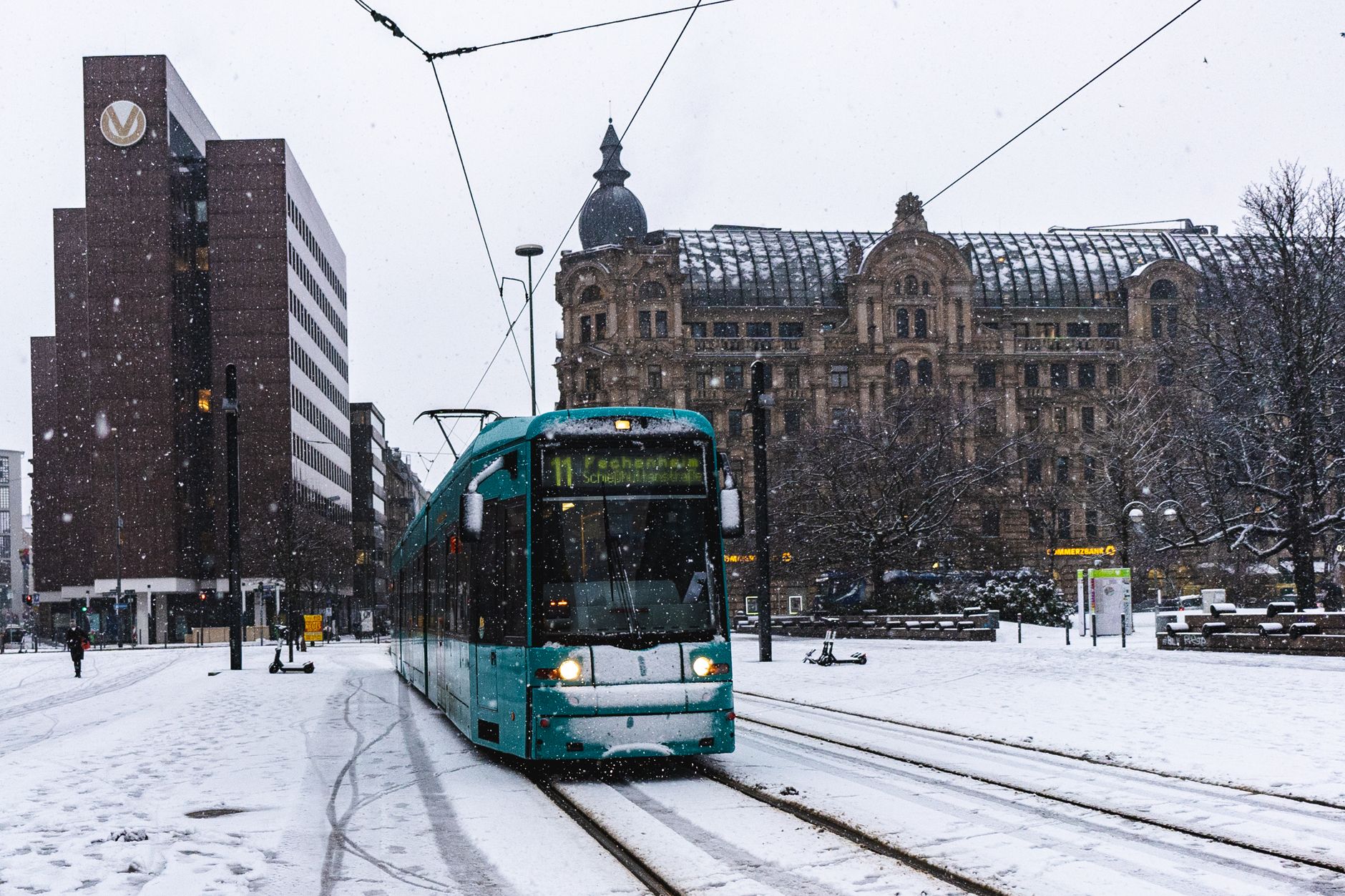
Bockenheim is where I went to university, and like a lot of Frankfurters I still associate it with seminars, canteen lunches and nights spent arguing about everything. The thing is, the university has gone. For almost a hundred years the campus by the Bockenheimer Warte was the heart of Goethe University; then, department by department, it moved out to the Westend and the Riedberg. What it left behind is a district with a huge empty site in the middle, one of Frankfurt’s liveliest shopping streets and, since autumn 2025, an art gallery in an old printworks. That mix of farewell and fresh start is exactly what makes Bockenheim so interesting for visitors at the moment.
A town of its own, just over the border
For a long time Bockenheim wasn’t Frankfurt at all, it was abroad. The village belonged to the lordship of Hanau from the 14th century, passed to Hesse-Kassel in 1736 and was granted town rights in 1819 by the Elector William I. Until 1866 the border with the Free City of Frankfurt ran just west of the Bockenheimer Warte. So when Germany’s first parliament met in the Paulskirche in 1848, Bockenheim lay a few kilometres away in a different state, the Electorate of Hesse. The town was only absorbed into Frankfurt on 1 April 1895.
You can still feel that past. Bockenheim has an old village core around the Kirchplatz and St Jacob’s church, its own market square, the Kurfürstenplatz with its monumental fountain of 1914, and a railway station, the Westbahnhof, that dates back to 1850. In the 19th century Bockenheim also became an industrial town, which later turned out to be a stroke of luck: one of those factories is now home to the Schirn.
The Bockenheimer Warte: a tower, a tram and a market
The name everyone knows doesn’t strictly belong to Bockenheim. The Bockenheimer Warte, a Gothic watchtower built in 1434–35 as part of Frankfurt’s outer defences, stands just inside the Westend. It guarded the trade road to Cologne, which continues today as Bockenheimer Landstraße and Leipziger Straße. You can’t go inside; the tower isn’t open to the public. But it’s the district’s landmark and the meeting point everyone uses.
Right next to it is the second, far more famous photo spot: out of one of the U-Bahn entrances an old tram car juts at an angle from the pavement, as if it had burrowed up through the tarmac. It was designed by the artist Peter Pininski in the late 1980s as both artwork and station entrance, and according to the city’s public-art catalogue the model was a London tram.
My favourite reason to come to the Warte, though, is the weekly market: every Thursday from 8am to 6pm right at the foot of the tower (as of 2026). It’s smaller than the one in Bornheim, but well stocked with fruit, vegetables, cheese, bread and flowers, and by late afternoon half the neighbourhood is standing around with a coffee or a glass of apple wine. If you want to compare, I’ve described the market at the Uhrtürmchen in my portrait of Bornheim and Berger Straße. Bornheim is the cosier village; Bockenheim is its rougher, more international counterpart.
Leipziger Straße: shopping without the chain-store look
Leipziger Straße is Bockenheim’s main artery, around 800 metres long, a single lane wide and one-way heading out of town. Until 1910 it was called Frankfurter Straße, which says something about how the neighbours used to see each other. The U6 and U7 run beneath it, stopping at Leipziger Straße station, and if you look closely you’ll spot old overhead-wire rosettes on some of the older buildings, left over from the tram that ran here until 1965.
What makes the street is its mix. There are small independent shops, bakeries and tradespeople, Turkish, Persian and Asian grocers, vegetable crates out on the pavement, snack bars from half the world and, in the back courtyards, more shops you only find if you peer through the archways. At the eastern end, by the Warte, is the small Ladengalerie Bockenheim shopping arcade. Big chains are rare, and the empty units locals have grumbled about for years are, honestly, part of the picture too. Leipziger Straße isn’t a showcase; it’s an everyday street, and that’s its charm.
At the Exzess-Halle, Leipziger Straße 91, the theatre company Die Dramatische Bühne has been performing since 1993, specialising in Shakespeare, Goethe and Molière. In the evening it’s worth a detour to Schloßstraße: the Bockenheimer Weinkontor at number 92 occupies a former smithy in a back courtyard that you can only reach through the passageway, and in summer you sit outside in a leafy yard.
The old campus, and the Kulturcampus still to come
From 1914 the main campus of Goethe University lay between the Bockenheimer Warte, Senckenberganlage and Gräfstraße, most of it, again, technically in the Westend. Adorno and Horkheimer taught here, the 1968 protests happened here, and until 2 February 2014 the 116-metre AfE tower stood here; at the time it was the tallest building ever demolished by explosives in Europe. The residential and hotel tower One Forty West has taken its place. The Philosophicum on Gräfstraße, designed by the university’s architect Ferdinand Kramer, has been converted and now serves as private student housing.
What’s left is mostly one big question: what happens to the rest? For more than fifteen years the answer has been the Kulturcampus. In March 2025 the state of Hesse and the city presented a new attempt. Under that plan the University of Music and Performing Arts (HfMDK) is to move here, spread over three buildings around Bockenheimer Landstraße, with around €170 million from the state; the old law faculty building, the Juridicum, is to be kept, and up to 1,000 homes are planned on the site. Construction was to start from 2030, with completion in 2035 at the earliest. I pass that on with some caution, because Kulturcampus timetables have slipped so often that locals now just laugh about them. For your visit it means: expect hoardings, vacant plots and temporary uses, not a finished cultural quarter.
Two places that already exist shape the campus all the same. The university library by the Warte is staying, and opposite stands the Bockenheimer Depot, a tram shed of 1900 with a remarkable arched timber roof that now serves as a venue for opera, drama and dance. How to get tickets there is covered in my overview of theatre in Frankfurt.
The Schirn in the Dondorf printworks, until around 2028
The best reason to head to Bockenheim right now is a stopgap. Because its building on the Römerberg is being refurbished, the Schirn Kunsthalle has been showing its exhibitions since September 2025 in the former Dondorf printworks at Gabriel-Riesser-Weg 3. The brick building of 1890 is one of the district’s last industrial buildings. The Jewish Dondorf family printed playing cards, securities and banknotes here until the business was seized in 1933 and the family persecuted. Once the Schirn moves back, the building is earmarked for the HfMDK.
It’s open Tuesday to Sunday from 10am to 7pm, Thursdays until 10pm, and admission is €7 (as of 2026). From 1 October 2026 the Schirn shows the Czech sculptor Anna Hulačová, followed from 23 October by a major Leonor Fini retrospective. Everything else about the programme, prices and concessions is in my article on the Schirn Kunsthalle and its move. For me Café B in the courtyard is the real prize of this interim: a yard where neighbours, students and exhibition-goers sit side by side as a matter of course.
Senckenberg and the Palmengarten: the big neighbours
Two of Frankfurt’s best-known attractions are within walking distance of the Warte, even if they officially belong to the Westend. The Senckenberg Natural History Museum at Senckenberganlage 25 is wrapped on three sides by the old campus; from the U-Bahn exit it’s only a few steps to the Tyrannosaurus on its forecourt. What’s worth seeing inside and what admission costs are in my guide to the Senckenberg Natural History Museum. Heading north, the Palmengarten is a good ten minutes’ walk away, which gives you a whole family day in one go: dinosaurs in the morning, tropical glasshouses in the afternoon.
Trade fair, Festhalle and the question of the car
To the south Bockenheim borders the trade fair grounds, and you notice it. On big fair days and during concerts at the Festhalle, the streets around Hamburger Allee and the Emser Brücke fill up, and hunting for a space in the residential streets is hopeless. If you’re coming by car anyway, look first at the car parks around the Festhalle and fairground, including the flat concert rate. Everyone else: Bockenheim has excellent public transport, and you won’t need a car here.
Getting there: U-Bahn, tram and the Westbahnhof
The central hub is Bockenheimer Warte, served by the U4, U6 and U7 and tram 16. From the Hauptwache the U6 or U7 gets you there in a few minutes, and the U4 runs directly from the main station. The U6 and U7 continue deeper into the district to Leipziger Straße and Kirchplatz. S-Bahn and regional trains stop at the Westbahnhof in the south.
Plenty of trade-fair visitors stay in Bockenheim because it’s close to the grounds and cheaper than the centre. From the airport, take the S-Bahn to the main station and change to the U4. With luggage late at night a taxi is easier; the Frankfurt Airport taxi calculator with indicative fares by distance shows roughly what the ride into town costs. And so the journey home starts calmly, it’s worth checking beforehand which terminal your airline uses at Frankfurt Airport; since Terminal 3 opened, not every airline is where it used to be. If you’re heading home from a Bockenheim bar at night and can’t decide between a taxi and an app, there’s a level-headed comparison of what Uber costs in Germany and when the taxi tariff works out cheaper.
My Bockenheim Thursday
When I have visitors, I like to put Bockenheim on a Thursday. We start at around eleven at the market by the Warte, grab something to eat on the go and watch the tram car breaking out of the ground. Then it’s a few minutes to the Schirn for an unhurried exhibition, followed by coffee in the courtyard. In the afternoon we wander up Leipziger Straße, browse the grocers and turn off at the end towards the Kurfürstenplatz. And because the Schirn stays open until 10pm on Thursdays, the day works the other way round too: market and Leipziger Straße in the afternoon, the exhibition in the evening, and to finish, a glass of wine in the courtyard on Schloßstraße.
Bockenheim isn’t pretty in the postcard sense. It has rough edges, empty shops and building sites, and it wears its student past with a certain untidiness. But it’s honest, international and changing faster than almost any other district. If you want to understand Frankfurt beyond the Römer and the skyline, spend half a day here, while the art still hangs in the printworks and the Kulturcampus is still a promise.
Keep reading
Neighbourhoods
Bornheim & Berger Straße: Frankfurt's Lively Quarter
Bornheim, affectionately called 'Bernem': the nearly 3-km Berger Straße, the market at the Uhrtürmchen (Wed & Sat), apple wine at Solzer and Zur Sonne, and the Günthersburgpark — a local's portrait with travel tips.
Katharina Vogt16 June 2026
Neighbourhoods
Nordend, Frankfurt: Gründerzeit Streets, Oeder Weg and the Holzhausenpark
A local's guide to Frankfurt's Nordend: protected Gründerzeit streets, the traffic-calmed Oeder Weg, cake and apple wine on Glauburgstraße, the moated Holzhausenschlösschen, the Friday market on Friedberger Platz and the Hauptfriedhof, with transport tips and my Friday walk (as of 2026).
Katharina Vogt25 September 2026
Neighbourhoods
Sachsenhausen: Apple Wine, Green Sauce & Museums
A portrait of Frankfurt-Sachsenhausen: the cobbled lanes of Alt-Sachsenhausen, green sauce and its seven herbs, the Museumsufer on the Schaumainkai, Schweizer Straße and the Main — with verified tips from a local.
Katharina Vogt16 June 2026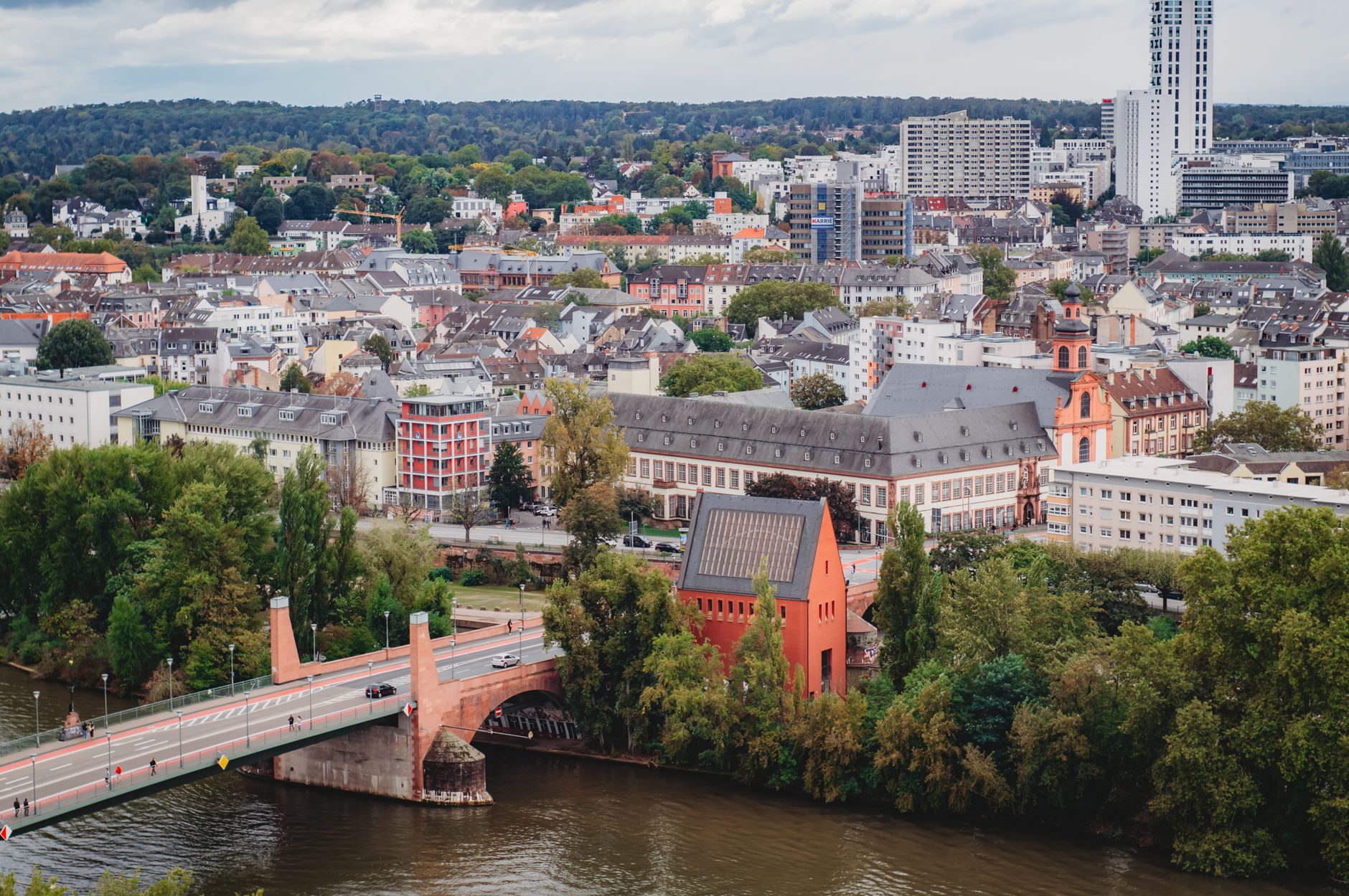
Neighbourhoods
Frankfurt Districts: The Big Overview
From the old town and the Bahnhofsviertel via the Westend, Nordend and Bornheim to Sachsenhausen, Ostend and Höchst: the character, landmarks and visitor tips for Frankfurt's key neighbourhoods.
Katharina Vogt19 June 2026