Schirn Kunsthalle Frankfurt: Exhibitions, Tickets & the Move to Bockenheim
Frankfurt's Kunsthalle shows everything except its own collection — because it hasn't got one. Why the programme matters more than the address, why you shouldn't walk to the Römerberg for it at the moment, and how I build half a day around it.

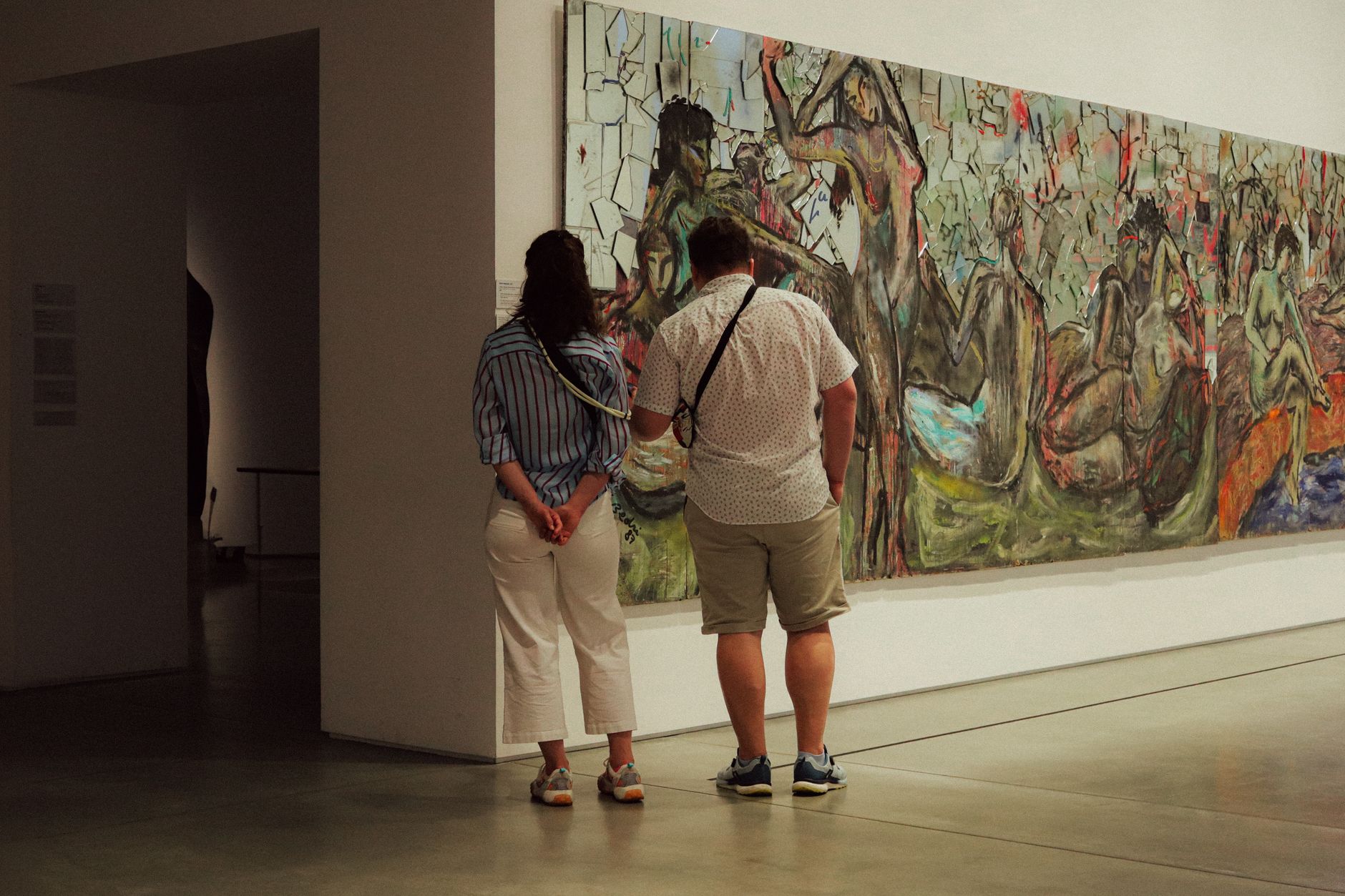
The most common disappointment I see among visitors to Frankfurt has a name: the Schirn. Someone has read that the Schirn Kunsthalle ranks among the great exhibition venues in Germany, strolls the few steps on from the Römerberg — and finds a building with nothing in it. No galleries of masterpieces, no “collection highlights”, and on a bad day not even an open door. That is not misfortune and not a badly chosen afternoon. It is how this institution works, and once you have understood the difference, you plan the visit completely differently and are rarely disappointed again.
A Kunsthalle means you visit a programme, not an address
The distinction sounds academic, but it decides your afternoon. A collection museum such as the Städel on the Museumsufer owns its holdings: Botticelli, Vermeer and Tischbein’s Goethe hang there, and if you walk in on an ordinary Tuesday, they are on the wall. A Kunsthalle owns none of that. It has rooms, a team and a budget — and borrows everything it wants to show, exhibition by exhibition.
That is exactly how the Schirn has operated since it opened on 28 February 1986. Roughly 280 exhibitions have passed through the building since, seen by more than ten million people; the record year was 2023, with 502,961 visitors, carried above all by the huge Chagall show. Kandinsky, Giacometti, Yves Klein and Bill Viola are all on that list — but as shows that ran and were then taken down again. Under directors including Max Hollein (2001–2016), Philipp Demandt and, since July 2022, Sebastian Baden, the house has built a reputation for rediscoveries: artists overlooked elsewhere get their first substantial retrospective here.
Three practical consequences follow. First, what is currently on decides entirely whether the trip is worth it for you — the institution’s reputation does not. Second, between two exhibitions the Schirn really does close altogether. As I write this in late September 2026, schirn.de simply says the house is shut until 1 October while the next show is installed. Third, and this is the pleasant side: a return visit a year later is guaranteed to be a different experience. So check the programme before you set off. With the Schirn that is not filler advice — it is half the preparation.
The building on the Römerberg, and why there is scaffolding on it
The building itself is a Frankfurt landmark, even if plenty of visitors could not name it. The long block by the Berlin practice BJSS runs some 140 metres between the Römer and the Imperial Cathedral, with a colonnade that borrows from the Uffizi in Florence, and more than 2,000 square metres of exhibition space. Its centrepiece is the rotunda: a drum roughly twenty metres across, capped with a glass dome, serving as the monumental entrance. The odd name, incidentally, comes not from art but from meat — a “Schirn” was an open sales stall, and this is precisely where the butchers’ guild kept its booths until the nineteenth century.
Right now, though, there is not much of it to see. Since late October 2025 the building has been undergoing an energy-efficiency refurbishment, and this is no cosmetic job: the pale sandstone façade has lost its structural integrity to moisture and is being replaced entirely, alongside insulation, heat-protective glazing, LED lighting, photovoltaics on roof and façade, planting, new fire protection and a rebuilt foyer. The city has approved well over 30 million euros for the work, which is due to finish around 2028. Until then the Römerberg site is a building site behind scaffolding — something I spell out plainly here, because a great many guidebooks and city maps have yet to catch up.
Bockenheim: a Kunsthalle in a printing works from 1890
So the Schirn has moved, to somewhere with nothing in common with its old address: the former Dondorf printing works at Gabriel-Riesser-Weg 3, 60325 Frankfurt-Bockenheim, on the site of the future Kulturcampus. The state of Hesse provides the building rent-free, and the city has put around 6.3 million euros into adapting it — museum-standard climate control, floors, walls, lighting, security. The venue opened on 7 September 2025 with a dance parade across the city, the participatory project “In C – Community” by Sasha Waltz & Guests; regular exhibitions began on 25 September 2025.
The format stays faithful to the original: two exhibitions run in parallel, in HALL 1 on the first floor of the main building and in HALL 2 on the far side of the courtyard. Add an open foyer with interpretation, the MINISCHIRN for younger children, and event spaces.
It was the building that surprised me most. The brick structure of 1890 is one of the last industrial buildings left in Bockenheim. Bernhard Dondorf founded the firm in 1833 on Saalgasse in the old town and moved production out here in 1873; what came off the presses were playing cards, board games, securities and forgery-proof banknotes of international standing, made by a workforce that peaked at 550. The Jewish family who built it were persecuted, deported and for the most part murdered under National Socialism, the business confiscated in 1933; bombing destroyed much of the plant in 1944, and from 1961 the site belonged to Goethe University’s Bockenheim campus. That contemporary art should now fill this hall strikes me as one of the most fitting interim uses anywhere in the city.
The programme is a calendar, not a constant
2026 is a particular year: the Schirn turns 40 and marked the anniversary with a jubilee weekend from 8 to 10 May. What a Kunsthalle year looks like is visible in the season — Bárbara Wagner & Benjamin de Burca with “The Tunnels We Dig” from late January to late April 2026, Thomas Bayrle’s “Be Happy!” from February to May, “The World Through AI” across the summer, then from 1 October the Czech sculptor Anna Hulačová with “Abundantia”, and from 23 October the first major German retrospective devoted to Leonor Fini, running into February 2027.
I list those titles deliberately as a snapshot rather than a recommendation: if you are reading this six months from now, something else is guaranteed to be on the walls. The current line-up lives on schirn.de, and for the big autumn shows the early-bird rate is worth having.
Seven euros — and two for one on the first Friday
Admission is the most cheerful part of this article. For the exhibitions in Bockenheim, adults pay 7 euros, concessions 5 euros, and the family ticket for two adults with children under 18 costs 14 euros; children under eight go free, school and student groups pay 4.50 euros a head, and with the Kulturpass it is a symbolic 1 euro (as of 2026). There is also an offer hardly anyone seems to know about: on the first Friday of every month, buy one ticket and the second is free.
Holders of the MuseumsuferCard get into every Schirn exhibition free all year — I unpick how that card scheme works and who it actually pays off for in my guide to the Museumsufer. Lockers inside are free to use, pushchairs included. Photography is not permitted in the exhibition spaces as a rule, though individual shows do release private, flash-free pictures — ask at the desk rather than finding out the hard way.
Hours, getting there, and the car park that takes coins only
The Schirn opens Tuesday to Sunday from 10 a.m. to 7 p.m., and until 10 p.m. on Thursdays; it is closed on Mondays (as of 2026). Ticket sales stop half an hour before closing, which is tight for a show of this size — allow ninety minutes rather than thirty. I am fond of the late Thursday here, because Bockenheim in the evening has a quiet, studenty character all of its own.
Getting there is straightforward: U4, U6 and U7, plus tram 16, all stop at Bockenheimer Warte, as do bus routes M32, M36, 50 and 75, and it is about a 200-metre walk from there. By car it gets fiddlier. The nearest car park is the Ladengalerie at Bockenheimer Warte with 320 spaces, and it has a quirk that catches people out: payment is cash only, in coins. If you drive in Frankfurt regularly, this rundown of the car parks in central Frankfurt sets out the alternatives and what they charge; two accessible bays are reached via Sophienstraße 1–3.
If you are driving in from further afield, it pays to look soberly at the distance and realistic driving time into Frankfurt first — the A5 and the Westkreuz interchange are no fun in the afternoon, and in most cases the train will get you to Bockenheimer Warte faster.
Schirn, Städel or MMK — what I tell people
These three houses get mentioned in one breath constantly, and they could hardly be more different. Go to the Städel if you want certainty of seeing famous names; it is the most dependable art afternoon in the city. Go to the MMK and its “slice of cake” on Domstraße for art made after 1960 from its own holdings, rehung regularly, with Warhol, Beuys and Richter behind it. And go to the Schirn for one particular exhibition — not for the building.
If friends give me a single afternoon and ask nothing further, I send them to the Städel. If they tell me what actually interests them, the Schirn wins surprisingly often, because whatever is on there is frequently the only chance to see it in Germany. Bockenheim and the Museumsufer are only a few U-Bahn minutes apart; if you would rather take a taxi back across town in the evening, it helps to know roughly what a city ride in Frankfurt costs, because fares here are not gentle.
One special case almost nobody thinks of: if you have several hours to kill between flights, you are far better off in the Schirn than in any terminal. From the airport’s S-Bahn station to Bockenheimer Warte is a good half hour with one change, and a visit takes one to two hours — that adds up neatly, provided you have the ground rules for a long layover at Frankfurt Airport straight and head back in time for security.
Café B, the courtyard and the half day around it
A café has always belonged to the Schirn, and in Bockenheim it is called Café B, run by Maison Badia in the inner courtyard. It is bright, airy and pleasantly unfussy — somewhere neighbours, families and exhibition-goers end up at adjacent tables, there is proper coffee, and a backgammon board occasionally appears. For me this yard is the real gain of the interim years: at the old address the café was a place you passed through, whereas here you sit down and stay.
Half a day builds easily around it. Take the exhibition in the morning while your head is fresh, then coffee in the courtyard, then a wander down Leipziger Straße with its small independent shops, or two stops further to the Palmengarten. Once the Schirn returns to the Römerberg in 2028, that plan shifts back into the old town — and the Kunsthalle becomes what it was for decades: a stop on the walk from the cathedral to the Römer, ideally combined with a loop through the New Old Town around the Hühnermarkt and the Golden Scales.
So next time you are in Frankfurt, do it the other way round from most visitors: don’t turn up and then see what is on, but see what is on and then decide. The Schirn rewards that small effort reliably — with a seven-euro ticket, an exhibition you are unlikely to encounter in this form twice, and, for now, a brick courtyard in Bockenheim where the city is quietly putting a piece of its own history back to work.
Keep reading
Attractions
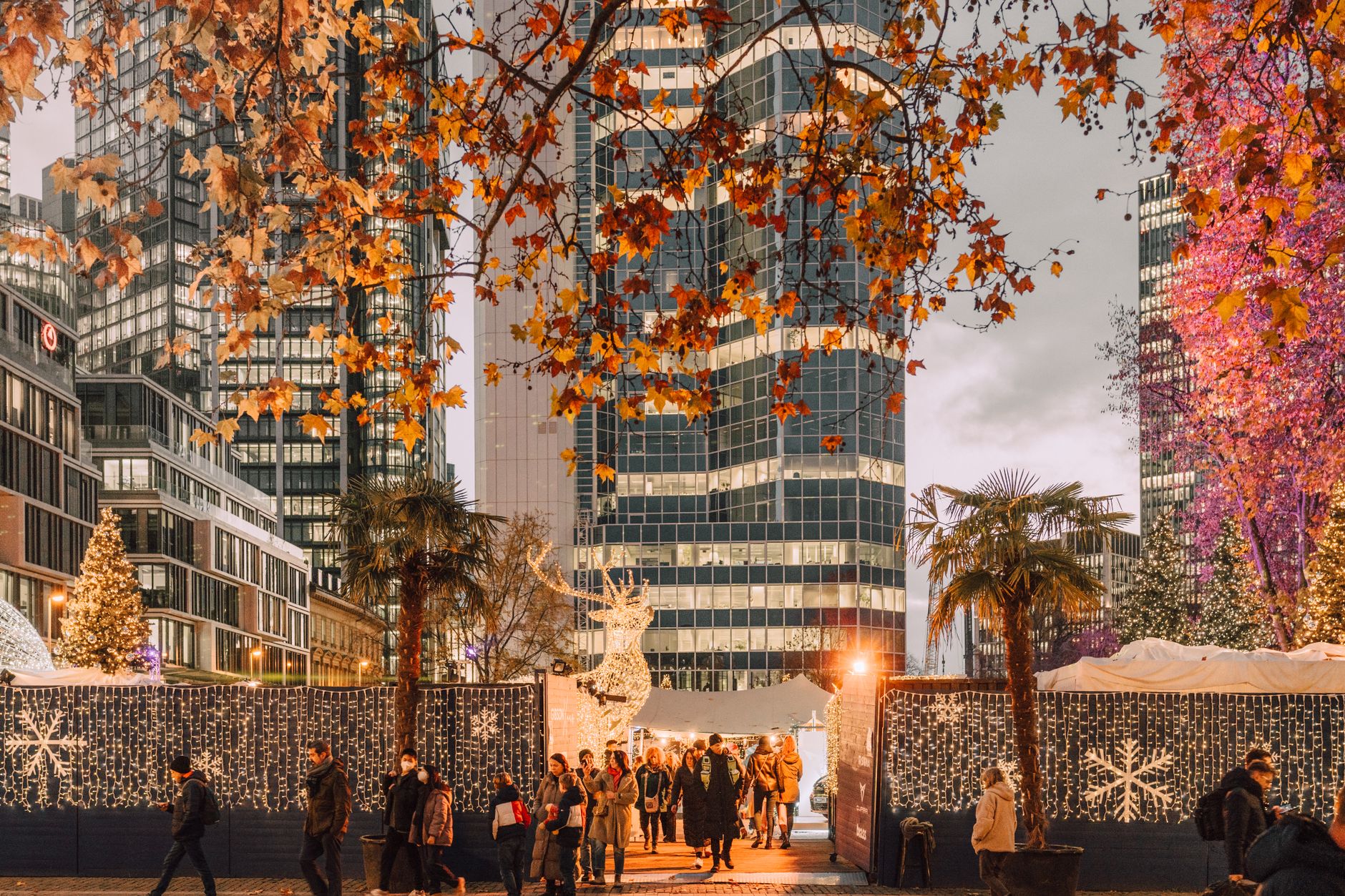
Frankfurt Christmas Market: Dates, Stalls & Tips
The Frankfurt Christmas Market on the Römerberg: history since 1393, the usual dates and opening hours, the areas from Hauptwache to the Mainkai, specialities like Bethmännchen and hot apple wine — and tips against the crowds.
Katharina Vogt16 June 2026
Attractions
Frankfurt Zoo: Tickets, Animals & Visitor Tips
Your visit to Frankfurt Zoo: current admission prices (as of 2026), opening hours and the highlights from the Grzimek House and Exotarium to the Borgori-Wald, Cat Jungle and Ukumari-Land — with tips from a local.
Katharina Vogt16 June 2026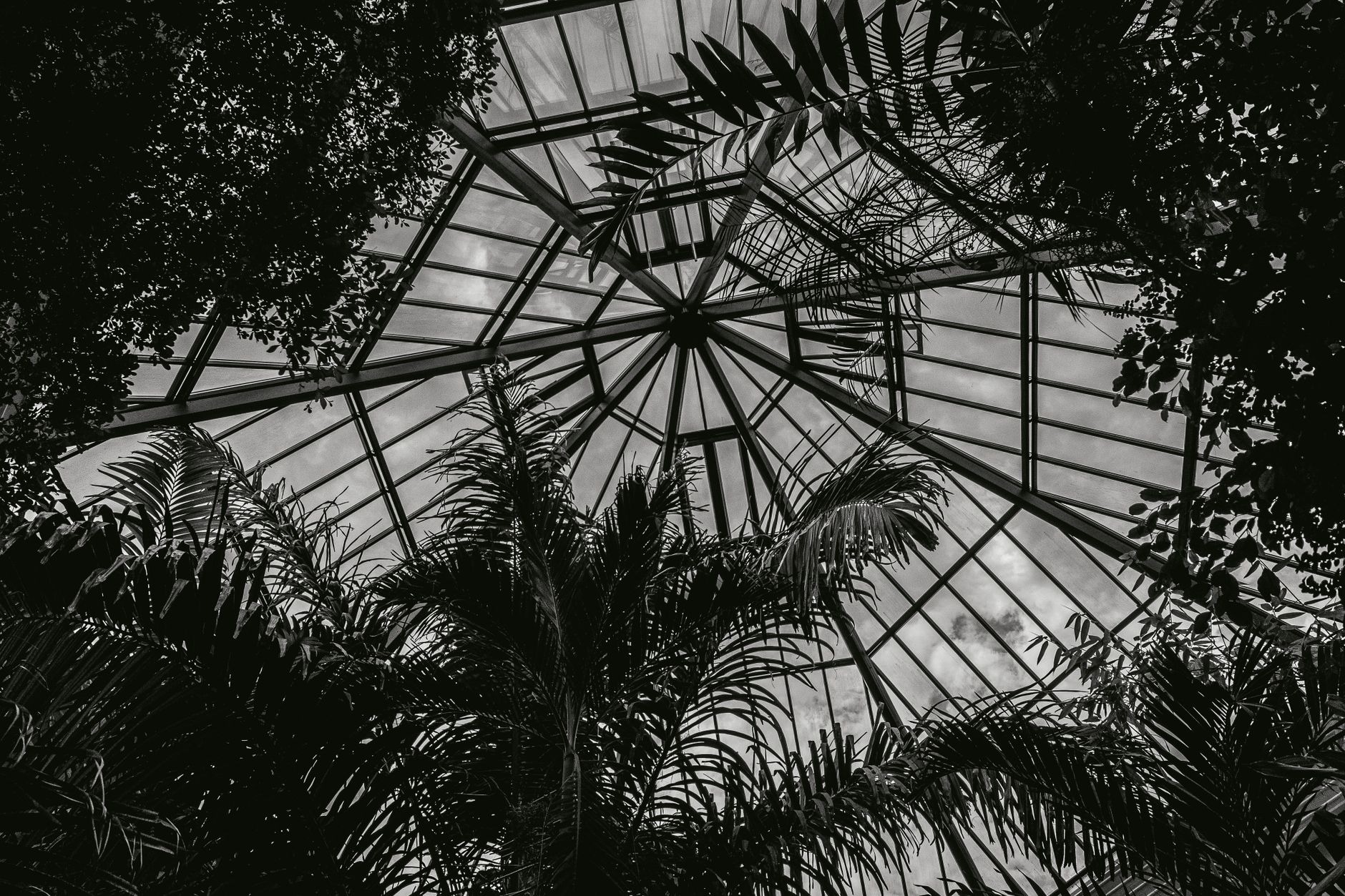
Attractions
Palmengarten Frankfurt: Tickets, Highlights & Tips
Everything for your visit to the Palmengarten in Frankfurt: current admission prices, opening hours, the loveliest glasshouses and exhibitions, plus practical tips from a local.
Katharina Vogt16 June 2026
Attractions
Theatre in Frankfurt: Schauspiel, English Theatre, Tigerpalast and More
Frankfurt's stages beyond the opera: the Schauspiel Frankfurt with English surtitles, the English Theatre back in the Gallileo tower, variety at the Tigerpalast, plus the Volksbühne and the Mousonturm, with 2026/27 prices, box-office hours and what works if you speak no German.
Katharina Vogt25 September 2026