Jewish Museum Frankfurt: Tickets & Opening Hours
Two houses, one great history: the Rothschild-Palais on the Museumsufer and the Museum Judengasse built over the foundations of the old ghetto. What awaits you, what admission costs, and when you get in free.

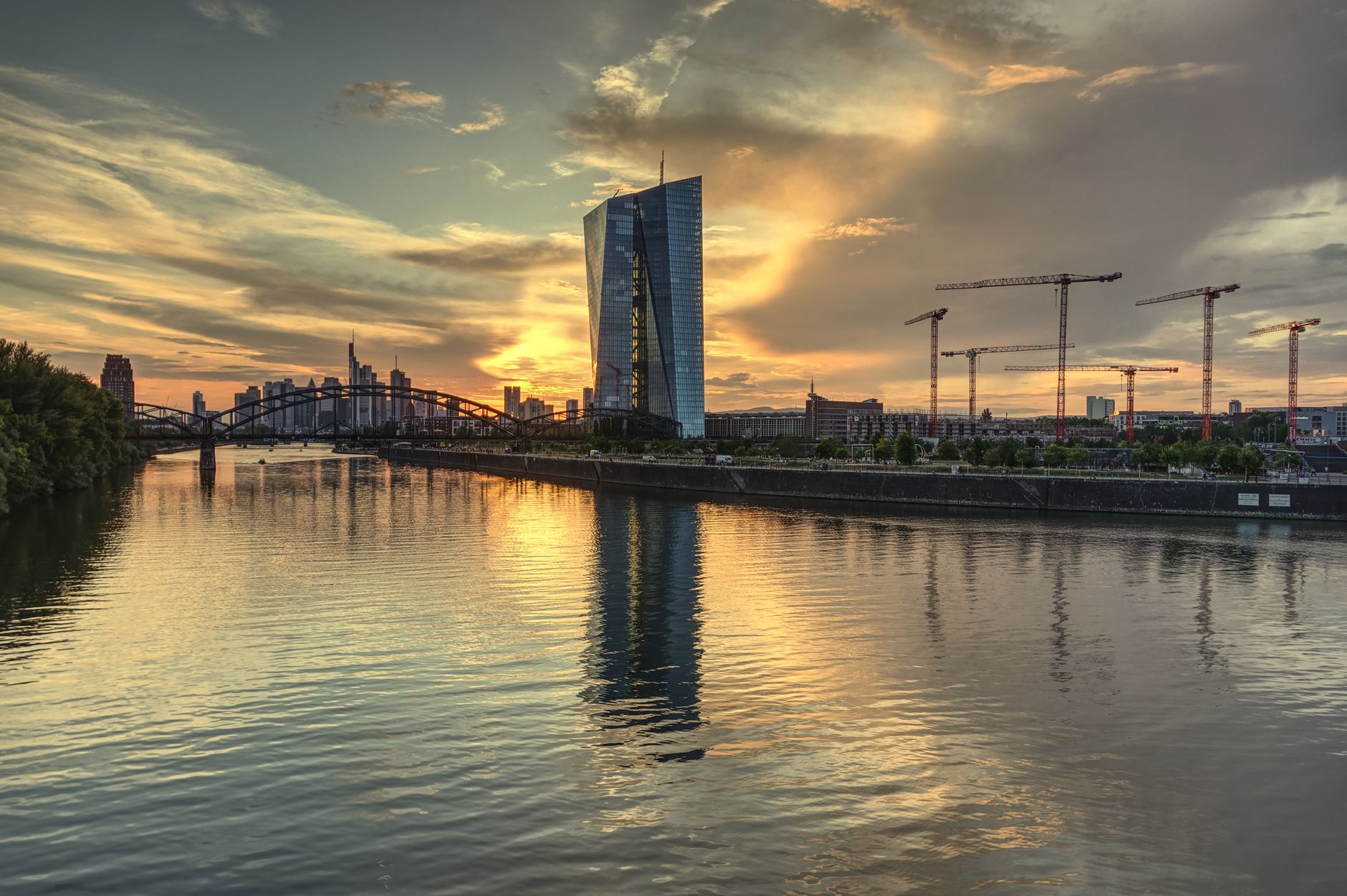
Some museums you visit for a single exhibition. I go to the Jewish Museum Frankfurt because it tells the story of my city like nowhere else — across more than 800 years, and in two houses that are only a walk apart. One stands as an elegant palace on the Museumsufer; the other rises over the exposed walls of the medieval ghetto, in the middle of today’s business district. Together they are what makes this place so special: they show Jewish life not as a closed chapter but as a natural part of this city — from the early modern era right up to the present day.
The Jewish Museum Frankfurt is considered the oldest independent Jewish museum in the Federal Republic of Germany. It opened in 1988, half a century after Frankfurt’s synagogues were destroyed in the November pogrom. Anyone who really engages with it leaves with a different view of the city — of the street names, of the Rothschilds, of the blank spaces in the townscape where something once stood.
The Rothschild-Palais on the Museumsufer
The main site sits at Bertha-Pappenheim-Platz 1 on the north bank of the Main, where the great row of riverside museums begins. It occupies a neoclassical palace on the Untermainkai that once belonged to the Rothschild family — hence the name. So the building itself already speaks of the rise that stands at the centre of the exhibition: a family that went from the cramped Judengasse to becoming one of the most influential banking dynasties in Europe.
In 2020 the museum reopened after years of renovation, gaining a bright, glazed extension known as the Lichtbau (“light building”). It now holds the foyer, the café and the museum shop run by the Literaturhandlung bookshop, linking the historic palace to a modern entrance. I like the contrast: outside, the austere 19th-century façade; inside, plenty of light and room to arrive.
At its heart is the permanent exhibition “Wir sind Jetzt. Jüdisches Frankfurt von der Aufklärung bis zur Gegenwart” (We Are Now. Jewish Frankfurt from the Enlightenment to the Present). It begins around 1800, when Frankfurt became one of the most important centres of Jewish life in Europe, and carries through to our own time. You meet the great civic families, the religious and cultural life, the rupture of the Nazi years and the new beginning that followed — told through art, Judaica, documents, photographs and countless personal objects that suddenly make the abstract history feel very close.
What moved me most was the Frank Family Center. Anne Frank was born in Frankfurt in 1929, and her family had deep roots here long before they emigrated to the Netherlands. The centre preserves the family’s estate and makes them tangible as a Frankfurt family — beyond the famous diary. If you have children or teenagers with you, this offers a very accessible way into a difficult subject.
Museum Judengasse: the city beneath the city
The second site lies a good 15-minute walk away at Battonnstraße 47, close to Konstablerwache. From the outside it’s a plain 1980s building — but inside you step onto the archaeological foundations of the Frankfurt Judengasse, the oldest Jewish ghetto in Europe.
The story of this place is also a story about remembering itself. In 1987, construction work for a municipal building on Börneplatz uncovered the foundations of the old lane. A fierce public dispute broke out over whether the finds should be preserved or built over. In the end preservation won: over the foundations of five houses, the museum was created that today shows everyday Jewish life in the early modern period.
From the 15th century onwards, Frankfurt’s Jews were forced to live here, in a single long and narrow lane cut off from the rest of the city — at times more than 3,000 people in the tightest of spaces, behind gates that were locked at night. The exhibition makes both that confinement and the vitality of this world palpable: you see the exposed cellars and wells, a ritual bath, and learn how trade, family, religion and scholarship coexisted in so little space. The Rothschilds, incidentally, came from this very lane; their name derives from an old house sign, the “red shield”. Visit both houses and the thread running between them suddenly appears.
The old cemetery and the names on Börneplatz
Right beside the Museum Judengasse lie two places I would not want anyone to miss, even though they are not “programme” in the usual sense. The Old Jewish Cemetery on Battonnstraße is one of the oldest Jewish cemeteries in Europe; it was in use for centuries and stands for some 800 years of Jewish history in Frankfurt. You can normally enter it only on the museum’s guided tours — a quiet, deeply affecting hour.
Along the wall runs the Neuer Börneplatz Memorial. Set into the stone wall are almost 12,000 small blocks, each bearing the name of a Frankfurt Jew murdered in the Shoah. Many visitors follow the Jewish custom of placing a small stone on one of the blocks. You walk slowly along this wall, reading names and years of birth, and you grasp that behind every abstract figure stood a single person from this city. Take a few deliberate minutes here — it is the place that stays with you longest.
Opening hours and admission (as of 2026)
Both houses keep the same hours:
- Tuesday to Sunday: 10 a.m. to 6 p.m.
- Thursday: the temporary exhibition in the Rothschild-Palais stays open until 8 p.m.
- Monday: closed
The prices reward a closer look, because a single ticket often covers more than you’d expect (as of 2026):
- Museum ticket (permanent exhibition at the Rothschild-Palais + Museum Judengasse): €12, reduced €6
- Combined ticket (museum + temporary exhibition): €14, reduced €7
- Temporary exhibition only: €7
- Family card: €20
- Museum Judengasse on its own: €6, reduced €3
- Children and young people under 18: free
- Frankfurt-Pass / Kulturpass: €1
The key point: the standard €12 museum ticket is valid for both houses. So if you plan to see both — and I recommend you do — you don’t need a second ticket. There are two lovely free opportunities on top of that: admission is free on the last Saturday of every month (“Satourday”), and on your birthday you get in free at any age. As prices and public-holiday opening can change, it’s worth a quick look at juedischesmuseum.de before a dedicated visit.
Getting there and the walk between the two houses
Both sites are central and best reached without a car. For the Rothschild-Palais on the Untermainkai, take the U-Bahn to Willy-Brandt-Platz; the tram also stops right on the riverbank (lines 11 and 12, Untermainbrücke stop). From the station district or the old town it’s only a few minutes on foot. The Museum Judengasse is a stone’s throw from Konstablerwache, the big S-Bahn and U-Bahn hub at the eastern edge of the city centre.
The nicest way to link the two, though, is on foot. The route from Battonnstraße down to the river runs straight through the old town, past the Römer and the cathedral — allow a little extra time for it, and read my historic walk through Frankfurt’s old town beforehand. Arrive at the river and you’re already at the start of the Museumsufer with the Städel, and for a further layer of the city’s history the Historical Museum on the Römerberg pairs beautifully with the visit.
How I would approach the visit
If you have half a day, start at the Museum Judengasse while you’re still fresh — the early history, the confinement of the lane, and then the quiet minutes at the cemetery and the wall of names all demand concentration. From there, walk through the old town down to the Main and let the visit finish at the Rothschild-Palais, where the story reaches the present. That way you experience the arc of time in the right direction: from the ghetto to an emancipated civic society, through the rupture of the Nazi years, to the plain, defiant statement that gives the main house its title — “We are now”.
It is not an easy visit, and it isn’t meant to be. But it is one that stays with you. Take your time, read the names, and afterwards you will understand Frankfurt a little more precisely — as a city whose Jewish history sits not at the margins but right at its heart.
Keep reading

Attractions
DFF – Film Museum Frankfurt: Exhibition, Cinema & Tips
The DFF – German Film Institute & Film Museum on the Schaumainkai: the two floors of the permanent exhibition, the in-house arthouse cinema, special shows such as Wim Wenders in 2026, plus current prices and opening hours.
Katharina Vogt30 June 2026
Attractions
Museum of Applied Arts Frankfurt: Collection, Villa Metzler & Visit
The white Richard Meier building on the Museumsufer: the collection from European craftsmanship to East Asian art, the Villa Metzler, the Emma Metzler restaurant, prices and opening hours (as of 2026).
Katharina Vogt27 June 2026
Attractions
Städel Museum Frankfurt: Tickets, Opening Hours & Highlights
The Städel Museum on Frankfurt's Museumsufer: 700 years of art from Botticelli and Vermeer to Monet, the underground Garden Halls, opening hours, admission prices and the Tuesday Special.
Katharina Vogt22 June 2026
Attractions
Museum of Communication Frankfurt: Behnisch Building, Tickets & Tips
The glass Behnisch building on the Museumsufer, Nam June Paik's robot Pre-Bell-Man and hands-on stations for children: admission, opening hours and tips for the Museum of Communication Frankfurt.
Katharina Vogt23 June 2026