Museum of Applied Arts Frankfurt: Collection, Villa Metzler & Visit
A dazzling white Meier building, a neoclassical villa, European craftsmanship beside East Asian lacquer — why the Museum of Applied Arts on Schaumainkai is my favourite underrated house on the Museumsufer.

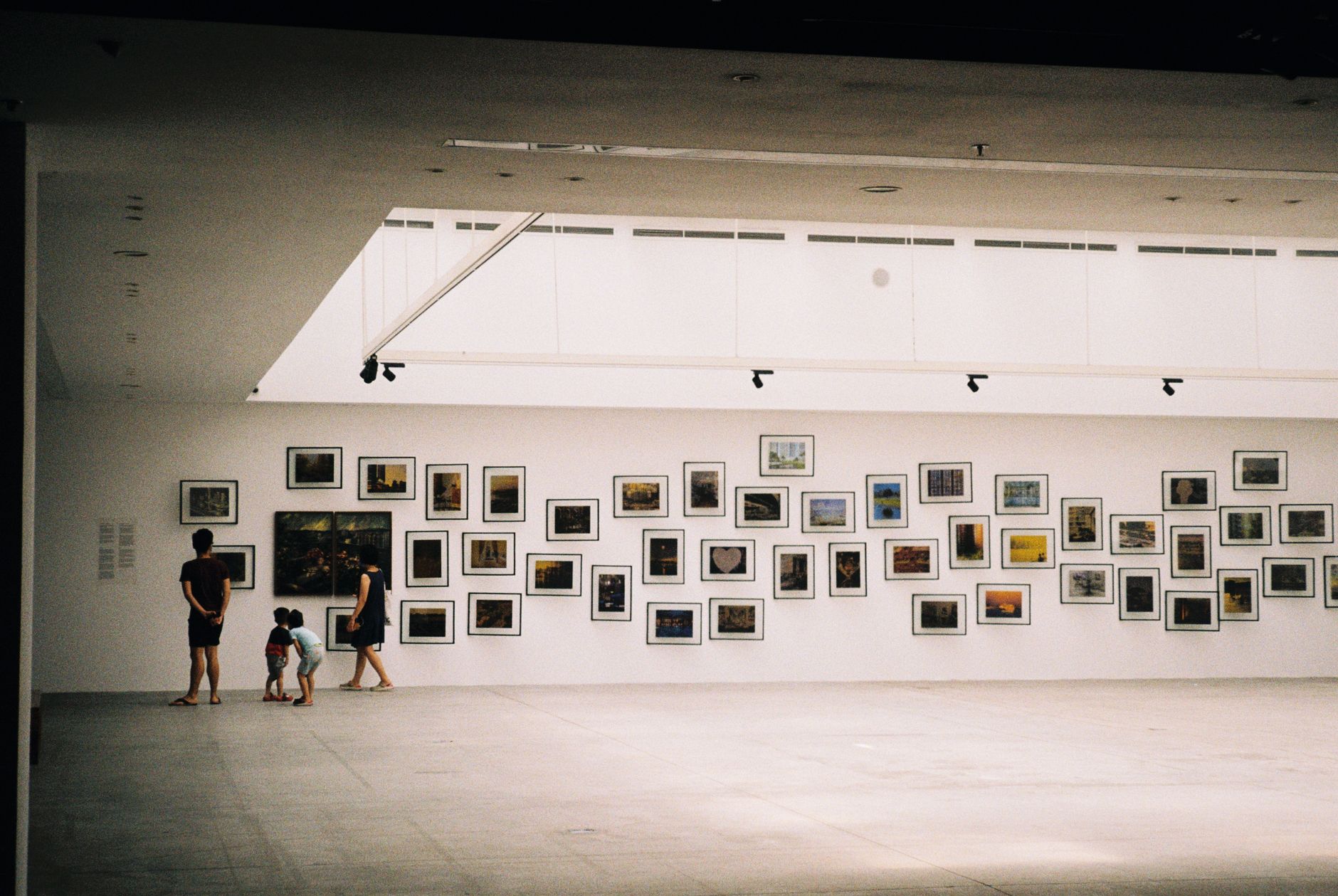
The white building catches your eye at once as you walk along the Sachsenhausen riverbank: crisp, bright, almost floating between the old trees on Schaumainkai. Many people take it for an elegant office block and carry on towards the Städel. Yet behind that cool façade hides one of the most rewarding — and most frequently overlooked — houses on the Museumsufer: the Museum of Applied Arts. I’ve been coming here for years, precisely because it’s never as crowded as the big names next door, and because you grasp something here that Frankfurt rarely makes you look at consciously: just how much design, skill and history sit inside the objects that surround us every day, from a medieval silver goblet to the Braun coffee maker that Dieter Rams designed.
Two buildings in conversation
What makes this museum special begins before you even go in, because it is really two buildings holding a dialogue across almost two centuries. There is the Villa Metzler, a neoclassical summer house from 1804, originally built for the apothecary Peter Salzwedel: a square ground plan, three storeys, five window axes on each side, entirely in the French-influenced style of the day. Less than fifty years later the banker Georg Friedrich Metzler bought the property and gave it the name it still carries.
And there is the large white new building, designed by the American architect Richard Meier and opened in 1985. Meier, one of the most influential museum architects of the 20th century, didn’t tear the old villa down or leave it in the shadows — he took its proportions and grid as his basic module and grew from them a luminous, gridded structure that opens up with great glazed walls onto the park and the Main. Walk through the white ramps and galleries and you feel daylight becoming a building material. For me that walk through the bright rooms is almost as lovely as the exhibitions themselves — and it’s one reason the house deserves a stop even on a short stroll along the Museumsufer.
A collection of things that were used
The name says it all: this is about applied art — everything that unites form and function. Not paintings on the wall but objects that people made, used, treasured and passed on. The collection runs to many tens of thousands of pieces and reaches from the Middle Ages to the present day, which makes the house one of the most important addresses for design in Germany.
European craftsmanship forms the historic backbone: ceramics and faience, glass, silver and goldsmith’s work, enamel art, furniture and textiles from the Middle Ages, the Renaissance, the Baroque and the centuries that followed. If you like looking closely, this is where you notice the details a photograph never captures — the engraving on a goblet, the glaze on a faience bowl, the inlay of a Baroque cabinet.
Just as strong is the modern design department, and this, to my mind, is what makes the museum feel so alive. Here stand furniture, tableware, cutlery and everyday objects of industrial production from the 20th and 21st centuries — from the espresso machine to the office chair. Two permanent style rooms are especially worth seeking out: one is devoted to Dieter Rams, whose sober, clear Braun appliances shaped design thinking worldwide; the other to the architect Richard Meier himself. Add to that the book art — from illuminated medieval manuscripts through early incunabula to artists’ books and bindings — and a dedicated graphic design holding with posters, type and paper samples and contemporary book design. It’s a rare chance to see everyday things taken as seriously as they deserve.
East Asia and the Islamic world: the quiet treasures
What surprises many visitors: this Frankfurt house holds an exceptionally rich non-European collection spanning millennia. The Asian department reaches from the Neolithic to the present and centres on East Asia and the Middle East. Its holdings include Chinese ceramics, Japanese painting as well as book and woodcut art, and the precious East Asian lacquerware whose deep, mirror-like surfaces look particularly striking in Meier’s light.
Buddhist sculpture from China and Thailand is here too, and — often unmentioned — a fine Islamic holding of ceramics, metalwork and textiles from Iran. These parts of the collection are rarely all on show at once, because the museum reshuffles its rooms regularly; under the title “meet asian art”, the East Asian objects repeatedly move centre stage in changing arrangements. That’s precisely the appeal: you see something different on every visit.
Nine style rooms in the Villa Metzler
My personal recommendation is to make a point of allowing time for the Villa Metzler, because many guests stay only in the white new building. Since 2009 the villa has shown nine style rooms that bring historical domestic culture to life, from the Baroque to Art Nouveau. Whole living ensembles have been recreated here from the museum’s own collections: furniture, porcelain, carpets, paintings, photographs and accessories that show how patrician and aristocratic households were actually furnished over the centuries.
It’s a completely different experience from a display case — you stand in a room that feels as though its occupants have only just stepped out. Anyone who cares about domestic history, craft or antiques will happily lose half an hour here without noticing. And afterwards you understand the Meier building better: only against the old villa does it become clear how radically modern the white structure must have looked in 1985.
Exhibitions that take a stance
What lifts the Museum of Applied Arts above being a mere treasure house is its concept-driven temporary exhibitions. They don’t simply revisit historical themes but put questions to the present — about design, fashion, craft, graphics and digital culture. In 2026, for instance, the house ran shows such as “Design for Democracy”, which examined how design shapes democratic processes, and “On Display: How Graphic Design Shapes Us” (as of 2026). Exhibitions like these are why I keep coming back: you leave with a different eye on the world outside the door.
Because the programme changes constantly, it’s worth a quick look at museumangewandtekunst.de before you set off, so you know what’s on — not as filler, but because here the current show is often the heart of the visit.
Metzlerpark and the Emma Metzler
One detail that’s easily missed: around the buildings lies the green, mature Metzlerpark, which runs right down to the riverbank. In fine weather it’s one of the calmest spots on the Sachsenhausen side — shady trees, a view of the water, and far more relaxed than the busy riverside paths closer to the centre.
Directly behind the museum sits the restaurant Emma Metzler, and this is no ordinary museum canteen. Head chef Anton de Bruyn, who previously worked in Michelin-starred kitchens in Hamburg, on the Moselle, in Vienna and London, cooks in a modern neo-bistro style with regional produce from the Rhine-Main area; the restaurant was awarded two Gault-Millau toques right after it opened. Its generous terrace looks straight out over the Metzlerpark. It’s open Tuesday to Saturday from midday to 11 p.m. and on Sundays from midday to 6 p.m. (as of 2026). Whether it’s a fine lunch, coffee and cake after your tour, or dinner to round off the day, the Emma Metzler quickly turns a museum visit into half a day out. For an unhurried outing for two, the combination of exhibition, park and terrace is one of my favourite ideas for Frankfurt as a couple.
Opening hours and the cheapest day (as of 2026)
The opening hours are pleasingly visitor-friendly:
- Tuesday, Thursday to Sunday: 10 a.m. to 6 p.m.
- Wednesday: 10 a.m. to 8 p.m. (extended)
- Monday: closed
The long Wednesday until 8 p.m. is ideal if you have no time during the day — after work it’s especially quiet.
For admission, adults pay a standard €9 and the reduced rate is €4 (as of 2026). There’s a combined ticket with the Icon Museum for €12 (reduced €6) if you want to see both houses. The many concessions are especially welcome:
- Children and young people under 18: free entry
- Every last Saturday of the month: free entry for all
- Kultur Pass holders and refugees: one euro
- Museumsufer Card holders: free
If you want to see several houses in a day or over a weekend, the Museumsufer Ticket or Museumsufer Card works out far cheaper — a good tip if the Städel Museum next door is already on your list. As prices and times can change on public holidays, it’s worth a quick check of the official site before you set off.
How to get there
The Museum of Applied Arts is at Schaumainkai 17, 60594 Frankfurt am Main, in the middle of the Museumsufer in Sachsenhausen. The most convenient way to arrive is by U-Bahn lines U1, U2, U3 or U8 to Schweizer Platz station, a few minutes’ walk away. Alternatively, tram lines 15 and 16 bring you to the stop Schweizer Straße/Gartenstraße. From the Römer it’s a lovely walk across the Eiserner Steg footbridge to the other bank. There’s a paid car park behind the museum, but in cramped Sachsenhausen I firmly recommend public transport.
If you ask me for the ideal plan: come on the long Wednesday or on the last Saturday of the month, begin in the bright Meier building with the current temporary exhibition, work your way through design and craftsmanship, treat yourself to the quiet East Asian rooms, and finish with the style rooms of the Villa Metzler. Then a coffee on the Emma Metzler terrace with a view of the park — and you’ll understand why I so happily press this underrated house on other people. It isn’t a museum that overwhelms you with superlatives. It’s one that teaches you to look more closely.
Keep reading
Attractions
Städel Museum Frankfurt: Tickets, Opening Hours & Highlights
The Städel Museum on Frankfurt's Museumsufer: 700 years of art from Botticelli and Vermeer to Monet, the underground Garden Halls, opening hours, admission prices and the Tuesday Special.
Katharina Vogt22 June 2026
Attractions
Jewish Museum Frankfurt: Tickets & Opening Hours
The Jewish Museum Frankfurt across two sites — the Rothschild-Palais on the Museumsufer and the Museum Judengasse over the old ghetto. The WE ARE NOW permanent exhibition, prices, opening hours and how to get there (as of 2026).
Katharina Vogt19 June 2026
Attractions
Weltkulturen Museum Frankfurt: Collection, Exhibitions & Tips
The Weltkulturen Museum on Frankfurt's Schaumainkai: its ethnographic collection of around 65,000 objects, the no-permanent-display principle, opening hours, admission and tips from a local.
Katharina Vogt14 July 2026
Attractions
DFF – Film Museum Frankfurt: Exhibition, Cinema & Tips
The DFF – German Film Institute & Film Museum on the Schaumainkai: the two floors of the permanent exhibition, the in-house arthouse cinema, special shows such as Wim Wenders in 2026, plus current prices and opening hours.
Katharina Vogt30 June 2026