DFF – Film Museum Frankfurt: Exhibition, Cinema & Tips
From the peep-box to the Cinématographe: at Schaumainkai 41 the DFF shows how cinema was invented and how films tell their stories — and then you simply sit down in its own cinema.

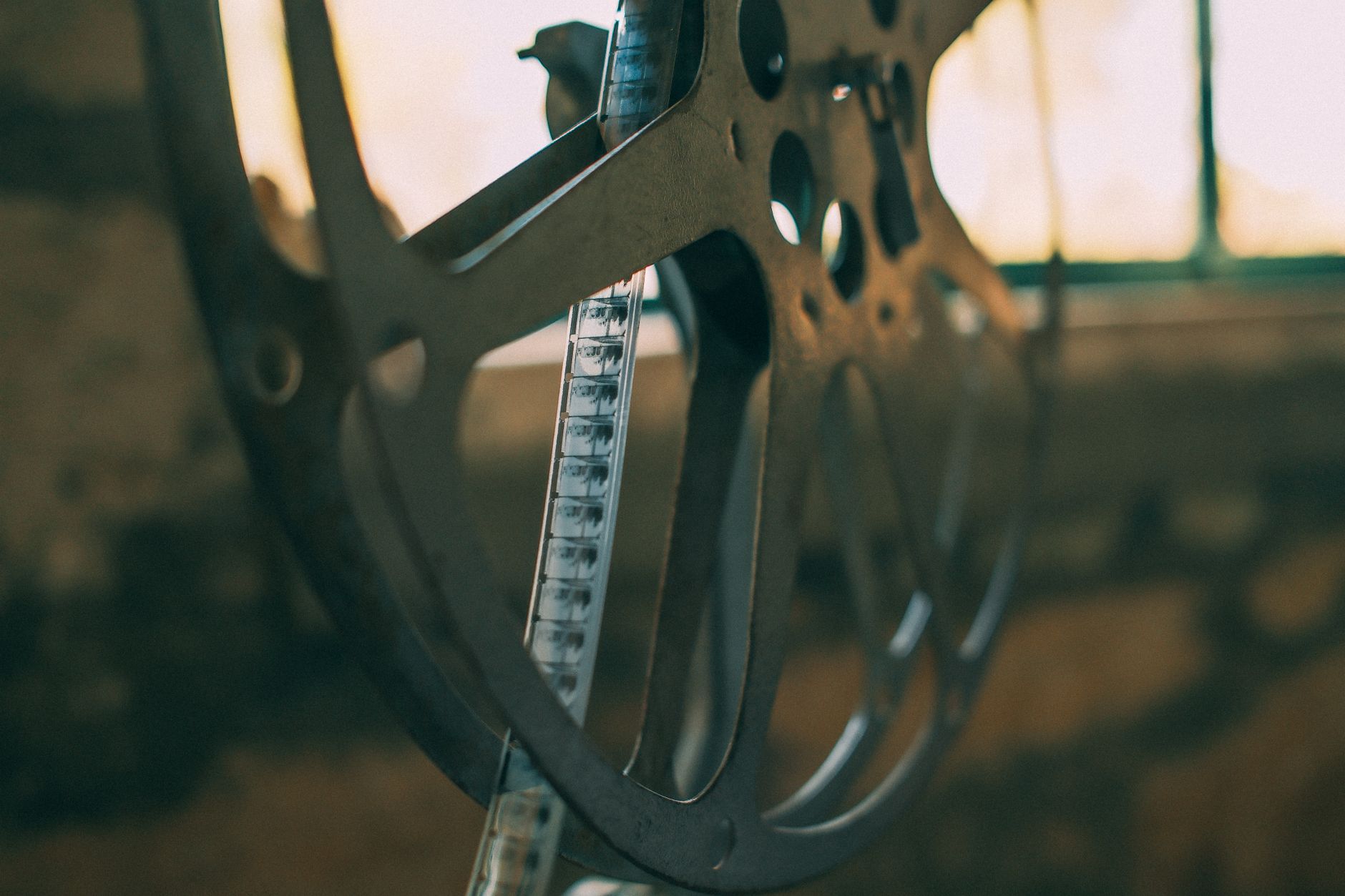
Whenever I have visitors from abroad and the rain sets in, I take them to almost the same place every time: the Schaumainkai, to the DFF. Its unwieldy official name is the German Film Institute & Film Museum, and that is exactly what it is — museum, archive and cinema in a single building on the Museumsufer. What I love about it is that it asks a childishly simple question and answers it across two floors: how did the moving image actually learn to move? Once you have turned a crank yourself and grasped why the eye blends single frames into motion, you watch every film differently afterwards.
More than a museum: institute, archive and cinema under one roof
The DFF is not a place you tick off once. It collects and preserves films, runs an archive and a library, publishes books — and shows all of it through a permanent exhibition, changing special shows and its own arthouse cinema. That mix is what sets it apart: you learn in the morning how an edit works, and in the evening, in the same building, you watch masters of the craft doing precisely that. The DFF is a fixture of Frankfurt’s museum mile along the Museumsufer, and with the Städel, the Museum of Communication and the Liebieghaus all within walking distance, the visit expands easily into a full day of culture.
Ground floor: “Cinematic Perception” — how cinema was invented
The first level of the permanent exhibition is called “Cinematic Perception” and is devoted to the optical media of the 18th and 19th centuries and to the invention of film itself. It is organised into six themes, and the lovely thing is how much of it you can try for yourself.
- Curiosity: it begins with peep-boxes and kaleidoscopes — the optical playthings that enchanted audiences long before cinema existed. Working models let you understand how these devices function.
- Movement: here the phenakistiscope, zoetrope and flip book spin and flick. They make it tangible why we see a fluid motion from a fast succession of still images — the founding principle of every film.
- Recording: from the camera obscura to the beginnings of photography — the step from the fleeting glance to the captured image.
- Projection: the magic lantern takes centre stage, including a restored, over-200-year-old hand-painted lantern. You realise at once that the urge to throw images large onto a wall is older than cinema itself.
- Moving Image: now it turns historic. Pioneers such as Étienne-Jules Marey feature, and the Lumière brothers make their entrance — with an original Cinématographe Lumière on display, the 1895 apparatus that combined recording and projection in one machine.
- Cinema: a small auditorium screens early films, among them the very first film ever shot in Frankfurt am Main. A quiet, local goosebump moment.
Give this floor time. It is the reason the DFF works so well with children — here abstract technology turns into play.
Upper floor: “Cinematic Storytelling” — the language of film
If the ground floor explains the technology, the level above is about the art. “Cinematic Storytelling” revolves around a single insight: the impact of a film depends not only on what it shows, but above all on how it shows it. Four sections spell that out:
- Image: camera angle, lighting, set design and special effects — small shifts that make a scene menacing, funny or romantic.
- Sound: how music and noise tell a story, often without our noticing.
- Montage: editing as the real storytelling craft. My personal highlight sits here: the original storyboard of the famous shower scene from Hitchcock’s “Psycho” — you grasp at a glance how many short shots become a shock.
- Acting: costume, make-up and expression — how performers bring a character to life.
The heart of this floor is the Film Room, an installation that runs a collage of film clips across four large screens. You can drift there for minutes and suddenly notice patterns you would never have spotted in a cinema seat.
Special exhibitions: 2026 under the sign of Wim Wenders
Alongside the permanent exhibition, the DFF mounts major changing shows on directors, genres and themes from film history. The flagship of 2026 is “W.I.M. In the Course of Time — A Wim Wenders Exhibition”, running from 11 March to 1 November 2026. Created together with the Bundeskunsthalle Bonn and the Wim Wenders Foundation, it traces six decades of the director’s work. If you are coming anyway, a show of this calibre makes the combined ticket for all exhibitions worthwhile — more on that below.
The in-house cinema: programme, series and children’s matinees
For me the in-house cinema is the DFF’s real trump card. Rather than blockbusters, it runs a carefully curated programme: retrospectives, film series and specials, often in the original version with subtitles. In 2026, for instance, there was a Robert Redford retrospective, a strand on French genre cinema and programmes on Iranian cinema; to match the special exhibition, films from Wim Wenders’s body of work screened too. Add to that formats such as “Lecture & Film” (a talk plus screening), post-screening discussions, and even a dedicated strand for older audiences called “Treffpunkt Kino 65plus”.
Particularly nice for families: the regular children’s cinema shows films for the youngest viewers at a small price. If you want to see a specific title, glance at the current cinema programme before you come — it changes almost daily, and there is a printed monthly cinema brochure too. An afternoon at the DFF that begins with the exhibition and ends with a screening is one of the most complete cultural experiences Frankfurt has to offer.
Taking children to the Film Museum
The DFF sits near the top of my list of museums for children in Frankfurt, and for good reason. The hands-on stations on the ground floor — cranking, peering, flicking — grip primary-school children at once, because they are not just looking but actually making something happen. The house also offers education programmes for families and school groups, plus workshops around animation and cartoon film; the dates are in the calendar on the website. And because the whole thing is entirely weather-proof, the DFF is one of my top picks for Frankfurt with kids in the rain: first the exhibition, then the children’s matinee — a full afternoon without a single drop from above.
What a visit costs (as of 2026)
Exhibition prices are moderate and tiered by scope:
- Permanent exhibition: €8, reduced €4
- All exhibitions (permanent plus special show): €15, reduced €10
- Children under 6: free entry
- On your own birthday: free entry — a nice touch by the house
With the Frankfurt Card or the Frankfurt Pass you pay just €4 for the permanent exhibition. If you plan to visit several houses along the riverbank, the Museumsufer Card is the best value: €89 regular, €45 reduced and €150 for families, giving a year’s free entry to around 37 Frankfurt museums. Two or three museum visits a year and it has already paid for itself.
The cinema has its own tariffs: regular screenings cost €9 (reduced €7 or €5), special screenings a little more, and children’s cinema €5. Frequent viewers reach for the annual cinema card (€45, reduced €22), which brings each ticket down to €5. As prices can change, it is worth a quick look at dff.film before you set off.
Opening hours and getting there
The exhibition is open Tuesday to Sunday, 11 a.m. to 6 p.m.; the house is closed on Mondays (as of 2026). The cinema runs independently and often screens into the evening — always check the actual start times of screenings here. On public holidays the hours may differ.
You will find the DFF at Schaumainkai 41, 60596 Frankfurt am Main, right on the Sachsenhausen bank of the Main. The easiest way to arrive is by U-Bahn: Schweizer Platz station (U1, U2, U3, U8) is just a few minutes’ walk away, as is Willy-Brandt-Platz (U4, U5) on the other side of the river; by tram, take the 15 or 16 to the Schweizer-/Gartenstraße stop. From the Römer it is a lovely walk across the Eiserner Steg footbridge to the far bank. I would advise against the car — parking in the district is tight.
In the end the DFF is, for me, proof that a museum need not lecture to be clever. You arrive as a spectator, turn a few cranks, discover the “Psycho” shower scene frame by frame — and you leave as someone who understands how cinema is made. My favourite sequence: early in the afternoon through the two floors of the permanent exhibition, then a coffee looking out over the Main, and finally into the in-house cinema. Add a stroll along the Museumsufer afterwards, and the day has earned its keep.
Keep reading
Attractions
Jewish Museum Frankfurt: Tickets & Opening Hours
The Jewish Museum Frankfurt across two sites — the Rothschild-Palais on the Museumsufer and the Museum Judengasse over the old ghetto. The WE ARE NOW permanent exhibition, prices, opening hours and how to get there (as of 2026).
Katharina Vogt19 June 2026
Attractions
Weltkulturen Museum Frankfurt: Collection, Exhibitions & Tips
The Weltkulturen Museum on Frankfurt's Schaumainkai: its ethnographic collection of around 65,000 objects, the no-permanent-display principle, opening hours, admission and tips from a local.
Katharina Vogt14 July 2026
Attractions
Museum of Applied Arts Frankfurt: Collection, Villa Metzler & Visit
The white Richard Meier building on the Museumsufer: the collection from European craftsmanship to East Asian art, the Villa Metzler, the Emma Metzler restaurant, prices and opening hours (as of 2026).
Katharina Vogt27 June 2026
Attractions
Städel Museum Frankfurt: Tickets, Opening Hours & Highlights
The Städel Museum on Frankfurt's Museumsufer: 700 years of art from Botticelli and Vermeer to Monet, the underground Garden Halls, opening hours, admission prices and the Tuesday Special.
Katharina Vogt22 June 2026