Caricatura Museum Frankfurt: Comic Art on the Weckmarkt
Germany's cheekiest art hangs inside the oldest core of the old town: Gernhardt, Waechter, „Titanic“ — and a museum where laughing is positively encouraged.

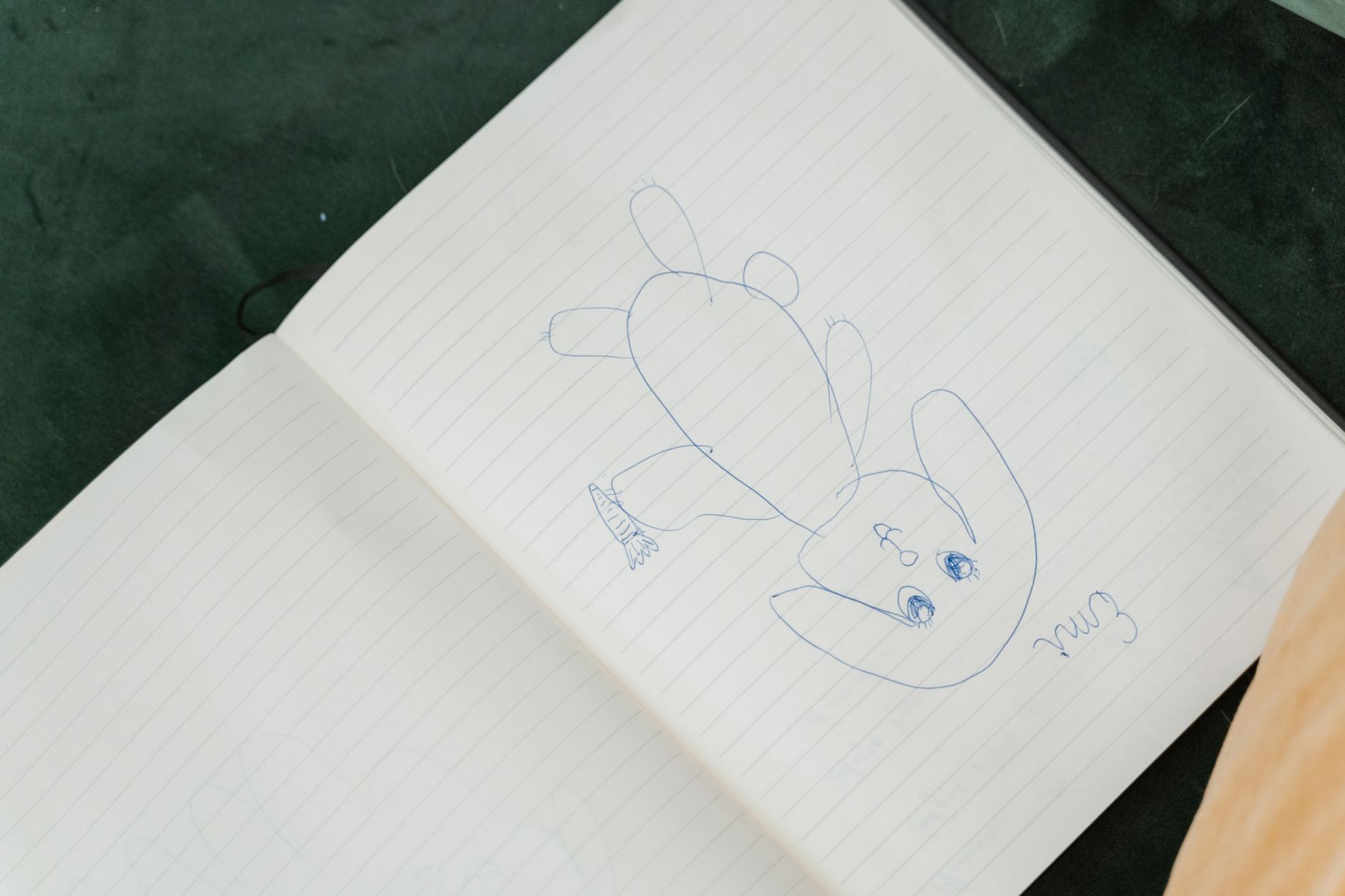
Most museums demand a certain reverence: speak softly, nod solemnly, and whatever you do, don’t laugh. At the Caricatura it’s precisely the other way round. If I walk through these rooms and don’t laugh out loud at least once, I’ve done something wrong. That is exactly what makes this little house on the Weckmarkt one of the most refreshing addresses in Frankfurt’s old town — a museum devoted to comic art that takes the art form seriously without ever taking itself seriously. In the lines below you’ll learn what lies behind it, why Frankfurt of all places is the secret capital of German satire, and how to plan your visit sensibly.
Frankfurt, the secret capital of satire
That Germany’s sharpest satire has come out of Frankfurt for decades is something even many locals don’t realise. Yet it was here, in 1962, that modern German magazine satire began with a title called „Pardon“, and from that same milieu, at the end of the 1970s, came the still-notorious satirical magazine „Titanic“ — the one billing itself as „the definitive satirical magazine“, which has reliably produced headlines, and the odd lawsuit, ever since.
A short but important note, because it trips people up: when the Caricatura talks about „Titanic“, it is not about the ship, and certainly not about the film. It means the satirical magazine, closely bound up with this city and with the illustrators around whom the whole house revolves. The Caricatura Museum was founded precisely to preserve that legacy — and it remains the only museum in Germany devoted exclusively to comic art: cartoons, caricatures, comics and satirical drawings, sometimes bitingly political, sometimes absurdly playful, but always with a wink.
The New Frankfurt School: clever nonsense with method
The heart of the museum is the collection built around the New Frankfurt School (Neue Frankfurter Schule). The name is a joke in itself: it winks ironically at the famous „Frankfurt School“ of the philosophers Adorno and Horkheimer — except that this new school elevated artful nonsense, rather than critical theory, to a method. It brings together the illustrators Robert Gernhardt, F. K. Waechter, F. W. Bernstein, Chlodwig Poth and Hans Traxler, along with writers such as Bernd Eilert, Eckhard Henscheid and Pit Knorr. Together they shaped post-war German humour like almost no other group.
What those names actually mean only sinks in once you stand in front of the originals. Robert Gernhardt was not just an illustrator and poet but also wrote gags for the early films of the comedian Otto Waalkes — so his sly wit reached millions who never knew his name. To F. W. Bernstein we owe perhaps the most quoted German couplet of all, which runs, roughly, „the fiercest critics of the elk were once elks themselves“. Hans Traxler, in „The Truth about Hansel and Gretel“, used a perfectly straight face to reframe a fairy tale as a criminal case, and Chlodwig Poth drew, in „Last Exit Sossenheim“, an entire comic chronicle of Frankfurt’s suburban gloom. F. K. Waechter, for his part, became famous as a children’s-book illustrator and a co-founder of „Titanic“. Standing before these sheets is therefore more than a chuckle: you see just how much craft, observation and melancholy go into a good caricature.
The Leinwandhaus: 600 years under one roof
Hardly any exhibition space in Frankfurt suits its contents so well, and so paradoxically, as this one. The Leinwandhaus on the Weckmarkt went up around 1400 and is one of the very few buildings that still recall the medieval city. Over its long life it has served as a courthouse, a prison, a hospital, a market hall and a museum — so it had seen everything long before the cartoons moved in. Badly damaged in the Second World War, it was rebuilt in 1984 and is a listed monument today.
To bring the museum in, the architects Diezinger + Kramer sensitively adapted the building in 2007–2008; the refurbishment won the „best architect award“ in 2011. The appeal lies in exactly that contrast: you step into ancient, thick-walled masonry and find inside it the youngest, cheekiest art in the city. Some 250 square metres on the ground floor host the large temporary shows; the first floor holds the collection display and the intimate „Caricatura Salon“; and right at the top are a lounge and a library.
What you’ll see: collection, salon and changing shows
The museum runs on two heartbeats. One is the collection exhibition on the first floor, where the masters of comic art are shown in rotating arrangements — this is where you meet the originals of the New Frankfurt School. The other is the special exhibitions on the ground floor, devoted to individual illustrators, themes or current trends, and changing several times a year. That is precisely why the Caricatura rewards a second and a third visit: you rarely see the same thing twice.
Just how lively the programme is shows in the current ground-floor show: running until January 2027 is a major retrospective of the cartoonist Katharina Greve (until 17 January 2027), spanning her work from the classic cartoon through photographic pieces to object art. By the time this text reaches you, a different show may well be hanging in its place — that is by design, and it’s why I’m a regular. And that the house not only entertains but counts as a serious cultural institution was confirmed in 2020 by the Hessian Cultural Prize, one of the most highly endowed cultural awards in Germany.
A word of context: from 2000 to 2008 the Caricatura was at first a department of the Historical Museum, before opening as its own house on the Weckmarkt on 1 October 2008. Since 2019 it has been an independent institution of the city’s Cultural Office, and since 2024 it has been directed by Martin Sonntag, who took over from the founding director Achim Frenz.
Prices, times and who gets in free
Admission is pleasantly moderate compared with the big institutions (as of 2026):
- Adults: €8.00
- Reduced: €4.00
- Children and young people under 18: free
Beyond free entry for under-18s, apprentices over 18, students of certain Frankfurt universities, and holders of the Museumsufer card, the Ehrenamtskarte Hessen (volunteers’ card) and the JULEICA (youth-leader card) also get in free. If you plan to visit several houses anyway, the MuseumsuferCard works out cheaper: it costs €89 for one person and €150 for a family, and opens the doors of some four dozen Frankfurt museums for a whole year. I’ve explained why it pays off, and which houses it covers, in my article on the Museumsufer and Frankfurt’s museum mile.
The museum is open Tuesday to Sunday from 11 a.m. to 7 p.m., and closed on Mondays. Those long hours into the early evening are a blessing if you want to combine the visit with a stroll through the old town — you don’t have to be there by lunchtime. Two practical details that surprise many people: tickets cannot be reserved in advance and are sold only at the desk on site, though at so compact a house that’s rarely a problem. And the cloakroom lockers need a one-euro coin as a deposit, which you get back afterwards. The building is fully accessible via ramps and a lift.
Getting there: straight in by U-Bahn and tram
The Caricatura is at Weckmarkt 17, 60311 Frankfurt am Main, in the oldest core of the old town between the cathedral and the Römer. The most convenient way is by U-Bahn: lines U4 and U5 stop at Dom/Römer, just two or three minutes’ walk away. By tram, get off at the Römer/Paulskirche stop, served by lines 11, 12 and 14. I’d advise against the car in the old town: parking is expensive and scarce, and the short hop by U-Bahn or tram saves you the search.
My afternoon around the Leinwandhaus
When friends ask how best to fit the visit in, I suggest not planning it as a solo outing but as part of an old-town afternoon. Almost everything that makes up Frankfurt’s historic centre lies within walking distance of the Weckmarkt: the imperial cathedral, the Römerberg with the city hall, and the rebuilt New Old Town between cathedral and Römer. I usually start with a loop through these lanes — if you’d like some context, my historic walk through Frankfurt’s old town and the Römer gives you a ready-made route. Then into the Caricatura, for which I allow a relaxed hour or two; the compact house needs no more, and to give it less would be a shame. Finish with a look into the museum shop, where books, prints and postcards by the great illustrators await — nicer, more personal souvenirs than the usual skyline kitsch are hard to find in Frankfurt.
One last tip for anyone hunting beyond the obvious sights: the Caricatura itself is still a bit of an insider’s secret to many visitors, and it fits beautifully with the other low-key corners I’ve gathered in my piece on Frankfurt’s hidden gems. Yes, a cartoon lives on German wordplay — with some German you’ll enjoy it all the more. But the purely visual comedy of the New Frankfurt School travels across every language border. In the end the Caricatura is exactly what a museum is far too rarely allowed to be: a place where laughter isn’t merely tolerated but positively invited — and one that, almost in passing, tells you a surprising amount about politics, society and ourselves.
Keep reading
Attractions
Archaeological Museum Frankfurt: Tickets, Highlights & Tips
The Archaeological Museum Frankfurt inside the Gothic Carmelite church: Roman finds from NIDA, Mithras reliefs, the Ratgeb frescoes, the Silver Inscription — plus current prices, opening hours and tips from a local.
Katharina Vogt28 June 2026
Attractions
Senckenberg Natural History Museum Frankfurt: Dinos, Messel & Tips
From the 18-metre Diplodocus and a genuine dinosaur mummy to the world-famous Messel fossils: current admission prices, opening hours, highlights and family tips for the Senckenberg Natural History Museum — from a local.
Katharina Vogt19 June 2026
Attractions
MMK Frankfurt: Museum of Modern Art – Locations, Collection & Tips
The MMK Frankfurt across three houses: the 'slice of cake' by Hans Hollein, the Zollamt and the TOWER high-rise. The collection from 1960 onwards, opening hours, admission and a personal route.
Katharina Vogt19 July 2026
Attractions
Goethe House & Romanticism Museum Frankfurt: Tickets & Tips
The Frankfurt Goethe House, Goethe's birthplace on the Großer Hirschgraben, and the German Romanticism Museum next door: combined ticket, opening hours, room-by-room highlights and a local's tips (as of 2026).
Katharina Vogt1 July 2026