Frankfurt Hidden Gems: A Local's Favourites Off the Tourist Trail
Everyone knows the Römerberg and the skyline. Let me take you to the places where Frankfurters themselves go — from a subtropical riverside garden to the city's only vineyard.

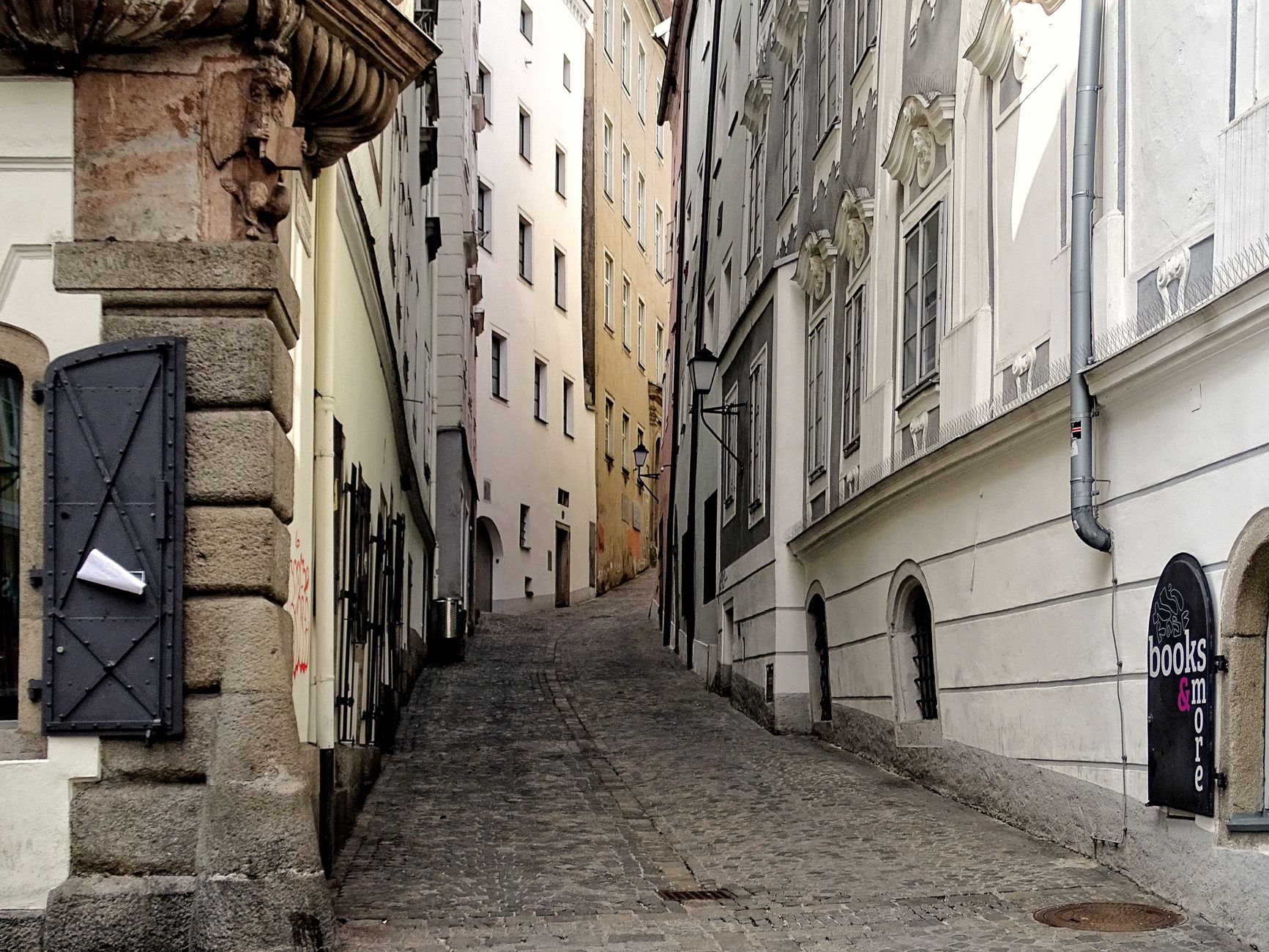
When friends visit Frankfurt for the first time, we naturally do a lap of the Römerberg and find somewhere to look at the skyline. Once that’s out of the way, the better part begins for me. Because the Frankfurt I love starts where the coach groups turn back: in a subtropical garden right on the water, in a market hall where locals drink a glass of wine standing up at lunchtime, or on the city’s one and only vineyard. What follows isn’t a ranking of the “top sights” but the list I press into people’s hands when they want to see the other Frankfurt — with addresses, prices (as of 2026) and the odd quirk worth knowing before you go.
Green corners that aren’t in any guidebook
Most visitors know the Palmengarten. Almost no one knows the Nizza — which is a small miracle, because it sits right in the middle of town, on the northern bank of the Main at Untermainkai 15. It was laid out in the mid-19th century by the city gardener Sebastian Rinz, and today it counts as one of the most species-rich Mediterranean plantings in any German public park: around 200 different woody plants from five continents, palms, figs, citrus and Mediterranean herbs, terracing down towards the river. Entry is free and it’s open daily. In late spring, when everything comes into leaf, it feels like a slice of the Côte d’Azur transplanted to the Frankfurt riverside. Right next to it, the narrow, car-free Holbeinsteg footbridge crosses the Main — the calmer alternative to the crowded Eiserner Steg.
A little further east, in the Nordend, hides my second green favourite: the Garden of Heavenly Peace in the Bethmannpark (entrance at Berger Straße 12). In 1989 Chinese specialists laid it out using components imported from China — curved pavilions, delicate bridges over a pond with water lilies and a lotus rock. The name recalls the events on Tiananmen Square that same year. Here, too, you pay nothing; the park opens at 7 a.m. on weekdays, 10 a.m. at weekends, and closes at dusk. If you want more quiet still, walk a few streets on to the Günthersburgpark, the big park of meadows and old trees where Nordend families spend their Sundays — reachable on the U4 to Bornheim Mitte.
The finest skyline view in the city is free
For the view from the Main Tower, visitors queue and pay admission. Yet to my mind the loveliest outlook lies out in the north-east and costs nothing: the Lohrberg in Seckbach, at around 185 metres the highest point within the city limits. From the edge of the slope you look out over the whole city as far as the skyline, and because vines have grown here since the Middle Ages, the Lohrberg is also Frankfurt’s only vineyard — worked by the city’s own winery. Bring a blanket, pick up something to eat beforehand, and you have a picnic with a panorama that other cities would charge for. If you’d rather sit down, the Lohrbergschänke (Auf dem Lohr 9) serves Handkäs and apple wine. You get up there by bus from Bornheim-Mitte plus a short climb on foot — but the loveliest way is by bike through the Grüngürtel green belt.
A medieval town with its own S-Bahn stop
Frankfurt’s best-kept secret lies in the west and can be reached in barely a quarter of an hour. Höchst has the largest closed timber-framed ensemble in the city: narrow lanes on a medieval street plan, many houses dating from after the great fire of 1586, and because the district was largely spared in the Second World War, the whole thing has grown organically rather than being reconstructed from scratch. Its heart is the Justinus Church, Carolingian at its core (around 850) and thus one of the oldest surviving buildings in Frankfurt at all. Add to that Höchst Castle right on the Main, once a residence of the archbishops of Mainz, and the baroque Bolongaropalast, where Napoleon is said to have spent his last night on German soil in 1813. The S1 and S2 get you from the centre to Höchst station in about 15 minutes; from there it’s a short walk into the old town. I’ve gathered much more about this idiosyncratic district in my piece on the Höchst old town.
Museums where you have the place almost to yourself
On the Museumsufer, crowds pack into the Städel — a few doors along you can have entire galleries to yourself. The Weltkulturen Museum (Schaumainkai 29–37) holds over 65,000 ethnological objects and shows them in changing, often artistically curated exhibitions that deliberately question the Western gaze on other cultures. Admission is €7 (reduced €3.50); it’s closed on Mondays and open until 8 p.m. on Wednesdays.
More atmospheric still, for me, is the Archaeological Museum at Karmelitergasse 1: Roman and Celtic finds stand here beneath the high vaults of a Gothic monastery church, the former Carmelite monastery. The space alone is worth the trip. Adults pay €8 and children and young people under 18 get in free. And this applies to both houses: on the last Saturday of every month, admission is free as part of the city’s “Satourday” programme — a date the budget-minded should note.
Two smaller houses are worth it for their sheer good humour. The Caricatura — Museum for Comic Art in the Leinwandhaus (Weckmarkt 17, Tuesday to Sunday 11 a.m.–7 p.m.) is devoted to the “New Frankfurt School” around Robert Gernhardt and F. K. Waechter; laughing is expressly allowed, and under-18s enter free. And the MOMEM at An der Hauptwache 15 is the world’s first museum of electronic music — black walls, light installations, almost a club atmosphere. Frankfurt played a key role in the history of techno, and this is precisely the story the museum tells (open Tuesday to Sunday, 1–7 p.m.). If you prefer things with an engine, head out to Fechenheim and the Klassikstadt: in a listed factory from 1910, everything across 16,000 square metres revolves around classic cars, behind glass and in open workshops — and entry is free.
Where Frankfurters themselves eat and drink
The Kleinmarkthalle (Hasengasse 5–7) does appear in plenty of guidebooks, but most people walk straight past the real secret: take the stairs up to the gallery on the first floor and you’ll find a small wine bar where locals think nothing of drinking a glass of Rheingau or Rheinhessen at midday. Downstairs, grab one of the famous beef sausages from Gref-Völsings first — that’s genuinely how the city eats and drinks. Just remember which day you come: the hall is open Monday to Friday from 8 a.m. to 6 p.m. and Saturdays until 4 p.m., and stays closed on Sundays.
In the evening, locals rarely head for the centre; they cross over to Bornheim instead. The Berger Straße is the lively going-out and shopping street of Frankfurters themselves, with small shops, cafés and a relaxed neighbourhood feel you’ll look for in vain on the Zeil. On the upper Berger Straße stands Apfelwein Solzer (Berger Straße 260), one of the oldest taverns in the city, family-run for generations, with garden seating in summer. If you want to dive deeper into the national drink, my overview of the best apple-wine taverns will help.
And for a long summer evening by the water, my favourite trip is out to the Gerbermühle (Gerbermühlstraße 105) in Oberrad. The beer garden sits right on the Main; even Goethe was a regular here, drawn back again and again by his affection for Marianne von Willemer. From Sachsenhausen you can stroll or cycle along the river to get there — a route almost as lovely as the destination.
Right across the city for eight euros
My most charming low-budget tip is also the most unusual: the Ebbelwei-Express. This colourful historic tram trundles through Frankfurt for about an hour on weekends and public holidays — from the zoo through the centre and past the Römer, through the station district, past the trade-fair grounds and across the Main to Sachsenhausen. A ticket costs €8 (reduced €3.50), and the price includes a small bottle of apple wine — or apple juice, or water — and a bag of pretzels. For families it’s enormous fun, and you happen to see more of the city than on many a pricey sightseeing tour.
My own afternoon off the beaten track
If you have only half a day and want to spend it exactly to my taste, do it like this: start at lunchtime in the Kleinmarkthalle, eat a beef sausage standing up and drink a glass of wine on the gallery upstairs. Then walk down to the Main, through the Nizza with its palms and across the Holbeinsteg to the Sachsenhausen bank. From there it’s a short hop to the Museumsufer — treat yourself to the quiet Archaeological Museum or the Weltkulturen Museum rather than shuffling through the crowds in the Städel. And when evening comes, take the U-Bahn to Bornheim, wander along the Berger Straße and let the day wind down over a glass of apple wine in one of the old taverns.
Frankfurt rewards anyone who looks beyond the Römerberg. Between a subtropical garden on the river, a vineyard with a skyline view, a timber-framed old town in the west and a tram that serves apple wine, a city emerges that is far more than its reputation as a banking metropolis. Make real time for two or three of these places, happily ride a few stops out on the S-Bahn — and you’ll come back with a completely different picture of Frankfurt.
Keep reading
Attractions
Eating Out with Kids in Frankfurt: Family-Friendly Places
Eating out with children in Frankfurt: cafés with a play corner, restaurants with a garden and playground, the Lohrberg, the Kleinmarkthalle and practical tips from a local.
Katharina Vogt27 July 2026
Attractions
New Year's Eve in Frankfurt with Kids: A Calmer Celebration
New Year's Eve in Frankfurt with children: where it's quieter, how to enjoy the fireworks from a safe distance, what Germany's fireworks rules mean for families — and how to celebrate early and relaxed.
Katharina Vogt29 July 2026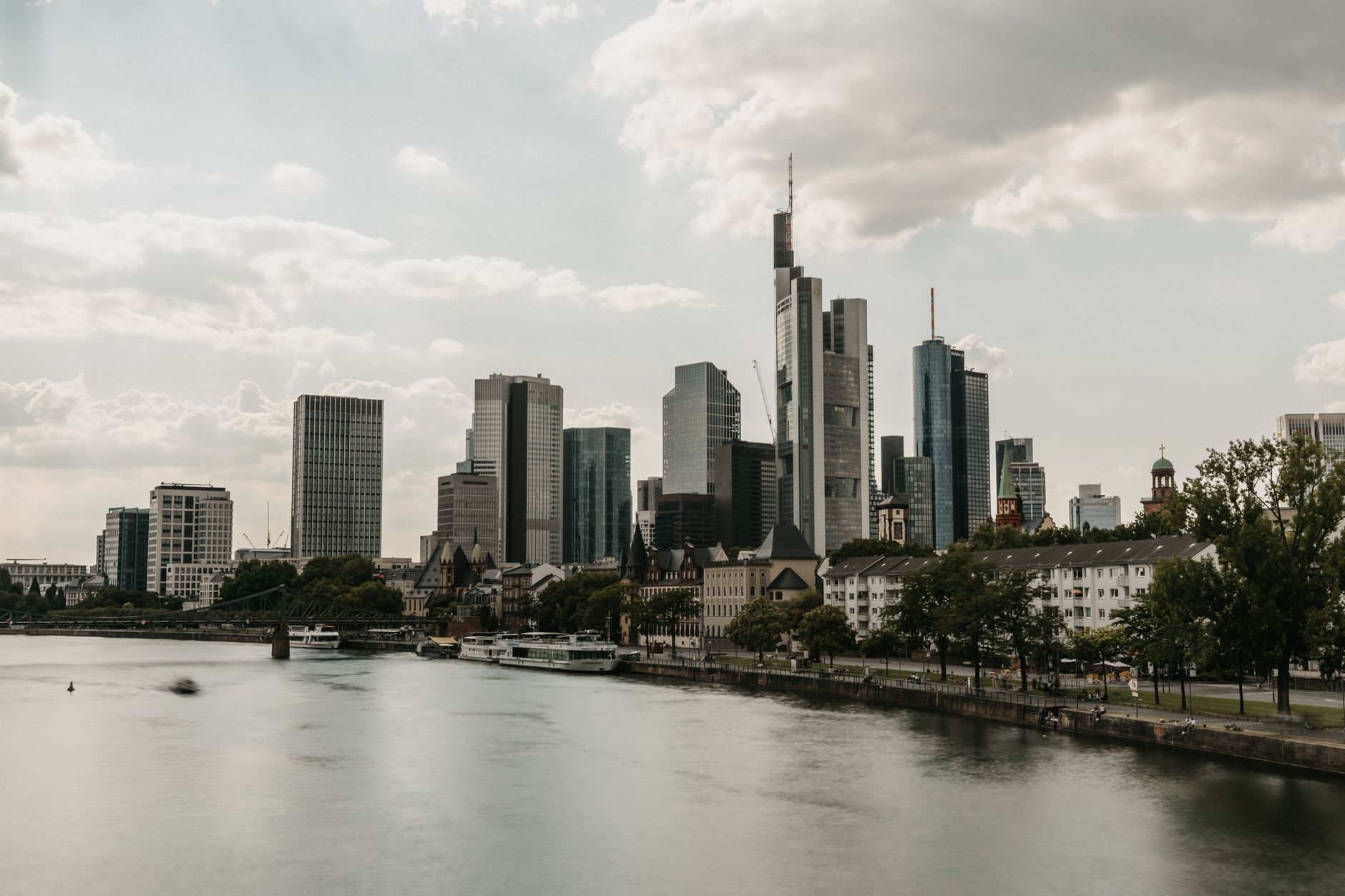
Attractions
Frankfurt Skyline: Best Viewpoints & Photo Spots
Where to see and photograph the Frankfurt skyline at its best: the Main Tower deck (€9, as of 2026), rooftop bars, and the finest free views from the Eiserner Steg, Deutschherrnufer and Lohrberg — with the best times and photo tips.
Katharina Vogt16 June 2026
Attractions
Frankfurt for Couples: The Loveliest Ideas for Two
Romantic Frankfurt for couples: sunset from the Main Tower, love locks on the Eiserner Steg, dinner at Seven Swans, wine on the Lohrberg and a day in the Rheingau — with addresses and prices.
Katharina Vogt9 July 2026