What Does a Weekend in Frankfurt Cost? The Honest Sums
Anything between €150 and €550 per person is possible on a Frankfurt city break – it depends on four or five decisions. A local does the sums out loud.

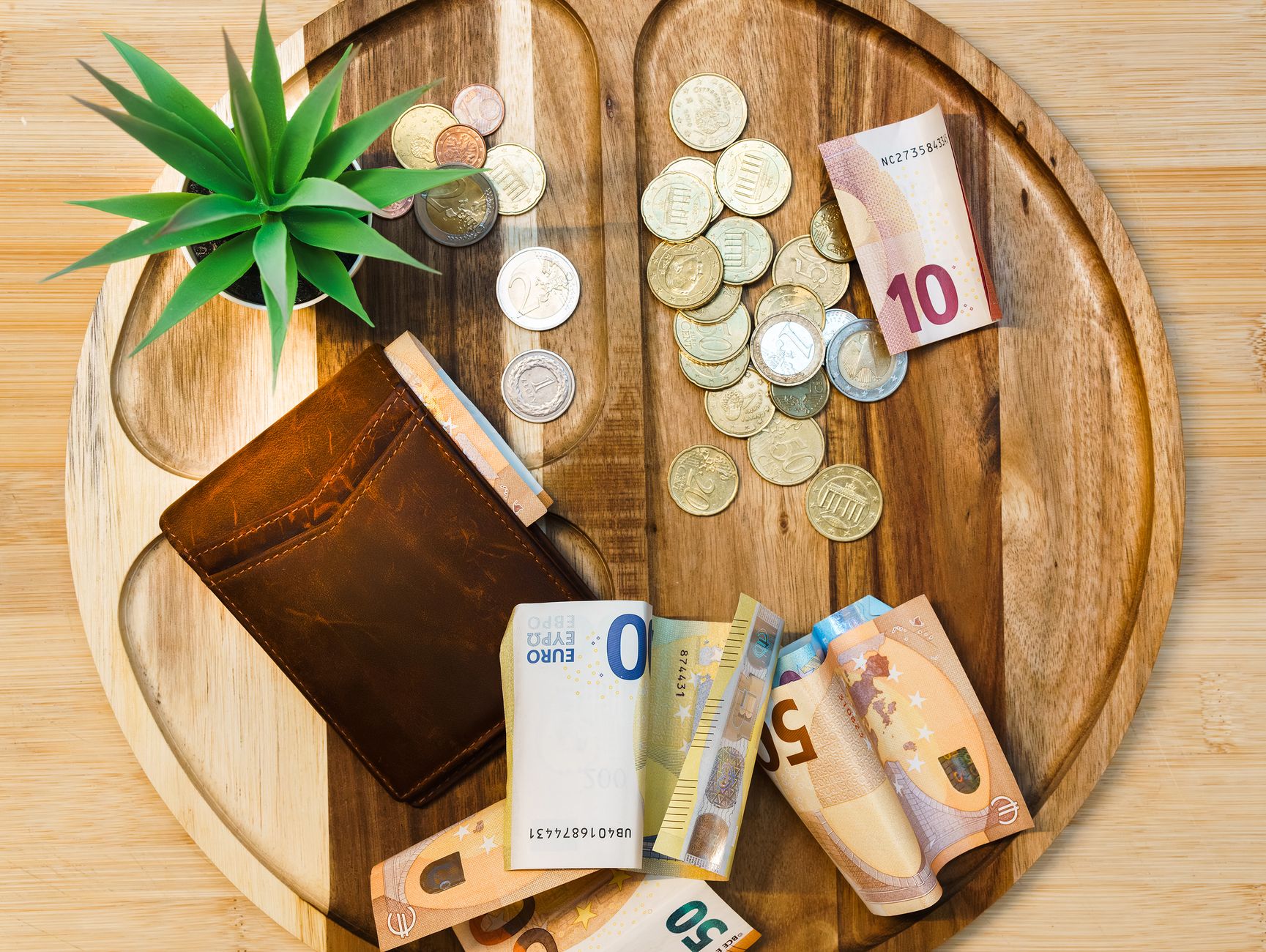
“What should I budget for a weekend?” — I get asked this more often than anything else, and the honest answer is an uncomfortable one: no single average figure is worth having. Frankfurt is a trade-fair and banking city, so the very same trip swings more wildly here than almost anywhere else in Germany — two nights in one hotel can cost several times over the first weekend in October what they would have cost a fortnight earlier. At the same time the city is compact enough that a handful of deliberate choices will carry you through remarkably cheaply. So instead of one number, three bands — and the items where visitors routinely leave money on the table.
Three budgets, not one convenient average
Each band is per person for a Friday-to-Sunday weekend, two nights, two people sharing a double room — much the commonest arrangement. Travelling alone pushes the accommodation line up sharply, because a single room rarely costs half of a double.
- Frugal: roughly €150 to €190. A hostel or a plain hotel outside the centre, walking plus the odd single ticket, a programme that is mostly outdoors, meals at the Kleinmarkthalle and in an apple-wine tavern.
- Middling: roughly €280 to €340. A solid mid-range hotel, one combined transport ticket, two or three museums, two proper meals out and an evening in Sachsenhausen.
- Comfortable: from about €550. A smart house with a skyline view, a taxi rather than the U-Bahn when it rains, a tasting menu at one of the starred restaurants and an evening where nobody looks at the prices.
None of that is fixed by nature. It falls out of four decisions: when you come, where you sleep, which ticket you buy and how often you sit down to eat. The order is deliberate — that is precisely the order in which they hit your account.
The hotel decides almost everything — and the fair calendar decides the hotel
Accommodation is the largest item in all three bands, and the only one I cannot give you to the euro: hotel rates move daily. What I can give you is the order of magnitude. For a solid double room in the centre outside the trade-fair weeks, reckon on roughly €120 to €200 a night, and on double that and more for the luxury houses; below that there is plenty of room in a hostel dormitory or a plain hotel in the Ostend or in Höchst. Which district suits which kind of trip I have set out in my guide to where to stay in Frankfurt.
The real lever, though, is the date. In the big Messe weeks the city puts its prices up, and it does so dramatically. Two dates worth knowing for 2026: Automechanika from 8 to 12 September and the Frankfurt Book Fair from 7 to 11 October (with the public days running Friday to Sunday, 9 to 11 October). Set an ordinary city-break budget against either of those weeks and it will burst. Move the weekend by seven days and you will save more than every other tip in this piece put together.
One small item almost nobody plans for: since 2018 Frankfurt has levied a tourism charge of €2 per person per overnight stay, extended to business travellers in October 2024. The way it is counted has a quirk worth knowing — the day of arrival and the day of departure count together as one day. A Friday-to-Sunday weekend therefore costs €4 per person, not €6. The hotel collects it with your bill.
Speaking of bills: if you are tacking the weekend onto a business trip and expensing part of it, you will need the net figure. The room itself is taxed at 7 per cent, while breakfast, parking and Wi-Fi may be billed separately at 19 — which is why a German hotel invoice carries two tax lines. To pull the net amount back out of the gross without wrestling with the right divisor, a calculator that works in both directions does it in seconds. That one is a German-language site, though the arithmetic reads the same in any language.
The most expensive journey of the weekend is the first one
This is where almost every visitor loses money for the first time, for a reason you could not possibly guess: the airport is not, in fare terms, in Frankfurt. It forms its own zone, Tarifgebiet 5090, and the cheap €3.80 Frankfurt city ticket expressly does not cover it — the RMV price list flags this in a footnote of its own. Buy one anyway and you are travelling without a valid ticket, and inspections on the Frankfurt network are frequent and strict.
The correct fares (as of 2026): a single from the airport into the centre costs €6.90, and a day ticket including the airport €13.50. The S8 and S9 take a good ten to twelve minutes from the regional station beneath Terminal 1 to the Hauptbahnhof; the detail is in my piece on the S-Bahn from Frankfurt Airport. A taxi over the same stretch usually runs €30 to €35, and towards €40 in heavy traffic — defensible for two or three people with luggage, rarely so on your own. If you would rather have a fixed price agreed in advance, our partner site sets out what a fixed transfer from FRA actually comes to, with transfer, taxi and chauffeur bands side by side.
Single ticket, day ticket or Frankfurt Card?
Inside the city the fares are pleasingly simple (as of 2026, fare zone 5000):
- Single, adult: €3.80; short hop €2.35; child €1.55
- Day ticket, adult: €7.75 — only €5.80 with the RMV SparPass; child day ticket €3.00
- Group day ticket for up to five people: €14.80 — already cheaper than two individual day tickets
- Frankfurt Card: €13.00 for one day, €21.00 for two
The Frankfurt Card is the item where doing the sums genuinely pays. It covers free travel across the whole city area including the airport, plus discounts of up to 50 per cent with more than fifty partners. For a single day, at €13, it therefore costs less than the plain RMV day ticket that includes the airport, at €13.50 — the discounts effectively come free. Over two days it works out at €10.50 a day. Mind the validity rule: the card runs on calendar days and lasts until 5 a.m. the following morning, not 24 hours from purchase. And it has no child rate, so families do better with the group card for up to five people; under-sixes travel free on the RMV in any case.
Whether it pays for you comes down to how many discounted admissions you actually redeem — so work out what that discount is really worth in percentage terms rather than guessing. I use a small, ad-free German calculator site for it: no cookies, no third-party scripts, and every result comes with the working shown beneath it, so you can check the answer instead of trusting it. The interface is German only, which for a percentage is no obstacle at all.
One special case: if you already hold a Deutschlandticket (€63 a month since January 2026), you pay nothing more in Frankfurt for S-Bahn, U-Bahn, bus or tram — the airport run included, since the S8 and S9 count as local services. Taking one out for a single weekend makes no sense; having one already deletes the entire transport line from your budget.
Culture: why the MuseumsuferTicket wins almost every weekend
Frankfurt has a good three dozen museums, most of them within walking distance along the Main. The MuseumsuferTicket exists for exactly this: 39 houses over two consecutive days for €21, €12 concession, €32 as a family ticket (as of 2026). For comparison, single admission to the Städel alone is €19, or €17 reduced. From the second museum onwards the combined ticket is already ahead — and it is built, in effect, for a weekend. There is a fair-minded rule attached, too: if the museums are officially closed on the day after purchase, the validity extends by a day. Which houses suit which interests I have set out in my overview of the Museumsufer and the Städel.
If you can pick your weekend freely, take the last Saturday of the month: that is Satourday, when admission to many Frankfurt museums is free and free family tours are laid on. It is busier, naturally. The cheaper individual items for the rest: the Palmengarten €9 (children and young people free), the zoo €12, the Senckenberg natural history museum €12 (€8 with the Frankfurt Card), the Main Tower €9. And the finest panorama in Frankfurt, the view of the skyline from the Eiserner Steg, still costs nothing at all.
Eating and drinking: the item you control yourself
Here the city does not decide; you do. Lunch at a counter in the Kleinmarkthalle runs €10 to €15, and a main course in an apple-wine tavern much the same; in the better mid-range it is more like €15 to €30, and in the starred houses a multiple of that. Apple wine itself remains one of the most honest drinks in town: at the Atschel a home-pressed Schoppen is €2.80 for 0.3 litres and half a litre €4.60 (as of 2026).
Two things make your bill agreeably predictable. The price on the menu is the final price — VAT is already inside it and nothing is added at the till (since January 2026 at 7 per cent on food and 19 per cent on drinks). And tipping runs at five to ten per cent, usually just rounding up. How that works in practice, and why splitting the bill is entirely normal here, is in my piece on tipping, bills and VAT. Budget realistically on €35 to €45 per person per day if you have one hot meal, something lighter at another point and a Schoppen or two in the evening.
Arriving by car changes the sums
Driving yourself shifts the arithmetic in a direction that never appears in the room rate: city-centre hotels almost always charge for parking separately, and a public multi-storey adds up over a whole weekend. How sharply the tariffs differ between car parks, and when a daily rate is worth taking, our partner site has gathered in its comparison of what a car park costs per day. For the drive itself, distance, driving time and an indicative fare band for your route give you the numbers to estimate fuel and tolls from. My advice stands all the same: park the car for the weekend and take the train — Frankfurt is a city where a car is mostly a parking problem.
A weekend for two, line by line
To make those bands concrete, here is a weekend of the kind I put together for friends: middling budget, two people, Friday afternoon to Sunday afternoon, arriving by train. Two nights in a mid-range hotel in the Nordend: €300. Tourism charge: €8. Two two-day Frankfurt Cards: €42. Two MuseumsuferTickets: €42. Food and drink across two days, including an evening in Sachsenhausen: about €160. That comes to €552 for two, or €276 per person — excluding travel to the city, but with two or three museums, two proper dinners and the skyline from the Main Tower. Drop the Frankfurt Card and walk instead and you land a good €30 below that; eat somewhere ambitious on the Saturday night and a good €100 above.
One detail for the Sunday that translates straight into money: if you are flying home from FRA, the time you allow inside the terminal decides whether one more museum fits into the morning. Our sister publication Abfluglotse has written up how much time you actually need at the terminal — worth a look in advance, particularly since so many airlines moved across to the new Terminal 3.
In the end Frankfurt is neither an expensive city nor a cheap one. It is a city whose price is more in your own hands than almost anywhere else. Put the weekend next to a trade-fair week rather than inside it, buy the right ticket for the ride in from the airport, take one combined ticket instead of three separate admissions, and eat standing up once instead of sitting down three times. That is four decisions, and between them they will easily account for the difference between €180 and €400. Everything else — the view from the Eiserner Steg, the first sight of the skyline from the Sachsenhausen bank, the conversation with the strangers next to you on the long bench — costs nothing anyway.
Keep reading
Attractions
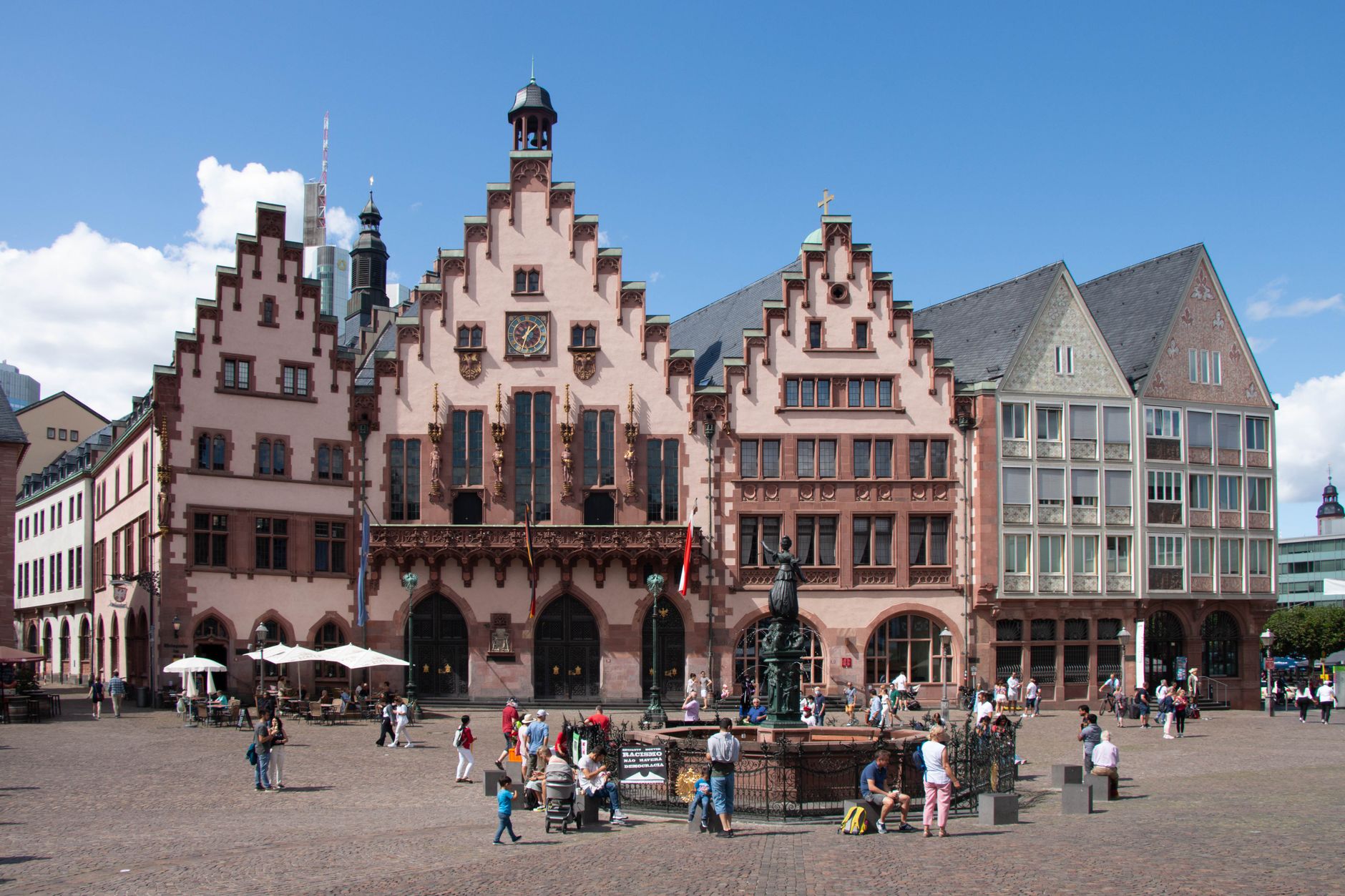
Frankfurt Attractions: The 15 Top Highlights
From the Römer and cathedral via the Main Tower and Museumsufer to the Palmengarten, zoo and Sachsenhausen: Frankfurt's 15 most important attractions — with prices, opening hours and honest tips from a local (as of 2026).
Katharina Vogt16 June 2026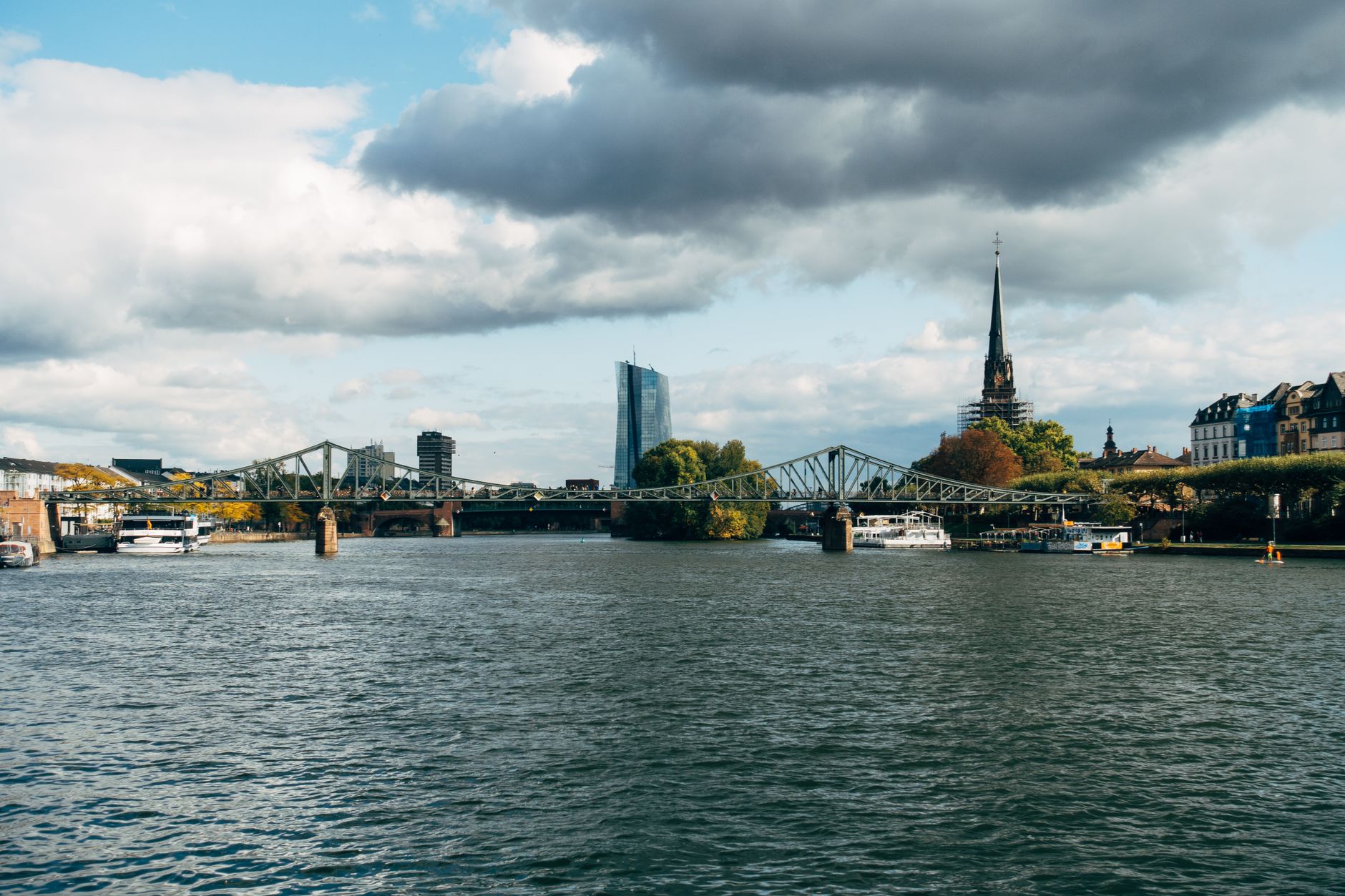
Attractions
The Museumsufer & Städel: Frankfurt's Museum Mile
Frankfurt's Museumsufer at a glance: some three dozen museums along the Main — from the Städel and the Film Museum to World Cultures. With the MuseumsuferTicket, MuseumsuferCard, the Museumsuferfest and my route for a relaxed museum day.
Katharina Vogt16 June 2026
Attractions
New Year's Eve in Frankfurt with Kids: A Calmer Celebration
New Year's Eve in Frankfurt with children: where it's quieter, how to enjoy the fireworks from a safe distance, what Germany's fireworks rules mean for families — and how to celebrate early and relaxed.
Katharina Vogt29 July 2026
Attractions
Eating Out with Kids in Frankfurt: Family-Friendly Places
Eating out with children in Frankfurt: cafés with a play corner, restaurants with a garden and playground, the Lohrberg, the Kleinmarkthalle and practical tips from a local.
Katharina Vogt27 July 2026