Tipping, Bills and VAT in Frankfurt: What You Actually Pay
The price on the menu is the price you pay. What to know about tipping, splitting the bill and the VAT already inside it before the waiter reaches your table — from a Frankfurter, honestly worked out.


There is a moment when I can spot visitors from overseas fairly reliably: the bill lands on the table, their eyes go to the total — and the silent arithmetic begins. Is tax added on top now? Is twenty per cent too little? Where do you write it in? I understand the uncertainty, because in many countries the printed price is only the opening bid. In Frankfurt it is the final word. What the menu says is what you pay: VAT and service are already inside it, and nothing is added at the till. Anything beyond that is a voluntary gesture — and a considerably smaller one than Americans are used to. Since a remarkable amount of half-knowledge circulates about these three things — the bill, the tip and the tax on it — here they are, sorted out and properly worked through.
The menu price is the final price
German price-marking law requires that prices shown to private customers are final prices, inclusive of VAT and every other component. If the board in the Kleinmarkthalle says €4.50, you pay €4.50. If the menu in the Bahnhofsviertel says €18.90 for the curry, the curry costs €18.90. The surprise you meet at an American cash register simply does not exist here, because the tax is already baked into the number.
Nor is there a separate service charge. Until the 1980s German restaurants sometimes itemised a Bedienungsgeld; once the final-price rule took hold, it disappeared. Service, in other words, is included in the price — and here is the decisive difference from the United States: staff do not live on tips. Since 1 January 2026 the statutory minimum wage has been €13.90 gross per hour, and in the city’s better restaurants pay sits well above it. Your tip is therefore exactly what the word suggests: appreciation, not a wage subsidy you owe.
”Together or separately?”
You will hear that question in every Frankfurt venue, and it is not an exam. In Germany you almost always pay at the table rather than at a central till: you catch the server’s eye, they come over with a wallet or a mobile terminal and ask whether it should be together or separately. Splitting is entirely normal here and embarrasses nobody — not in a group of six, and not when one person had only a water. Servers do the sums in their heads or on the device, and orders are recorded per person anyway. Only on a packed Friday evening with a large party is it polite to flag your intention early.
The second difference is how you name the amount. You do not wait for change and then leave something behind; you say the total you want to pay as you hand the money over. The bill comes to €33.40, you hand across a fifty and say “make it thirty-six” — you get €14 back and the matter is settled. Hand over the note without a word and you will receive the full change, and the subsequent hunt for the right coins is precisely the awkward manoeuvre you wanted to avoid. Paying by card works the same way: state the total before the terminal is keyed in. A receipt is issued more or less automatically these days, since German venues are obliged to produce one.
Tipping: the realistic numbers
The customary range in Germany is roughly five to ten per cent, and the usual form is simply rounding up to a clean figure. Nobody expects twenty, and nobody will chase you down the street if you leave nothing at all — a tip is legally a voluntary gift to the person serving you, and it stays tax-free for them as long as it reaches them directly. A few examples from my own week, at Frankfurt prices (as of 2026):
- Two portions of Grüne Soße with egg at €12.50 each and three glasses of apple wine at €2.80 each come to €33.40. I say “make it thirty-six” — just under eight per cent.
- Dinner for two in the Bahnhofsviertel at €68.40 I round up to €75. That is about ten per cent, because the evening was long and the service attentive.
- A cappuccino and a slice of cake in the Nordend for €8.30 become €9. On small sums it is the round number that counts, not the percentage.
- A €12 cocktail becomes €13; standing at the bar, a euro per round left with the payment is plenty.
Other situations have their own scale. In a taxi you round up: €33 becomes €35 — more on that in my guide to taxi costs in Frankfurt. In a hotel, one to two euros per night for housekeeping is customary, best left visibly at the end of your stay, and a euro per bag for the porter. In an apple-wine tavern nobody calculates much at all: you round up the price of the glass or the total, and because the Bembel jug is usually ordered for the whole table, whoever pays does the rounding for everyone. Which houses are worth your evening is in my guide to the best apple-wine taverns, and why Äppelwoi matters so much here at all is in my piece on the city’s own drink.
One more thing that Americans find genuinely hard: do not leave the tip on the table and walk out. The German gesture is to hand it over at the moment of payment. If the card terminal now prompts you for a tip — increasingly common — that is perfectly fine, though many servers still prefer cash, because it lands with them directly.
19 or 7 per cent: what the January 2026 change means for your bill
Germany has two VAT rates: the standard 19 per cent and a reduced 7 per cent that traditionally covers groceries, books, local transport and overnight accommodation. For restaurants, something fundamental changed at the turn of the year. The Tax Amendment Act 2025 inserted a new provision into § 12(2) of the German VAT Act (UStG) which taxes restaurant and catering services at 7 per cent permanently from 1 January 2026 — excluding the supply of drinks, which stays at the standard 19 per cent (as of 2026). That ends a long back-and-forth: the reduced rate applied temporarily during the pandemic, food eaten in was back at 19 per cent from 2024, and since the start of 2026 the reduced rate applies indefinitely, whether you are sitting in a restaurant, standing at a food truck or having it delivered.
On a real Frankfurt bill it looks like this. The €33.40 above splits into €25 of food and €8.40 of apple wine. The €25 gross is €23.36 net plus €1.64 of tax; the €8.40 is €7.06 net plus €1.34. All told, €2.98 of VAT sits inside your bill — declared, but never added. That is why any proper receipt carries two tax lines. In a café the same logic plays out in miniature: the slice of cake runs at 7 per cent, the cappuccino beside it at 19. And if you suspect the cut must have pushed prices down — honestly, little of it has reached Frankfurt menus; most houses kept the relief against rising wages and energy costs.
The hotel invoice is where it gets briefly complicated. The room itself is reduced to 7 per cent, while breakfast, parking, wellness and Wi-Fi may be separated out and charged at the standard rate; the restaurant cut did not change that (as of 2026). For you as a guest this is mostly an accounting matter — the gross figure at the bottom is still the figure you pay. VAT does become interesting, though, if you live outside the EU and shop in Frankfurt: goods you export can be reclaimed under the Tax Free scheme, while restaurant meals and hotel nights cannot. How that actually works on departure day, with the customs stamp before bag drop, is set out by our partner publication Abfluglotse in its guide to the VAT refund at the airport — airport procedure is their subject, not mine.
Card or cash: Frankfurt is better than its reputation
The old line that “Germany is a cash country” no longer holds. According to the Bundesbank’s study of payment behaviour, more than half of all purchases were settled without cash for the first time in 2025, and in a banking city like Frankfurt you notice it: restaurants, cafés, museums, supermarkets and public transport all take cards as a matter of course, usually contactless from a phone or watch too.
The exceptions, though, are exactly the places visitors end up. Many of the old apple-wine taverns still take cash only, or at most the German Girocard, and hardly any take credit cards. The same goes for some stalls in the Kleinmarkthalle, for kiosks, weekly markets, small bakeries, the occasional taxi, the cloakroom at a club, and station toilets (usually 50 cents to a euro). The distinction between the German Girocard and a credit card matters more than people expect: a sticker promising card payment does not automatically mean Visa or Mastercard, and American Express is rarely accepted. My pragmatic advice: carry around €50 in cash, some of it in fives, tens and coins — if only so the rounding-up works — and simply ask as you sit down if you are unsure. For choosing where to eat in the first place, my guide to the city’s best restaurants sets out the price levels district by district.
When the maths really does start at the table
Sometimes you want the exact figure: five people, a bill of €148.60, €29.72 each — in practice you round to €32 a head, which makes €160 in total and just under eight per cent in tips. Or a catering quote for an office party arrives at €1,200 net and you want to know what that becomes gross. For moments like these I use EinsRechner: no ads, no cookies, no third-party scripts, and the formula it used is printed under every result, so you can follow the working rather than trust a black box. Most useful is that its VAT calculator handles both directions — net to gross and gross back to net, at 19 or 7 per cent — which is precisely the conversion you need when checking an event or hotel invoice. If you only want a quick percentage or a mark-up, the percentage calculator beats any calculator app. Both are German-language pages, but the fields are numbers and the labels are the two words you will meet on every receipt here anyway: netto and brutto.
In the end it is far less complicated than it sounds. You pay what the menu says, you round up to a clean figure, you say that figure out loud as you hand the money over — and the tax was settled long before, without you ever adding it. Next time you are sitting in Sachsenhausen with an empty Bembel and the question “together or separately?” arrives, you will know both halves of the answer: what to say, and what to give.
Keep reading
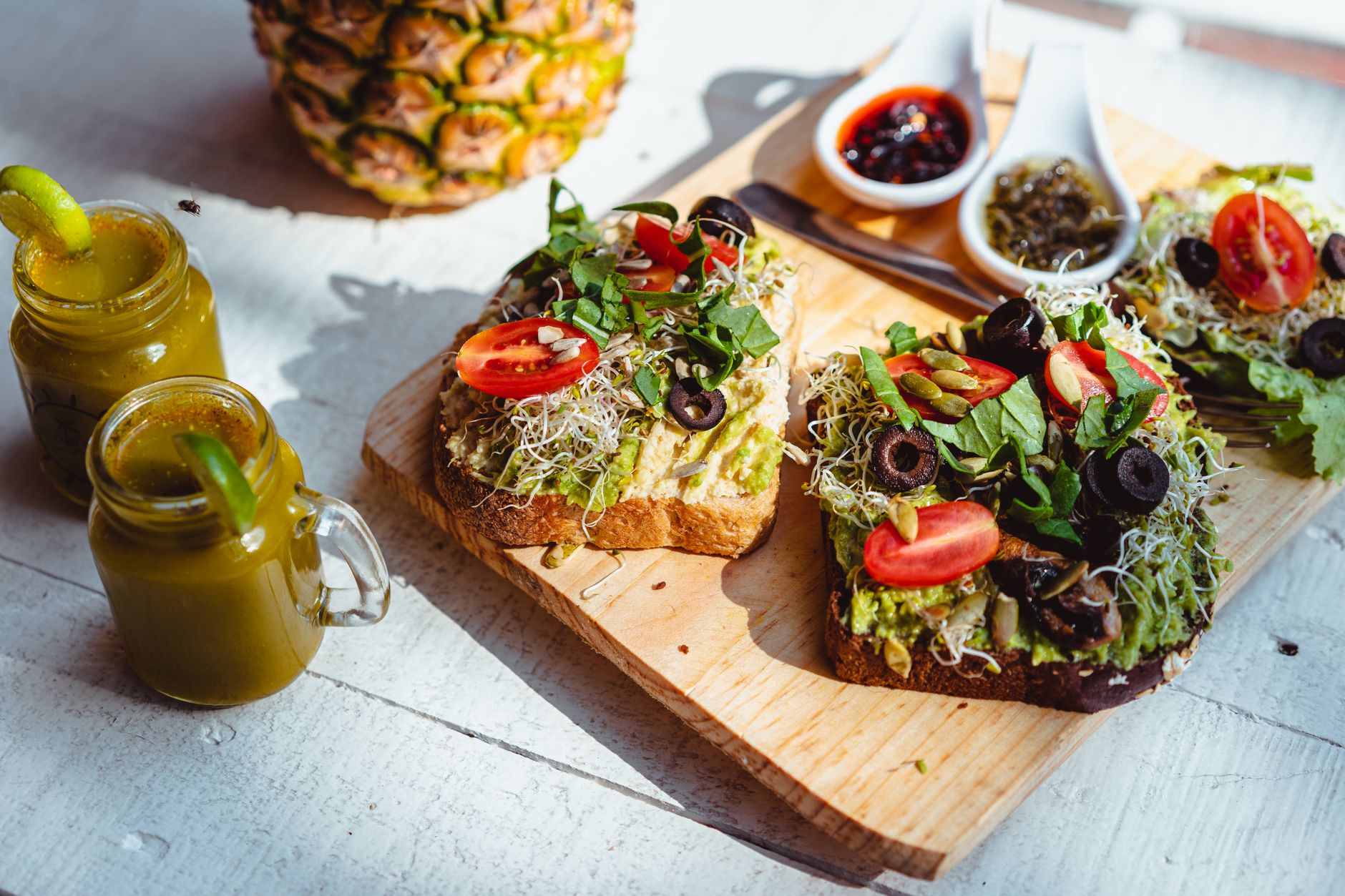
Food & Drink
Vegan Breakfast in Frankfurt: The Best Cafés & Brunch Spots
Fully vegan cafés and vegan-friendly breakfast spots in Nordend, Bornheim, Bockenheim and the city centre — with addresses, what I actually order and tips for weekend brunch.
Katharina Vogt17 July 2026
Food & Drink
Apple Wine: All About Frankfurt's National Drink
Frankfurt's 'Ebbelwoi' from A to Z: what apple wine is, how it's pressed with speierling, why the ribbed glass is ribbed, what 'sauer gespritzt' means and what to eat with it.
Katharina Vogt16 July 2026
Food & Drink
Apple Wine in Frankfurt: The Best Apple-Wine Taverns
Where to drink real Ebbelwoi in Frankfurt: the best apple-wine taverns in Alt-Sachsenhausen, Bornheim and Seckbach — with addresses, opening hours and tips on the proper etiquette.
Katharina Vogt16 June 2026
Food & Drink
Ebbelwei-Express Frankfurt: The Apple Wine Tram Tour
The Ebbelwei-Express: Frankfurt's colourful apple-wine tram, running since 1977. The loop around the zoo and Sachsenhausen, timetable, prices, what's in the ticket and tips from a local.
Katharina Vogt22 July 2026