The S-Bahn from Frankfurt Airport: S8, S9, Prices & Times
Around eleven minutes from the regional station beneath Terminal 1 to the main station: which line to take, what the ticket really costs in 2026 — and how to find the platform if you land at Terminal 3.

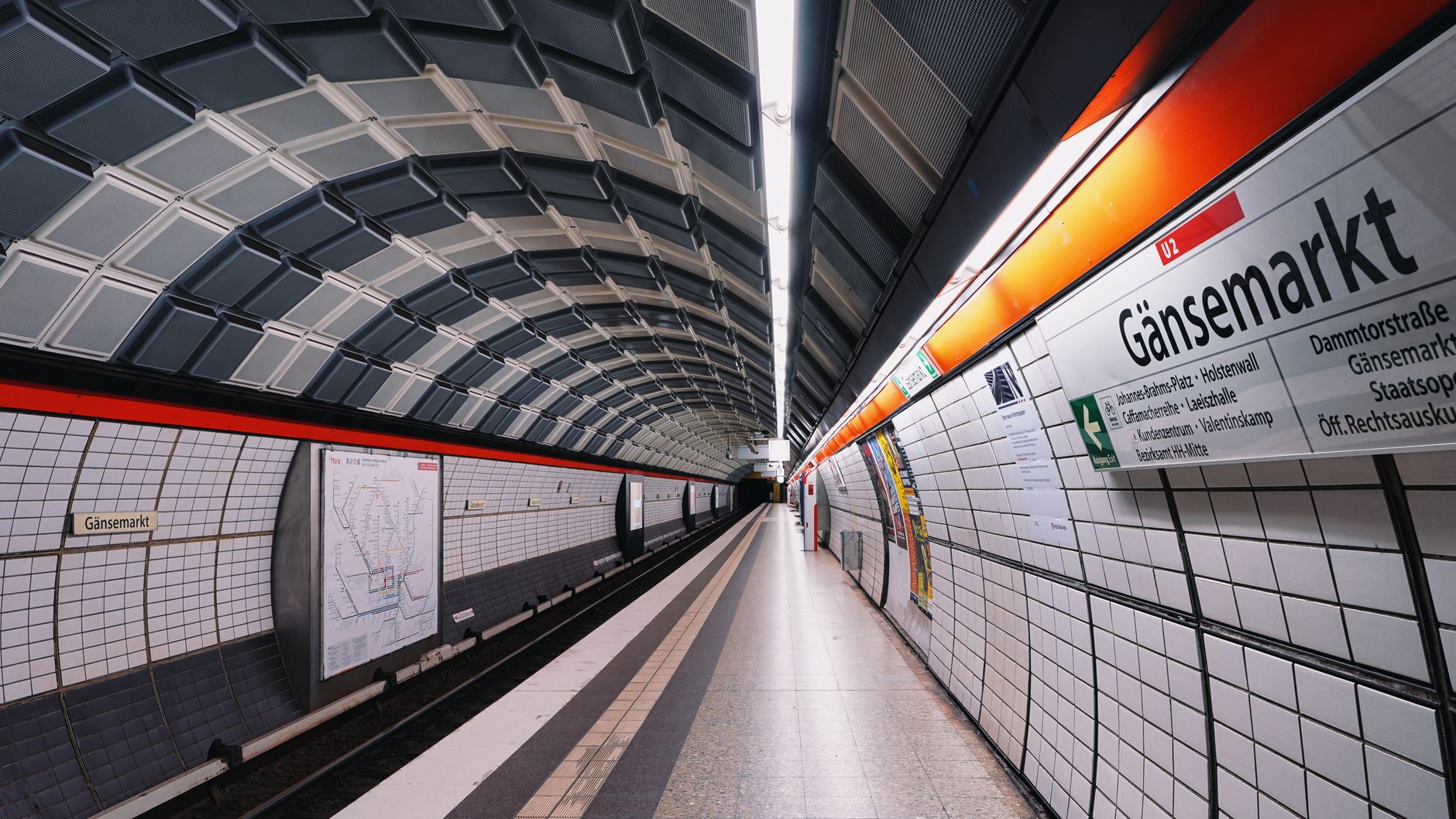
For many travellers, the first impression of Frankfurt is settled not at the gate but one level below it — on the platform beneath Terminal 1. I regularly pick up friends and family from the airport, and the question that almost always comes first on the phone is: “What’s the quickest way into town?” My answer has been the same for years: take the S-Bahn. In rush hour it beats any taxi, it costs a fraction of the price, and it drops you right in the centre with no detour. Even so, I see travellers at the machine every day buying the wrong ticket or hunting for the wrong station. To spare you that, here is everything that matters — lines, prices, journey times and the pitfalls that have appeared in 2026.
Two stations, one letter apart
Frankfurt Airport has two entirely different railway stations almost side by side, and mixing them up is the single most common mistake. For the S-Bahn you want the regional station (Regionalbahnhof). It sits underground beneath Terminal 1, on level B, and you can reach it from the arrivals hall in a few minutes by escalator or lift — just follow the green S-Bahn signs and the DB logo. This is where the S8 and S9 stop, along with some regional trains (RB and RE).
The second station is the long-distance station (Fernbahnhof), a separate building above ground next to Terminal 1, linked by a bridge — the AIRail Terminal. From there the fast ICE, IC and EC trains run right across Germany, but no S-Bahn into central Frankfurt. If you are continuing by long-distance train, that is your station; if you only want the city centre, go one level down. I have set out exactly how the two relate, and when the Fernbahnhof is worth it, in the piece on the long-distance station and the ICE connection.
If you land at Terminal 3
A good deal has shifted at the airport since 2026. Terminal 3 opened on 23 April 2026, and since 9 June 2026 Terminal 2 has been closed entirely for a refurbishment that will run for years — all of its airlines have moved across to Terminal 3. In practice that means more and more travellers now land at Terminal 3, while the S-Bahn regional station remains beneath Terminal 1.
The route is straightforward all the same. From Terminal 3 you take the free Sky Line, the airport’s fully automated elevated train, to the stop at Terminal 1; the ride takes only a few minutes. From there it is a short walk to the escalators down to the regional station. If the Sky Line happens to be out of service for maintenance, the airport runs shuttle buses along the same route — in that case, watch for the signs and the announcements. Allow a realistic 15 to 20 minutes for the transfer from Terminal 3, and rather more with a lot of luggage. The airport map lays out every route between the terminals, and I have covered the Sky Line itself in more detail elsewhere.
S8 and S9: two lines, the same direction
Two S-Bahn lines run into town from the regional station: the S8 and the S9. For the trip into the centre the difference between them hardly matters — both cross Frankfurt on the same core route, the City Tunnel. Heading into town they call in turn at Frankfurt Hauptbahnhof (the underground part, the “Hbf tief”), at Taunusanlage, at the Hauptwache and the Konstablerwache — the two central interchanges in the middle of the pedestrian zone — and then at Ostendstraße. Whether your hotel is by the main station, on the Zeil or over in the Ostend, the S8 or S9 will leave you within walking distance.
Beyond the centre the lines continue east through Offenbach to Hanau. In the opposite direction — heading away from the city out of the airport — both run towards Mainz and Wiesbaden, the S8 via Mainz Hauptbahnhof and the S9 via Mainz-Kastel. In practical terms: if you want central Frankfurt, take whichever train at the regional station is signed towards Frankfurt / Offenbach / Hanau. Only travellers bound for Mainz or Wiesbaden need to mind the opposite direction. Besides the S-Bahn, regional trains also stop at the regional station; if an RE or RB to the main station happens to be leaving, you can use that just as well.
How long it really takes
Speed is the great argument for the S-Bahn. It is only about eleven minutes to the Hauptbahnhof and roughly fifteen to the Hauptwache in the heart of the city. No other connection gets you from the airport to the centre this reliably fast, because the S-Bahn never sits in traffic. A taxi at the same hour can take two or three times as long — and cost many times more. If you want to weigh up the different ways into town side by side, I have compared them in the airport-to-city-centre rundown.
Frequency, first and last train
Each of the two lines runs roughly every 30 minutes during the day; because the S8 and S9 overlap, on average a train into the centre pulls in about every 15 minutes, and more often at peak times. You rarely have to wait long.
There is one widespread misconception I want to clear up: the S-Bahn does not run around the clock. On weekdays the first trains roll out around half past four in the morning and the last shortly after midnight (until about 00:44). In between, in the small hours, there is a gap. If you have to be at the airport very early, or you land in the middle of the night, you switch to the night buses; on the nights before Saturday, Sunday and public holidays the RMV night network runs in addition. So for an early-morning flight, check the timetable carefully beforehand and, if in doubt, plan an earlier connection or a taxi.
The right ticket — where the price is decided
The ticket is where most people go wrong, and it costs real money. For the trip from the airport into central Frankfurt you need a single ticket at the correct fare level (Preisstufe). And take note: the airport lies in its own fare zone (5090), which is not covered by the cheap Frankfurt city fare. Specifically (as of 2026):
- Single, airport → central Frankfurt (adult): €6.90
- Day ticket including the airport (one adult): €13.50
- Single within Frankfurt only (excluding the airport): €3.80 — this cheaper city ticket is precisely what does not apply from the airport
- Short-distance ticket (Kurzstrecke): too short for the trip into town, and not valid for it anyway
The most common trap is exactly that cheap city ticket or the short-distance fare: neither is enough for the journey from the airport, and checks on Frankfurt’s network are frequent and strict. Travelling without a valid ticket gets expensive fast — far more than the €6.90 you were trying to save.
Two ways to save all the same: if you plan to travel more on the same day — there and back, say, or several hops around the city — the day ticket already pays off from the second trip. And if you happen to hold a Deutschland-Ticket (currently €63 a month), it takes you to and from the airport at no extra charge: it is valid across all local and regional transport, the S8 and S9 included. Buy before you board, ideally — at the machines on the platform (card accepted) or in the RMVgo app, which suggests the correct fare level for you and saves the fiddling at the machine.
Engineering works in 2026: the check that pays off
There is one point I cannot spare anyone in 2026: the line between Wiesbaden, Mainz, Frankfurt and the airport has been under repeated construction since the start of the year. A series of phases began as early as 16 January 2026, disrupting S8/S9 service in sections. The effects range from replacement buses (which take noticeably longer) to individual trains terminating at the long-distance station rather than the regional station. The most robust alternative during such phases is the Regional Express trains via Mainz Hauptbahnhof.
My firm advice, especially if you have a flight to catch: check the RMV app or bahn.de the night before, and again shortly before you set off. If replacement buses are involved, allow an extra 45 to 60 minutes, and rather more for a very early flight. That turns possible panic on the platform into a relaxed journey.
What I do when I land at FRA
When I arrive back at the airport myself, it nearly always goes the same way: while still walking, I buy the €6.90 single in the RMVgo app, follow the green S-Bahn signs one level down to the regional station, and take up position on the platform towards Frankfurt/Offenbach. The next S8 or S9 usually comes within a few minutes. I find a spot with a little room for luggage — not right by the doors, because it fills up at peak times — and after a good ten minutes I step out at the main station or the Hauptwache, right in the middle of the city.
For travellers with manageable luggage and the centre as their destination, there is simply no better option than the S-Bahn: fast, cheap, weatherproof and free of traffic. Just remember the three things that really count — the regional station beneath Terminal 1, the €6.90 ticket (not the short-distance fare) and a quick look at any engineering works — and you will have arrived in a good quarter of an hour, while others are still sitting in a taxi on the A5.
Keep reading
Airport & Getting There
Transfer Frankfurt Airport to Heidelberg, Mainz & Wiesbaden
From Frankfurt Airport to Mainz, Wiesbaden or Heidelberg: the S8, ICE via Mannheim, FlixBus and the TLS shuttle compared — with journey times, rough costs (as of 2026) and the best choice for each destination.
Katharina Vogt16 June 2026
Airport & Getting There
From Frankfurt Airport to the City Centre: Every Option Compared
S-Bahn, taxi, ride service or rental car? Every way from Frankfurt Airport into the city centre, with prices, times and tips — updated after the opening of Terminal 3 (2026).
Katharina Vogt16 June 2026
Airport & Getting There
Frankfurt Airport Terminal 3: Airlines & Access
The new Terminal 3 at Frankfurt Airport (open since April 2026): which airlines and alliances fly from here, concourses G, H and J, check-in and security, and how to reach it by Sky Line, bus and car.
Katharina Vogt19 June 2026
Airport & Getting There
Frankfurt Airport Terminal 1: Gates, Levels & Map
How Terminal 1 at Frankfurt Airport is laid out: concourses A, B, C and the Z pier stacked above A, the levels from arrivals to Sky Line, the regional and long-distance stations, lounges and how to find your bearings in 2026.
Katharina Vogt16 June 2026