Green Sauce (Grüne Soße): Frankfurt's Seven-Herb Classic
Seven herbs, one cold sauce and a city that guards it by EU law: what goes into Frankfurt's Grüne Soße, where to eat the proper version, and why the herb fields of Oberrad are worth the detour.

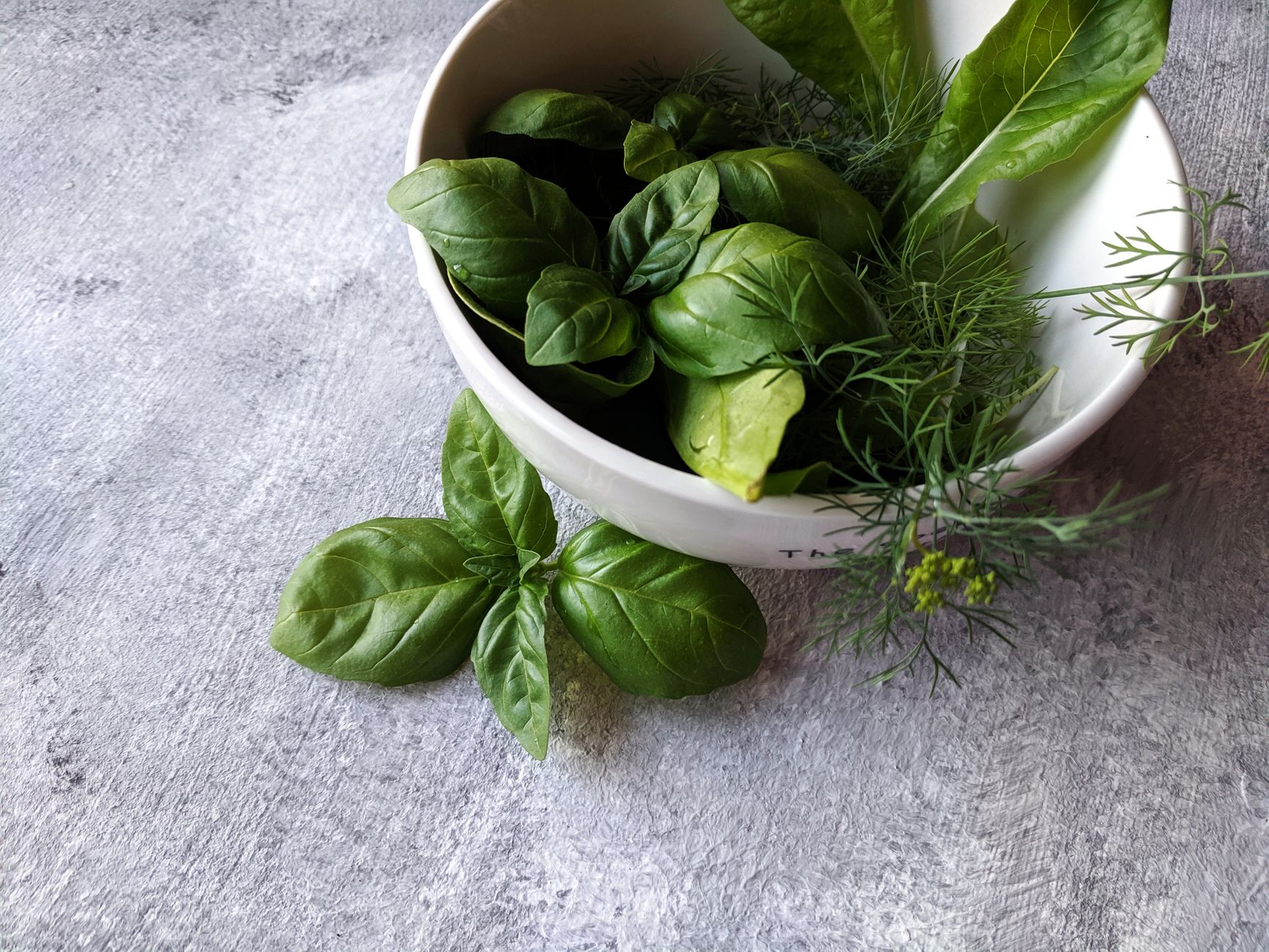
There is a moment every spring when I know Frankfurt has woken up: the little cellophane packets of seven herbs appear on the market stalls, stacked in green rolls, and suddenly everyone is talking about the same thing. Grüne Soße — “Grie Soß” in the local dialect — is not a side dish here. It is a season, an argument at family tables about whose is best, and one of the very few things a banking city with a global airport gets genuinely sentimental about. If you eat one regional speciality while you are here, and you are not in the mood for pork knuckle, make it this. Below is what actually goes into it, where to find a good one, and the two places — a herb village and a festival square — where the sauce is more than lunch.
Seven herbs, and only these seven
The heart of the matter is a fixed set of seven fresh herbs: borage (Borretsch), chervil (Kerbel), cress (Kresse), parsley (Petersilie), salad burnet (Pimpinelle), sorrel (Sauerampfer) and chives (Schnittlauch). Not six, not eight, not “a handful of whatever looks good” — seven, and these seven. Each pulls its weight: borage brings a faint cucumber freshness, sorrel the sharp green tang that makes the sauce sing, cress a peppery bite, salad burnet a nutty note that few people can name but everyone misses when it is absent. Balance is the whole art, which is why the rules (more on those shortly) forbid any single herb from dominating.
The season is real, not marketing. By tradition it opens on Maundy Thursday — Gründonnerstag, and yes, the pun on grün is half the fun — and runs through the summer until the first autumn frost cuts the herbs down. Outside that window you will still find versions made with imported or frozen herbs, but a Frankfurter will tell you, not always kindly, that it is not the same thing.
How it’s really made
There are two honest schools, and people defend theirs like a football team. The older, “posher” version binds the finely chopped herbs into a kind of green mayonnaise: hard-boiled egg yolks pushed through a sieve, then mustard, salt, pepper, a little vinegar and oil beaten in until it emulsifies. The everyday version — the one most taverns serve — uses a dairy base instead: quark, soured cream, crème fraîche or yoghurt, often several at once, with chopped egg white folded through. Both are served ice-cold.
Two things separate a good green sauce from a sad one. First, the herbs must be chopped, not blitzed to a purée — you want to see the green flecks and taste each herb, not baby food. Second, it should be neither runny nor stiff: creamy enough to coat, loose enough to pool. The classic plate is disarmingly plain — Grüne Soße mit Ei und Kartoffeln, poured generously over halved hard-boiled eggs and hot boiled potatoes in their skins. In smarter kitchens it turns up alongside Tafelspitz (boiled beef), cold roast or poached fish, and it is superb that way too. It is also, not incidentally, the ideal foil to the tart local apple wine — I go into that pairing, and the drink itself, in my portrait of Frankfurt’s Ebbelwoi.
A protected name — and a legend that isn’t true
Frankfurt takes this sauce seriously enough to have gone to Brussels over it. Since 2016 “Frankfurter Grüne Soße” has been a Protected Geographical Indication (PGI) under EU law. The protection is precise: the herbs must be grown and the little bundles assembled by hand in the defined region — Oberrad and a handful of neighbouring communities — and no single herb may make up more than 30 per cent of the mixture. Only a herb bundle that meets those terms may legally carry the name. Frankfurt is not the only claimant, incidentally: Kassel in northern Hesse has its own fiercely defended green sauce, and the rivalry is real — but only the Frankfurt version wears the EU seal.
Which brings me to the story you will hear from at least one waiter: that green sauce was the beloved dish of Goethe, supposedly perfected by his mother in her Frankfurt kitchen. It is a lovely tale and it is, sadly, a modern invention — historians have found no evidence for it at all. The sauce’s true origins are murky; the more sober guesses point to Huguenot refugees or Italian spice merchants introducing the idea of a cold herb sauce centuries ago. I rather like that the honest answer is “we don’t really know” — it suits a dish that belongs to everybody here and to no single famous name.
Oberrad: the herb village on the city’s edge
The herbs come from a surprising place — not the countryside, but a district of Frankfurt itself. Oberrad, on the southern bank just east of Sachsenhausen, has grown market-garden herbs on the fertile Main-valley soils for generations, and the seven-herb bundles are still cultivated in fields hemmed in by houses and allotments. It is one of the last working pieces of agricultural Frankfurt, and a fragile one: of the sixteen farms that originally applied for the PGI, only a couple were still growing the herbs commercially as of 2024, worn down by vandalism, labour shortages and thin margins. Buy the real thing while there are still hands to grow it.
The nicest reason to come out here is the Green Sauce Monument (Grüne-Soße-Denkmal), unveiled in 2007 by the artist Olga Schulz. It is seven small, greenhouse-like structures, each glazed in a different shade of green — one per herb — standing freely accessible at the edge of the Oberrad fields near Kochstraße and Speckgasse. Shortly after sunset the little houses glow softly from within and the skyline shimmers through the coloured glass; it is one of my favourite quiet corners in the whole city, and almost no visitor knows it. Take tram 15 or 16 to Oberrad and walk the last few minutes. Sachsenhausen’s cobbled lanes are hopeless for a car, and out here parking is thin too — if you insist on driving, it pays to know which central car parks are actually worth the money before you set off rather than circling.
Where to eat it
In season, almost every apple-wine tavern in Alt-Sachsenhausen puts green sauce on the board, and that is where I send friends. A reliable pick is Zum Gemalten Haus (Schweizer Straße 67), where the sauce is grated fresh; a few doors up, Apfelwein Wagner (Schweizer Straße 71) does the full plate of eggs and potatoes in a lovely half-timbered courtyard. For the etiquette, the addresses and the other classics — Handkäs, Rippchen and the rest — see my guide to Frankfurt’s best apple-wine taverns, and for how the whole district fits together, my walk through Sachsenhausen. Take the U-Bahn (U1/U2/U3/U8) to Schweizer Platz and you are among the taverns in minutes.
If you want the refined version — green sauce with Tafelspitz, on white linen — several of the city’s more ambitious kitchens do a spring special; I flag a few in my restaurant guide by cuisine and district. And if Grüne Soße is honestly the first thing you want to taste after you land, Sachsenhausen is a short, direct run from Frankfurt Airport — it is worth checking what that transfer actually costs before you set off, so the meal, not the ride, is the memorable part.
The Grüne Soße Festival on the Roßmarkt
Once a year the sauce gets its own festival — and, in a quirk locals love to point out, it happens not in Sachsenhausen but hibbdebach, across the river on the Roßmarkt in the city centre. In 2026 the competition runs from 2 to 9 May, with the festival market open from around 1 May. Some 56 restaurants enter their own recipes, and the format is genuinely fun: on each competition evening around 650 guests blind-taste seven sauces and vote, with the daily winners meeting in a grand final on the last day. New for 2026 is an International Evening on 1 May, run entirely in English with the city’s Newcomers Network — a rare chance for visitors to join in rather than just watch. The festival was nearly lost after 2025 and only saved at the last minute for 2026, so if you are in town that week, go: it is one of the warmest, most local things Frankfurt does all year, and the market stalls run the gamut from the strict classic to green sauce on falafel or over Argentine steak.
Buy the herbs and take it home
You can, of course, make your own. In season the fresh seven-herb bundles are sold at the Kleinmarkthalle (Hasengasse 5–7), at the weekly markets and in most supermarkets — I say more about the hall and the city’s other food shopping in my Frankfurt shopping guide. Chop the herbs fine by hand, fold them into quark and soured cream with plenty of chopped egg, season boldly with mustard, salt and a little vinegar, and — this is the one non-negotiable — let it rest cold for an hour before serving. It travels home surprisingly well as a jar of herbs, too, if you want a taste of Frankfurt spring in your own kitchen.
My perfect green-sauce day is a simple one: out to Oberrad in the late afternoon to see the herbs still growing where they belong and to catch the little glass houses glowing at dusk, then back across to a Sachsenhausen tavern for a plate of eggs and potatoes under a proper flood of green sauce and a cool Schoppen of apple wine beside it. It costs almost nothing, it is unmistakably Frankfurt, and it tastes of exactly one season — which is, I think, the whole point.
Keep reading
Food & Drink
Apple Wine in Frankfurt: The Best Apple-Wine Taverns
Where to drink real Ebbelwoi in Frankfurt: the best apple-wine taverns in Alt-Sachsenhausen, Bornheim and Seckbach — with addresses, opening hours and tips on the proper etiquette.
Katharina Vogt16 June 2026
Food & Drink
Breakfast & Brunch in Frankfurt: The Best Cafés
Where to have a really good breakfast and brunch in Frankfurt: the best cafés in the Nordend, Bornheim, Sachsenhausen, the city centre and the Bahnhofsviertel — with addresses, specialities and honest reservation tips from a local.
Katharina Vogt19 June 2026
Food & Drink
Breakfast with a View in Frankfurt: Rooftops, Skyline & the Main
Where to have breakfast with a view in Frankfurt: rooftop terraces with a skyline view, the Sunday brunch above the rooftops and cafés right on the Main — with addresses, times and prices (as of 2026).
Katharina Vogt7 July 2026
Food & Drink
The Best Restaurants in Frankfurt: A Guide by Cuisine & District
Where to eat really well in Frankfurt: Hessian classics in Sachsenhausen, world cuisine in the Bahnhofsviertel and three two-star kitchens — sorted by district and cuisine, with honest tips from a local.
Katharina Vogt16 June 2026