Porcelain Museum Frankfurt: Höchst Porcelain at the Kronberger Haus
Germany's second-oldest porcelain manufactory was founded in Höchst on the Main in 1746. Where to see the “white gold” today, what the mark tells you, and how to fold it into a day in the old town.

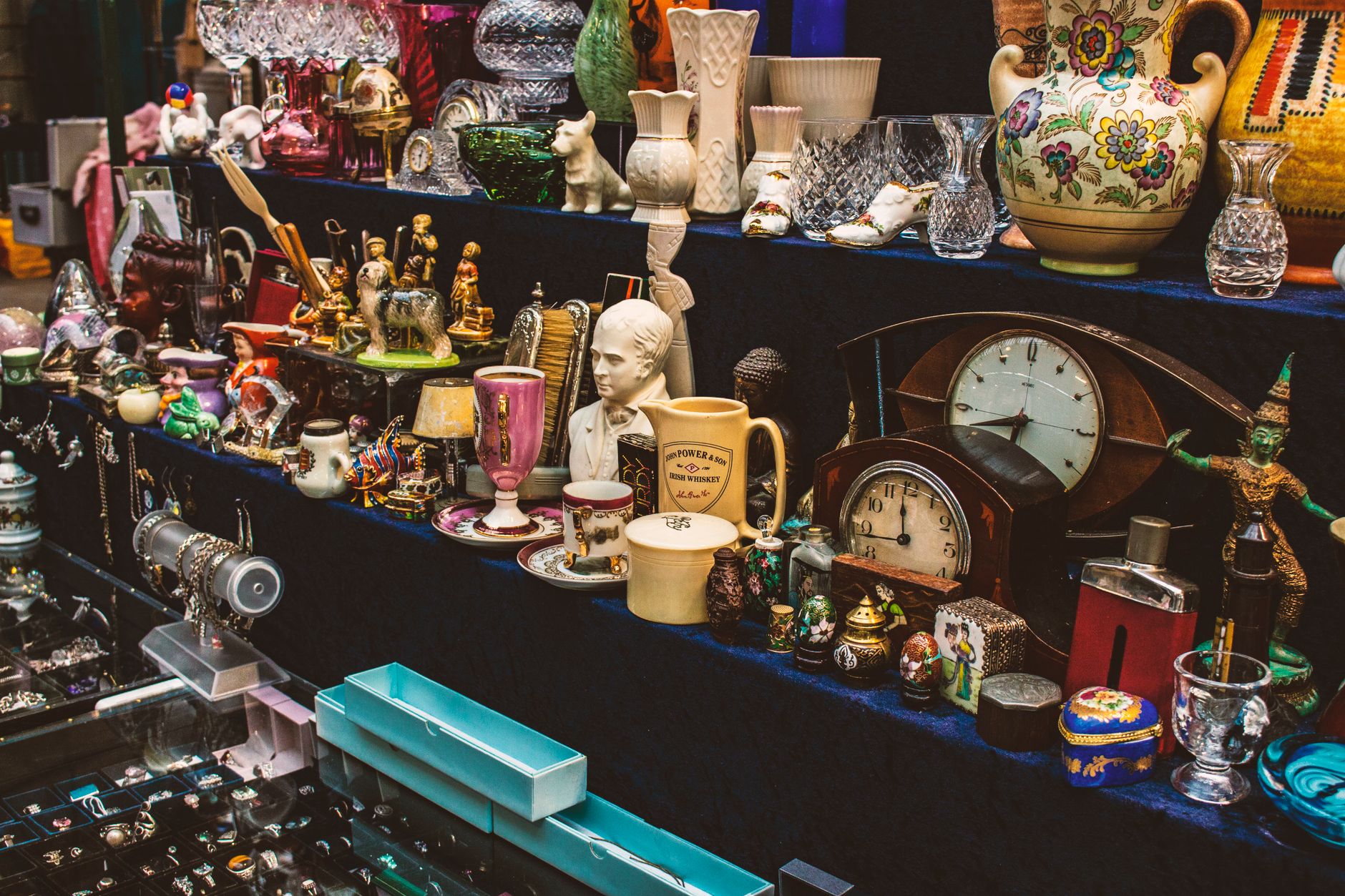
Porcelain feels ordinary today — a coffee service, a vase, a small figure on a shelf. In the 18th century, though, it was “white gold”: a luxury for which European princes spent fortunes, and whose recipe was guarded like a state secret. That Frankfurt of all places played a prominent part in this story is something even many locals don’t know. Because in the west of the city, in Höchst on the Main, Germany’s second-oldest porcelain manufactory was founded in 1746 — and some of its loveliest pieces still stand just a few minutes by S-Bahn from the main station.
One thing to clear up first, because it’s often muddled: you don’t see the historic porcelain collection in the striking Höchst Castle down by the water, but a few steps further on in the Kronberger Haus on Bolongarostraße. Both sit in the same old town, but if you’re coming specifically for the porcelain, aim for the right door. More on that below.
”White gold”: how the secret came to Höchst
Until the early 18th century, no one in Europe could make true hard-paste porcelain. The fine, white, translucent material came from China and Japan, cost the earth, and was the ultimate status symbol. The breakthrough came at Meissen around 1708/09 — and from then on courts across Europe schemed to prise the closely guarded production secret, the so-called arcanum, out of its keepers. Whoever could poach a runaway “arcanist” suddenly had a chance to make “white gold” of their own.
That is exactly how the Höchst story begins. In 1746, the merchant Johann Christoph Göltz and the porcelain painter Adam Friedrich von Löwenfinck founded the manufactory under the protection of the Elector of Mainz. Höchst then belonged to the Electorate of Mainz, and the Elector granted the enterprise its privilege. This makes Höchst, after Meissen, the second-oldest porcelain manufactory founded in Germany — a remarkable rank for a place many people now think of merely as a Frankfurt suburb.
The start, though, was bumpy. In the first years, between 1746 and 1750, Höchst produced no porcelain at all, only faience — brightly painted earthenware under an opaque tin glaze. The real breakthrough came only in 1750, when the arcanist Johann Kilian Benckgraff and the kiln builder Josef Ringler arrived: they achieved the first genuine porcelain firings. Only now did the workshop master the very material everything revolved around. It’s a typical episode of the age — the story of early porcelain is always also a story of secrets betrayed.
The Mainz wheel: what the mark tells you
Once you start taking an interest in Höchst porcelain, you soon look for a small detail on the underside of the pieces: the maker’s mark. In Höchst this has always been the six-spoked wheel — the Mainz wheel, taken straight from the coat of arms of the Electorate of Mainz. It’s no random emblem but a sign of sovereignty, a reminder that the manufactory operated under the Elector’s privilege.
For collectors, that mark is worth its weight in gold, so to speak. From the shape and colour of the wheel — whether painted or impressed, in which shade, with which added symbols — pieces can often be placed roughly in time. That is also why the wheel is still used today: the 20th-century revival of the manufactory deliberately picked up the old sign. So when you stand in front of a display case, it’s worth looking not only at the painting but — where you can see it — at that little signature underneath.
The Rococo figurines and Johann Peter Melchior
Lovely as Höchst tableware and vases are, the manufactory became famous above all for its figurines. The Rococo loved the dainty, the graceful, the small narrative scene, and few materials suited that better than porcelain. Höchst produced whole series: groups from courtly and everyday bourgeois life, musicians, gardeners’ children, craftsmen, mythological figures.
Inseparable from this fame is one name: Johann Peter Melchior. Court sculptor to the Elector of Mainz, he came to Höchst as chief modeller in 1768 and shaped the house style for years. His figures — such as the delicate genre piece “The Cobbler’s Wife” of 1770 — show where the artistry lay: not in pomp, but in living movement, in children’s faces and everyday gestures you would never credit to so brittle a material. Stand in front of these figures at the Kronberger Haus and you quickly grasp why Höchst Rococo porcelain is still traded at auction and held in major collections.
That first golden age ended abruptly: in 1796, after exactly fifty years in business, the manufactory went bankrupt. The turmoil of the Napoleonic era, economic hardship and competition from rival houses had pulled the ground from under it. The models and moulds survived, however — and that is precisely why a sequel later became possible.
Where to see the historic porcelain: the Kronberger Haus
The finest chance to see genuine historic Höchst is at the Kronberger Haus at Bolongarostraße 152 in Höchst. The building itself is a small marvel: a Renaissance house, built between 1577 and 1580 for the nobleman Franz von Cronberg — far older, then, than the manufactory whose work it now shelters. Since 1994 it has housed the porcelain museum as a branch of the Historical Museum Frankfurt, with around 1,000 pieces of Höchst porcelain.
The combination is exactly what makes a visit special: you see fragile Rococo figures and fine tableware not in a sober modern box, but in a house from almost the same era, with historic rooms and old beams. If decorative craftsmanship excites you, incidentally, the city centre holds another great address: the Museum of Applied Arts on the Museum Mile collects European and non-European craft and complements the Höchst speciality beautifully.
An honest word about the Kronberger Haus: the opening hours of this branch tend to be limited and can change. I deliberately give no fixed times here that might be out of date by tomorrow — check the Historical Museum Frankfurt’s own pages, or phone ahead, shortly before you go. Especially if you’re travelling out solely for the porcelain, that one call is well spent.
The manufactory today: a chequered rebirth
And the manufactory itself — does it still exist? Yes, but its recent history is as eventful as its old one. At the urging of the Höchst historian Rudolf Schäfer, the Höchst Porcelain Manufactory was founded a second time in 1947. After a closure in 1963 it resumed work in 1965 with backing from the Farbwerke Hoechst chemical company and the Frankfurt bank Koch, Lauteren & Co. It picked up the old moulds, kept the Mainz wheel, and made porcelain by hand — formed and painted as in Melchior’s day. Later the manufactory was based, among other places, in the Dalberger Haus, before production moved in 1996 to the “New Porcelain Court,” a listed industrial building on Palleskestraße.
In recent years, though, the business came under heavy financial pressure: there were several insolvencies, most recently in the summer of 2022. At the end of 2022 the State of Hesse finally took over the assets and part of the workforce, continuing the operation as a training facility of the Offenbach University of Art and Design (Hochschule für Gestaltung Offenbach). So the storied brand lives on — but now less as a classic sales business than as a craft-and-art institution. That also explains why, online, you may land on outdated or redirected pages. One important word if you’d like to buy pieces or see the workshop on a tour: don’t rely on old addresses from guidebooks, but check locally or by phone what is actually possible right now. A souvenir of genuine Höchst make remains a wonderful, distinctly regional gift — it’s just that getting hold of one is no longer as straightforward as it once was.
Around Höchst: castle, Justinus Church, timber frames
The nice thing about a porcelain outing is that it takes you into one of Frankfurt’s most surprising corners. Höchst has the city’s largest closed timber-framed ensemble, which was largely spared in the Second World War, and it rewards exploring on foot. I’d urge anyone to fold the porcelain into a wander through the Höchst old town — only then does the day round itself off.
Within easy walking distance stand some of the oldest and finest buildings in the region:
- Höchst Castle: the striking building on the riverbank, once the customs and residence castle of the Electorate of Mainz, with its landmark tower. It defines the silhouette by the water and makes the ideal spot for a look across the river.
- The Justinus Church: Frankfurt’s oldest surviving building of all, a Carolingian basilica from the 9th century — a quiet, deeply impressive space.
- The Bolongaro Palace: a magnificent Baroque palace built by the Italian merchant brothers Bolongaro in the 18th century; it gave the street in front of the Kronberger Haus its name.
- The riverbank: lovely views, a ferry and a pleasant place for a break.
If you like places like this — corners most Frankfurt visitors miss entirely — you’ll find plenty more in my roundup of Frankfurt’s hidden gems.
Practical tips for your visit
Getting there: Höchst lies in the west of Frankfurt and is most easily reached by S-Bahn. Several lines bring you from the main station to Frankfurt-Höchst in around 15 minutes; from there it’s a few minutes’ walk through the old town to the Kronberger Haus and the castle by the water. Arriving by car is possible, but parking is tight in the narrow old-town lanes — the train spares you the hunt.
Allow the time: For porcelain, old town and Justinus Church, reckon on half a day. Everything is close together, so you can drift from one spot to the next without rushing.
Check ahead: Do confirm the opening hours and admission of the porcelain museum at the Kronberger Haus, as well as any sales or tour offerings from the manufactory, shortly before you go — the situation has changed several times in recent years.
Who it’s for: If craftsmanship, the Rococo, history or fine handwork excite you, Höchst offers a genuine speciality. And even if porcelain leaves you cold, it’s a wonderful excuse to discover this underrated district at last.
For me, a porcelain outing to Höchst is one of those Frankfurt secrets that show how much history hides in a city so often seen only as a banking hub. Germany’s second-oldest manufactory, the “white gold” of the 18th century, a Renaissance house full of Rococo figures, and around it the oldest Frankfurt there is — you won’t find that density anywhere else in the city. Take the S-Bahn, take your time, and you’ll leave Höchst seeing it with different eyes.
Keep reading
Attractions
MMK Frankfurt: Museum of Modern Art – Locations, Collection & Tips
The MMK Frankfurt across three houses: the 'slice of cake' by Hans Hollein, the Zollamt and the TOWER high-rise. The collection from 1960 onwards, opening hours, admission and a personal route.
Katharina Vogt19 July 2026
Attractions
Struwwelpeter Museum Frankfurt: Heinrich Hoffmann, Tickets & Tips
The Struwwelpeter and Heinrich Hoffmann Museum in Frankfurt's New Old Town (Hinter dem Lämmchen 2–4): how the world's most famous shock-headed boy was created in 1844, what the exhibition shows, plus admission, hours and how to get there (as of 2026).
Katharina Vogt11 July 2026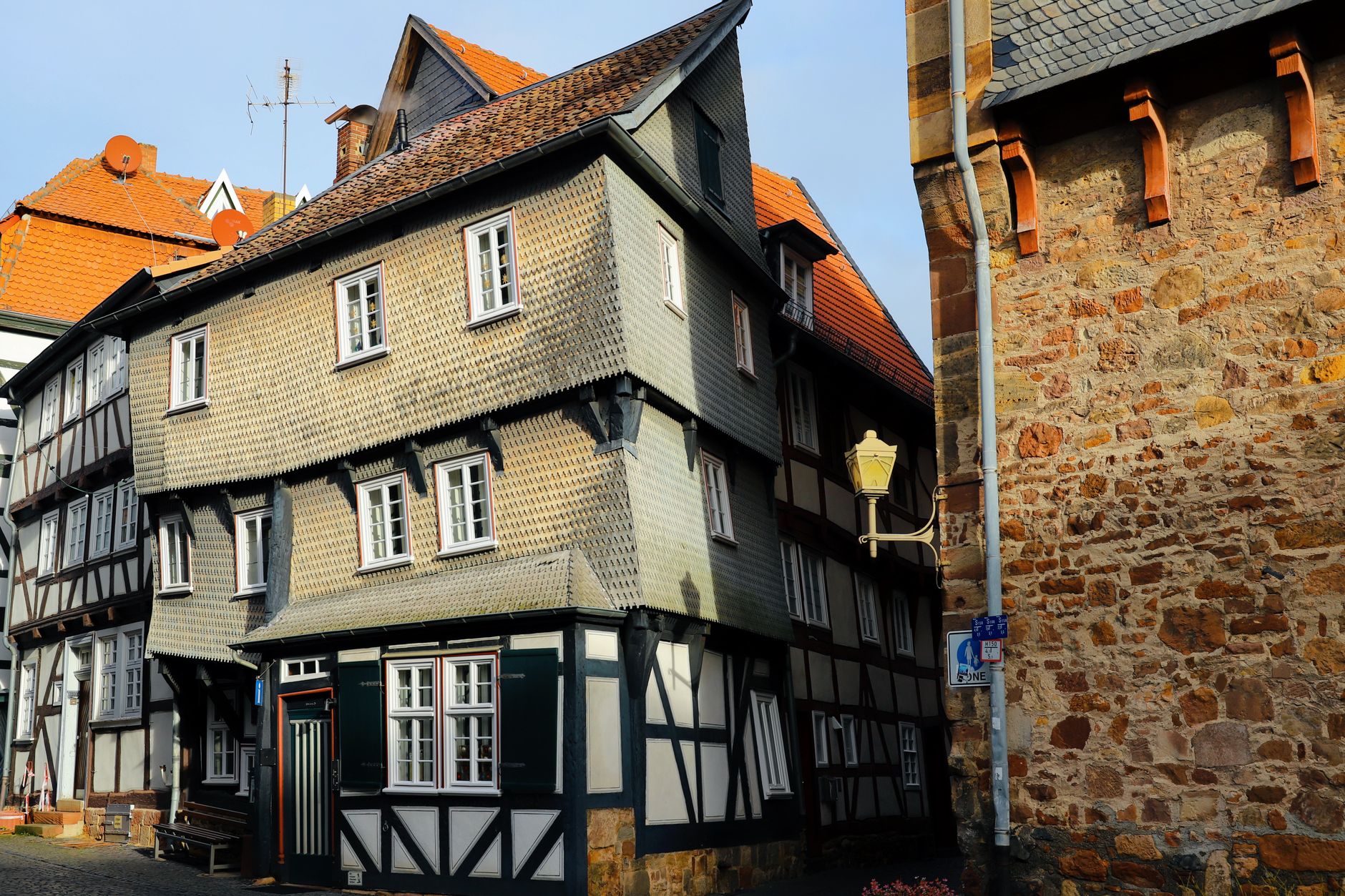
Attractions
Höchst Old Town Frankfurt: Timber-Framing, Castle & Justinus Church
Höchst in Frankfurt's west: the only old town that survived the war — with the Carolingian Justinus Church, the castle on the Main, the Bolongaro Palace and timber-framed lanes. Getting there, the Schlossfest and my walking route.
Katharina Vogt10 July 2026
Attractions
Goethe House & Romanticism Museum Frankfurt: Tickets & Tips
The Frankfurt Goethe House, Goethe's birthplace on the Großer Hirschgraben, and the German Romanticism Museum next door: combined ticket, opening hours, room-by-room highlights and a local's tips (as of 2026).
Katharina Vogt1 July 2026