Frankfurt Parks and the Riverbank: The City Without a Ticket Desk
Frankfurt's best day out costs nothing. From the Westhafen along the Main, up into the Westend, across to the Nordend and finally down into a forest the city has owned since 1372.

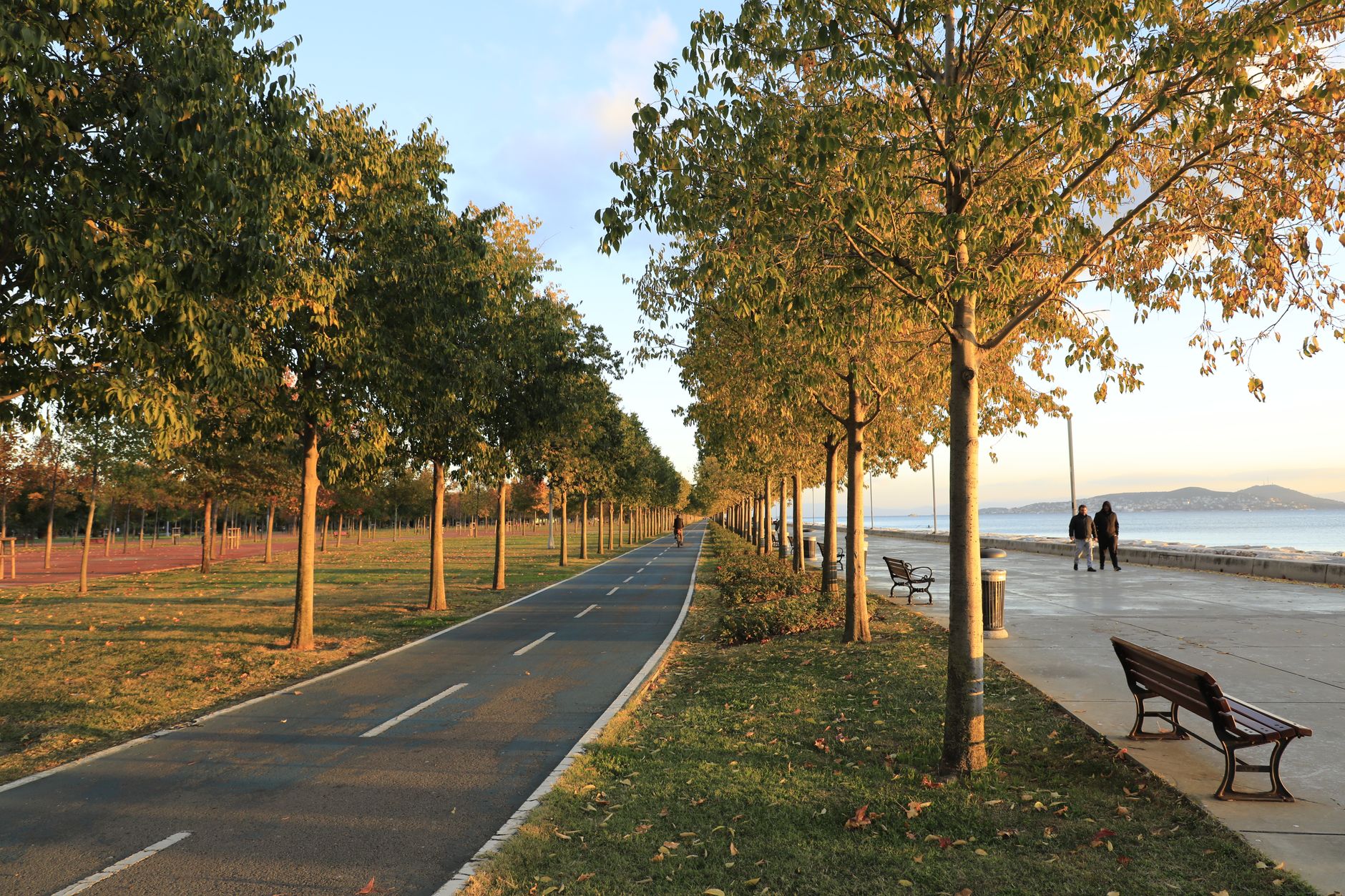
Frankfurt has a reputation for being expensive, and where museum tickets are concerned that is fair enough. The part of the city I like best costs nothing at all: the river, the parks and, right down in the south, a forest larger than many a small town. The best of it is that these places join up. The riverbank is less a destination than an axis — follow it from west to east and you pick up almost everything green this city has. That line is what I have written down here.
Seven kilometres of river: the Mainuferweg as a spine
That you can walk for kilometres along the water here is not an accident. From 1990 onwards the city pushed through a Mainuferpark project running from the Deutschherrnbrücke in the east to the Main-Neckar-Brücke in the west; by the 2006 World Cup a continuous park landscape of roughly seven kilometres had taken shape along both banks. Much of it had been car park before — at the Deutschherrnufer, where the conversion began in the late 1990s, you would never guess it now.
The two sides have different characters, and that decides your walk. The northern bank starts a few paces from the 109-metre Westhafen Tower: a foot and cycle path beside the water, old trees over generous lawns, and just behind the Untermainbrücke a toddlers’ playground screened off from the traffic. Towards the Eiserner Steg the promenade shares its space with the tracks of the old harbour railway, which still runs on special occasions, then carries on east past the Weseler and Ruhrorter Werft to the Hafenpark beside the European Central Bank.
The southern bank is the side with the view: if you want the skyline in front of you, walk over in Sachsenhausen. In summer boats are moored between the Alte Brücke, the Eiserner Steg and the Untermainbrücke where you can sit with a coffee, and at the Schaumainkai the museum mile begins — how to tackle that without exhausting yourself is in my piece on the Museumsufer. One detail that gets passed on wrongly all the time: the Frankfurt flea market is not on the riverbank every Saturday. It runs every second Saturday, 9 a.m. to 2 p.m., public holidays excepted, alternating between the Schaumainkai and the Osthafen at Lindleystraße (as of 2026). The current dates, and my tips for haggling, are in my guide to the Frankfurt flea market.
Coming by car is the worst of all plans, because there is essentially nowhere to park along the water. Leave the car in one of the central car parks in the middle of Frankfurt and walk the last few minutes.
The Nizza: Mediterranean terraces behind a sandstone wall
At the Untermainbrücke the planting on the northern bank suddenly thickens, and you are standing in the Nizza. The name is historical: Sebastian Rinz, Frankfurt’s first official city gardener, laid the ground out, and his grandson Andreas Weber brought exotic plants to the Main for the first time in 1875. What makes it work is the high quay wall of red sandstone — it stores heat, the south-facing position is sheltered, and in that microclimate Mediterranean plants get through a Frankfurt winter. After the redesign in 2000, deliberately frost-hardy species were planted that no longer have to be carried indoors.
What grows here is remarkable for an inner-city green space: palms and fig trees, evergreen oaks, rock roses, lavender and sage, a strawberry tree and a giant sequoia. The garden falls into three zones, and knowing that means coming at the right moment: along the quay wall the winter-flowering garden, next to it the orchard whose peak bloom falls in early autumn, and towards the river the summer-flowering garden. So the Nizza has something to show in every month of the year — and there is no gate, no ticket desk and no closing time. Its more elaborate but chargeable counterpart sits up in the Westend: how to plan the Palmengarten is a separate piece.
The Grüneburgpark: 27 hectares of Westend, no admission
From the Nizza it is a good twenty minutes north to Frankfurt’s third-largest green space. The Grüneburgpark measures 27 hectares, was voted the city’s favourite park in a 2014 survey, and many of its trees are over a hundred years old. It was once the Rothschild family’s residence, the garden laid out among others by Heinrich Siesmayer; after the family was expropriated by the Nazis it passed to the city shortly after the war. Where the Rothschild palais stood, a bed of white and pink roses now marks the spot — one of the quietest acts of remembrance I know in Frankfurt.
Since the thorough refurbishment completed in 2017 there is a network of solid paths again and several imaginative playgrounds. What strikes me is how little is mown here: whole areas are wild meadows cut only once or twice a year, and the old tree stock shelters numerous bird and bat species.
In the east lies the Korean Garden, and here I have to slow you down, because nearly every guidebook still lists it as an attraction. The 4,800-square-metre garden was South Korea’s gift to the city at the 2005 Book Fair, laid out as a traditional scholars’ garden with two pavilions built from Korean materials. On 1 May 2017 an arson attack destroyed the Morning Dew Pavilion completely; the garden is closed for maintenance work, and the surviving Plum Arbour urgently needs a new roof (as of 2026). Do not build a visit around it. Getting there: the U1, U2, U3 and U8 stop at Holzhausenstraße beneath the Eschersheimer Landstraße; coming from the Palmengarten, take the U6 or U7 to Westend.
Günthersburgpark: the Nordend’s park, and the piece still missing
The Günthersburgpark in Nordend-Ost, between Wetteraustraße and Comeniusstraße, has a similar pedigree: in 1837 the banker Carl Mayer von Rothschild had it laid out as an English landscape park, again under Sebastian Rinz and with Heinrich Siesmayer, and it has been open to the public since 1892. Today it is officially 7.4 hectares — and that is precisely its problem. The Nordend is one of the most densely populated districts in Frankfurt, green and play space is scarce, and the city itself writes that the park is being over-used.
So it is being extended northwards by about four hectares, onto the site of a former parks-department depot. Demolition is finished and the first sections have been seeded and opened, but the money for the landscaping works that follow is currently not there (as of 2026). What you will find, then, is a lively, heavily used park with a water play area and an adventure playground, and beside it a large, still raw expanse. Tram 12 stops at Günthersburgpark, bus lines 30 and 103 serve it, and the U4 gets you to Bornheim Mitte. Two more green targets in the north-east — the Chinese garden in the Bethmannpark and the Lohrberg for a free skyline view — are in my Frankfurt hidden gems rather than repeated here.
The Frankfurter Stadtwald: where the city turns into forest
South of the Main, Frankfurt does not stop; it becomes woodland. The Frankfurter Stadtwald covers around 5,785 hectares, of which 3,866 lie inside the city boundary, and makes up almost half the GrünGürtel green belt (as of 2026). The city has owned it since 2 June 1372, when Emperor Charles IV handed it over for 8,800 guilders. In the west lie the dry, sandy Unterwald and the Schwanheimer Wald with pines and gnarled oaks, in the east the damper Oberwald with very tall beeches and a scatter of ponds. The city does not hide the state it is in: more than 70 per cent of the trees are classed as moderately to severely damaged.
Because the area is enormous, your way in shapes the whole day. The most useful line is tram 17, which runs from the Hauptbahnhof via Stresemannallee to the stops Louisa Bahnhof and Oberschweinstiege and on to Neu-Isenburg Stadtgrenze.
The StadtWaldHaus with its Fasanerie sits on the Kuhpfadschneise, which leads off the Isenburger Schneise opposite the Oberschweinstiege: tram 17 to Oberschweinstiege, then roughly 800 metres following the signs. Across about three hectares there are enclosures with more than twenty native species, a rescue station for injured wild animals, a barefoot trail and a forest exhibition; admission is free. It opens March to October, Monday to Thursday 9 a.m. to 4 p.m., Saturday noon to 6 p.m., Sunday and public holidays 10 a.m. to 6 p.m.; from November to February Saturdays close at 4 p.m. and Sundays and holidays run 10 a.m. to 4 p.m. One rule catches people out constantly: dogs are not allowed on the site at all, not even outdoors.
With the Goetheturm on the Sachsenhäuser Landwehrweg, the date matters. The 43.3-metre wooden tower and its 196 steps burned down in an arson attack on the night of 12 October 2017 and has been open again since spring 2021. It opens 1 April to 31 October, from 8 a.m. until dusk and at the latest until 8 p.m.; in autumn and winter it stays shut for safety reasons. At its foot are a restaurant and the 2.98-hectare Waldspielpark Goetheturm, with a paddling pool and a maze laid out in 2006. The stop is simply called Goetheturm, served by bus 48 from Südbahnhof.
The Waldspielpark Louisa, the oldest of the seven forest play parks, was created in 1954 on the grounds of a landscape garden of 1812 and covers 2.5 hectares. If you would rather have water, walk to the Jacobiweiher, the largest of the forest ponds, which locals call the “Vierwaldstättersee” for its shape; a circular path with benches runs round it and the Oberschweinstiege inn sits at the western end. Swimming is not permitted. Along the way you meet the seven comic sculptures designed by Robert Gernhardt and F. K. Waechter, among them an owl in a Norwegian jumper.
And yes, you hear the airport. The Stadtwald wraps around it, and heading towards Schwanheim you walk under the approach path. If you are connecting in Frankfurt anyway, the overview of how the terminals at Frankfurt Airport are arranged has the current position — a good deal has shifted there lately.
The GrünGürtel holds it all together
That river, parks and forest run into one another so naturally is the result of a decision. In 1991 the city assembly adopted the GrünGürtel constitution to secure the green ring around the inner city for good; it takes in about a third of the city’s area, some 80 square kilometres. The GrünGürtel circular trail runs just under 68 kilometres in nine sections, each with its own stamp for the walking passport — an unshowy project you need not be a hiker to enjoy.
How I would spend the day
My own Saturday looks like this: start around eleven at the Westhafen, head east along the northern bank, through the Nizza, across the Holbeinsteg and on the Sachsenhausen side as far as the Schaumainkai — an ice cream on one of the boats there, with the skyline behind you. Early afternoon, either the U-Bahn up to Holzhausenstraße and two hours on a blanket in the Grüneburgpark or, if everyone still has energy, tram 17 into the Stadtwald, up the Goetheturm and round the Jacobiweiher. If you want animals and don’t mind buying a ticket, the zoo in the Ostend is the more comfortable alternative to the Fasanerie.
Evenings in the forest go dark quickly and the tram thins out. Anyone travelling with tired children takes a taxi, and it helps to know roughly what a taxi ride in Frankfurt costs before you flag one down.
What reconciles me to this city is exactly that sequence: a morning by a river, a midday under hundred-year-old trees, an afternoon in a forest the city has owned since 1372 — without passing a single ticket desk. If you are coming in from outside and weighing up whether the car is worth it, the distances and driving times from Frankfurt am Main settle that faster than any argument over breakfast. And if you find the Goetheturm closed in autumn — go anyway. The forest beneath it is at its best then.
Keep reading
Attractions
Frankfurt Hidden Gems: A Local's Favourites Off the Tourist Trail
Insider tips from a local: the Nizza garden on the Main, the Lohrberg for a free skyline view, the Höchst old town, the Kleinmarkthalle and more — with addresses and prices.
Katharina Vogt24 July 2026
Attractions
Paulskirche Frankfurt: Cradle of German Democracy, the Peace Prize and What to See Inside
Frankfurt's Paulskirche (St Paul's Church), where Germany's first freely elected parliament sat in 1848–49: the foyer, the assembly hall and Grützke's mural, opening hours (daily 10am–5pm, free), the 2026 Peace Prize for Philippe Sands, and where the refurbishment and House of Democracy really stand.
Katharina Vogt25 September 2026
Attractions
Theatre in Frankfurt: Schauspiel, English Theatre, Tigerpalast and More
Frankfurt's stages beyond the opera: the Schauspiel Frankfurt with English surtitles, the English Theatre back in the Gallileo tower, variety at the Tigerpalast, plus the Volksbühne and the Mousonturm, with 2026/27 prices, box-office hours and what works if you speak no German.
Katharina Vogt25 September 2026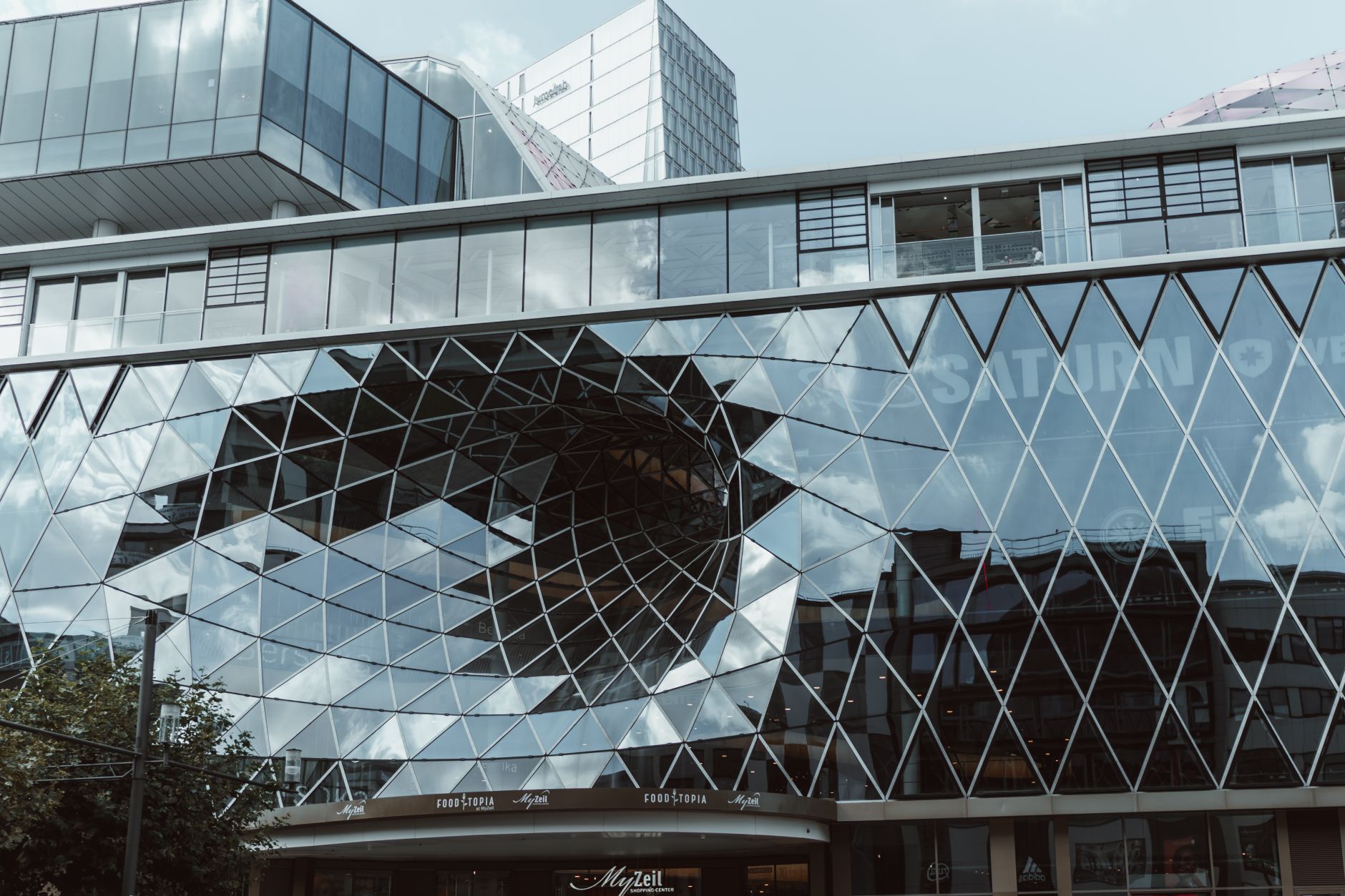
Attractions
Shopping in Frankfurt: Zeil, MyZeil & Skyline Plaza
Where to shop best in Frankfurt: the Zeil between Hauptwache and Konstablerwache, Fuksas' MyZeil, the Skyline Plaza with its rooftop garden, the luxury Goethestraße, the Freßgass, the Kleinmarkthalle and the city's markets — plus opening hours.
Katharina Vogt16 June 2026