Weltkulturen Museum Frankfurt: Collection, Exhibitions & Tips
Frankfurt's museum of world cultures lives in three villas on the Museumsufer — and deliberately does without a permanent exhibition. What to know about its collection, current shows and your visit.

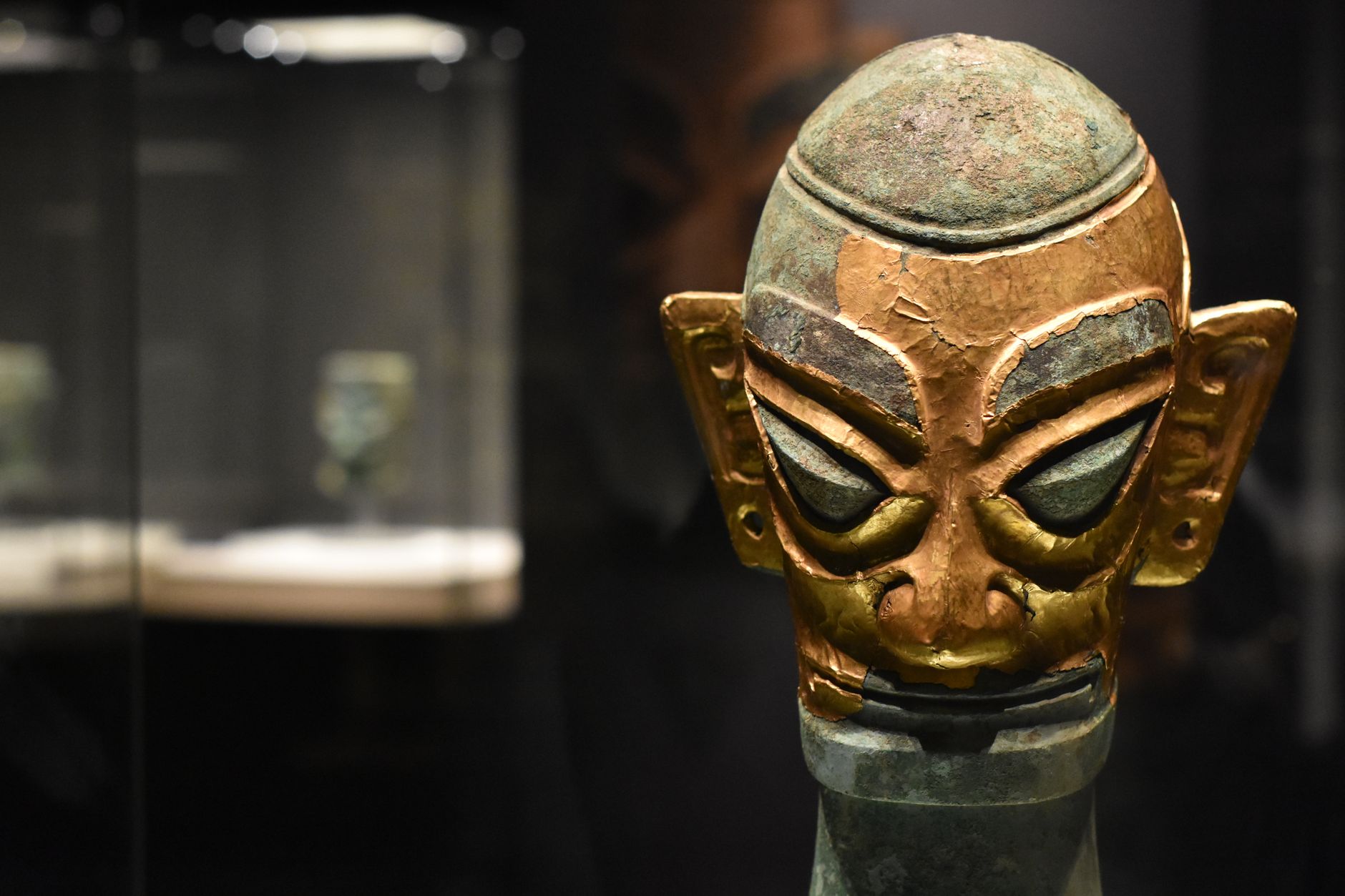
Every Frankfurter knows some of the houses on the Museumsufer: the Städel, the Film Museum, the Senckenberg just around the corner. The Weltkulturen Museum, by contrast, tends to slip under the radar even with locals — quite undeservedly. It is the city’s ethnographic museum, it lives in three old villas overlooking the Main, and it does something no other house on the riverbank does with such conviction: rather than laying its collection out as a fixed display, it thinks the collection through in ever-changing exhibitions, frequently shaped together with artists. If you know that going in, you will rarely be disappointed. If you have a classic ethnology permanent gallery in mind, please read on before you set off.
A museum without a permanent exhibition
This is the single most important sentence for your planning, so I am putting it right at the top: the Weltkulturen Museum has no permanent exhibition in which the collection is spread out room by room. Instead the house describes itself, quite explicitly, as a “museum without a permanent exhibition” and stages changing thematic shows, for which individual holdings are re-examined, recombined and often interwoven with contemporary art.
That sounds technical, but the appeal is very concrete. Instead of a historical parade of vitrines, you get a curated line of thought: how did these objects reach Frankfurt in the first place? What did they mean in their original context, and what do they mean now? And by what right do we exhibit them at all? To pursue those questions the museum repeatedly invites artists, researchers and members of the source communities to work directly with the collection. Visits to the depot — access to the storerooms themselves — are, notably, treated as a central part of the museum’s work rather than a footnote.
The flip side of this stance is worth knowing: between two big exhibitions there can be changeover periods when little or nothing is on show. So it always pays to glance at the calendar on weltkulturenmuseum.de before you travel, to see which show is running — or whether the house happens to be between exhibitions and rebuilding. Unlike the Städel, where the masterpieces are essentially always on the walls, checking the current programme here is genuinely essential.
What’s on right now
At the time this piece was updated (as of 2026), the museum is showing “SHEROES. Comic Art from Africa” in the main building at Schaumainkai 29, running until 30 August 2026 (it opened in November 2025). It brings together around twenty young creatives from across the African continent — among them names such as Farida Bedwei, Akosua Hanson, Juni Ba and Beserat Debebe — and their comics on historical, cultural and social themes. The connecting thread is female perspectives and heroines, hence the title. A nice touch for spontaneous visitors: the show includes a reading room that you can enter even without a ticket.
What comes after that I obviously can’t promise you — which is precisely the point of this house. Take “SHEROES” as an example of how they work here: rooted in the present, often surprising, and with a clear point of view. And do check, for your own date, what is actually on the walls.
The collection: around 65,000 objects from four world regions
Even if it is rarely all on view at once, the reserve behind the scenes is substantial. The Weltkulturen Museum holds an ethnographic collection of around 65,000 objects from Oceania, Africa, Southeast Asia and North, Central and South America. Add to that a treasure many people don’t even know about: the Visual Anthropology collection, with roughly 120,000 historical and contemporary photographs and films. All of which makes it one of Germany’s significant ethnographic collections.
A little history helps to place it. The roots reach back to 1817 and the circle of the Senckenberg Society for Natural Research; as a standalone municipal ethnology museum the house opened in 1904. From that “museum of ethnology” it became, in 2010, the Weltkulturen Museum — the change of name is not marketing but a mission statement. That very shift, from the collecting gaze of old-style ethnology towards a questioning “world cultures” perspective, shapes every exhibition today.
Three villas on the Schaumainkai
The museum has sat on the Schaumainkai since 1969, and since the 1990s across a small ensemble of three Gründerzeit villas — which gives a visit its own almost domestic character. You don’t step into an anonymous museum block, but into a townhouse with high stucco ceilings, parquet floors and mature trees all around.
It’s worth knowing how the three buildings divide up, so you end up at the right gate:
- Schaumainkai 29 is the exhibition house — this is where the actual visit takes place.
- Schaumainkai 35 holds the library. It’s a reference library covering ethnology, religion, music, art and museology, weighted towards the regions Africa, the Americas, Oceania and Southeast Asia, with a fine holding on contemporary art beyond the Western world. It is open to anyone interested, but by prior appointment only (generally Monday to Thursday, in the reading room, with no lending). For the curious and for researchers, a genuine insider tip.
- Schaumainkai 37 is the Weltkulturen Labor (laboratory), opened in 2011 as an experimental space with exhibition areas, event rooms, guest apartments and studios — in other words the workshop where the artistic engagement with the collection happens. Important to know: the Labor is not currently (as of 2026) open to the public on a regular basis, so don’t build your plans around it.
These villas are also my argument for not treating the visit in isolation. The Weltkulturen Museum is one building block on one of Europe’s loveliest cultural miles — more on that in my overview of the Museumsufer.
Opening hours and admission (as of 2026)
The opening hours are pleasingly clear:
- Tuesday, Thursday to Sunday: 11 a.m. to 6 p.m.
- Wednesday: 11 a.m. to 8 p.m. (extended)
- Monday: closed
The long Wednesday until 8 p.m. is my favourite: after the working day it’s often agreeably quiet, and you can have the rooms almost to yourself. Times may differ on public holidays, as is normal for municipal houses.
Admission stays refreshingly down to earth:
- Adults: €7
- Reduced: €3.50
- Children and young people up to 18: free
- Every last Saturday of the month: free entry to the exhibition
The last Saturday of the month is therefore the cheapest day — though also the busiest, in the interest of full disclosure. If you plan to work through several houses on the riverbank anyway, the Museumsufer Ticket (two days, many museums) or the Museumsufer Card (one year) will almost always work out cheaper. Not worth it for a single house, well worth it for a proper day of culture.
How to get there
The museum is at Schaumainkai 29–37, 60594 Frankfurt am Main, right in the middle of the Museumsufer on the Sachsenhausen side of the river. The most relaxed way to arrive is by public transport: the U-Bahn station Schweizer Platz (U1, U2, U3, U8) is only a few minutes’ walk away, and tram lines 15 and 16 stop there too. Alternatively, get off at Willy-Brandt-Platz (U4, U5) and walk across the Main.
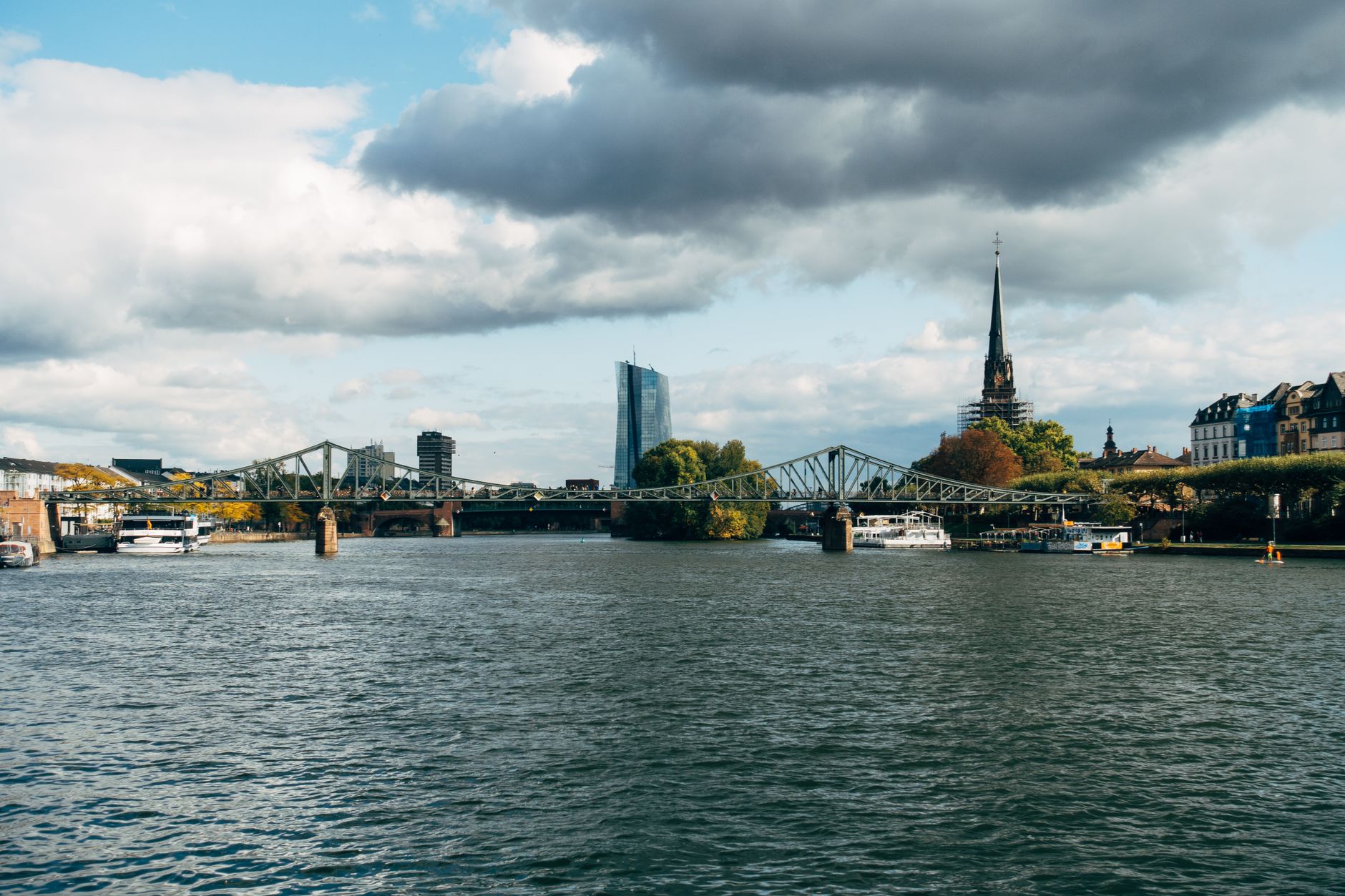
That last route is my favourite approach: on foot from the Römer across the Eiserner Steg footbridge over to Sachsenhausen, the skyline at your back and the row of museums ahead of you. I’d steer you away from driving — parking spaces along the Schaumainkai are scarce and pricey, and the U-Bahn drops you at the door with no hunt for a space.
My suggestion for an afternoon
When visitors ask me how best to fit the Weltkulturen Museum in, I recommend a relaxed afternoon rather than a rushed drop-in. One to two hours is usually enough for the current show — the house is small enough not to overwhelm you and intense enough to stay with you. Ideally start on a long Wednesday, take the running exhibition slowly and give the wall texts your time; here, half the substance lives in the curating.
Afterwards I wouldn’t dive straight back into the U-Bahn — I’d stroll along the riverbank instead. To the left the neighbouring houses of the museum row line up; to the right it heads towards Sachsenhausen, and there, a few streets into the quarter, the apple-wine taverns are waiting. If you want to round off a cultural afternoon with a glass of Äppelwoi and some green sauce, you’ll find the right addresses in my piece on Sachsenhausen, apple wine, green sauce and museums. And if you like the Frankfurt that lies beyond the obvious sights, you’ll appreciate the Weltkulturen Museum anyway — it’s on my list of Frankfurt hidden gems for good reason.
That, for me, is the charm of this house: it doesn’t hand you a comfortable stroll past famous masterpieces, but a different, often uncomfortable view of the diversity of human cultures — and of the way we ourselves deal with it. Check what’s on shortly beforehand, arrive with a little time and an open mind, and you’ll leave the Schaumainkai with a few more thoughts in your luggage than you brought with you. To me, that is exactly what a good museum should be able to do.
Keep reading
Attractions
The Museumsufer & Städel: Frankfurt's Museum Mile
Frankfurt's Museumsufer at a glance: some three dozen museums along the Main — from the Städel and the Film Museum to World Cultures. With the MuseumsuferTicket, MuseumsuferCard, the Museumsuferfest and my route for a relaxed museum day.
Katharina Vogt16 June 2026
Attractions
Städel Museum Frankfurt: Tickets, Opening Hours & Highlights
The Städel Museum on Frankfurt's Museumsufer: 700 years of art from Botticelli and Vermeer to Monet, the underground Garden Halls, opening hours, admission prices and the Tuesday Special.
Katharina Vogt22 June 2026
Attractions
DFF – Film Museum Frankfurt: Exhibition, Cinema & Tips
The DFF – German Film Institute & Film Museum on the Schaumainkai: the two floors of the permanent exhibition, the in-house arthouse cinema, special shows such as Wim Wenders in 2026, plus current prices and opening hours.
Katharina Vogt30 June 2026
Attractions
Museum of Applied Arts Frankfurt: Collection, Villa Metzler & Visit
The white Richard Meier building on the Museumsufer: the collection from European craftsmanship to East Asian art, the Villa Metzler, the Emma Metzler restaurant, prices and opening hours (as of 2026).
Katharina Vogt27 June 2026