Taxi Costs in Frankfurt: Fares, Typical Prices & App Alternatives
Base fare, per-kilometre rate, waiting time — and what the airport ride really costs. Plus the ride-hailing apps, tipping and an honest comparison with the S-Bahn, from a Frankfurt local.

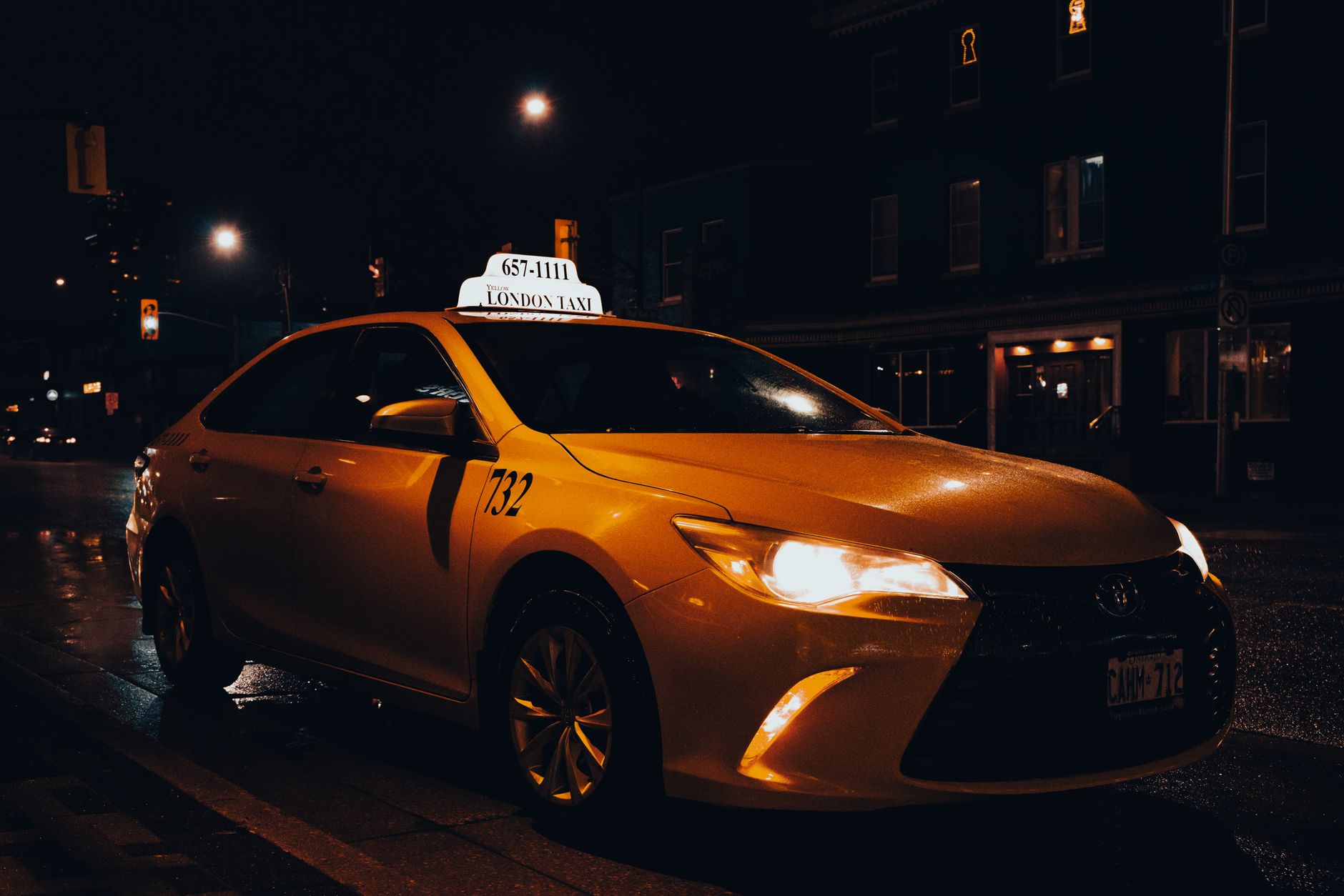
Frankfurt is a city of short distances — and yet there are moments when only a taxi will do: the last flight has landed, it’s well past midnight, your suitcase weighs a tonne, or you simply want to be dropped at the hotel door after a long day at the Messe without one more change of train. I rarely take a taxi here myself, but when I do, I appreciate one thing: prices in Frankfurt aren’t haggled over or guessed at — they follow a fixed tariff set by the city. What that means for your wallet, roughly what the common routes cost, and when the app or the S-Bahn is the smarter call, I’ve sorted out for you here.
One fixed tariff for the whole city
Unlike in some countries, in Frankfurt you don’t need to negotiate, and you needn’t fear that two drivers will charge wildly different sums for the same route. There is an official, compulsory tariff set by the city — every licensed taxi bills by the same rates, whichever company it belongs to. The fare is built from three components:
- Base fare: charged once when you get in, at around €4 (as of 2026). Think of it as the starting sum on the meter before the taxi has even pulled away.
- Per-kilometre rate: roughly €2 to €2.60 for each kilometre driven. Frankfurt uses a tapered tariff — the first kilometres cost more, and the rate per kilometre falls on longer trips, so a long ride works out proportionally a little cheaper than a short one.
- Waiting time: when the taxi is stationary — stuck in traffic, at a red light or during a brief stop — the clock keeps ticking. As a rule of thumb, waiting time adds around 50 cents a minute, or roughly €30 an hour.
All of this is calculated by the meter, and that’s where my most important tip comes in: make sure it’s switched on at the start of the ride and set to the correct tariff. The valid tariff is also displayed inside the cab. Large-capacity taxis, with more seats and room for plenty of luggage, may carry a higher rate — if in doubt, just ask before you set off. The figures here are deliberately rounded guide values; the exact official cent amounts are adjusted by the city from time to time.
What common trips cost, roughly
Because the price depends on distance, traffic and time of day, no fare can be predicted to the cent. For the most common journeys in and around Frankfurt, though, here are my rule-of-thumb figures (as of 2026, approximate):
- Airport ↔ city centre / main station (around 12 km): usually about €30 to €35, edging towards €40 in heavy traffic.
- Hauptbahnhof ↔ Messe (barely 2 km): a short hop, roughly €10 to €13.
- Within the city centre, say from Hauptwache to Sachsenhausen: around €10 to €15 depending on the route.
- Airport ↔ Messe (about 10 km): roughly €28 to €33.
These ranges are broad on purpose, because a ride on a traffic-free Sunday morning costs noticeably less than the same route in rush hour. For a destination that isn’t on this list, a fare estimate worked out from the distance and the driving time will get you close enough to budget for before you flag a cab down. If you’re specifically planning the airport-to-city leg and want every option laid out side by side with prices and journey times, I’ve broken it all down in my comparison of getting from Frankfurt Airport to the city centre.
At the airport: where the taxis wait
If you land at Frankfurt Airport, you’ll find the official taxi ranks right in front of the arrivals levels. Terminal 1 and the new Terminal 3 — which opened in April 2026 — are currently in operation; Terminal 2 has been closed for refurbishment since June 2026, and its airlines have moved to Terminal 3. So get out at the right terminal and simply follow the “Taxi” signs — the routes are well marked, and there’s usually a whole line of cars waiting, so you’ll rarely stand around.
One piece of advice I give every arriving visitor: take only the official taxis from the marked rank. Anyone who approaches you inside the hall offering a “cheap ride into town” is best politely ignored — reputable Frankfurt taxis don’t tout for business that way. And if you’d rather book ahead or are weighing up a private transfer, it’s worth a look at my overview of transfer and ride services from the airport.
Paying: cash, card or contactless
For a long time German taxis were firmly “cash is king”, but that has changed markedly. Many Frankfurt taxis now accept cards, often contactless by phone too. Even so, don’t rely on it blindly: not every cab has a working terminal, and late at night in particular you may find that only cash will do. My practical tip: ask as you get in, “Can I pay by card?”, and there’ll be no debate at the destination. A small cash buffer in your wallet never hurts.
Tipping: just round up
Tipping in Germany is voluntary but customary for a satisfactory ride. The usual gesture is to round up: €33 becomes €35, €11 becomes €12. Most people land at around five to ten per cent. If the driver has helped with heavy luggage or brought you safely through the night-time rain, feel free to give a little more. It’s easiest to state the total as you pay — a simple “make it 35” — so everything is clear.
FreeNow, Uber and Bolt: the app alternatives
Beyond the old-fashioned wave at the kerb, the booking apps are now firmly established in Frankfurt. FreeNow (formerly mytaxi) mostly dispatches ordinary licensed taxis — so you ride on the same official tariff, but with conveniences like in-app card payment and sometimes a fixed price agreed up front. Uber and Bolt work in Germany, for legal reasons, with licensed private-hire (Mietwagen) firms; here there’s no fixed taxi tariff but a dynamic price that the app shows before you book.
The key difference: a taxi has a fixed, regulated price that can rise through waiting time in heavy traffic; the app services show the price in advance but add surcharges when demand is high — trade fairs, rain, the evening rush — and are sometimes cheaper at quiet times. So when it’s busy, it pays to compare the two quickly. Payment with all the apps is conveniently handled by stored card. For more pre-booked options specifically from the airport, see my overview of transfer and ride services as well.
When the S-Bahn is simply the better call
Convenient as the taxi is, for the classic airport–city run it’s almost always the priciest option for a solo traveller with light luggage. The S8 and S9 S-Bahn lines run from the regional station beneath Terminal 1 to the main station in a good ten to twelve minutes, and on to Hauptwache and Konstablerwache. A single RMV ticket costs only a fraction of the taxi fare (around €5 to €6 as of 2026), and in sluggish traffic you’re often faster than on the road. For exactly how it works — lines, prices and journey times — see my piece on the S-Bahn from Frankfurt Airport.
The taxi, by contrast, comes into its own when there are several of you — up to four share the one fare — when you have a lot of luggage, when you’re travelling late at night or early in the morning, or when you simply want to be taken to the door without changing. With four people aboard, a taxi can even hold its own against public transport per head.
The bottom line: taking a taxi in Frankfurt is pleasantly predictable — you pay by a fixed tariff that’s the same everywhere, the common airport run usually sits in the €30 to €35 range, and with a quick price check in the app or a switch to the S-Bahn, whether your trip is cheap or comfortable is largely in your own hands. Keep an eye on the meter, get into official cabs only — and otherwise just sit back and relax.
Keep reading
Airport & Getting There
Transfer & Ride Services from Frankfurt Airport: All Options
Taxi, FreeNow, Uber, Bolt, a private chauffeur or the S-Bahn after all? Every ride option from Frankfurt Airport compared — with prices (as of 2026), the fixed-fare system and honest tips from a local.
Katharina Vogt16 June 2026
Airport & Getting There
Valet Parking at Frankfurt Airport: How It Works, What It Costs & Whether It's Worth It
An honest guide to valet parking at Frankfurt Airport: private providers vs. official Fraport parking, how the key handover works, prices (as of 2026) and what to watch for.
Katharina Vogt24 June 2026
Airport & Getting There
From Frankfurt Airport to the City Centre: Every Option Compared
S-Bahn, taxi, ride service or rental car? Every way from Frankfurt Airport into the city centre, with prices, times and tips — updated after the opening of Terminal 3 (2026).
Katharina Vogt16 June 2026
Airport & Getting There
Frankfurt-Hahn Airport: What You Need to Know (Not FRA!)
Frankfurt-Hahn lies 120 km from Frankfurt in the Hunsrück. Everything on getting there, the Flibco bus, prices and Ryanair — so you don't end up at the wrong airport.
Katharina Vogt16 June 2026