Kleinmarkthalle Frankfurt: Stalls, Wine Bar & Opening Hours
Not a food hall built for visitors but the grocery shop of Frankfurt's city centre. A walk through the Kleinmarkthalle floor by floor and stall by stall, with the timings that actually matter.

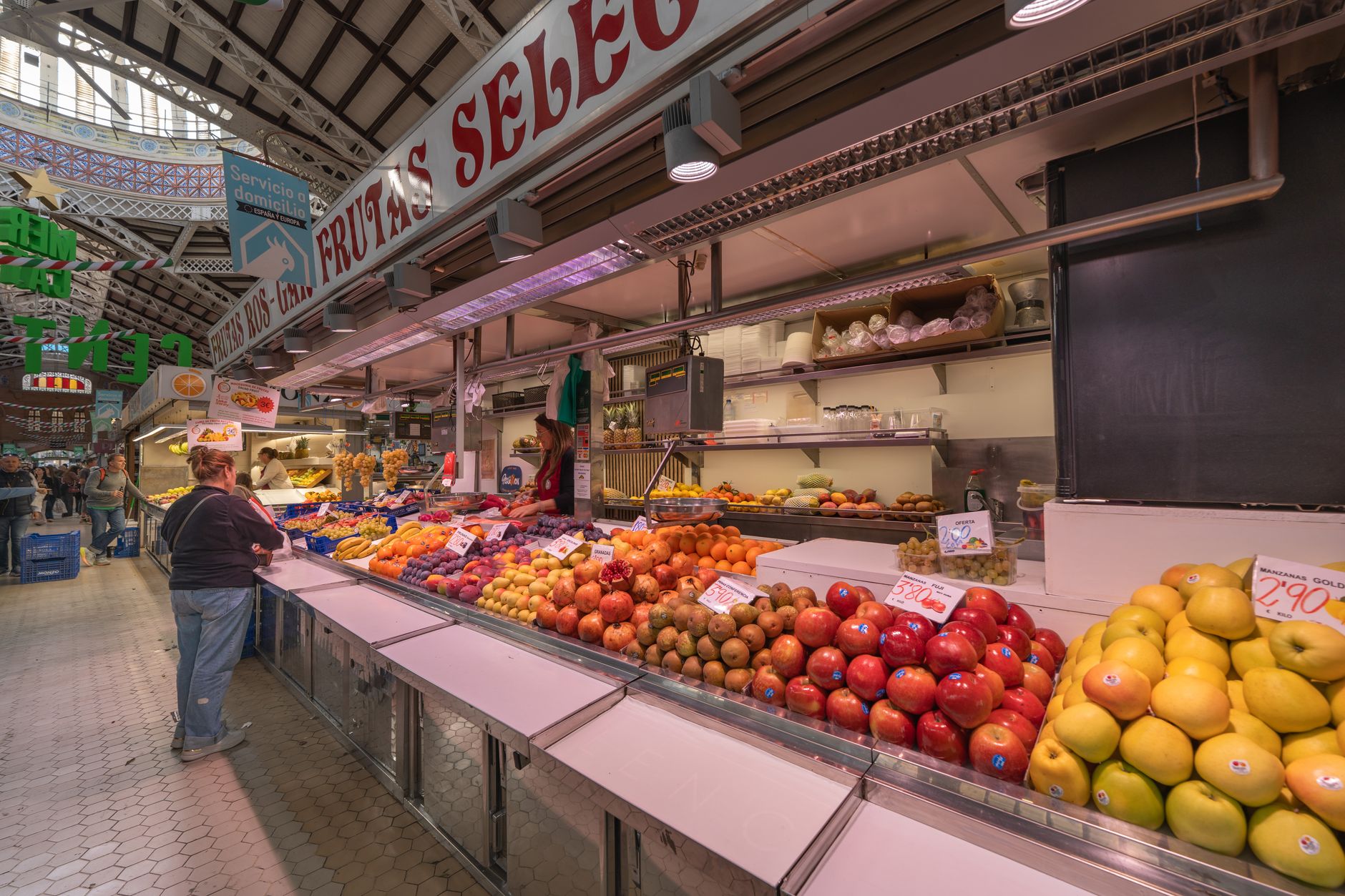
There are places in Frankfurt you visit, and places where, for half an hour, you simply belong. The Kleinmarkthalle is the second kind. Step through the Hasengasse door at half past eight in the morning and you are not standing in a sight but in the shopping routine of an entire city: pensioners with wheeled trolleys at the vegetable stall, a chef from the Westend collecting his crate of ceps, a lawyer in a suit eating a slice of Fleischwurst standing up at a quarter past twelve with his tie flicked over one shoulder. That is why the hall is so good — it is not a curated food hall, it is the city centre’s grocery shop that happens to cook extremely well.
The address is Hasengasse 5–7, 60311 Frankfurt am Main, mid-block between the Zeil and the old town. That location is precisely why people walk past: from the Zeil all you see is an unremarkable post-war building, and unless you know that roughly 1,500 square metres of market sit behind it, you keep walking.
Why this is not a food hall
The distinction sounds pedantic, but it is the whole point. A food hall is planned: pick your concepts, let the units to caterers, put communal tables in the middle. The Kleinmarkthalle grew the other way round. Traders selling groceries came first — butchers, fishmongers, cheese, fruit and vegetables, spices, flowers, seeds — and the eating-on-your-feet arrived over decades as a by-product, because people get hungry while they shop.
You can see it in details no concept developer would invent: a kiosk selling newspapers, tobacco and lottery tickets. A stall for flower bulbs and plant pots. A branch of the art-book publisher Walther König’s bookshop in one of the entrance units, with a Hessen souvenir shop beside it. And down in the basement a live-fish trader who opens on Fridays and Saturdays only — trout, salmon trout, char, carp. That kind of thing survives only where there is a genuine regular clientele.
The official count is over 60 traders, selling Monday to Saturday. Stall numbers run past 120 on the ground floor and up to nearly 40 again on the gallery, because many businesses work several neighbouring pitches. The building itself dates from 1954. Its magnificent predecessor, a neo-Renaissance hall from the end of the nineteenth century and four times the size, was destroyed by bombing in 1944; the replacement went up plainly, quickly and cheaply, which is exactly why it still works as what it was meant to be — a hall for doing business in.
A modernisation is currently under way, covering fire safety, building services and energy. Trading continues throughout, and there is a dedicated construction information desk inside the hall for questions. So expect hoardings in the odd corner, but not a locked door.
Kleinmarkthalle opening hours: the times that matter
The hall is open Monday to Friday from 8 a.m. to 6 p.m. and Saturday from 8 a.m. to 4 p.m. It is closed on Sundays and public holidays (as of 2026). That is the single most important line in this article, because it wrecks travel plans with great regularity: anyone who schedules their Frankfurt weekend so that Sunday is the strolling day arrives at a bolted door. There is no Sunday trading, no Advent exception and no late evening opening.
Three subtleties that are not on the board by the entrance:
- The hall’s hours are the ceiling, not the rule. Individual stalls close earlier and some keep a rest day — the apple-wine place up on the gallery, for instance, opens from Tuesday onwards. If you are coming for one specific trader, check that trader’s own page first.
- Lunch is the meal here, not dinner. The kitchens run hardest between roughly 11.30 a.m. and 3 p.m.; after that the clearing up starts, and by half past five many hot counters have gone cold. The Kleinmarkthalle is not an evening out.
- The calmest moment is Tuesday or Wednesday morning around 9.30. The traders have unloaded, the produce is at its best, and you get a conversation instead of a queue.
The ground floor: the circuit I always walk
The ground floor is where the shopping happens, and it is sensibly arranged once you have the rhythm. The butchers start just past the entrance, several in a row and with markedly different specialisms: beef, veal and lamb at one, house-made merguez at the next, own-production sausage at the third. For Hessian charcuterie I go to Michel’s Feinkost for the Ahle Worscht and the Eichsfelder Stracke; Feinkost Treulieb carries Upper Hessian sausage and home-made Frikadellen.
Further back the fruit and vegetable traders stand in a long line, and comparing three of them really does pay, because the ranges genuinely differ: one strictly regional and seasonal, one exotic with fruit from everywhere, one with fresh truffle in season, one with asparagus the moment spring arrives. In between sit Käse Thomas with international cheeses, two bread stalls, the Frankfurter Kaffeerösterei roasting its own coffee and running a café bar, the Imkerei Schiesser with regional honey, beeswax candles and mead, plus a chocolatier selling Belgian and French confectionery.
The most underrated corner of the hall is the spice quarter: four separate businesses selling spices, herbs, tea, rice blends and pulses — one with the German classics, one Persian, one Persian-Asian, one specialising in dried fruit and things to nibble. If you cook at home you will pay a fraction of what the little supermarket jars cost. It is the best thing to take home from Frankfurt that I know of: longer-lasting than green sauce and lighter than a Bembel.
Kleinmarkthalle food: the stalls I queue at
And then the eating. The hall has no food court; it has around twenty stalls that cook as well as sell, and you eat standing at narrow counters, perched on a stool, or on the move.
- The hot sausage. The classic is the ground-floor sausage stall with its hot specialities, Fleischwurst, Krakauer and Gelbwurst. The queue in front of it is legendary and the most reliable clock in the building at lunchtime — it moves fast, because everybody already knows what they want.
- Hessian, done properly. Edel’s Hausmannskost does a daily changing lunch, green sauce, potato salad, Gref-Völsing’s Rindswurst and a Frikadelle written on the board in capitals. If you want to know what green sauce and its seven herbs actually consist of, eat it here, where it is not a tourist dish.
- The Levant. A Tel Aviv street-food stall doing hummus and pitas, plus a Levantine kitchen with vegan and vegetarian dishes prepared fresh each day.
- Japan. A Japanese stall with fresh sushi, a lunch service and tea — which also, almost incidentally, sells Japanese knives and runs courses. Next to it a newer arrival doing matcha creations and inari.
- Italy, Greece, Spain. Fresh pasta with rotating sugos, Italian antipasti, Greek cheeses and olive oils, Spanish tapas with cold ham platters and wine.
- Plant-based. Salads, wraps and vegan dishes at several stalls, and one entirely organic, entirely vegan trader with stone-milled breads.
A hot lunch at the stalls generally runs to about €8 to €15 (as of 2026), a sausage in a roll well below that. There is no central price list — every trader sets their own, and the boards are up where you can read them. Cash is still the fastest way to pay; cards work at many stalls but by no means all.
Two house rules are worth knowing: you join the queue even when it looks shapeless, and you order briskly — and you do not occupy the counter once you have finished. Observe those and you will be treated like a regular immediately. For where the hall sits in the city’s wider eating landscape, see my guide to Frankfurt’s best restaurants.
The wine bar on the gallery
The best part of the hall is the part most visitors never see, because they miss the stairs. A gallery runs right around the upper floor, and up there you sit above the noise instead of in it.
The wine bar proper is the Weingut Rollanderhof counter (gallery, stalls 33–34) with its own terrace: wine from the estate’s own production, plus sparkling wine and spirits, served standing or at one of the terrace tables. This is the Frankfurt version of an aperitif — no bar operation, no door policy, just a winegrower pouring in the middle of a market hall, where half an office can end up sitting at two in the afternoon. A few stalls along, Casa Italiana Wine and More carries Italian wines from many regions, grappa, olive oil and aceto balsamico, to take away rather than drink there.
The gallery also holds:
- Daheim, a Frankfurt apple-wine tavern in miniature, serving Hessian home cooking alongside apple wine and cider in a striking range of varieties. If you have not yet tried apple wine, Frankfurt’s own drink, this is an unfussy way in without the Sachsenhausen folklore.
- Die Marktstubb, the hall’s restaurant on the east side: a breakfast table, four changing set menus daily including soup and dessert, home cooking and fish dishes. The one place in the building where you genuinely sit down and take your time.
- An oyster bar with fresh fish, oysters and seafood, plus a second fishmonger who sources from the French Atlantic coast around La Rochelle.
- Poultry and game at two stalls, including free-range birds and a large range of eggs, and a Turkish butcher doing veal, beef and lamb sausage.
If you stay downstairs, the entrance units also include the Apfelweingalerie, selling regional apple wines alongside changing exhibitions; tastings there need no booking.
The Kleinmarkthalle on a Saturday
Saturday is the hall in its purest form — and its most exhausting day. It closes at 4 p.m., half the city is shopping for the weekend, and between 11 a.m. and 2 p.m. you simply move with the current in the main aisles. Anyone arriving with a pushchair, a large rucksack or a suitcase will struggle.
In exchange, Saturday brings something no other day does: the Schlemmergarten in front of the hall. Part of the food and drink moves outdoors, you stand in the lane with a glass and a plate, and for a few hours the hall becomes what Frankfurters otherwise only get down by the river — an open-air meeting point in the middle of town.
My compromise is simple: come early. Between 8 and 10 a.m. the hall is full of people who are actually shopping, the stock is complete, and you still get fish, poultry and cheese at full choice. From half past ten you can do a circuit of the Schlemmergarten, and by noon, when it tightens up, you are already upstairs with a glass. It does not work in the other order. If Saturday is your city-centre day anyway, pair it with the Zeil and the shopping centres three minutes’ walk away.
What to take home — and what not to
The hall is an excellent souvenir shop for people who dislike souvenirs: spice blends, regional honey, Ahle Worscht, dried fruit, pralines, freshly roasted coffee. Most of it is light, keeps well and is considerably more Frankfurt than a fridge magnet.
One thing to think through first, though: if you are flying the same day, the usual hand-baggage rules apply to anything liquid or spreadable — a bottle of apple wine, a jar of honey or a tin of olives belongs in the hold, not in your rucksack. What actually gets through the checkpoint is set out by our sister site in its guide to hand luggage and security, and reading it saves you the argument at the tray. Fresh fish and oysters are best left behind entirely.
Getting there: on foot yes, by car preferably not
The Kleinmarkthalle is so central that the journey barely needs planning. From Konstablerwache (U4, U5, U6, U7 and every S-Bahn line except the S7, with trams 12 and 18 at street level) it is about five minutes’ walk west; from Hauptwache roughly the same distance east; from Dom/Römer (U4, U5) a few minutes up from the south. Practically every U-Bahn and S-Bahn line in the city calls at one of those three.
By car it is needlessly awkward: there is no parking in front of the hall, the Hasengasse is narrow, and the inner ring crawls on Saturdays. If driving is unavoidable, the multi-storey car parks at Konstablerwache and Hauptwache are the closest, both under two minutes from the door. How far apart their hourly and daily maximum rates actually are is worked through in this comparison of central Frankfurt car parks — the gap between two garages in the same few streets is wider than you would guess. Coming in from further out, from Wiesbaden, Darmstadt or the Taunus, it is worth checking the distance and a realistic driving time rather than trusting instinct.
And if the hall is your last stop before a flight: from the Hasengasse door, the S-Bahn from Hauptwache or Konstablerwache reaches the airport in a good twenty minutes. Laden with shopping and a suitcase, a transfer can be the easier option — what one realistically costs is better checked in advance than guessed at the rank.
My morning in the Kleinmarkthalle
When someone asks me for a plan, this is it. Come on a weekday just after nine. Walk a complete circuit of the ground floor first without buying anything — just look, smell, sort. Buy on the second lap: spices, a piece of cheese, bread, perhaps sausage for home. Around eleven, climb to the gallery, look down over the hall and have a glass of wine on the terrace. By a quarter to twelve you are back downstairs and in the queue before the offices arrive — a hot sausage eaten standing up, or a plate of green sauce. After that the Römer is five minutes away and you can carry on with my walking tour of Frankfurt in one day.
One last point I mean seriously: this hall’s trader list changes. Businesses give up, new ones move in, pitches get swapped — several have changed hands in the past year alone. So do not assume a particular name still stands where a guidebook put it; kleinmarkthalle.de keeps the current directory itself. What does not change is the principle: six days a week, eight until six, real food, real customers. That is why the Kleinmarkthalle is the most honest place to eat in Frankfurt — and the only one where you get to watch the city doing its ordinary shopping.
Keep reading
Food & Drink
The Best Restaurants in Frankfurt: A Guide by Cuisine & District
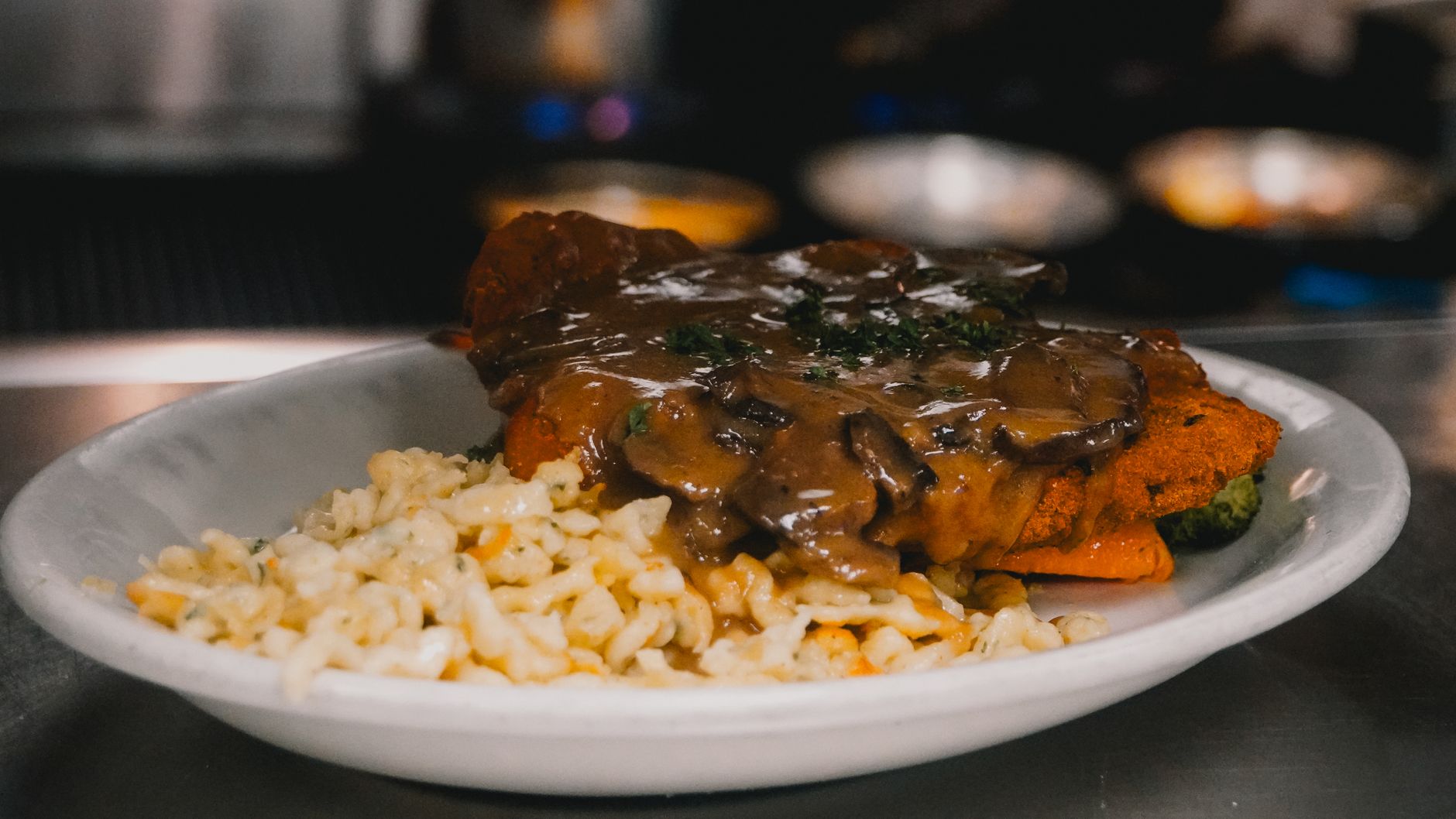
Where to eat really well in Frankfurt: Hessian classics in Sachsenhausen, world cuisine in the Bahnhofsviertel and three two-star kitchens — sorted by district and cuisine, with honest tips from a local.
Katharina Vogt16 June 2026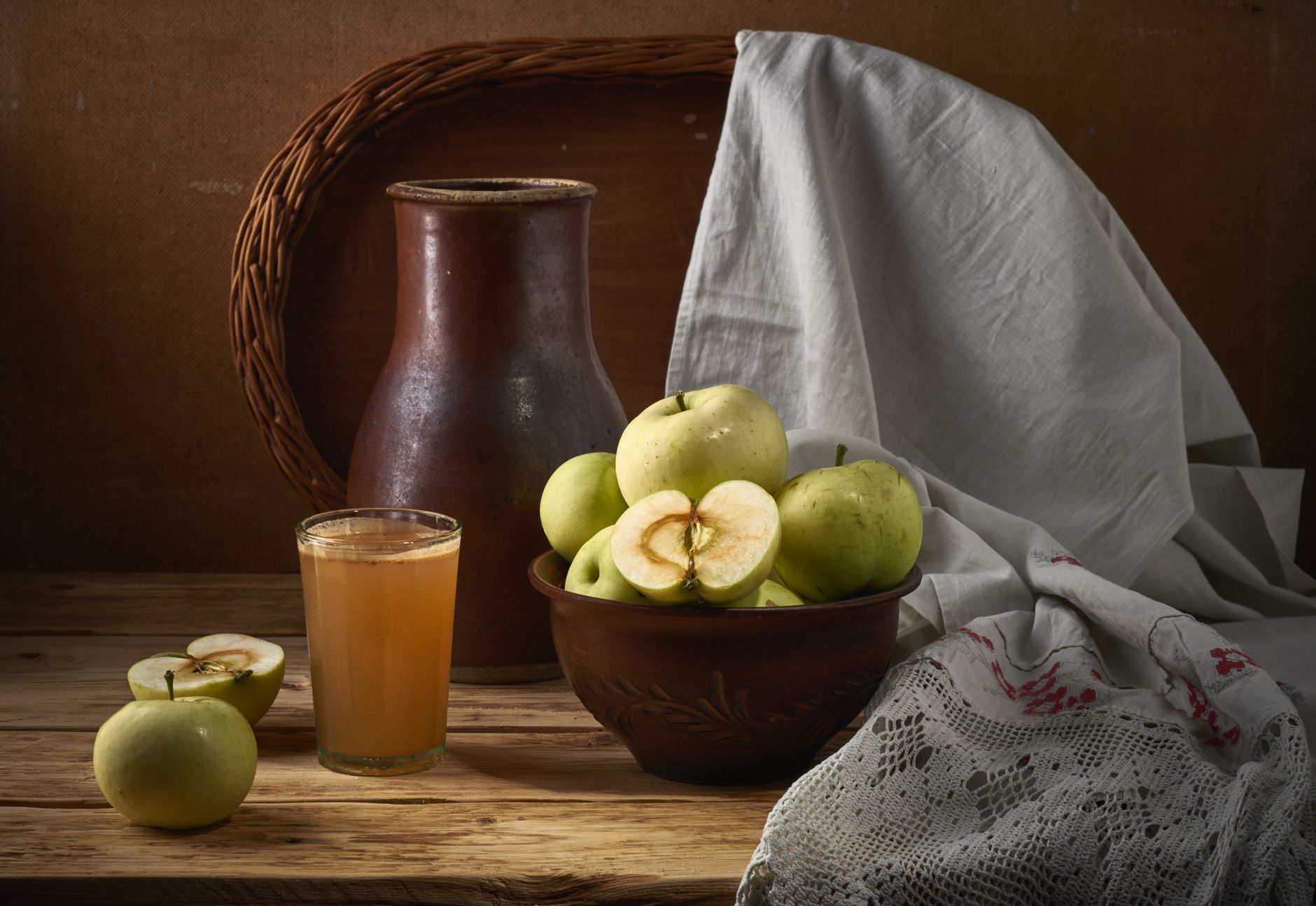
Food & Drink
Apple Wine in Frankfurt: The Best Apple-Wine Taverns
Where to drink real Ebbelwoi in Frankfurt: the best apple-wine taverns in Alt-Sachsenhausen, Bornheim and Seckbach — with addresses, opening hours and tips on the proper etiquette.
Katharina Vogt16 June 2026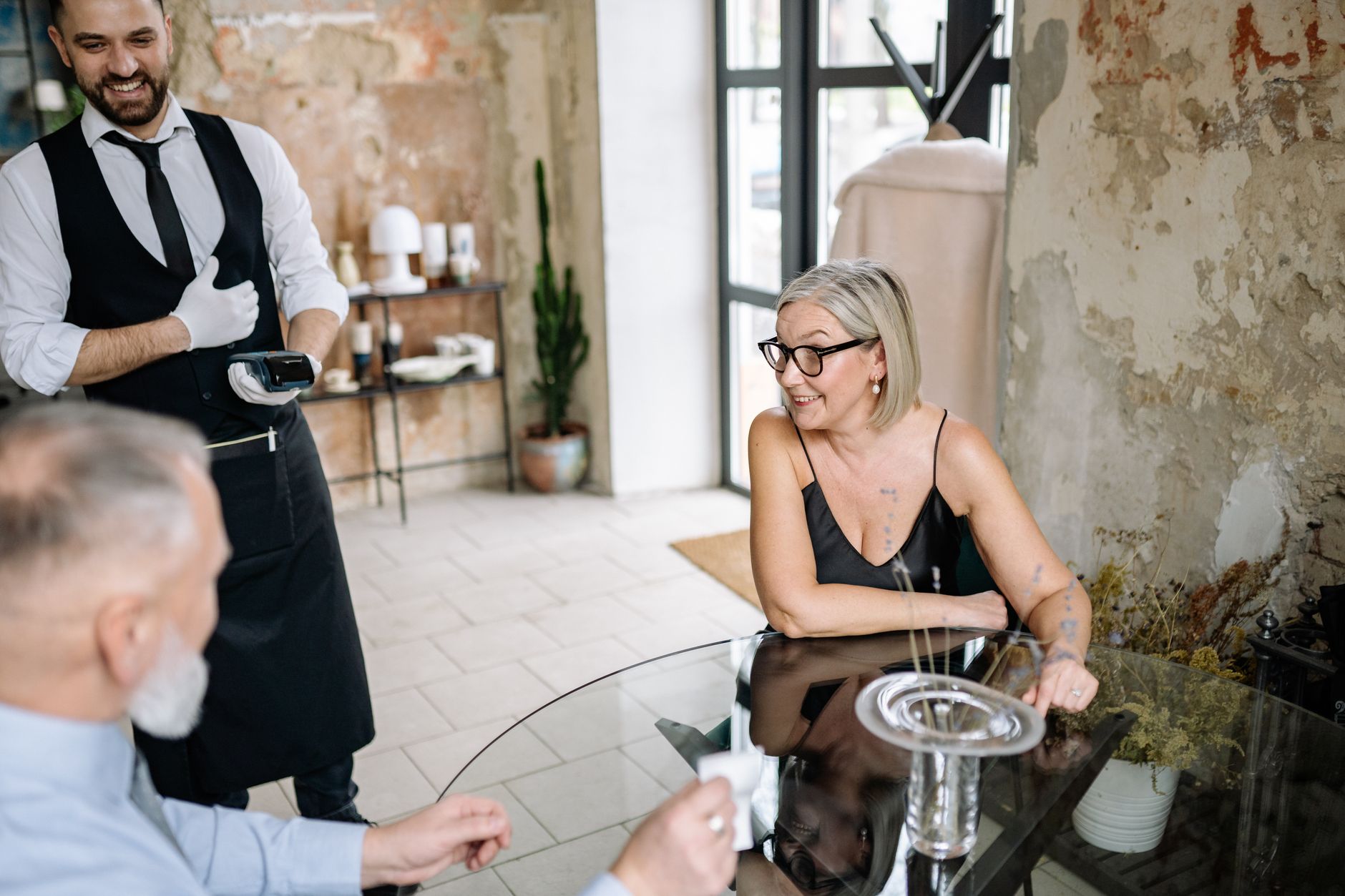
Food & Drink
Tipping, Bills and VAT in Frankfurt: What You Actually Pay
How a German restaurant bill works, how much to tip in Frankfurt, and what changed in January 2026 when VAT on restaurant food dropped to 7 per cent — with worked examples, card-versus-cash rules and separate advice for taxis, cafés, bars and apple-wine taverns.
Katharina Vogt19 August 2026
Food & Drink
Ebbelwei-Express Frankfurt: The Apple Wine Tram Tour
The Ebbelwei-Express: Frankfurt's colourful apple-wine tram, running since 1977. The loop around the zoo and Sachsenhausen, timetable, prices, what's in the ticket and tips from a local.
Katharina Vogt22 July 2026