Frankfurt Airport Terminal 1: Gates, Levels & Map
A, B, C or Z? The airport's oldest and biggest terminal and the home of Lufthansa and Star Alliance — with everything you need on concourses, levels, the two railway stations and the walks between them.

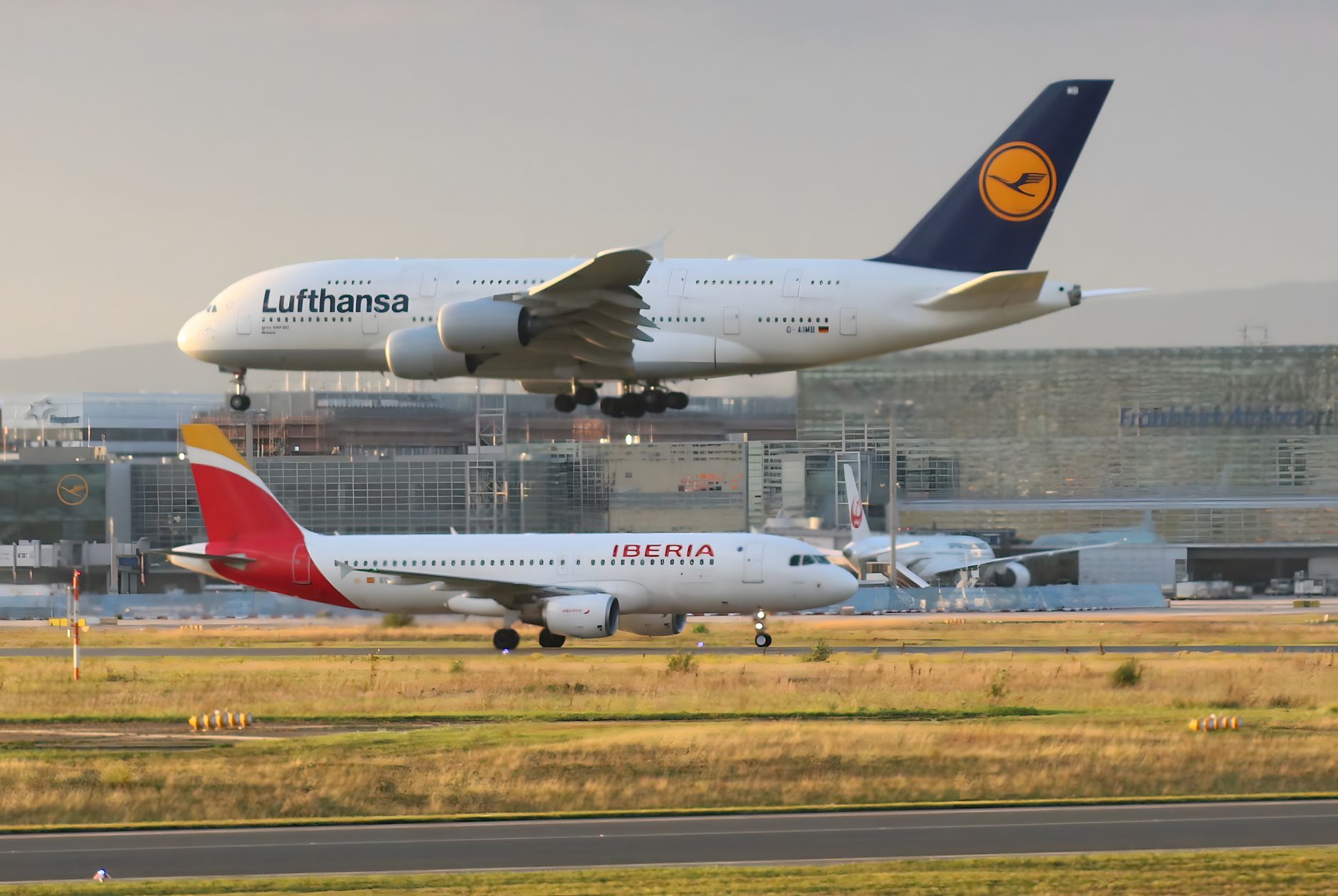
The first time you stand in Terminal 1, it can look like a maze: four concourses labelled with letters, several levels stacked on top of one another, two railway stations, and the Sky Line whirring back and forth overhead. Yet almost everything here follows a logic you can learn. I nearly always fly out of Terminal 1 myself — it has been the hub of Lufthansa and the Star Alliance since the early 1970s — and once you know the basic principle, you’ll find your gate without any panic. What follows is up to date for 2026: with Terminal 3 open since April and Terminal 2 closed for refurbishment since 9 June, the airport has visibly sorted itself out — but Terminal 1 remains the oldest, the biggest and, with around 100 gates, the busiest of the three.
A, B, C — and the puzzling Z
Terminal 1 is divided into four concourses, each with a letter: A, B, C and Z. Your boarding pass shows this letter before the gate number, and it is your single most important guide — more useful than any sign. Here’s how the traffic splits up:
- Concourse A is the big Schengen area (gates roughly A1 to A69). Most intra-European Lufthansa flights leave from here without passport control. At its far western end sits Pier A-Plus, an almost 800-metre extension opened in 2012 with stands for the big long-haul jets.
- Concourse Z is the twist that trips most people up: it sits directly above Concourse A and even shares the same jet bridges. Z (gates from Z11 upwards) handles mainly non-Schengen flights, and passport control lives up here. Same location as A — just one level higher.
- Concourse B is mixed: the inner part (about B1 to B19) serves Schengen flights, while the outer part facing the apron (roughly from B20) handles non-Schengen connections. Depending on your gate, you also reach the Z level through the Concourse B access.
- Concourse C is the older eastern pier and is almost entirely non-Schengen (C2 to C20, with only C1 Schengen). Here the security check is sometimes done locally, right at the gate.
Above all, remember the A/Z double-decker. I’ve watched travellers spend minutes hunting for their “Z” gate down in Concourse A — when all they needed was to go one floor up, through passport control. If your gate starts with “Z”, you go up; if there’s an “A” in front, you stay down.
What the gate number tells you about the walk
The numbers aren’t random. Within each concourse they count up from the root (where the pier joins the main building) outwards towards the pier’s tip. In practice that means a gate like A3 sits just past security, while A60 is at the very end of the long A-Plus extension — and there can easily be ten to twelve minutes of walking in between. In the same way, B62 is far further out than B5.
So whenever I see a high number on my boarding pass (A50+, B50+, or a far-out Z gate), I mentally allow for a proper march and don’t dawdle among the shops after security. With low numbers, by contrast, you’re at the gate in a couple of minutes.
A terminal in layers
Terminal 1 is organised not only horizontally (A, B, C, Z) but vertically too. These are the levels worth keeping straight:
- Arrivals level: at the bottom of the building are baggage reclaim and the arrival halls A, B and C. Anyone who lands emerges here — specifically in the hall that matches the concourse they landed at.
- Departures and check-in level: one floor up you’ll find the check-in desks, the central security checks and the Schengen Concourse A. This is also where the big shopping area sits, the “Marktplatz” between Concourses B and C — everything from a chemist and a bookshop to duty-free and luxury brands.
- Non-Schengen level: above that are Concourse Z and passport control. The link corridor to the long-distance station also leads off from here.
- Sky Line level: at the top are the stations of the Sky Line, the driverless elevated train between the terminals.
Finally, beneath the whole building, on the lower level, is the regional station with the S-Bahn and local trains. Escalators take you straight from the platform up into the check-in hall. If you’d like to see how the whole airport fits together across all the terminals, our map of all terminals and routes lays it out.
Security and passport control: what happens where
Two checks are worth telling apart. Security (hand luggage, body scanner) is for everyone; in Terminal 1 there are central checkpoints on the departures level, and in Concourse C some checks are done locally right at the gate. Passport control applies only if you’re leaving the Schengen area — so for flights from Z, from the outer B and from C. For Concourse Z it sits exactly at the transition from the A level up to the Z level, working like a one-way valve between Schengen and non-Schengen.
For planning, that translates very concretely: fly intra-European from A or the inner B and it’s quick. Have an intercontinental flight from C or Z and you’ll need to factor in passport control and long walks — especially at the morning and late-afternoon peaks, when it can cost real time.
Two railway stations under one roof
Few terminals in Germany are so well connected to the rail network as this one — and it happens through two separate stations that you really shouldn’t confuse:
- The regional station lies directly beneath Terminal 1. The S-Bahn lines S8 and S9 run from here, along with regional trains; it’s about 15 minutes into central Frankfurt and to the main station. For a quick hop into town this is nearly always the smart choice — more on fares and options in our A-to-Z airport overview.
- The long-distance station (Fernbahnhof) is a separate building for ICE and IC trains. You reach it on foot via a covered link corridor that begins above Hall A and runs through The Squaire complex — allow five to ten minutes with luggage. From here you can ride through to Cologne, Stuttgart or Basel without changing. How connecting between a flight and a long-distance train actually works, we explain in our piece on the ICE connection via the long-distance station.
The main thing is to know in advance which train you need: turn up expecting an S-Bahn but land at the long-distance station (or vice versa) and you’ll trudge back and forth for nothing.
Riding the Sky Line to Terminal 3
If your connection or return flight is at a different terminal, the Sky Line takes you there — a free, driverless elevated train on the upper level. In 2026 it was extended and now links Terminal 1, the (closed) Terminal 2 stop and the new Terminal 3. Trains run around the clock every two to three minutes; Terminal 1 to Terminal 3 takes about eight minutes, and along the way they conveniently stop by the railway stations too. For exactly how the Sky Line works and where the stations are, see our Sky Line guide.
Two points for 2026: Terminal 2 has been closed since 9 June, and the airlines once handled there have all moved to Terminal 3. And the new Sky Line had teething troubles after launch and had to pause for a while — it’s running again now, but allow plenty of time when transferring to Terminal 3. T3 sits well to the south, beyond the runways; for a terminal change I’d never budget under a good hour, and rather more for intercontinental connections.
Lounges and where to wait
Terminal 1 is Lufthansa’s living room, and you can tell from the lounges. Numerous Business and Senator lounges are spread across Concourses A, B and Z, along with the more exclusive First Class lounges. In a class of its own is the Lufthansa First Class Terminal — a separate building solely for First Class and HON Circle guests, with its own security, restaurant and a car service that drives you to the aircraft. If you don’t have status access, there’s also a pay-per-use lounge on the landside between Concourses B and C, right by the travel market. Which lounge has which access rules, and where the lockers and left-luggage are, we’ve gathered in our big airport A-to-Z overview.
Where to meet arriving passengers
If you’re picking someone up, know this: arrivals don’t emerge from one central exit but in the arrival hall that belongs to their concourse — Hall A, B or C. So check the arrivals board first to see which concourse the aircraft lands at, and agree to meet in the matching hall. I always suggest fixing a specific spot inside the hall (a particular café, say) rather than standing in the crush at the exit. And because baggage reclaim and customs can drag on after landing, allow a comfortable 30 to 45 minutes after the scheduled arrival before your guest really walks through the door.
Which airlines fly from Terminal 1
The main user is Lufthansa with its subsidiaries and partners — among them Lufthansa CityLine, SWISS, Austrian Airlines, Brussels Airlines and Discover Airlines. Add to that the Star Alliance partners such as Air Canada, All Nippon Airways (ANA), Singapore Airlines, Turkish Airlines and United Airlines, plus several other carriers. Rule of thumb: if you’re flying Lufthansa or a Star Alliance airline, you’ll very likely depart from Terminal 1. You’ll only know for sure from your ticket, though — the big 2026 reshuffle has moved some allocations around, and in case of doubt it’s always the information on your booking that counts, not habit.
My rhythm for a relaxed start
When friends ask how not to get lost in Terminal 1, I always pass on the same short sequence: first read the boarding pass and note the gate letter plus number — that’s your target. Then think for a second: Schengen or not? Intra-European and you’ll usually be at A or the inner B and skip passport control; further afield and it’s likely C or Z, so build passport control firmly into your timing. Then follow the signs by letter without wavering, and don’t let the shops distract you when the gate number is high. And keep an eye on the monitors — gates can change at short notice, especially at a terminal this size.
As enormous as Terminal 1 feels in its first few metres, there’s a clear system behind it: four concourses, stacked by Schengen and non-Schengen, tied together by two railway stations and the Sky Line. Take the letter on your boarding pass seriously, remember that Z sits above A, and you’ll get through here remarkably calmly — perhaps even with time for a coffee at the Marktplatz before you head to the gate.
Keep reading
Airport & Getting There
Valet Parking at Frankfurt Airport: How It Works, What It Costs & Whether It's Worth It
An honest guide to valet parking at Frankfurt Airport: private providers vs. official Fraport parking, how the key handover works, prices (as of 2026) and what to watch for.
Katharina Vogt24 June 2026
Airport & Getting There
Frankfurt Airport Terminal 3: Airlines & Access
The new Terminal 3 at Frankfurt Airport (open since April 2026): which airlines and alliances fly from here, concourses G, H and J, check-in and security, and how to reach it by Sky Line, bus and car.
Katharina Vogt19 June 2026
Airport & Getting There
The S-Bahn from Frankfurt Airport: S8, S9, Prices & Times
Everything about the S-Bahn from Frankfurt Airport: the S8 and S9 lines, around eleven minutes to the main station, the right RMV ticket (as of 2026), where the regional station is and how to reach it from Terminal 3.
Katharina Vogt16 June 2026
Airport & Getting There
Park, Sleep & Fly Frankfurt: Hotel and Parking for Early Flights
Park, Sleep & Fly at Frankfurt Airport: combine an overnight stay with parking the clever way. Which hotels offer it, what's in the package and what to watch out for in 2026 (Terminal 3!).
Katharina Vogt2 July 2026