Frankfurt Airport Long-Distance Station: ICE Links Explained
Straight from the ICE onto the plane: why FRA has two stations, which cities you can reach in under an hour — and how to find the right platform.

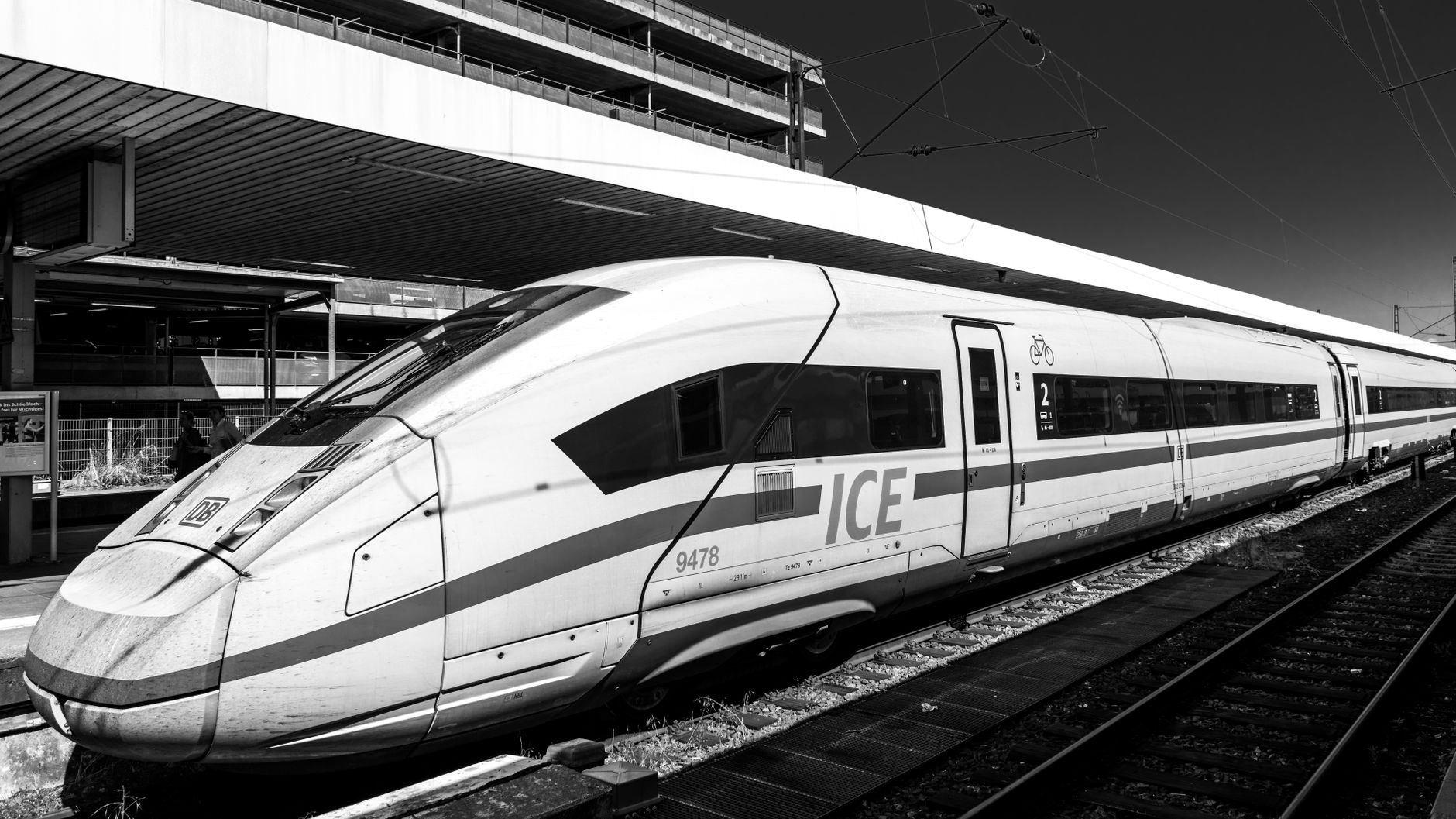
There’s a small moment of hesitation I see again and again at Frankfurt Airport: someone stands in front of a departure board with a wheeled case and a rail ticket, unsure whether to head up or down. “Fernbahnhof” or “Regionalbahnhof” — long-distance or regional station? At first glance it sounds like hair-splitting; in reality a few hundred metres, and in the worst case a missed train, separate the two. Yet FRA is one of the most convenient rail hubs in Germany once you understand how it works. That’s what this piece is about.
Two stations, one airport — and why it matters
Frankfurt Airport has not one but two railway stations. Both belong to Terminal 1, yet they sit in completely different places:
- The regional station (Regionalbahnhof) lies beneath Terminal 1, on Level 0 in the basement. This is where the S-Bahn lines S8 and S9 run, along with regional trains (among them the RB58, RE2, RE3 and RE59). It’s your station for central Frankfurt, Mainz, Wiesbaden, Hanau and the closer Rhine-Main area.
- The long-distance station (Fernbahnhof) is a separate, above-ground building for long-distance services: ICE, IC and EC. From here you travel right across Germany and into neighbouring countries.
The classic mistake: you land, see “station” signposted, head underground — and end up at the regional station even though your ticket says “Frankfurt Flughafen Fernbahnhof”. And the other way round just as easily. Just remember: if your ticket carries the word Fernbahnhof (or, in Deutsche Bahn’s shorthand, “Frankfurt(M) Flughafen Fernbf”), your train isn’t down in the basement but in the long building next to the terminal. If you’re changing here for the first time, the map of all terminals and routes is a huge help in keeping your bearings.
Where the long-distance station actually is
The long-distance station sits beneath “The Squaire” — that long, curved building that arches over the tracks like a bridge and which you can spot from the motorway a long way off. The Squaire was built directly on top of the existing station; it houses offices, two hotels and shops, with the ICEs stopping right underneath.
It’s connected to Terminal 1 by a covered link passage. On foot you’re across in about five minutes, sheltered from both weather and traffic. The route is easy with luggage: there are escalators, lifts and continuous signs towards “Terminal 1”. For most travellers this is the pleasantest part of the whole journey — you roll from the platform almost right up to check-in.
Where you can go direct — the key ICE connections
There’s plenty going on at the long-distance station: around 210 long-distance trains stop here every day, roughly 185 of them ICEs (as of 2026). That puts the airport among the country’s most important long-distance stations — on busy days it feels like a main station with a departure hall attached.
The connection I like best is the one to Cologne (Köln): on the Cologne–Rhine/Main high-speed line, where ICEs run at up to 300 km/h, you’re on the Rhine in a good hour (about 62 minutes) — faster than many people need to drive from a Frankfurt suburb to the airport. This line opened in 2002 and roughly halved the journey time compared with the old route through the Rhine valley.
Other direct destinations (times vary by train):
- Mannheim: from about 31 minutes, with a very frequent service
- Stuttgart: around 75 minutes
- Munich (München): the fastest trains take about 3 hours 18 minutes, with numerous direct services every day
- Basel (and on into Switzerland): around 3 hours
- plus the Ruhr, Hanover, Hamburg, Berlin, Nuremberg, Freiburg and many more
The real appeal: you board an ICE in dozens of places across Germany and travel straight to your flight without a detour via a city-centre station — or, after landing, straight onto a long-distance train. Compared with the “S-Bahn into town, change there, then back out to the long-distance network” shuffle, that often saves a whole hour.
Lufthansa Express Rail and AiRail check-in
This is where it gets genuinely clever. Lufthansa and Deutsche Bahn sell certain ICE services to the airport together as Lufthansa Express Rail (long known as AiRail). The trick: that train journey carries a real Lufthansa flight number and forms part of your flight ticket — the rail feeder formally becomes the first “flight segment”.
What that means for you in practice:
- One ticket, one check-in for the entire journey — train and flight together.
- A transfer guarantee: if a train delay means you miss your flight, Lufthansa handles the rebooking, because the train counts as part of the travel chain.
- A seat reservation on the train is included, miles are credited, and status customers may use the DB lounge.
- The ticket usually comes with a City-Ticket, letting you use local transport free of charge at both ends.
Express Rail runs from numerous cities — among them Cologne, Düsseldorf, Stuttgart, Mannheim, Nuremberg, Hanover, Leipzig, Freiburg, Basel, Karlsruhe and Würzburg.
You drop your bags right at the long-distance station: the AiRail check-in is in The Squaire building, just a few steps from the platform. At the self-service desks you check in and — with participating airlines and fares — hand over your case for the flight, so you don’t have to haul it through the terminal. The AiRail desk is open daily from 7 a.m. to 9 p.m.; you can check in online or via the app from 23 hours before departure up to 15 minutes before the train leaves. One important caveat remains: this only works with a suitable combined ticket, so before booking, check whether your airline, fare and route qualify.
Which terminal do I reach the station from?
Quite a lot changed at the airport in 2026, and it matters for planning your route:
- From Terminal 1 it’s simplest: the regional station is directly below (Level 0), and the long-distance station is about a five-minute walk along the link passage. If you’re flying out of Terminal 1 anyway, my guide to the gates and levels in Terminal 1 helps you plan the connection without stress.
- From Terminal 3, which opened on 23 April 2026, take the free elevated Sky Line train to Terminal 1 and walk on to the long-distance station from there. Allow around 10 to 15 minutes in total from the terminal to the platform. Just follow the signs for the railway stations or towards Terminal 1.
- Terminal 2 closed on 9 June 2026 for refurbishment — so don’t factor it into your route any more. All the former Terminal 2 airlines have since moved to Terminal 3.
If you want to find your way around this sprawling site, I’ll point you once more to the map with all terminals and routes — the new layout with Terminal 3 takes some getting used to at first.
Booking tips — and when the S-Bahn is the better bet
A few things I always stick to, from experience:
- Book early, grab the saver fares: ICE tickets are far cheaper booked ahead. If you’re flexible, the long-distance station can save you real money.
- Reserve a seat: the airport is usually a stop en route, not the origin — trains often arrive already full. Standing with a suitcase is no fun.
- Leave enough buffer: even though the walk into the terminal is short, allow generously for security and check-in. Long-distance services aren’t always punctual; with a tight connection, take an earlier train.
- Put the right station on your ticket: if you only want central Frankfurt, you don’t need a pricey ICE. Take the S-Bahn from the airport from the regional station instead — the S8/S9 reaches the main station and Hauptwache in about 15 minutes, at a fraction of the ICE fare. For the other ways into town, I’ve laid them out in my airport-to-city-centre comparison.
In the end, the long-distance station is what makes travelling from Frankfurt so relaxed: at hardly any other German airport do train and plane flow into one another so seamlessly. Remember the one rule — Fernbahnhof for ICE and IC, Regionalbahnhof for the S-Bahn and the region — head for the right one, and give the short walk into the terminal a little breathing room, and you’ll step from platform to gate here about as easily as anywhere. And next time you spot someone standing baffled in front of the departure board, you’ll know exactly where to send them.
Keep reading
Airport & Getting There
Sky Line Frankfurt Airport: Free Train Between Terminals 1, 2 and 3
The Sky Line at Frankfurt Airport: driverless and free between Terminal 1, the T2 station and the new Terminal 3. Route, journey time, frequency, operating hours, night buses and transfer tips — explained up to date.
Katharina Vogt4 July 2026
Airport & Getting There
Frankfurt Airport Map 2026: All Terminals & Routes
How Frankfurt Airport is laid out in 2026: Terminal 1 in the north, the new Terminal 3 in the south, Terminal 2 under refurbishment, plus the Sky Line, shuttle buses and the two stations — with transfer times from a local.
Katharina Vogt16 June 2026
Airport & Getting There
From Frankfurt Airport to the City Centre: Every Option Compared
S-Bahn, taxi, ride service or rental car? Every way from Frankfurt Airport into the city centre, with prices, times and tips — updated after the opening of Terminal 3 (2026).
Katharina Vogt16 June 2026
Airport & Getting There
Frankfurt Airport Visitors' Terrace: Hours & Views
The visitors' terrace was in Terminal 2 — closed since June 2026. Where to watch aircraft at Frankfurt Airport now: the Visitor Center, apron tours and the best free plane-spotting points at the fence.
Katharina Vogt16 June 2026