Sky Line Frankfurt Airport: Free Train Between Terminals 1, 2 and 3
Driverless, free and roughly every two minutes: since the extension to Terminal 3, the Sky Line runs 5.6 kilometres. Here's how to use it when transferring — including the night buses and the 2026 teething troubles.

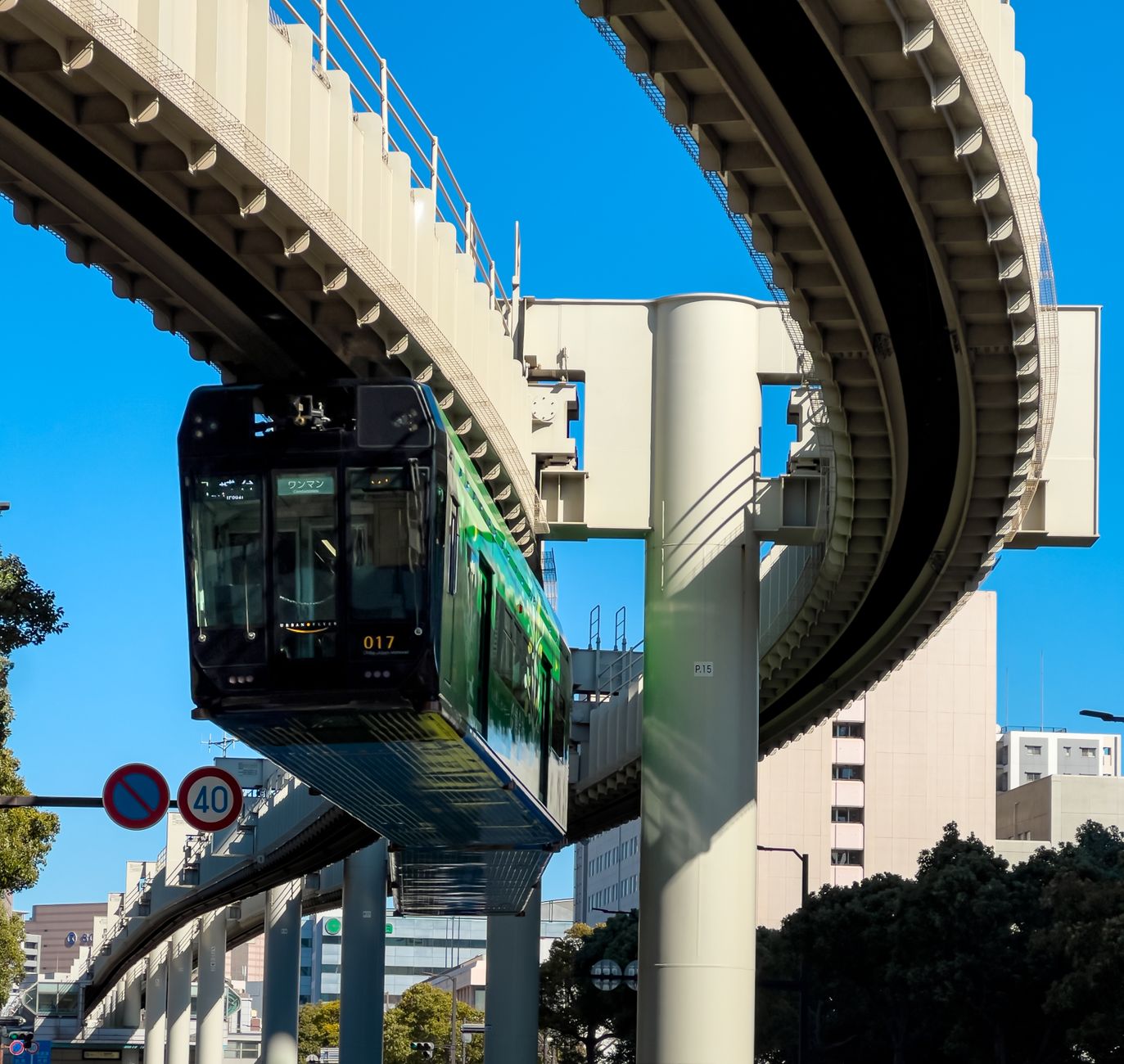
Frankfurt Airport is a small city, and like any city it needs a way of getting you from one district to another. That is exactly what the Sky Line is for: a driverless elevated train that glides along a raised track above the apron and links the terminals in a matter of minutes. I rarely cross the airport without it — anyone who has once tried to walk from the railway stations to the new Terminal 3 does not make that mistake twice. Since the line was extended to Terminal 3 in spring 2026, it has become almost compulsory for transferring passengers and rail travellers alike. In this piece you’ll find everything you need on the route, the frequency, the operating hours and the pitfalls of transferring.
A train that makes a very large airport feel small
The Sky Line is what’s known as a people mover: a fully automatic, driverless transit system that runs entirely within the airport grounds. You may know the idea from other big airports — small, cabin-like trains shuttling between the buildings every couple of minutes, controlled from a central room rather than by a driver. For years the Sky Line in Frankfurt connected only Terminal 1 and Terminal 2. That was enough while everything was concentrated in those two buildings.
The new Terminal 3 changed that fundamentally. It sits well to the south of the site, clearly set apart from the older terminals — walking is no longer a realistic option, and nobody wanted long bus rides across the apron. Fraport’s answer was to extend the Sky Line and turn the old shuttle route into a continuous spine. So the reason the train exists can be put in a single sentence: it keeps one of Europe’s biggest airports walkable by slicing the long distances into eight-minute portions.
The route: three stations across 5.6 kilometres
Since the extension, the Sky Line serves three stations along a track of roughly 5.6 kilometres:
- Terminal 1 — the central hub. The station is about 220 metres long and sits on the arrivals level, right next to the regional station (S-Bahn) and the long-distance station (ICE). From here trains run both north towards Terminal 2 and on south to Terminal 3.
- Terminal 2 — the station stays in service even though the terminal building itself has been closed for a major refurbishment since 9 June 2026. As a stop for passengers it currently means little, because no flights are handled in Terminal 2 any more.
- Terminal 3 — the new southern terminus. The terminal opened on 23 April 2026, and most of the airlines that used to sit in Terminal 2 have moved here.
One point for your planning: if you used to “always fly from Terminal 2”, you now most likely fly from Terminal 3 — and the Sky Line is your way there. I’ve mapped out how the buildings relate to one another in more detail in my guide to the airport map and all terminals; if you specifically need Terminal 3, my piece on Terminal 3, its airlines and access has the specifics.
Free and no ticket needed
The best bit first: the Sky Line is completely free. You need no ticket, no app and no boarding pass at the entrance — you simply walk onto the platform and get on. There are no barriers and no checks; the train is part of the airport’s infrastructure, like a lift or an escalator. That applies to passengers just as much as to people meeting arrivals, to visitors and to airport staff. So if you’re only picking someone up or heading to the visitors’ terrace, you can hop on quite casually too.
Frequency, journey time and operating hours
In normal operation the Sky Line is impressively brisk and runs at a dense frequency:
- Journey time: from Terminal 1 to Terminal 3 the trip takes a good eight minutes at full speed.
- Frequency: during the day a train usually comes about every two to three minutes, dropping to intervals of roughly 100 seconds at peak times. You practically never wait long.
- Speed: the train is designed for up to 80 km/h.
- Capacity: the system can carry up to 4,000 people per hour in each direction; twelve trains of two carriages each are in service.
- Operating hours: it runs daily from roughly 4 a.m. to 11 p.m. At night the service pauses for maintenance and inspection.
An honest note on the current state (as of 2026): since the mid-June restart, Fraport has deliberately been running the extended line more cautiously — at times with fewer vehicles and a reduced speed. In practice the trip may then take a little longer than eight minutes and the intervals stretch a touch. So do allow a few extra minutes rather than banking on the ideal figures.
At night the bus replaces the train
Between roughly 11 p.m. and 4 a.m. the Sky Line stands still. During those hours replacement buses take over the connection between the terminals. They leave from the bus stops in front of the terminal buildings on the arrivals level and are clearly signposted. If you have a very early flight, or land late at night and still need to change terminals, keep this in mind: the bus takes longer than the train and comes less often. For an early-morning departure from Terminal 3 that you’re reaching by train into Terminal 1, that can easily mean 20 to 30 minutes of buffer — budget for it generously.
Where to board: level and signage
You don’t need to hunt for the Sky Line at the airport — you’re led to it. Yellow-and-black signs with the train symbol and the terminal numbers hang everywhere. In Terminal 1 you’ll find the station on the arrivals level, right by the passage to the railway stations; this is the big central hub that rail travellers navigate by too. In Terminal 3 the station is built into the transport level of the new building and is signposted throughout. My tip: don’t just follow the signs to “Sky Line”, but note the direction as well — trains run both ways, and the platform display tells you which train is heading where. There are lifts and escalators on the level itself, so you won’t be hauling luggage up any stairs.
Transferring on a tight connection: my buffer tip
For transfer passengers the Sky Line is both a blessing and a snag. A blessing because it’s fast. A snag because the ride itself is only part of the sum. Between stepping off one aircraft and boarding the next you often face: the walk to the platform, the ride itself, the walk from the arrival platform to your gate — and, depending on your route, a fresh security check or passport control. Whether you have to leave the secure transit area depends on where you’re coming from and where you’re flying on to (Schengen or not). That’s precisely why it’s risky to bank on those eight minutes alone for a tight transfer.
My rule of thumb: for a straightforward terminal change by Sky Line I allow at least 30 to 45 minutes between T1 and T3, and rather more for international connections with a check. Look first at your boarding pass to see which terminal your onward flight leaves from, then follow the signage consistently. Getting familiar in advance with the levels and routes inside your departure building saves a lot of stress — for Terminal 1 I’ve laid that out in a separate guide to its gates, levels and layout.
Luggage, prams and accessibility
The Sky Line is built completely step-free, and you feel it. You can roll a luggage trolley straight out of the station area and into the train; the doors are wide and the entrance is level. For families with prams and for travellers using a wheelchair the train is a real relief, because there are lifts at every station and no gap to bridge between platform and vehicle. A practical word on luggage when transferring: check whether your case is booked through to your destination. If it is, you carry only your hand luggage on the Sky Line; if not, you’ll have to collect it first and take it with you through the change. For more on lockers, left luggage and services, see my overview of the airport from A to Z.
By train or S-Bahn — and then the Sky Line
One point that surprises many rail travellers: there is no dedicated station right at Terminal 3. Both the regional station (S-Bahn) and the long-distance station (ICE) are at Terminal 1. So if you arrive by train and fly from Terminal 3, you get off at Terminal 1 and take the Sky Line for the final 5.6 kilometres south — about eight minutes between the stations and Terminal 3, according to Fraport. The reverse holds too: to get from Terminal 3 into the city, first ride the Sky Line to Terminal 1 and change there onto the S-Bahn (S8 or S9) towards the main station and the centre. Always factor in this intermediate leg, especially on tight rail connections.
The 2026 teething troubles — and how it runs now
I won’t gloss over anything here, because the launch of the extended line was bumpy. Shortly after it opened, as passenger numbers rose and the load grew, recurring technical faults appeared whose causes hadn’t been anticipated. At the end of May 2026 Fraport pulled the plug and temporarily took the new line out of service; during that spell replacement buses ran between the terminals around the clock. After technical adjustments along the route, a thorough check of every vehicle and several software updates, the train went back into service in mid-June — at first with part of the fleet and at a reduced speed, and gradually ramped up since.
For you as a traveller that means the Sky Line is running again and links the terminals more reliably than in those first weeks — but it isn’t yet at full strength, and a short-notice disruption can’t be entirely ruled out. So my most important advice stays simple: allow time. Check before you travel which terminal your flight leaves from, follow the signage at the airport, and when transferring keep a buffer you don’t need rather than one you’ll wish you had. Do that, and the Sky Line is exactly what it’s meant to be: the fast, free shortcut that makes Germany’s biggest airport feel surprisingly manageable.
Keep reading
Airport & Getting There
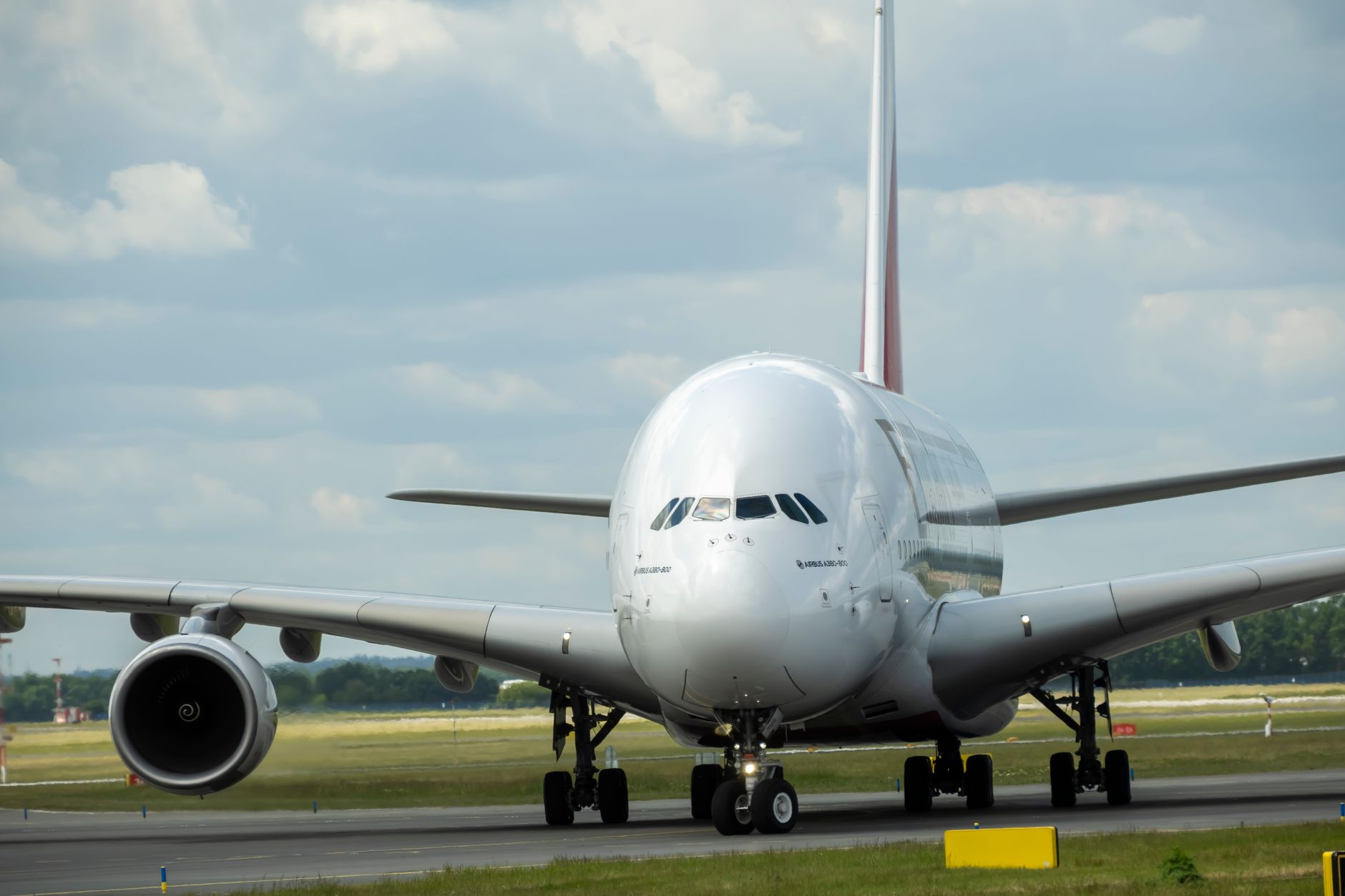
Frankfurt Airport Map 2026: All Terminals & Routes
How Frankfurt Airport is laid out in 2026: Terminal 1 in the north, the new Terminal 3 in the south, Terminal 2 under refurbishment, plus the Sky Line, shuttle buses and the two stations — with transfer times from a local.
Katharina Vogt16 June 2026
Airport & Getting There
Frankfurt Airport Terminal 3: Airlines & Access
The new Terminal 3 at Frankfurt Airport (open since April 2026): which airlines and alliances fly from here, concourses G, H and J, check-in and security, and how to reach it by Sky Line, bus and car.
Katharina Vogt19 June 2026
Airport & Getting There
From Frankfurt Airport to the City Centre: Every Option Compared
S-Bahn, taxi, ride service or rental car? Every way from Frankfurt Airport into the city centre, with prices, times and tips — updated after the opening of Terminal 3 (2026).
Katharina Vogt16 June 2026
Airport & Getting There
Frankfurt Airport Long-Distance Station: ICE Links Explained
The long-distance station at Frankfurt Airport made simple: how it differs from the regional station, ICE destinations like Cologne in about an hour, Lufthansa Express Rail with AiRail check-in, and the way there from Terminals 1 and 3.
Katharina Vogt16 June 2026