Frankfurt Hauptbahnhof: Arriving, Changing Trains, Luggage
Upstairs the trains stop at the buffers; downstairs they run straight through. Grasp that one distinction and Germany's busiest station becomes simple. Platforms, levels, luggage and the walk out.

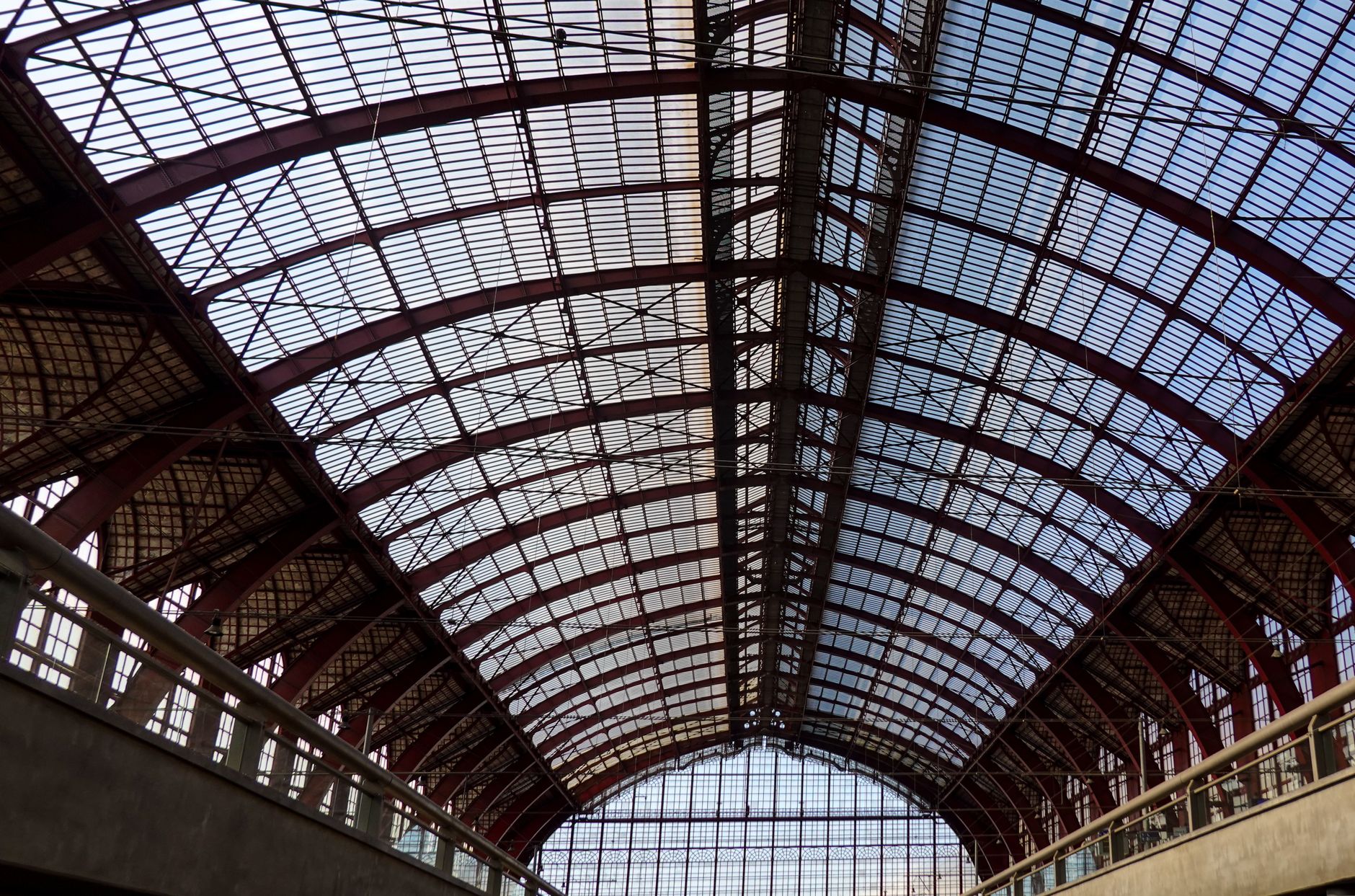
This site usually describes arriving in Frankfurt from the air: terminals, the Sky Line, the regional station, the long-distance station. Yet most of the visitors I know never see the airport at all. They arrive at a terminus in the middle of the city that handles around 493,000 travellers and visitors a day (2019 figure), making it one of the largest stations in Europe. And that station is where I see baffled people most often: standing with a suitcase in front of a departure board that says platform 103, while the platforms in front of them run from 1 to 24 and not one of them is numbered 103.
That isn’t the travellers’ fault. It happens because two completely different stations sit on top of one another here, and they work in opposite ways. Once that single distinction clicks, Frankfurt Hauptbahnhof becomes remarkably easy to read.
Buffers upstairs, through tracks below
The main station, opened on 18 August 1888 as the Centralbahnhof, is a terminus — a Kopfbahnhof. Trains run in, stop at the buffers and leave the way they came. That has one practical consequence which explains everything else: because no train passes through, every platform ends at a single concourse running across the head of the tracks, the Querbahnsteig, which spans the full width of the five train sheds. Everything you need — departure boards, exits, escalators down, the ticket office — sits on or beside that axis. You never have to work out which end of the platform to walk towards. There is only one.
Beneath the northern part of the station building and its forecourt, by contrast, sits a through station: the underground S-Bahn station, some twenty metres below the hall. It opened on 28 May 1978 together with the first section of the Frankfurt City Tunnel as far as Hauptwache. Down there the trains carry straight on into the city centre without reversing. That is precisely why the S-Bahn doesn’t use the hall above: a service running across Frankfurt every few minutes cannot change ends at the buffers each time.
Two more levels sit in between. The B-Ebene immediately under the forecourt is the distribution and shopping level that virtually every interchanging passenger walks through. One floor below it, on the C-Ebene, is the U-Bahn station served by lines U4 and U5, also open since 1978. At the bottom, on the D-Ebene, the S-Bahn. Remember that order — hall, B, C, D — and you will know at every escalator how much further down you still have to go.
Frankfurt Hauptbahnhof platforms: 1 to 24, plus a 1a
The train shed holds 24 numbered platform tracks side by side, with an additional track 1a — 25 mainline tracks in all. That makes Frankfurt the largest German terminus station measured by platform tracks.
The numbering follows a simple rule that nobody ever announces: seen in the direction of travel, even numbers lie to the right, odd numbers to the left. Platform 1 stands on its own at the northern edge; after that the tracks are paired at a single platform — 2 and 3, 4 and 5, 6 and 7, and so on up to 24. In practice that means this: if your connection leaves from platform 9 and you arrive at platform 8, you simply cross the platform you are already standing on. If the connection is platform 10, it is one platform further over. On a tight connection that pairing logic saves more minutes than running does.
The second thing to grasp is the sheer width. Getting from platform 1 to platform 24 across the concourse is a proper walk — allow a good five minutes end to end, and more with luggage in a crowd. So a change from platform 3 to platform 22 is not a short connection, whatever the eight minutes on your ticket suggest. One landmark helps: the main exit from the hall lies roughly level with platforms 12 and 13, near enough the middle.
A local curiosity in passing: statistically the station does not belong to the Bahnhofsviertel at all but to neighbouring Gallus. What the quarter immediately outside the doors is actually like is something I’ve written about separately.
Changing at Frankfurt Hbf: finding the S-Bahn
Now for the three-digit platform numbers that catch almost everybody out. The four tracks of the underground station are numbered 101, 102, 103 and 104. That leading 10 exists for exactly one reason: to keep them apart from the one- and two-digit numbers in the hall above. Platform 103 is therefore not a platform 3 you somehow cannot find — it is three levels down.
The route is short once you know it. Escalators and lifts lead down from the concourse into the B-Ebene; from there follow the green S-Bahn signs further down, past the U-Bahn level, to the two very wide platforms, each 210 metres long. Realistically, allow six to ten minutes from your long-distance train to the S-Bahn door — nearer ten with a suitcase in rush hour.
Then comes the one decision worth getting right, because getting it wrong costs twenty minutes:
- Tracks 101 and 102 (southern platform): inbound, towards Taunusanlage, Hauptwache, Konstablerwache and Ostendstraße.
- Tracks 103 and 104 (northern platform): outbound, towards the airport, Höchst and Westbahnhof.
So if you are heading for the airport you want 103/104; for the city centre, 101/102. I’ve set out the lines, journey times and ticket prices for the airport run separately — everything on the S-Bahn between the main station and the airport is there. Which RMV ticket you need inside the city, and why a day pass is often the better buy, is covered in my piece on public transport in Frankfurt.
One exception is worth knowing, because otherwise it causes panic. The S7 is the only Rhine-Main S-Bahn that does not use the City Tunnel; Wikipedia puts it plainly — it is “the only S-Bahn service in Rhein-Main that starts always at the above ground platform hall of Frankfurt central station”. So if your service towards Groß-Gerau or Riedstadt-Goddelau shows a single-digit platform, that is not a mistake. Look upstairs, not down.
Left luggage at Frankfurt Hbf: lockers or a counter?
I get this question constantly, usually from people with six hours between trains who would like to see the old town without a wheelie case.
The railway’s official answer is lockers. According to bahnhof.de, the main station has 96 lockers measuring 35 × 45 × 85 cm at 6.00 euros per 24 hours, and 48 larger ones at 52 × 62 × 85 cm for 7.00 euros per 24 hours, paid by card (as of 2026). That is 144 lockers for a station handling half a million people a day — hence the most important line in this section: on trade-fair days, Advent weekends and the Friday of a school holiday they are often all taken. If you are counting on one, don’t turn up with five minutes to spare.
A large suitcase will generally go into the 52 cm locker, as will a trekking rucksack. What won’t — bicycles, child seats, three family cases at once — is awkward at the station itself. Deutsche Bahn’s own station page does not currently list a staffed left-luggage counter for Frankfurt Hbf (as of 2026); what it does list is the ticket centre, the DB Lounge, the Bahnhofsmission, lost property and the mobility service. For bulky items that leaves commercial operators who take bags in shops and hotels around the station and are booked through storage platforms. Prices and hours there vary sharply from address to address, so I deliberately won’t quote a figure that changes faster than I can correct it. Do check one thing above all: the time by which you must collect. A locker is reachable at night; a shop unit is not.
Which exit puts you where
The station building is around 270 metres wide, and choosing the right door decides whether you walk five minutes or twenty.
The main exit, facing east, leads out of the hall onto the square called Am Hauptbahnhof. The taxi rank is here, trams stop directly in front of the building level with platforms 12 and 13, and this is where the Bahnhofsviertel begins. Worth knowing, because it surprises nearly everyone: this exit does not face the old town. It faces Kaiserstraße and the two other boulevards fanning out to the east — a very busy, very international inner-city quarter, but not a half-timbered one.
The southern exit onto Mannheimer Straße, on the south side of the concourse, is the calmer way out. Trams stop here too, and long-distance coaches leave from here. If your hotel is on Gutleutstraße, or you are heading for the river, use this door. To the north the building is bounded by Poststraße; that exit puts you into the cross streets where the open drug scene concentrates — not the shortcut I would choose with luggage. Inside the station building the quarter’s weapons ban has applied since June 2024 and around the clock since 1 January 2025, and federal police are present at all hours.
If you are being collected by car, don’t count on pulling up at the main entrance: the forecourt is tight and stopping is enforced. The multi-storey car parks around the station and the centre are the sensible option, and parkfibel has put together a comparison of car parks in central Frankfurt covering what each costs and which height limits apply. If you are taking a taxi instead, it helps to know roughly what a ride from the main station runs to before the meter starts.
From the main station to the old town
The old town, with the Römerberg and the cathedral, lies about 1.5 kilometres from the station, roughly 20 minutes on foot. The simplest route is also the straightest: out of the main exit, across the forecourt, then along Kaiserstraße — some 950 metres dead straight to the Roßmarkt, and five minutes south-east from there. You cannot get lost doing it.
With luggage, or in the rain, take the U-Bahn from underneath instead: U4 or U5 from the C-Ebene to Dom/Römer, two stops, under five minutes. Alternatively the S-Bahn from track 101 or 102 to Hauptwache, then ten minutes south on foot. If you only have a single day, my perfect one-day walking tour of Frankfurt starts right here at the station.
A permanent building site: where things stand in 2026
The station has been under reconstruction since the early 2020s, and you notice. The B-Ebene has been closed off in sections for years, routes are diverted and shops sit in temporary units. As things stood in December 2025, the first new retail units in the B-Ebene were due to open in mid-2026, with the area between the main entrance and the concourse expected in 2027; work on the ticket hall had not yet begun at that point. Far larger and far further off is the planned Fernbahntunnel, which would turn the terminus into a through station for long-distance trains: costed at 3.6 billion euros, construction starting in the 2030s at the earliest and services in the 2040s.
In practice: don’t rely on a route you walked two years ago, and give yourself a few more minutes than the timetable allows for a change. The signage is updated continuously, but it sometimes lags behind the works.
What I do when the connection is tight
Arriving in Frankfurt with little time, I always do the same thing. On the train I check whether my connecting platform number has one digit or three. Three digits means going straight to the concourse and down, no coffee first. One digit means applying the pairing logic — even opposite odd — and walking at a civilised pace. If I have more than two hours, the case goes into a locker and I walk down Kaiserstraße rather than sit in the hall.
If the day continues by air, it pays to read up on the terminal and the sequence beforehand: what actually happens on a departure day at FRA is explained by our sister site far better than any departure board manages. If you are driving on into the region instead, distance, driving time and an indicative fare band from Frankfurt are quicker to look up than to guess.
Frankfurt Hauptbahnhof has a worse reputation than it deserves. It is loud, it is crowded, and the way out does not lead into the postcard city. But it is built logically: one concourse where everything converges, even numbers right and odd numbers left, and three levels down to the S-Bahn. Carry that in your head and you will make an eight-minute connection here while everyone else is still hunting for platform 103 somewhere between platforms 1 and 24.
Keep reading
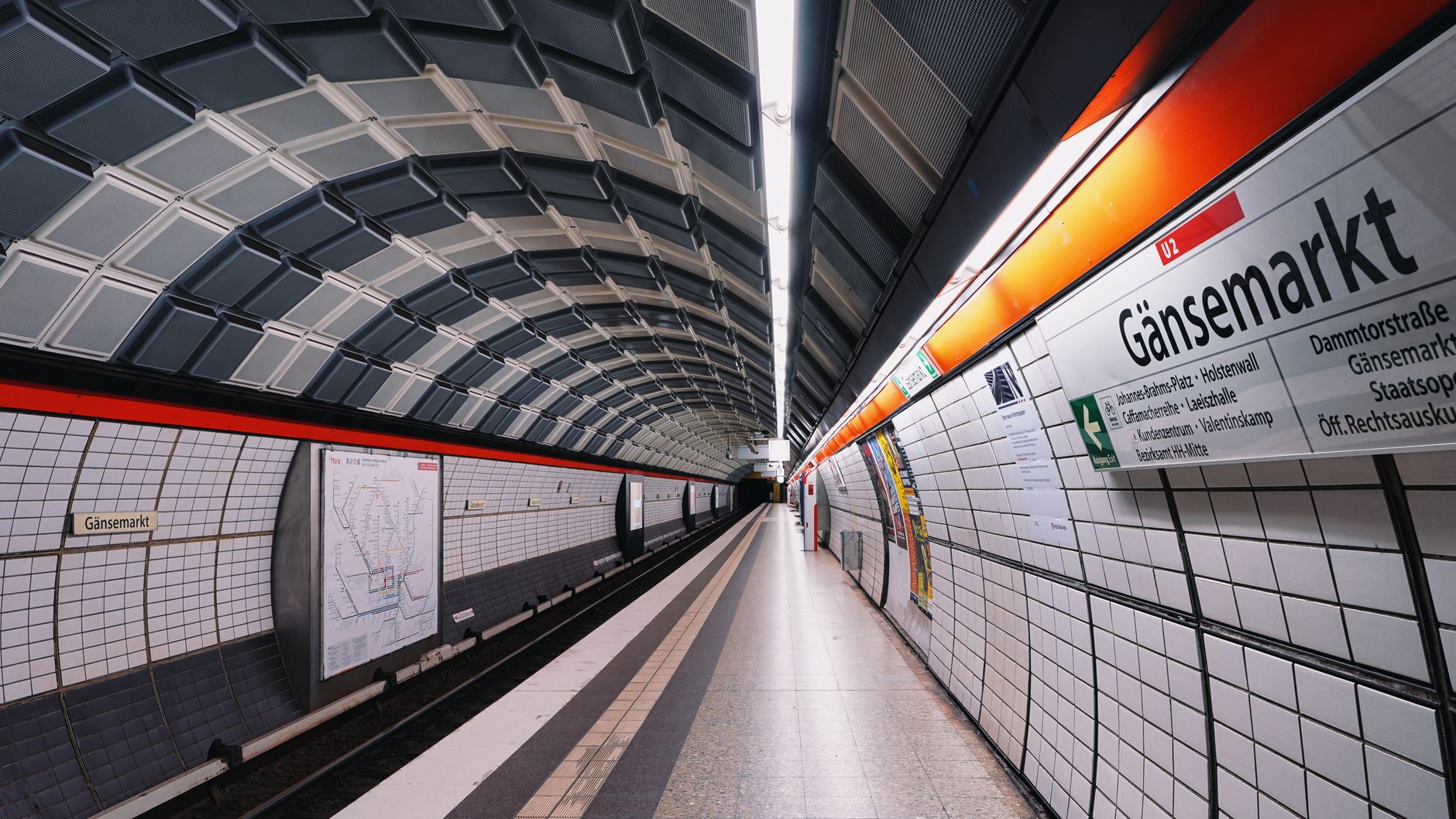
Airport & Getting There
The S-Bahn from Frankfurt Airport: S8, S9, Prices & Times
Everything about the S-Bahn from Frankfurt Airport: the S8 and S9 lines, around eleven minutes to the main station, the right RMV ticket (as of 2026), where the regional station is and how to reach it from Terminal 3.
Katharina Vogt16 June 2026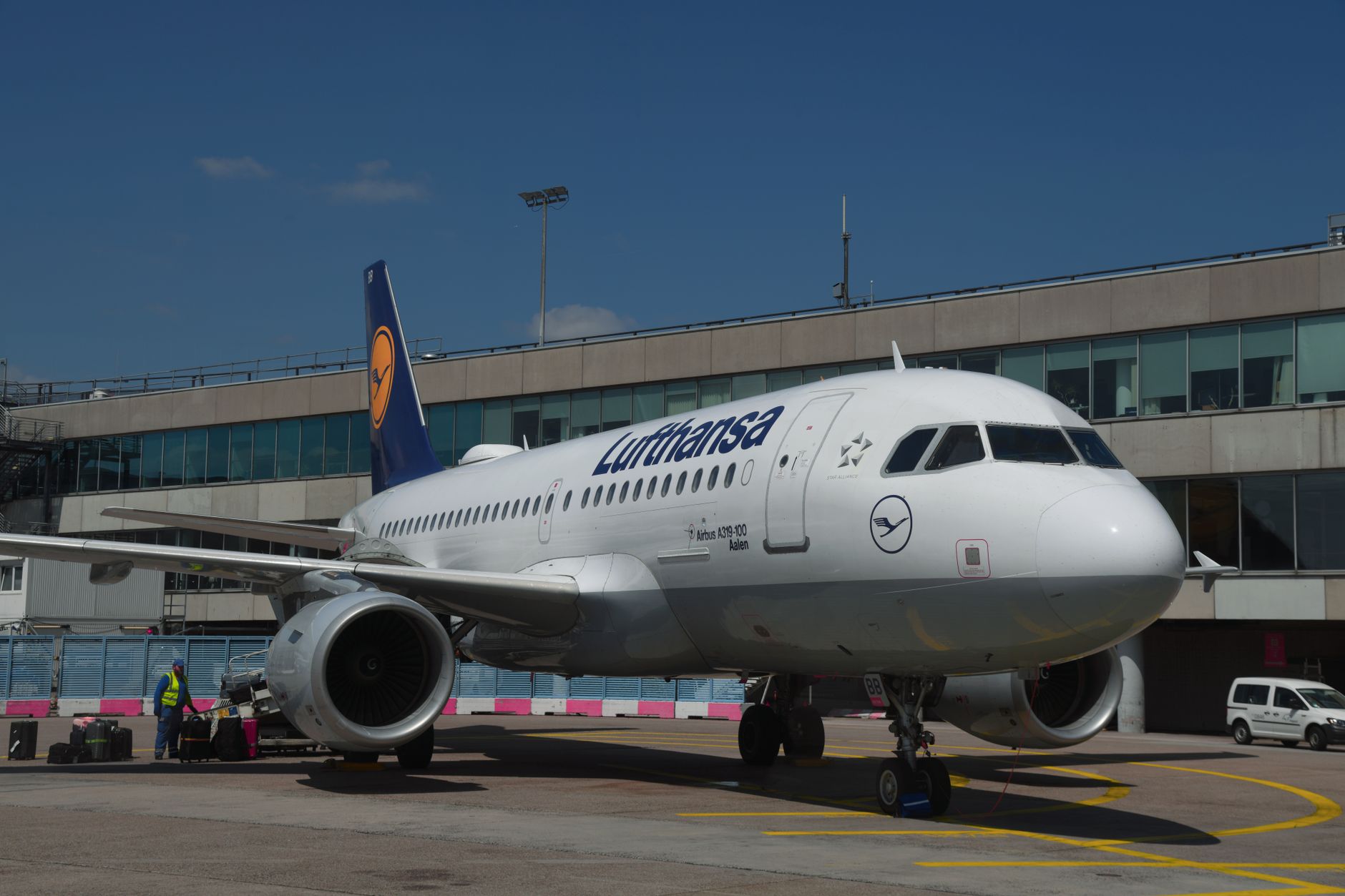
Airport & Getting There
From Frankfurt Airport to the City Centre: Every Option Compared
S-Bahn, taxi, ride service or rental car? Every way from Frankfurt Airport into the city centre, with prices, times and tips — updated after the opening of Terminal 3 (2026).
Katharina Vogt16 June 2026
Airport & Getting There
Transfer Frankfurt Airport to Heidelberg, Mainz & Wiesbaden
From Frankfurt Airport to Mainz, Wiesbaden or Heidelberg: the S8, ICE via Mannheim, FlixBus and the TLS shuttle compared — with journey times, rough costs (as of 2026) and the best choice for each destination.
Katharina Vogt16 June 2026
Airport & Getting There
Public Transport in Frankfurt: Tickets, Fare Stages and Which Card
How the RMV fare system actually works in Frankfurt: every 2026 ticket price, why the day ticket only pays from the third journey, where the short-distance ticket stops being valid, why the airport is not tariff-wise part of Frankfurt – and who the Frankfurt Card and MuseumsuferTicket are wrong for.
Katharina Vogt17 September 2026