Transfer Frankfurt Airport to Heidelberg, Mainz & Wiesbaden
Mainz and Wiesbaden by S8, Heidelberg via Mannheim, by FlixBus or shuttle: the realistic ways from FRA to the three neighbouring cities — and what the 2026 S-Bahn engineering works mean for you.


Not everyone who lands in Frankfurt actually wants Frankfurt. A great many people I know arrive at FRA and travel straight on — to family in Mainz, to the office in Wiesbaden, or to romantic Heidelberg for a weekend. The good news: all three cities are perfectly reachable from the airport, but by very different means of transport and at very different prices. Mainz costs a few euros; Heidelberg by taxi costs many times that. I’ll take the three destinations in turn — with honest journey times, rough costs and the one piece of advice that matters most in 2026.
First, get your bearings: two stations, one terminal
The airport has two separate railway stations, and mixing them up leaves you on the wrong platform in no time. The regional station (Regionalbahnhof) beneath Terminal 1 (Hall B) is the S-Bahn stop — the commuter lines to Mainz and Wiesbaden leave from here. The long-distance station (Fernbahnhof), a few steps further across the glazed bridge, serves ICE and IC trains — this is where you board for Mannheim and therefore Heidelberg. Both are at Terminal 1.
That matters because a fair amount changed at the airport in 2026: Terminal 3 opened on 23 April 2026, and Terminal 2 closed for a full refurbishment on 9 June 2026, with around 57 airlines moving from it to T3. Lufthansa and its Star Alliance partners stay in Terminal 1. So if you arrive at Terminal 3, first take the free Sky Line people mover (which now stops at all three terminals) across to Terminal 1, then walk to the stations. Allow roughly 15 minutes for that, depending on your walking pace and luggage. For how the rail links work in detail, see my overview of taking the S-Bahn from Frankfurt Airport.
To Mainz: the most relaxed connection of all
Mainz is by far the easiest of the three. The S8 runs from the regional station directly and without a change to Mainz main station (Hauptbahnhof). All you do is go down to the S-Bahn platform, buy an RMV ticket, board the S8 towards Wiesbaden via Mainz — and about half an hour later (roughly 25 to 30 minutes) you’re at Mainz Hbf. During the day the line runs every 15 minutes (together with the S9) and, in principle, around the clock, which is worth its weight in gold for late or very early flights.
On price it’s a doddle: you only need a single RMV ticket, bought from the platform machine or in the RMV app — a fraction of what any transfer costs. For Mainz, I see no reason to take anything other than the S-Bahn. Only if you arrive late at night with a great deal of luggage or several children is a taxi or a pre-booked transfer sometimes more comfortable; I’ve gathered which operators are worth considering in my piece on transfer and ride services from the airport.
Important in 2026: engineering works on the S8/S9
And that brings me to the point that can upend your planning in 2026. Because of major upgrades at the Mainz rail hub (a new digital signal box, plus bridge and track works), the line between Wiesbaden Hbf and Kelsterbach is heavily disrupted from 10 July to 19 September 2026. The S9 is suspended on this section for the entire period, and the S8 runs only in phases — in several windows (among them late July, late August and early September), as well as overnight, it is closed completely and replaced by buses. Replacement services run as bus routes such as S8A, S8E, S8X and S9X; the S8X is the faster bus link between Mainz, Rüsselsheim, the airport and Gateway Gardens.
In practice this means the trip to Mainz or Wiesbaden can take considerably longer during this window, the replacement buses don’t always stop right outside the station, and bikes usually can’t be carried on the bus. Build in generous buffers during this phase and check your specific connection shortly beforehand in the RMV app or on rmv.de — especially with a connecting flight or an appointment. If you’re reading this well after September 2026, the normal timetable should long since be back; even so, a quick check before you travel never hurts, as works around Mainz continue for some time yet.
To Wiesbaden: also by S-Bahn, but watch the display
You reach the Hessian state capital of Wiesbaden directly from the regional station too. Here both the S8 and S9 serve the route; allow about 40 minutes to Wiesbaden main station. The ticket is the same single RMV fare as for Mainz, and again you simply board on the platform beneath Terminal 1.
One small but decisive difference from Mainz: beyond the airport the destinations split, and not every train ends up where you want to go. So watch the destination display — the words “Wiesbaden Hbf” point you to the right train. The S8 takes the route via Mainz, the S9 goes more directly via Mainz-Kastel; both work for Wiesbaden. During the engineering works described above the same rule applies: check the current connection first, then set off. If you’d rather not change at all and you have luggage, the transfer and ride services also include shared and private transfers to Wiesbaden — pricier, but with no stairs and no changes.
To Heidelberg: this is where comparing really pays
Heidelberg lies about 90 kilometres to the south and no longer inside the RMV area — so there’s no simple S-Bahn solution, but four sensible routes instead. Because Heidelberg is such a popular day-trip destination, I’ve given the city its own article: a day trip to Heidelberg from Frankfurt, with getting there and what to do on arrival. For the airport connection itself, here’s the comparison.
By train via Mannheim. The most flexible option, because it needs no advance reservation. From the long-distance station, ICE and IC trains run to Mannheim in a good 30 minutes (very frequently during the day), and from there an S-Bahn or regional train takes about a quarter of an hour on to Heidelberg Hauptbahnhof. All told you’re in Heidelberg in around an hour. There are a handful of direct, change-free services too (the fastest does it in about 52 minutes), but only very few run each day — so plan for the change at Mannheim. Book early and DB saver fares come in well below the flexible walk-up price.
By coach. Unlike in the past, FlixBus now also departs directly from the airport (the coach stop at the terminal), not only from Frankfurt’s main station. There are around a dozen services a day, the journey takes roughly 1 hr 5 min to 1 hr 30 min depending on the routing, and tickets start at about €10 (as of 2026). When booking, though, check the departure point carefully: some services start right at the airport, others only at the main station — in which case you’d first have to take the S-Bahn into the city.
By shuttle or private transfer. If you’re travelling with a lot of luggage, in a small group, or simply want to arrive at your door without changing, a pre-booked transfer is comfortable. The van service once known as the “Lufthansa Express Shuttle” is now run by TLS (Transfer & Limousinenservice) of Heidelberg; the trip between Terminal 1 and Heidelberg also takes about an hour when the A5 is clear. You must book at least three days ahead (online, by phone or by email), and it’s no longer cheap: a private transfer runs (as of 2026) to around €165 per trip for the whole vehicle, while a seat in the shared shuttle costs noticeably more per person than a train ticket, with possible night and fuel surcharges on top. These transfers make most sense when you can split the cost across several people. Exact current prices are in the timetable at tls-heidelberg.de.
By hire car. Via the A5 it’s about an hour to Heidelberg when the road is clear. Whether that beats the train on cost depends mostly on how many of you there are — a calculator that totals the fuel and distance for the drive settles the question in a minute. That’s worth it if you want to be mobile once you’re there — though within central Heidelberg itself a car is more of a hindrance than a help.
Luggage, tickets and a few honest rules of thumb
A few things that make the difference between relaxed and frazzled:
- Sort tickets in advance. For Mainz and Wiesbaden a single RMV ticket from a machine or the app is enough. For Heidelberg by train you need a DB ticket — the earlier you book, the cheaper. Coach and shuttle you book ahead in any case.
- Luggage on the S-Bahn. The S8/S9 has no seat reservations and no large luggage racks; it can get crowded at peak times. With a lot of luggage or a pushchair, a direct transfer is more pleasant.
- Head for the right station. S-Bahn (Mainz/Wiesbaden) at the regional station, ICE (Heidelberg via Mannheim) at the long-distance station — both at Terminal 1. If you land at T3, factor in the Sky Line hop.
- Buffers during the 2026 works. Between July and September 2026, allow plenty of time on the S8/S9 and check the connection on the day.
If you’re not yet sure whether to leave Frankfurt at all, my comparison of getting from the airport to the city centre covers the way into town instead.
Which connection for which destination?
When friends ask, I usually put it like this: for Mainz, always the S8 — fast, cheap, no change. For Wiesbaden, likewise the S-Bahn (S8 or S9), just with an eye on the destination display. For Heidelberg it depends on what matters most to you: if you want to stay flexible, take the train via Mannheim; if you’re travelling on a budget, take the FlixBus straight from the airport; if you want to arrive comfortably with luggage and no changes and can share the cost, book a TLS transfer.
In the end none of these cities is more than about an hour away — and that’s the real joy of arriving in Frankfurt: you land in the centre of a whole region. Wine taverns in Mainz, the spa-town elegance of Wiesbaden, or the castle above the Neckar in Heidelberg — pick your transport to suit your destination and your luggage, and you’ll arrive everywhere unruffled.
Keep reading
Airport & Getting There
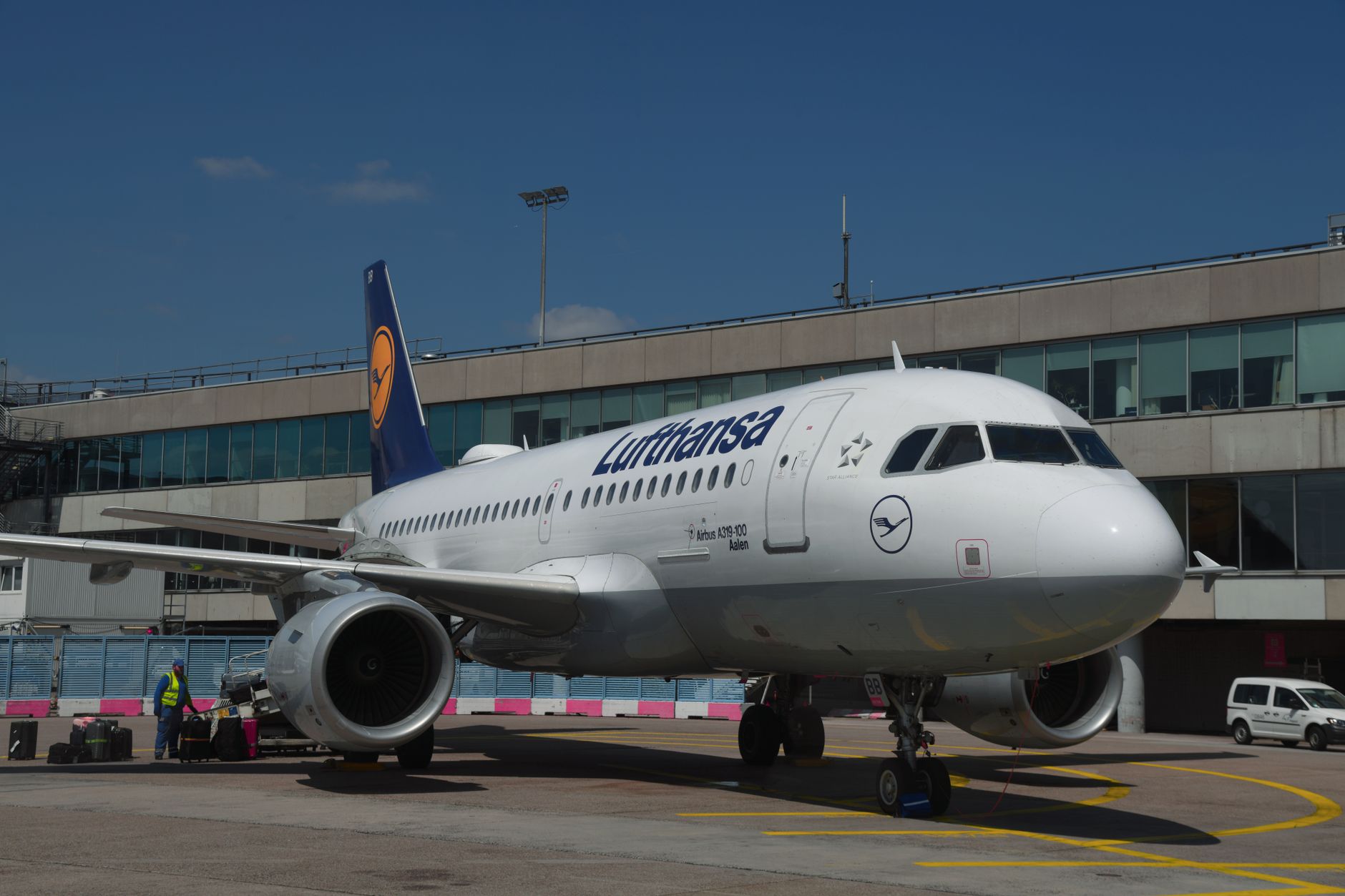
From Frankfurt Airport to the City Centre: Every Option Compared
S-Bahn, taxi, ride service or rental car? Every way from Frankfurt Airport into the city centre, with prices, times and tips — updated after the opening of Terminal 3 (2026).
Katharina Vogt16 June 2026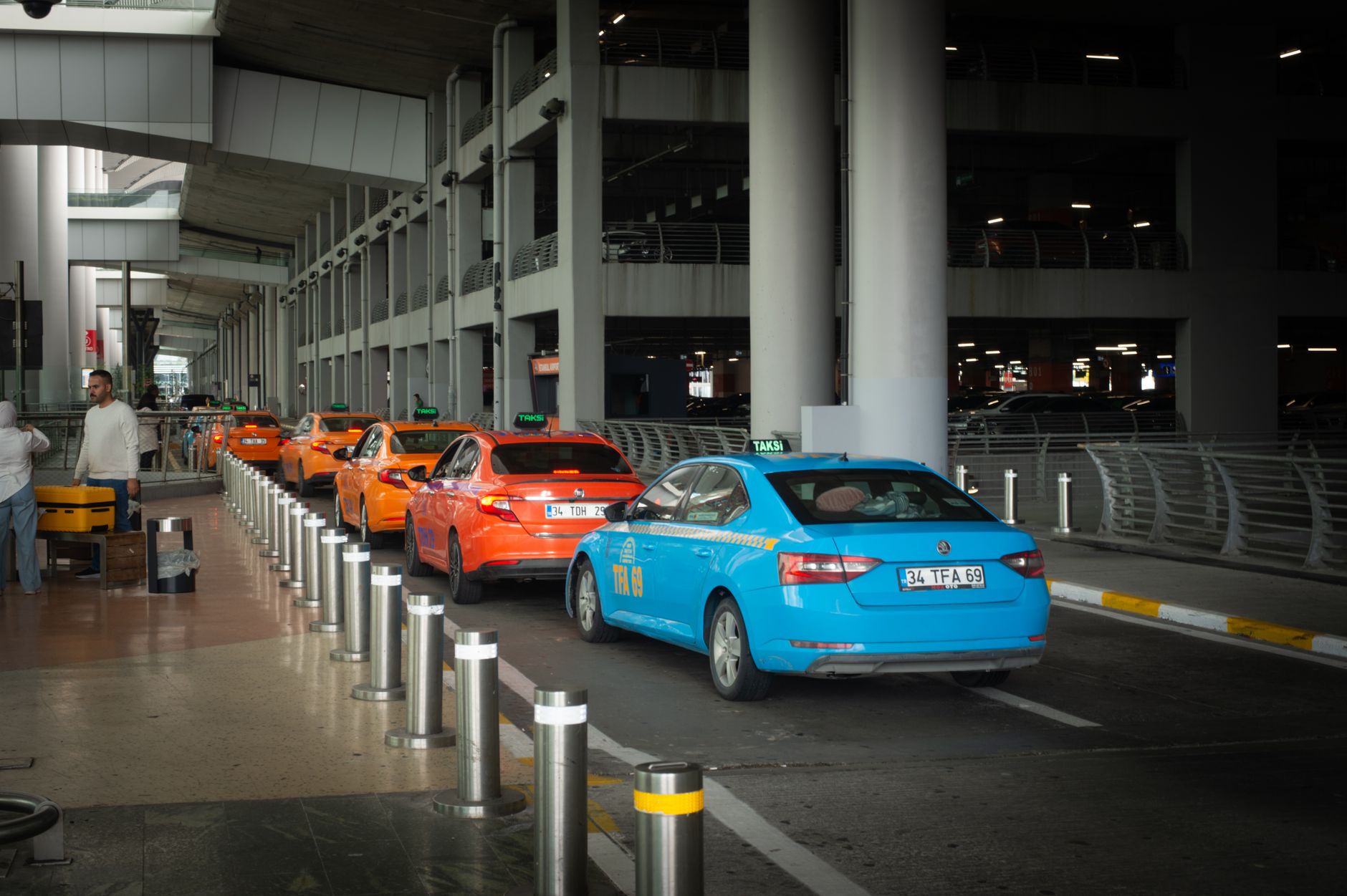
Airport & Getting There
Transfer & Ride Services from Frankfurt Airport: All Options
Taxi, FreeNow, Uber, Bolt, a private chauffeur or the S-Bahn after all? Every ride option from Frankfurt Airport compared — with prices (as of 2026), the fixed-fare system and honest tips from a local.
Katharina Vogt16 June 2026
Airport & Getting There
The S-Bahn from Frankfurt Airport: S8, S9, Prices & Times
Everything about the S-Bahn from Frankfurt Airport: the S8 and S9 lines, around eleven minutes to the main station, the right RMV ticket (as of 2026), where the regional station is and how to reach it from Terminal 3.
Katharina Vogt16 June 2026
Airport & Getting There
Flying to Frankfurt: Which Airport Is Actually Worth It?
FRA, Hahn, Cologne/Bonn, Stuttgart, Karlsruhe or Düsseldorf — an honest door-to-door comparison with realistic journey times and costs to Frankfurt Hauptbahnhof (as of 2026).
Katharina Vogt19 August 2026