Car Rental at Frankfurt Airport: Providers & Pickup
Terminal 2 is closed and the new Terminal 3 is open: where Sixt, Hertz, Avis & co. sit now, what to bring to the desk — and when a car is worth it at all.

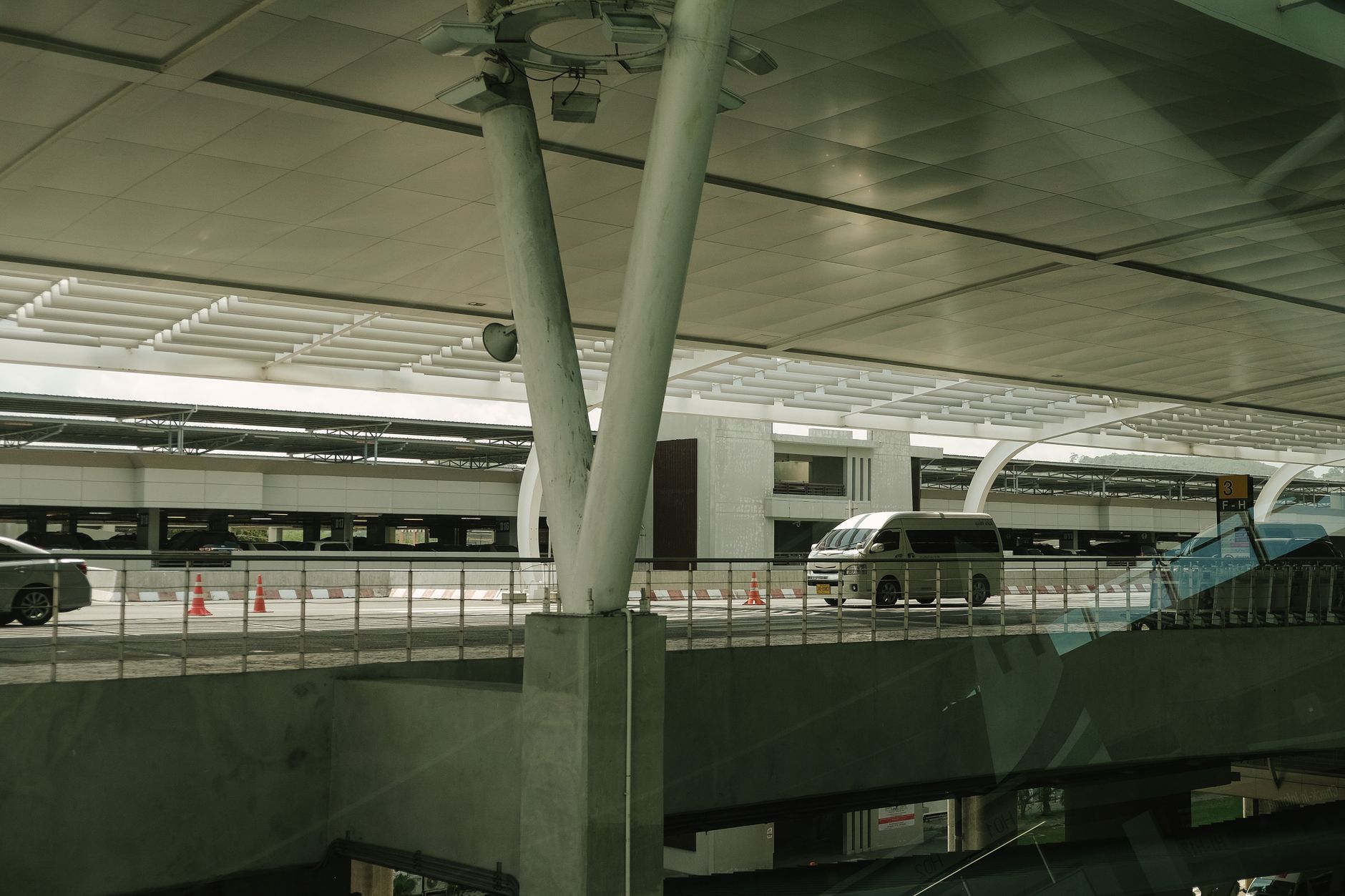
The first coffee after landing, then straight onto the Autobahn — for many people a stay in Germany begins exactly like this: with a hire car from Frankfurt Airport. I pick up cars here regularly myself, sometimes for visitors, sometimes for a long weekend in the Rheingau, and the good news first: getting a car at FRA is straightforward. You just need to know where the rental firms actually sit since 2026 — because a fair bit has shifted. Anyone who walks to the old terminal out of habit can lose half an hour with their luggage in the worst case. So that this doesn’t happen to you, let’s go through it in order: where to collect, which providers, the documents, insurance, refuelling — and the question of whether a hire car makes sense for your trip at all.
What changed in 2026 — and why Terminal 2 is gone
The big change this year is Terminal 3, which opened on 23 April 2026. Shortly afterwards, on 9 June 2026, Terminal 2 closed completely — it is being refurbished from the ground up over several years at a cost of around €1.5 billion. For hire cars this means one thing very concretely: the former Car Rental Center in Terminal 2 no longer exists. You can neither pick up nor return a car there. So if you’re holding an older guidebook or an older booking confirmation that mentions “Terminal 2”, ignore it — the rental firms have moved.
Today you’ll find the hire cars in two places (as of 2026):
- Terminal 1: The Car Rental Center is in Hall A, in the Airport City Mall area — one level above the regional train station. After arriving, simply follow the “Car Rental / Mietwagen” signs towards Hall A. This is the larger of the two centres; all the providers sit together here.
- Terminal 3: The new terminal has its own Car Rental Center on the arrivals level. If you land at Terminal 3, you stay in the building and follow the car-rental signs.
If you land at Terminal 3, it’s best to pick up there too — that saves you any terminal change. Only if your provider stages your booked category exclusively at Terminal 1 do you have to cross over. Check this at the time of booking if in doubt; the confirmation usually names the exact pick-up centre.
Getting between the terminals to your car
If you do have to switch terminals, it’s doable but costs time. A free shuttle bus runs between the terminals, every two to three minutes during the day and less often at night, with the ride itself taking only a few minutes. The well-known Sky Line people mover normally links the terminals too, but it was out of service at times in 2026 for technical work — when in doubt rely on the bus and glance at the on-site displays.
One point many underestimate: the route between Terminal 1 and Terminal 3 passes through a fresh security check. For simply collecting a hire car after landing this is usually no drama, since you’re moving through the public area — but reckon on a few extra minutes of walking and waiting. If you’re travelling with tired children or a lot of luggage, it’s far less stressful to pick up at your arrival terminal, where that’s possible.
The providers — and why you should book ahead
All the big names are represented at FRA, and in the Car Rental Center their desks sit right next to one another:
- Sixt
- Hertz
- Avis
- Europcar
- Enterprise (with its sister brands National and Alamo)
- Buchbinder
- Budget
Having the desks together has a practical upside: if you turn up without a reservation, you can compare offers directly. My clear advice, all the same, is to book online in advance. Walk-up prices at the desk are, in my experience, considerably higher than an early reservation, and during the Hessian school holidays or around the big trade fairs (the IAA, the Book Fair, Automechanika) it’s precisely the cheaper categories that run short. Book early, filter for the specific pick-up point “Frankfurt Airport”, and read the small print on mileage limits and excess before you pay.
A word on one-way rentals: if you want to drop the car not in Frankfurt but in, say, Munich, Berlin or abroad, most of the major providers (Sixt, Europcar, Enterprise and others) allow it — but it carries a one-way fee that is noticeable on cross-border journeys. Sort this out at the booking stage, not at the desk.
What to bring to the desk
Have these documents to hand before you even land:
- The main driver’s driving licence. Within the EU your national licence is enough. If you come from outside the EU (from the USA, Canada, Japan or China, for instance), you’ll usually need an International Driving Permit in addition to your original home licence — the permit alone is not sufficient.
- A credit card in the main driver’s name. It’s almost always mandatory for the deposit; the provider blocks an amount on it. Plain debit or prepaid cards are often not accepted — this is the classic reason travellers end up without a car despite a booking.
- Your passport or ID card for identity verification.
- Your booking confirmation, if you reserved in advance.
Also mind the minimum age: you usually have to be 21, and under 25 many providers add a young-driver surcharge; for premium categories the threshold is often higher. If two of you will be driving, have the additional driver written into the contract on the spot — if someone drives who isn’t listed, your insurance may not respond in the event of a claim.
Insurance, excess and the fuel trap
Third-party liability is always included with German hire cars. What matters is the collision cover and, above all, your excess (the amount you pay yourself in the event of damage). Standard rates often include cover with a high excess — for a single scrape you can suddenly be looking at a four-figure sum. You can reduce the excess for a surcharge, or book a low-excess rate from the outset. Watch, too, for the typical exclusions: tyres, glass, the underbody and the roof are not covered in many basic rates. If you rent often, a separate annual excess-reimbursement policy from a third party frequently works out cheaper than the cover sold at the desk — but that only pays off if you can front the cost when a claim arises.
The second cost trap is the fuel policy. You’re almost always best off with “full to full” (pick up full, return full). Steer clear of arrangements where you prepay a full tank and return it empty (“full to empty”) — you’ll never see the fuel you didn’t burn again, and the providers’ per-litre rates are steep. Refuel yourself before returning, and not right at the airport: the filling stations on the approach roads are usually noticeably cheaper than the last pump before the terminal.
Pickup and return, step by step
After the paperwork at the desk, you collect the car from the associated car park. My single most important tip from many rentals: photograph the car all around before you set off — every existing scratch, the wheels, the interior and the fuel gauge. Two minutes with your phone saves you every argument about alleged new damage at return. While you’re at it, check whether an environmental sticker is on the windscreen (more on that below) and whether the warning triangle, hi-vis vest and first-aid kit are on board — these are compulsory in Germany.
Returns are possible at Terminal 1 and Terminal 3. As you drive back, follow the “Car Rental Return / Mietwagenrückgabe” signs early; they lead you to the right car park. Allow generous buffer: park the car, get the contract closed, and only then head to check-in with your luggage. Before a flight I reckon on at least an extra half hour for this process — and remember to refuel if your contract requires it. If, conversely, you’re driving your own car to the airport and leaving it there, my comparison of the car parks at Frankfurt Airport will help you choose.
Driving through Germany: the Autobahn, the sticker, tolls
For many international guests the headline is this: cars pay no toll on German Autobahns. There’s no vignette as in Austria or Switzerland, no ticket, no registration — you simply drive off. The German toll applies only to lorries and coaches over 3.5 tonnes. Only a handful of privately run tunnels or bridges charge a fee. If, however, you drive on from Frankfurt into Austria or Switzerland, you will indeed need a vignette there — buy it in good time before the border.
The second key point is the environmental sticker (Umweltplakette). Like many German cities, Frankfurt has a low-emission zone: only vehicles with a green sticker may enter. The zone covers around 110 square kilometres and lies roughly within the motorway ring (the A5 to the west, the A3 to the south, the A661 to the east and north) — in practice the whole city centre. Drive in without a valid sticker and you risk a €100 fine. The good news: hire cars from German firms almost always already carry the green sticker, because the fleets are new enough. Still, glance at the windscreen when you collect the car.
Two sentences on driving style, because myths swirl around the Autobahn. There are stretches with no general speed limit, but the advisory speed is 130 km/h, and in roadworks, at slip roads and in built-up areas limits very much apply. You drive on the right, overtake on the left, and the keep-right rule is taken seriously. The blood-alcohol limit is 0.5, and zero for newly qualified drivers.
Is a hire car worth it for you?
Now the honest assessment as a local. If you’re staying in Frankfurt, you need no car. The centre is traffic-calmed, parking is expensive, and the S-Bahn (S8/S9) brings you from the airport into the centre in a good 15 minutes for around seven euros. A hire car would just be an expensive burden here — for which routes run from the airport into town and what they cost, I’ve put it all together in my airport-to-city-centre comparison.
A hire car really comes into its own, on the other hand, the moment you want to explore the region. The Rheingau with its wine villages, the Taunus hills, the Bergstraße, Heidelberg, Würzburg or a jaunt to the Rhine are far more flexible by car than by bus and train — and from the airport you’re on the motorway within minutes, without the city traffic. For where it’s worth heading, see my overview of day trips around Frankfurt. Before you book, it is worth running one or two of those routes through a quick estimate of what the driving itself costs in fuel, because a full day at the wheel adds up faster than most people expect. Anyone travelling with a lot of luggage, in a group or with children and covering several stops is often more relaxed in their own vehicle, too.
In short: renting a car at Frankfurt Airport is easy once you sidestep the Terminal 2 misunderstanding. Stick to the Car Rental Center in Hall A (Terminal 1) or to Terminal 3, book ahead, bring a credit card and — from outside the EU — your International Driving Permit, and read the fuel policy and excess carefully. Then nothing stands between you and the road to the Rheingau. And if you only want to get into town anyway: save yourself the money and the hassle, and take the train.
Keep reading
Airport & Getting There
Frankfurt Airport Terminal 2: Closed — How to Fly Now
Terminal 2 at Frankfurt Airport has been closed since 9 June 2026. Where the airlines have moved, how to reach Terminal 3 and what to watch for when transferring now — explained by a local.
Katharina Vogt16 June 2026
Airport & Getting There
Frankfurt Airport Terminal 3: Airlines & Access
The new Terminal 3 at Frankfurt Airport (open since April 2026): which airlines and alliances fly from here, concourses G, H and J, check-in and security, and how to reach it by Sky Line, bus and car.
Katharina Vogt19 June 2026
Airport & Getting There
The S-Bahn from Frankfurt Airport: S8, S9, Prices & Times
Everything about the S-Bahn from Frankfurt Airport: the S8 and S9 lines, around eleven minutes to the main station, the right RMV ticket (as of 2026), where the regional station is and how to reach it from Terminal 3.
Katharina Vogt16 June 2026
Airport & Getting There
Flying to Frankfurt: Which Airport Is Actually Worth It?
FRA, Hahn, Cologne/Bonn, Stuttgart, Karlsruhe or Düsseldorf — an honest door-to-door comparison with realistic journey times and costs to Frankfurt Hauptbahnhof (as of 2026).
Katharina Vogt19 August 2026