Frankfurt Airport Terminal 2: Closed — How to Fly Now
Still planning around “Terminal 2”? You're planning for the wrong building: it closed on 9 June 2026 for a major refurbishment. Where the airlines went, how to reach Terminal 3 — and what remains of the old terminal.

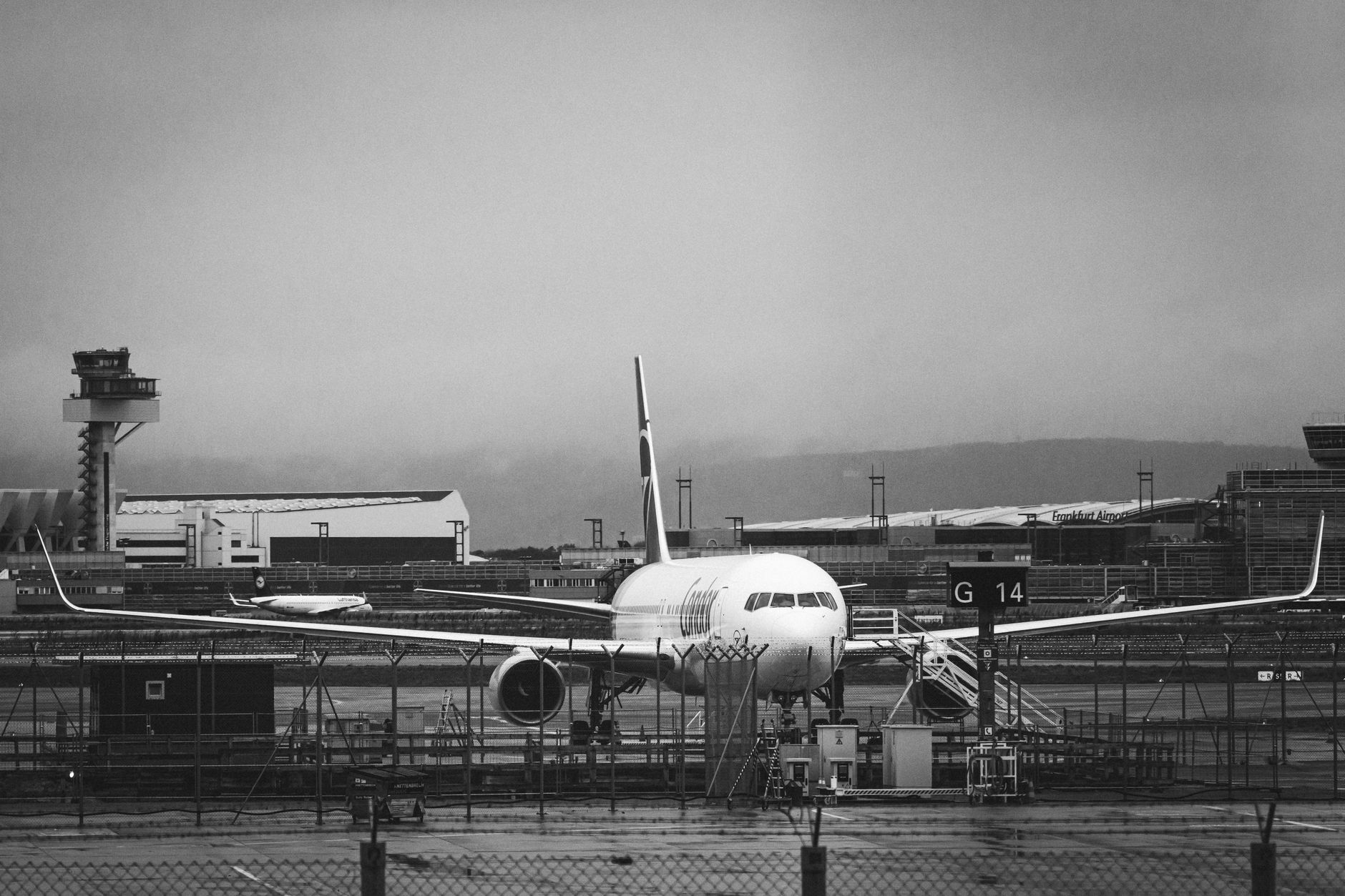
Almost every week these days someone asks me where Terminal 2 is at Frankfurt Airport — and is surprised when I answer: nobody arrives or departs there right now. If your old itinerary, an older guidebook or simply the back of your mind still says “Terminal 2”, this is the piece for you. I’ll go through it step by step: why the terminal is closed, where the airlines have moved, and how you now arrive, depart and transfer at FRA without ending up at the wrong building.
First things first: Terminal 2 is closed
Let’s start with the fact that governs everything else: since 9 June 2026, Terminal 2 has been closed to passengers. This is not a short-term disruption or a strike, but a long-planned major refurbishment. And genuinely everything that makes a terminal a terminal is shut — check-in desks, security, gates, shops, restaurants and lounges. So you can’t just “nip through Terminal 2”, meet someone there or run a quick errand.
I stress this so plainly because the old assumption dies hard. For more than three decades, T2 was the perfectly ordinary way in and out of Frankfurt for millions of travellers. That habit runs deep, and it’s exactly what’s leading people astray at the moment. For the coming years the rule is simple: cross Terminal 2 off your travel planning.
What this actually means for your flight
If your airline used to be handled at Terminal 2, you now almost certainly fly from Terminal 3. For you as a traveller, one thing changes above all: the place where your journey begins and ends — and therefore the way you get there.
The single most important step sounds banal and is skipped all the time: look at your boarding pass or your airline’s booking confirmation and read which terminal is listed. Don’t go by the feeling that “it was always Terminal 2”. Frequent flyers on the same airline are precisely the ones who walk to the wrong building out of pure routine. The same applies if you’re picking someone up: ask for the terminal beforehand, or you may end up waiting a kilometre away from the right exit.
Where the airlines have moved: Terminal 3
The good news is that the Terminal 2 airlines haven’t been given a makeshift arrangement but a full, thoroughly modern replacement: the new Terminal 3 in the south of the airport site. It was ceremonially inaugurated on 22 April 2026, with flight operations beginning on 23 April 2026. The carriers then moved from T2 to T3 in four waves — 57 airlines in all, a transition completed on 9 June 2026 as Terminal 2 shut its doors.
Terminal 2 was traditionally the home of the non-Lufthansa world: it housed above all the airlines of the oneworld and SkyTeam alliances. Accordingly, you’ll now find in Terminal 3, among others, American Airlines, British Airways, Iberia, Finnair, Japan Airlines, Cathay Pacific, Qatar Airways and Royal Air Maroc from the oneworld camp, along with Air France, KLM, Delta Air Lines and Korean Air from SkyTeam, plus major Gulf and Asian carriers such as Emirates, Etihad Airways and Singapore Airlines. In short: anyone who used to “always fly from Terminal 2” now almost certainly checks in at Terminal 3.
The new terminal opens with concourses G, H and J. Concourse G handles Schengen traffic, while the considerably longer piers H and J serve international routes. In this first stage Terminal 3 is designed for up to 19 million passengers a year. If you want to know how the building is laid out in detail, which airline sits at which pier and how the lounges are distributed, read my full guide to Terminal 3 — I go into exactly that there.
How to reach Terminal 3
Terminal 3 doesn’t sit right next to Terminal 1, but a fair way to the south. The main link is the Sky Line, the airport’s driverless elevated railway. It’s free, connects the terminals directly, and is scheduled to take around eight minutes between Terminal 1 and Terminal 3. In normal operation it comes every two to three minutes and runs from early morning until late evening.
An important note on the current situation: during the construction phase the airport has at times suspended the Sky Line and covered the route with shuttle buses instead. Whether the train is running at the time of your trip, or a replacement service is in place, can therefore change — check briefly in advance and, if in doubt, allow a few extra minutes. I’ve described how the elevated railway works, where to board and how reliable it is in my piece on the Sky Line at Frankfurt Airport.
Beyond that, you have several options for getting there:
- By rail: the regional station (S-Bahn) and the long-distance station for ICE trains are at Terminal 1. From there you continue to Terminal 3 by Sky Line or the replacement service. Allow plenty of time for that final leg.
- By car: Terminal 3 has its own car parks and drop-off areas as well as its own car rental station, so you no longer face the long haul from the older parking areas.
- By bus or taxi: additional bus routes and the taxi rank also bring you straight to the new terminal.
If you need to get your bearings on the ground first, my overview of the airport map with all terminals and routes will help — especially now, when the familiar walking routes have shifted, having that map in your head is worth a lot.
Transferring at FRA: what to bear in mind now
Frankfurt is one of Europe’s largest transfer hubs, and closing Terminal 2 changes nothing about that — only the routes are new. If you’re transferring at Frankfurt and have to change terminals, say from a Lufthansa flight in Terminal 1 to a connection out of Terminal 3, use the Sky Line or the current replacement service. A few things are worth keeping in mind:
- Allow enough transfer time. Between Terminal 1 and Terminal 3, on top of the ride itself come the walks inside the buildings, possible repeat security checks and waiting times. With tight connections, plan far more generously than for a transfer within the same terminal.
- Clarify your luggage. Check whether your bag is checked through to your destination or whether you have to carry it to the next terminal yourself. When you switch between two alliances, that isn’t always arranged automatically.
- Follow the signs. The routes to the Sky Line and between the terminals are signposted; if in doubt, the staff at the information desks will point you on.
- Check the current status. Because so much is in flux at the airport, it’s worth looking at the official notices on the Sky Line and replacement services before you travel.
A look back: the history of Terminal 2
Terminal 2 isn’t gone for good — but a short look back belongs here if you want to understand what’s actually being refurbished. The building opened on 24 October 1994, when the airport urgently needed extra capacity because the older Terminal 1 was reaching its limits. T2 was divided into the two halls D and E and designed for around 15 million passengers a year.
Where Terminal 1 has always been the domain of Lufthansa and its Star Alliance partners, Terminal 2 became home to almost all the other carriers — above all the oneworld and SkyTeam airlines already mentioned, plus numerous Gulf and Asian carriers. If you ever landed in Frankfurt from Doha, Hong Kong or New York and wondered at the rather sober, functional hall with its long corridors, you were very likely in T2. After more than thirty years of intensive use the building had simply aged technically — and that’s precisely where the works come in. Incidentally, the neighbouring Terminal 1 with its gates, levels and routes is worth a look of its own if you’re departing from or transferring through it.
What is known about the refurbishment
The overhaul is no cosmetic touch-up but a rebuild from the ground up. The airport operator is investing around €1.5 billion in it. What’s being replaced and modernised is above all the building’s core technical systems: fire alarm and smoke-extraction systems, the energy supply, heating, ventilation and air conditioning, as well as lifts, escalators and sanitary facilities; the security checks are to be made more efficient too.
On the timeline I’m deliberately cautious, because a project of this scale is inherently fluid. What’s known: a multi-year planning phase is to be followed by the actual construction phase from around 2030, with reopening envisaged for the mid-2030s — then with capacity for more than ten million passengers a year. I deliberately won’t quote a firm reopening date here, because there simply isn’t one you could rely on yet. Anyone planning today should firmly assume that Terminal 2 will be unavailable for the foreseeable future.
The bottom line is less complicated than it first sounds. Terminal 2 is closed and will be refurbished over several years; the airlines that were based there now fly from the modern Terminal 3, which is connected to Terminal 1 and the stations by the Sky Line. If you take a quick look at your ticket before every Frankfurt flight to see which terminal it names, and allow a little more time for the routes and transfers than you used to, you’ll reach your gate relaxed despite the major works at FRA. And in a few years, when the renewed Terminal 2 reopens, I’ll happily tell you here what has changed.
Keep reading
Airport & Getting There
Frankfurt Airport Terminal 3: Airlines & Access
The new Terminal 3 at Frankfurt Airport (open since April 2026): which airlines and alliances fly from here, concourses G, H and J, check-in and security, and how to reach it by Sky Line, bus and car.
Katharina Vogt19 June 2026
Airport & Getting There
Park, Sleep & Fly Frankfurt: Hotel and Parking for Early Flights
Park, Sleep & Fly at Frankfurt Airport: combine an overnight stay with parking the clever way. Which hotels offer it, what's in the package and what to watch out for in 2026 (Terminal 3!).
Katharina Vogt2 July 2026
Airport & Getting There
Valet Parking at Frankfurt Airport: How It Works, What It Costs & Whether It's Worth It
An honest guide to valet parking at Frankfurt Airport: private providers vs. official Fraport parking, how the key handover works, prices (as of 2026) and what to watch for.
Katharina Vogt24 June 2026
Airport & Getting There
Frankfurt Airport Map 2026: All Terminals & Routes
How Frankfurt Airport is laid out in 2026: Terminal 1 in the north, the new Terminal 3 in the south, Terminal 2 under refurbishment, plus the Sky Line, shuttle buses and the two stations — with transfer times from a local.
Katharina Vogt16 June 2026