Day Trip to the Taunus: Feldberg, Königstein, Bad Homburg
The range you see from the Main Tower is half an hour away — but the bus to the summit runs far less often than most people assume. An honest day plan for the Feldberg, a castle and a spa park.

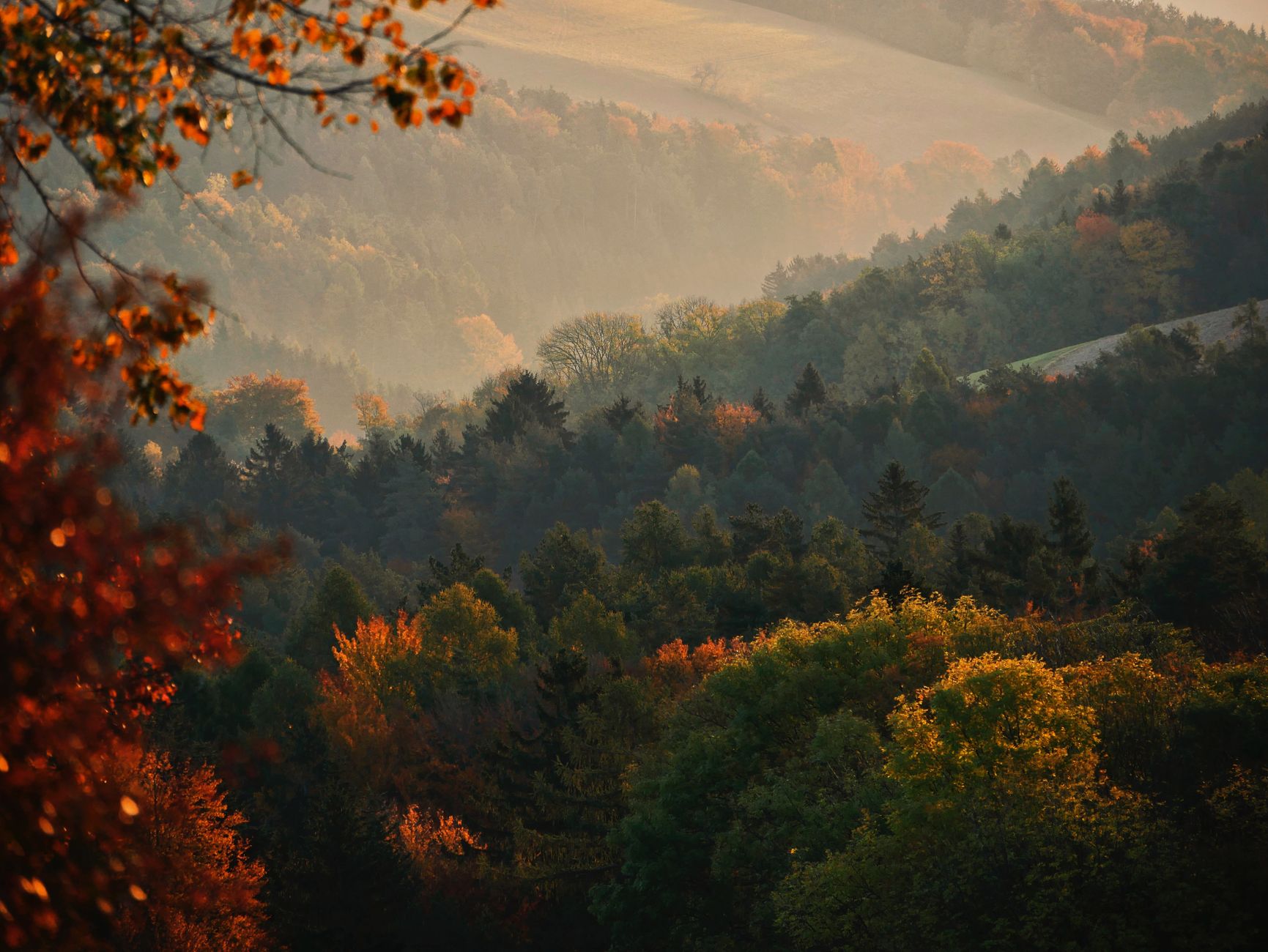
From the Main Tower it lies to the north like a long, dark wave: the Taunus. I’ve pointed that ridge out to visitors a hundred times, and almost always the same question follows — can you actually get up there? You can, and quickly. The S-Bahn leaves Frankfurt, twenty-odd minutes later you’re standing in a spa town, and an hour after that on a summit plateau at 880 metres where the wind is always a few degrees colder than down by the Main.
What hardly anyone knows in advance: the bus to the Großer Feldberg runs only every two hours on weekdays — and on weekdays it doesn’t serve Bad Homburg at all. That single fact has wrecked outings that would otherwise have been lovely. So this piece puts the getting-there first and the view second, with timetables, prices (as of 2026) and the question you’ll face anyway: one destination done properly, or three done by halves.
The Taunus by train: three lines, three doors
There is no single train into the Taunus. There are three ways in, and each one leads somewhere different.
- The S5 runs from the Hauptbahnhof via Rödelheim and Oberursel to Bad Homburg and on to Friedrichsdorf; the timetable allows 23 minutes between Bad Homburg and the Hauptbahnhof, every half hour by day and more often at peak times. This is the door to the spa town — and, via bus line 5, to the Saalburg.
- The RB12, the old Königstein Railway of 1902, takes about 38 minutes from the Hauptbahnhof via Höchst to Königstein, every 30 minutes by day, hourly on Sundays.
- The U3 is the real surprise: it terminates at Oberursel-Hohemark, right at the edge of the forest, just under 40 minutes from Hauptwache — the starting point for the Feldberg, for walkers and for the bus alike.
One ticketing rule catches Frankfurt visitors out again and again: you are leaving fare zone 5000. The flat city price stage of €3.80 stops at the city boundary. For the immediate neighbourhood the RMV has introduced intermediate price stages, covering among others Bad Homburg, Oberursel and Schmitten (the municipality the Feldberg belongs to), which are noticeably cheaper than the regular next stage up — but the journey planner only quotes the right price if you enter the exact stop rather than simply “Frankfurt”. How the tariff works I’ve taken apart in my guide to local transport tickets and price stages. Anyone holding a Deutschlandticket (€63 a month) has the easiest day of all: it covers the S-Bahn, the U-Bahn, the regional train and the Feldberg bus.
Line 57 — and why it decides your day
Exactly one bus goes to the summit: the Feldberg line, number 57. It links Königstein station via Oberreifenberg and the Großer Feldberg with the U-Bahn terminus at Oberursel-Hohemark. And it does not run the way a city bus route does:
- Monday to Friday it runs every two hours between Königstein and Hohemark. The first uphill departure leaves Hohemark at 9.32 and reaches the summit at 9.59 — about 27 minutes. The last weekday descent leaves the Feldberg at 19.05.
- On Saturdays, Sundays and public holidays it runs hourly between Hohemark and the summit, and only on those days does it also serve Bad Homburg, every two hours. On Sundays the last bus leaves the summit at 18.50.
- In winter extra journeys are laid on at weekends and during school holidays when there’s snow; which ones is decided at short notice, depending on the weather.
(Timetable valid from 20 December 2025; do pull the exact times for your own day from the RMV journey planner before you set off.)
From which follows the single most important line in this article: the frequently repeated advice to “take the S5 to Bad Homburg and then the bus up the Feldberg” does not work from Monday to Friday. On weekdays the way up is the U3 to Hohemark. And if you miss the last bus at the top, you are at 880 metres with no taxi rank — walking down takes hours. Note the return time before you step off the bus.
Großer Feldberg: a proper walk, or simply standing at the top
At around 880 metres the Großer Feldberg is the highest point in the Taunus. Its summit is, to be honest, not a lonely crag but a broad, blustery plateau with a car park, a telecommunications mast and somewhere to eat — and worth it anyway, for the sheer sweep across the Rhine-Main plain.
The best all-round view is from the observation tower, some 40 metres high, its glazed platform sitting at over 900 metres; you climb an enclosed staircase of about 100 steps, and there is no lift. Admission is €2.00 for everyone aged five and over, under-fives free. It opens daily from 1 April to 31 October, noon to 7 p.m., and from 1 December to 31 March Friday to Sunday, noon to 5 p.m.; in November it stays shut (as of 2026).
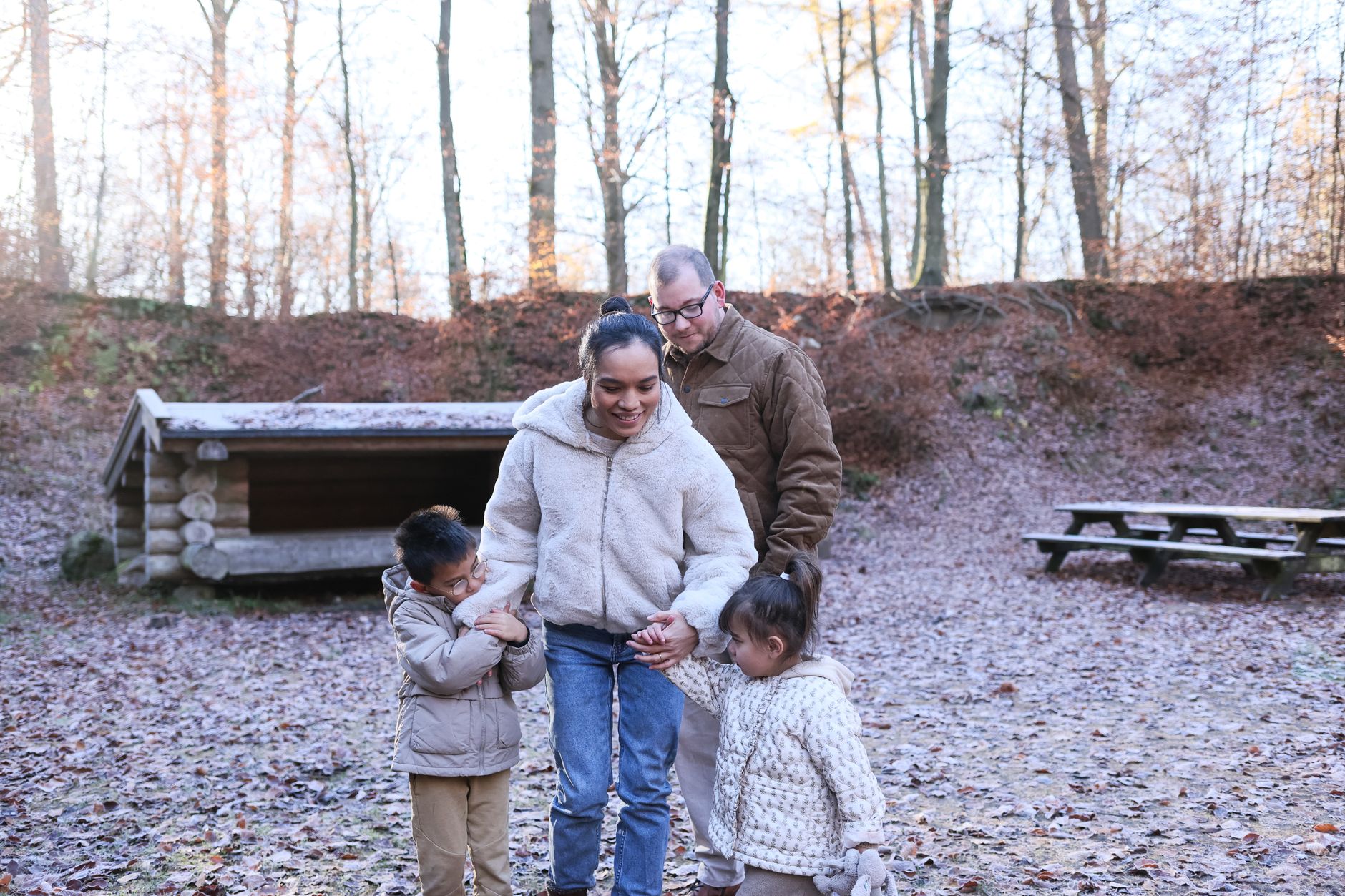
And the walking? Here two quite different outings get muddled. The classic circuit published by the Taunus information centre starts at the Hohemark, follows the Urselbach and then climbs steeply to the summit and back: 16.73 kilometres, a good five and a quarter hours of walking, around 568 metres of ascent, just under 60 per cent of it on unsurfaced ground. That isn’t an afternoon, it’s the whole day — and it calls for proper boots with a grip; trainers are not enough on the stony sections, which turn to mud after rain. Take the bus up, walk one of the short loops on the plateau and ride back down, and comfortable shoes will do. That’s how families do it, and which Taunus destinations work with children is in my guide to family day trips around Frankfurt.
Königstein and its castle
If the Feldberg is the weather, Königstein is the history. Above the little town stands one of the largest castle ruins in Germany: the oldest visible parts date to before 1215, and the castle was probably built to guard the trade road from Cologne to Frankfurt; later it grew into a fortress. In 1796 the French blew it up — though the thoroughness of today’s ruin is also down to the people of Königstein, who helped themselves afterwards: the stones of the castle are in the houses of the old town.
So you don’t walk through state rooms here but through cellars, casemates and rings of wall, and across terraces from which the view reaches all the way to Frankfurt. It’s open daily from April to October, 10 a.m. to 7 p.m. (last entry 6.30 p.m.), and from November to March only at weekends, 10 a.m. to 5 p.m.; at €3.50 for adults and €2.00 for children admission is almost touchingly modest (as of 2026). From the station the way leads uphill through the town centre; from the spa gardens on Hauptstraße it’s only about 600 metres more — but 600 metres upwards.
Bad Homburg as a day trip: spa park, casino, White Tower
Bad Homburg is the opposite of a hike, and the best plan B when the sky hangs grey. The Kurpark covers 44 hectares, was laid out in 1856 by Peter Joseph Lenné for the Blanc brothers, and counts as the only Lenné garden preserved unaltered. You stroll past the mineral springs — Elisabethenbrunnen, Kaiserbrunnen, Landgrafenbrunnen — past a gleaming golden Thai Sala (a gift from King Chulalongkorn, inaugurated on 22 May 1914; a second followed in 2007), past the Russian chapel consecrated in 1899, and past a golf course going since 1889, reckoned the oldest on the European mainland. The park itself is free.
Its showpiece is the Kaiser-Wilhelms-Bad, built between 1887 and 1890 and today a day spa — for anyone who would rather spend the day in warm water than in metres of ascent. And then the casino, opened on 23 May 1841 by the Blanc brothers, who turned sleepy Homburg into an international spa and paid for the Kurhaus, the street lighting and the railway link to Frankfurt out of the gaming takings. François Blanc moved to Monaco in 1863 — ever since, Bad Homburg has liked to call itself the mother of Monte Carlo. That leaves the palace with its White Tower, at 48.11 metres the town’s landmark and last remnant of the medieval Hohenberg castle: March to October, Tuesday to Sunday, 10 a.m. to 5 p.m., November to February until 4 p.m., closed Mondays — interiors only on a guided tour.
The Saalburg: a Roman fort on the World Heritage Limes
North of Bad Homburg the Upper German-Raetian Limes runs through the woods, the old frontier of the Roman Empire, a UNESCO World Heritage Site since 2005. The best place to grasp it is the Saalburg — the most completely rebuilt fort on the entire Limes. Kaiser Wilhelm II set the reconstruction in motion in 1897 and the foundation stone was laid on 11 October 1900, so you don’t approach a heap of stones but a gateway, and behind it a defensive wall, a shrine of the standards, workshops and reconstructed rooms.
It opens March to October, Tuesday to Sunday, 10 a.m. to 6 p.m., and November to February 10 a.m. to 4 p.m., closed Mondays; admission €8, reduced €6, ages 6 to 17 €3, family ticket €16 (as of 2026). Without a car you take the S5 to Bad Homburg and change to culture bus line 5 — but do the arithmetic first: from May to October there are nine journeys at weekends and on public holidays, otherwise only four a day. Alternatively the Taunusbahn stops at the Saalburg/Lochmühle halt, about 45 minutes’ walk along the Limes, which for walkers is a bonus rather than a detour.
By car — and what the summit now costs
By car you’re up there in a little under three quarters of an hour, usually via the A661 and the B456; what the route means in kilometres, driving time and fuel is worth working out beforehand, because in the Taunus the straight-line distance is wildly misleading. The summit is no longer free parking, either: since 8 April 2025 parking on the plateau has been chargeable — €2.00 per hour begun, €12.00 for the day, payable by card at the machine or through an app. There is still free parking below the summit, at the Tillmannsweg, Teufelsquartier and Windeck car parks. Twelve euros is roughly a city-centre day rate; how far such rates diverge our partner site has gathered in its comparison of parking charges.
Arriving with luggage changes the sums: the fixed fares to Bad Homburg or Königstein are in this overview of transfer, taxi and car-service prices from Frankfurt, and for two people with cases they are often less trouble than the S-Bahn plus a change. If you first have to find your way around the airport because your terminal has moved, our sister site explains the routes through the Frankfurt terminals step by step.
One of the three — or two combined?
My honest answer: three destinations in a day is two too many. Two can be combined, but only in certain pairings.
- Feldberg and Königstein is the finest combination, because line 57 links them: U3 to Hohemark, bus over the summit, an hour or two at the top, the next bus down to Königstein, up to the castle — and home on the RB12 in a good 38 minutes. A clean loop with no leg repeated.
- Bad Homburg and the Saalburg works thanks to bus line 5 — provided you check those four or nine journeys first.
- Feldberg and Bad Homburg only works at weekends, because on weekdays the bus doesn’t serve the spa town.
- Königstein and Bad Homburg look close on the map but, by train, mean a detour via Frankfurt. Leave it.
If you can’t decide, take the Feldberg when the air is clear, Königstein when the weather is changeable and Bad Homburg when it rains. Further destinations with travel times are in my overview of day trips around Frankfurt; if you’d rather have an old town with a castle than a forest, the day trip to Heidelberg is the opposite programme entirely.
My own Taunus day usually goes like this: early on the U3 to Hohemark, the first bus up, a loop across the plateau and a coffee out of the wind, then the bus to Königstein and the castle in the afternoon light, when the sun falls flat across the walls. My favourite months are May and October: in spring for the unreal pale green of the beech woods, in autumn because the plain often lies under fog while the sun shines up top. Bring a jacket, even in summer. And check the time once more before you settle onto the bench outside the Feldberghaus: the bus does not wait.
Keep reading
Day Trips
Day Trips with Kids around Frankfurt: The Best Outdoor Destinations
Family outings around Frankfurt: the zoo and the Opel-Zoo, the Taunus with the Großer Feldberg, the Hessenpark open-air museum, the Lochmühle theme park, Taunus Wunderland, a high-ropes course and a Main river cruise — with prices, hours and how to get there (as of 2026).
Katharina Vogt28 July 2026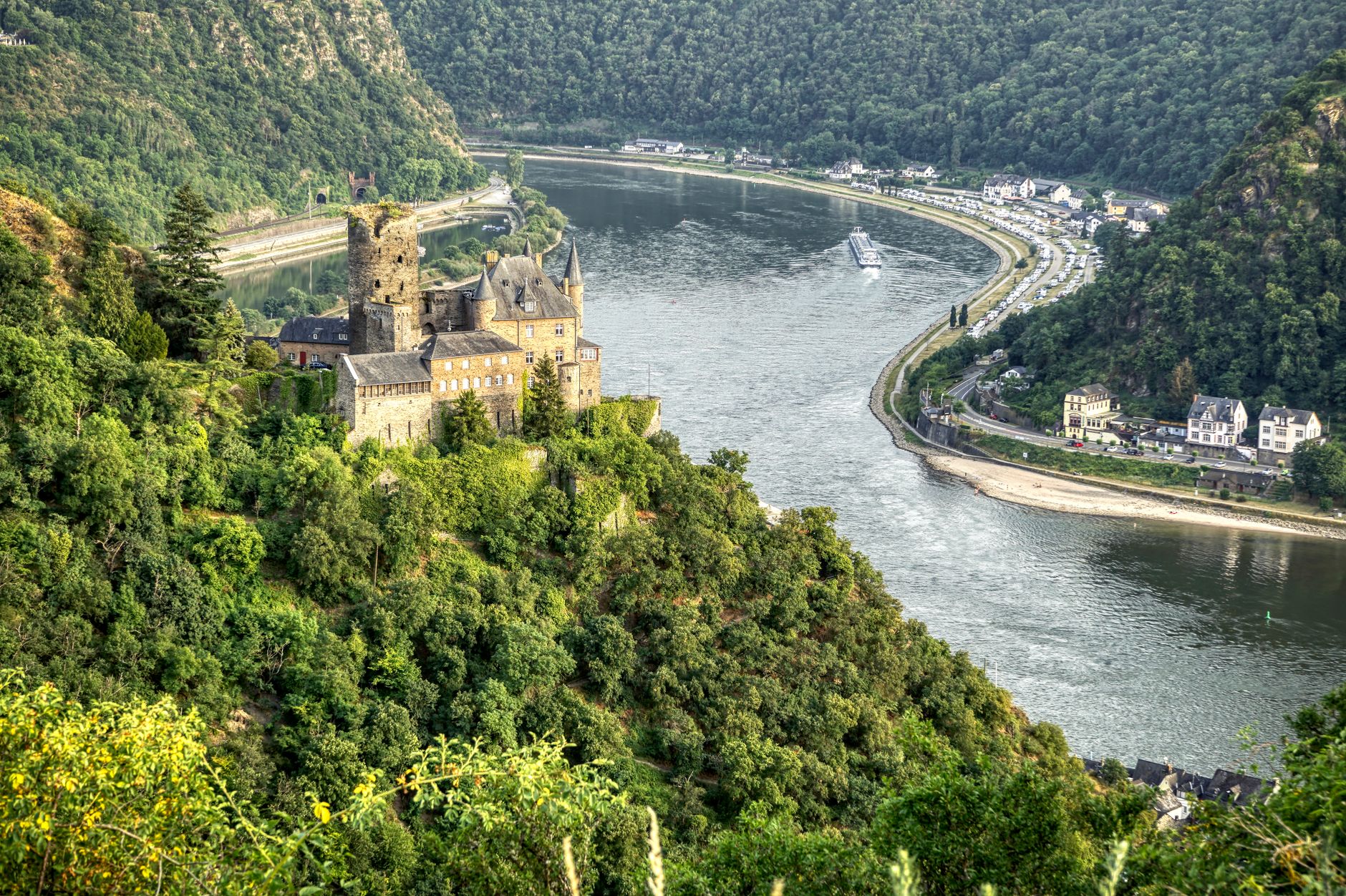
Day Trips
Day Trips Around Frankfurt: The Best Excursions by Train
The best day trips from Frankfurt: the Rheingau, Heidelberg, Mainz, Wiesbaden, the Taunus, the Loreley, Marburg and Darmstadt — with rough travel times by train and car.
Katharina Vogt3 July 2026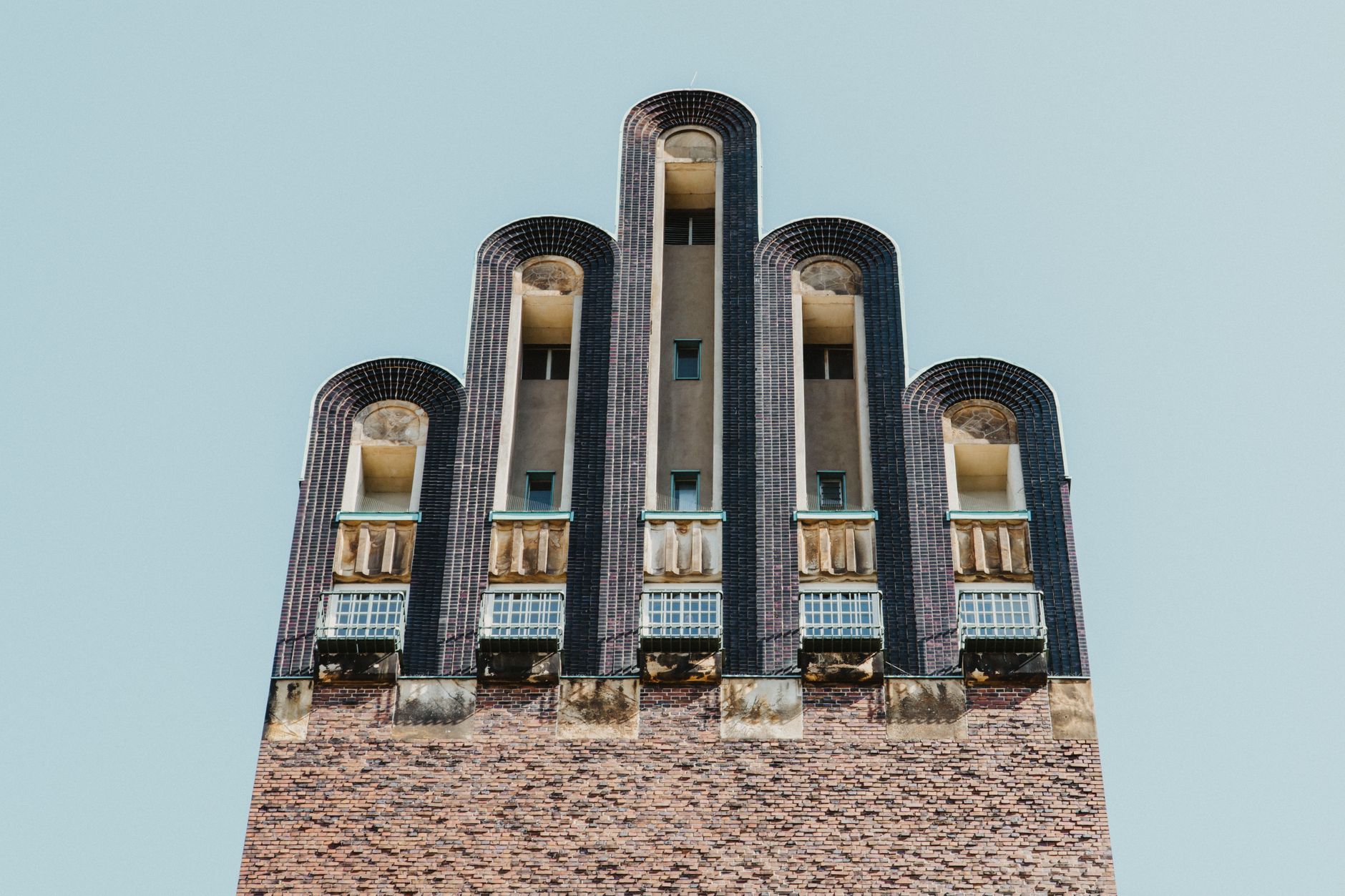
Day Trips
Day Trip to Darmstadt from Frankfurt: Mathildenhöhe, Wedding Tower and Waldspirale
Darmstadt in a day from Frankfurt: 17 to 19 minutes by regional train, RMV fare level 5. The Mathildenhöhe World Heritage Site with the Wedding Tower, Russian Chapel and Artists' Colony Museum, Hundertwasser's Waldspirale and the Hessisches Landesmuseum, with prices, opening hours and a plan for the day (as of 2026).
Katharina Vogt25 September 2026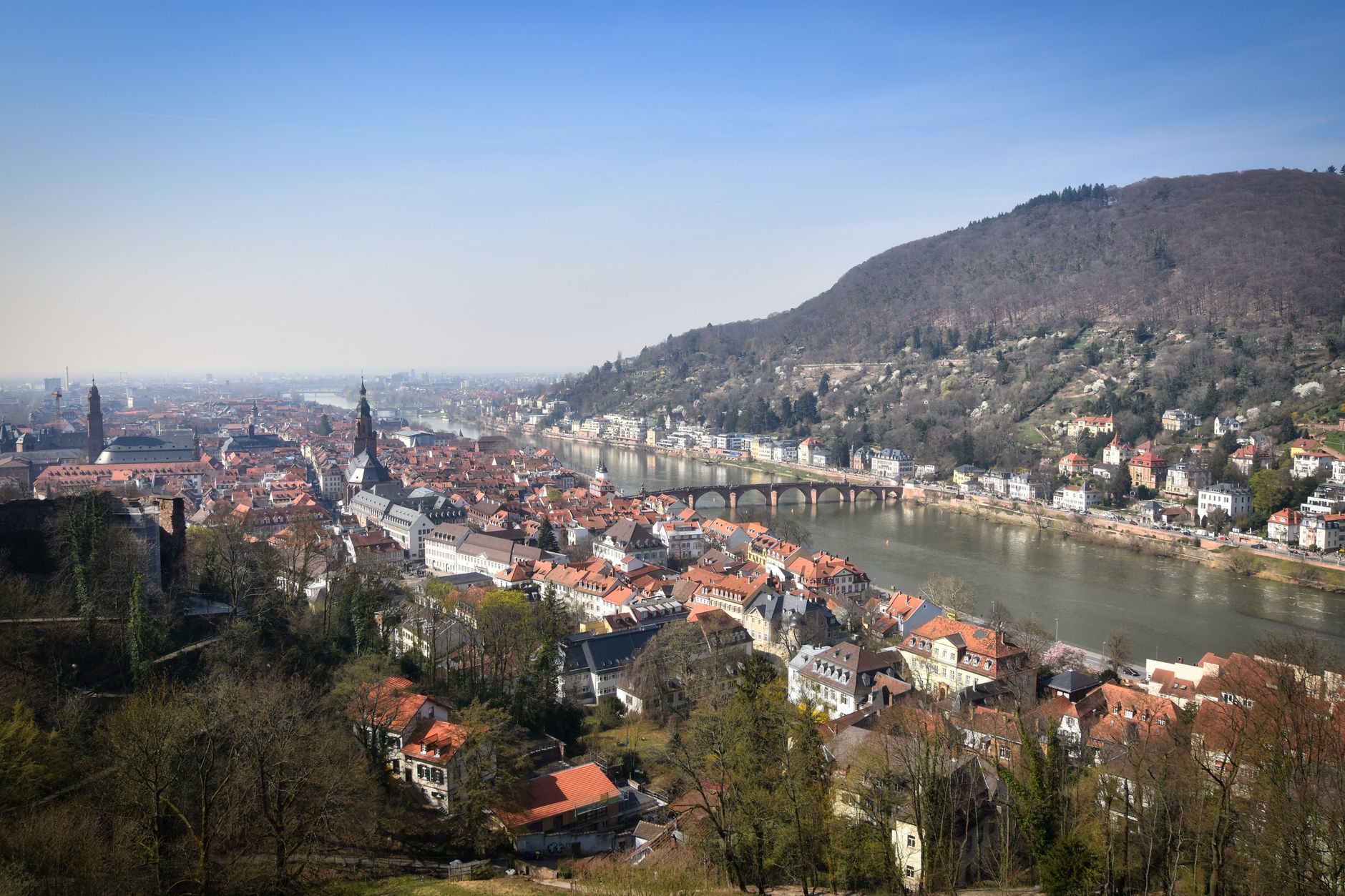
Day Trips
Day Trip to Heidelberg from Frankfurt: Getting There & Plan
Heidelberg in a day from Frankfurt: getting there by train or car, prices (as of 2026) and a tried-and-tested plan with the old town, castle, funicular, Old Bridge and Philosophers' Walk.
Katharina Vogt16 June 2026