Visiting Messe Frankfurt: Entrances, Getting There and the RMV Question
Ten halls, seven entrances and a ticket that pays for some visitors' train fare but not others'. A local sorts out what matters before your first day on the grounds.

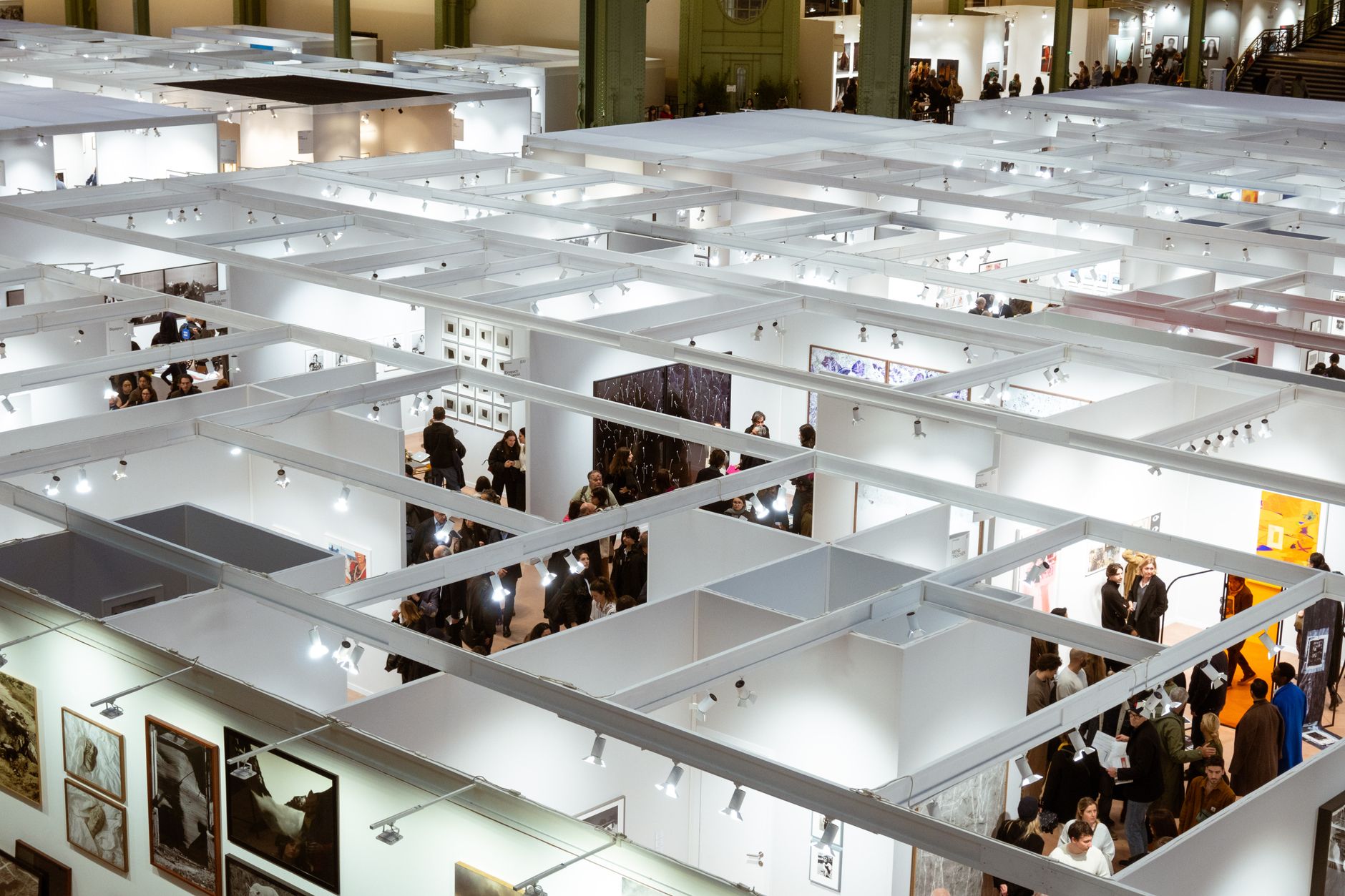
Three times on these pages I have told people to check the Frankfurt trade fair calendar before booking a hotel. What I have never explained is the opposite case: you are coming for the fair, not in spite of it — perhaps with a trade visitor pass, perhaps on the Book Fair Sunday with a child and a tote bag. And then you face questions no ticket shop answers: which of the seven entrances is yours, how far it is from there to your hall, and whether you must pay for the S-Bahn on top. The grounds are not a building; they are a district with their own railway station. Knowing that in advance saves an hour and a couple of kilometres on day one.
A site the size of a district: halls, levels, Via Mobile
Messe Frankfurt brings together around 400,000 square metres of hall space plus a good 60,000 square metres outdoors (as of 2026), spread across ten halls — and the first thing that throws newcomers is the numbering: there is a Hall 1, 3, 4, 5, 6, 8, 9, 10, 11 and 12. There is no Hall 2 and no Hall 7 any more. Don’t go looking for them.
Broadly, the site falls into two halves. To the east, facing the city, stand the Festhalle of 1909, the Congress Center, the glass Forum and Halls 1 to 6. To the west, towards the Europaviertel and Rebstock, lie Halls 8 to 12 with the Galleria and the Portalhaus; Hall 12 completed that western half in 2018. Between them stands the Torhaus — 117 metres tall, 28 floors, designed by Oswald Mathias Ungers and inaugurated on 25 January 1985. It holds the administration and the press centre, it is the hinge between the two halves, and the S-Bahn station sits underneath it.
Two pieces of vocabulary save a lot of wandering. First, the level notation: “Hall 4.2” means Hall 4, level 2 — the digit after the dot is the floor, not the stand number. Second, the Via Mobile, a covered system of walkways and moving pavements that leads from the Torhaus into the halls and links Hall 11 with the Galleria via Hall 10. In the rain it is worth its weight in gold. Free shuttle buses also run between the halls during opening hours, plus an express shuttle connecting the eastern and western halves directly.
One more figure, and it is mine rather than an official one: from the City entrance at the eastern tip to Hall 12 at the western end takes me about a quarter of an hour, moving walkway included. Back-to-back appointments in Hall 3 and Hall 11 are a mis-plan. Comfortable shoes are not a lifestyle tip here; they are equipment.
Getting to Messe Frankfurt: which line takes you where
Few exhibition grounds sit this centrally. Four routes lead there, and they end in different places:
- S-Bahn: lines S3, S4, S5 and S6 stop at Frankfurt (Main) Messe — in the middle of the site, right under the Torhaus. You step off the train and you are at the Torhaus entrance.
- U-Bahn: the U4 towards Bockenheimer Warte stops at Festhalle/Messe, which serves the City entrance, the Festhalle and the Congress Center.
- Tram: lines 16 and 17 also stop at Festhalle/Messe.
- On foot from the Hauptbahnhof: about ten minutes via Düsseldorfer Strasse and Platz der Republik to the City entrance. By U4 it is exactly one stop — often slower than walking when the crowds are out.
Flying in, take the S8 or S9 to the Hauptbahnhof and change onto the S3 to S6: one change, roughly half an hour. Which terminal you land at and how the routes run since Terminal 3 opened is set out by our sister site in its guide to the Frankfurt terminals. Travelling as a three with sample cases, a car is worth pricing up: what a pre-booked fixed-price transfer from FRA actually costs is laid out there provider by provider.
By car the journey is the easy part — the distance, driving time and a realistic cost range for your route can be looked up in advance. The destination is harder. The closest multi-storey is the Parkhaus Messeturm on Friedrich-Ebert-Anlage; how it prices up against the other central garages is in our partner site’s rundown of central Frankfurt car parks. The fair’s own alternative is the Rebstock car park west of the grounds, with a shuttle to the Galleria and Portalhaus entrances on fair days — satnav destination “Zum Messeparkhaus Rebstock”, not the Messe’s postal address.
Torhaus, City or Portalhaus — and how to work out which entrance is yours
The site has seven entrances: City, Emser Brücke, Europa-Allee, Galleria, Ludwig-Erhard-Anlage (LEA), Portalhaus and Torhaus. They are never all open at once; the organiser decides which, according to the halls in use. The rule of thumb: the City entrance serves Halls 1 to 6 in the eastern half, Portalhaus and Galleria serve Halls 8 to 12 in the west, and the Torhaus sits in the middle at the S-Bahn station — the safest bet if you are unsure.
Your admission ticket will usually not name an entrance. Look it up on your fair’s own arrival page instead and match it against the hall number on your exhibitor list. The 2026 Book Fair shows how specific this gets: general-public visitors are directed to the City and Festhalle Süd entrances, Europa-Allee and Portalhaus stay closed for the duration — and Festhalle Süd is not step-free.
A navigation note to close: Ludwig-Erhard-Anlage 1 is Messe Frankfurt’s postal address and drops you at the eastern tip. If your hall is number 11, that leaves you a kilometre too far east.
The question that matters most: does your ticket include the train?
This is where people guess wrong in both directions. The answer is: sometimes — and you can tell by looking at your ticket.
What counts is the RMV notice printed on the admission ticket. Messe Frankfurt’s own wording is that admission tickets bearing an RMV travel notice, complimentary tickets excepted, also serve as valid travel passes covering the journey to and from the event within the RMV area. In practice that makes the ticket an RMV KombiTicket: valid across the entire RMV network area, out and back, in 2nd class. Three caveats belong with it:
- Complimentary tickets are excluded. If someone gave you a voucher code, you must first exchange it in the ticket shop for a real admission ticket; an unredeemed voucher is not a travel pass.
- Tickets bought at the box office cover the return journey only. You pay for the outward leg yourself. Only tickets bought in advance are valid both ways on the day.
- Show digital tickets with photo ID if you are checked.
The gain is bigger than it sounds. Because the KombiTicket covers the whole RMV area, the airport is included — and the airport is precisely where the expensive exception otherwise bites, since a normal Frankfurt ticket is not valid there and a single journey costs 6.90 euros (as of 2026). Travel from the terminal to the fair on a valid fair ticket and you pay nothing extra; why the airport is not tariff-wise part of Frankfurt is worked through in my piece on public transport tickets and fares. What most visitors miss is that this is not a blanket rule for every fair and every ticket type: it hangs on the printed notice, not on the venue.
Visiting the Frankfurt Book Fair: the case where the rule flips
The Frankfurter Buchmesse runs from 7 to 11 October 2026, but opens to the general public only at the weekend: Friday 9 October, 11am to 6.30pm, Saturday 10 October, 9am to 6.30pm, Sunday 11 October, 9am to 5.30pm. Trade visitors get all five days.
And this is exactly where the two ticket worlds part company (as of 2026). The trade visitor tickets — 165 euros for the five days, 91 for a day, 33 concession — include free RMV travel. The general-public tickets — 30 euros for Friday, 35 for Saturday, 30 for Sunday, 59 for the three-day pass, 25 concession — do not. Taking the family on the Saturday, then, you buy ordinary travel tickets; the group day ticket is almost always the right one. There are family day tickets (60 euros, 70 on Saturday) and a children’s ticket at 9 euros, and under-sixes go in free with an adult. Saturday is by far the busiest public day — given the choice, take Sunday morning. What you can actually do on the grounds on the public days, how the reduced trade-ticket route works and what guest of honour Czechia is bringing are all in my separate Frankfurt Book Fair 2026 visitor guide.
Which of the big fairs happen when
Fair dates move from year to year, and plenty circulate online without a year attached. So here is only what the organisers’ own pages state:
- Heimtextil: 12–15 January 2027
- Ambiente and Christmasworld: 29 January – 2 February 2027
- ISH: 15–19 March 2027
- Formnext: 17–20 November 2026
- Frankfurter Buchmesse: 7–11 October 2026
- Automechanika: most recently 8–12 September 2026, next 5–9 September 2028
- Light + Building: 5–10 March 2028
Ambiente, Christmasworld and the Book Fair are the weeks when the whole city runs differently. Automechanika, ISH and Light + Building are biennial — Automechanika having just been and gone this September means 2027 is quiet on that front.
A hotel during a Frankfurt fair: the honest price reality
I won’t dress this up: in a major fair week the same room in Frankfurt readily costs twice or three times the usual, and the hotels around the exhibition grounds are gone months ahead. That is not a rumour; it is why Frankfurt hotel prices have the reputation they have.
Three things help. First, book early — as soon as the dates are fixed, not a few weeks ahead. Second, stay away from the fair. Ostend, Bornheim and Sachsenhausen are a quarter of an hour from the grounds by U- and S-Bahn and in a different price league from the Europaviertel; which district suits which trip is in my guide to where to stay in Frankfurt. Third — the tip your ticket pays for: with the RMV notice on your ticket, a night in Offenbach, Hanau, Darmstadt or Wiesbaden costs nothing extra in fares, because the KombiTicket covers the whole network area.
Dinner near the grounds can’t be improvised either — in fair weeks the restaurants there are as booked out as the hotels, so ride two stops further out. And if there is a concert on at the Festhalle next door, fair visitors and concertgoers leave at once: allow more time for the way back.
The rest is composure. Take the S-Bahn rather than the car, get off at the Torhaus if in doubt, and check your ticket once more for that RMV notice before you set out. Those three moves shape your day more than any app will — and if an hour opens up between appointments, the Skyline Plaza sits on the southern edge of the grounds with its roof garden, the nearest place to rest your feet and part of my guide to shopping in Frankfurt.
Keep reading

Attractions
Frankfurt Book Fair 2026: Tickets, Public Days and Guest of Honour Czechia
The Frankfurter Buchmesse, 7–11 October 2026, from a member of the public's point of view: trade and public days, ticket prices, the student trick, guest of honour Czechia, signings, buying books, Open Books in the old town and the hotel problem.
Katharina Vogt25 September 2026
Attractions
Festhalle Frankfurt: Events, Getting There & Parking
Concerts in the domed hall of 1909: capacity, history, getting there by U4, S-Bahn and tram, and parking at the trade-fair grounds — a local's tips for your event night.
Katharina Vogt15 July 2026
Attractions
Paulskirche Frankfurt: Cradle of German Democracy, the Peace Prize and What to See Inside
Frankfurt's Paulskirche (St Paul's Church), where Germany's first freely elected parliament sat in 1848–49: the foyer, the assembly hall and Grützke's mural, opening hours (daily 10am–5pm, free), the 2026 Peace Prize for Philippe Sands, and where the refurbishment and House of Democracy really stand.
Katharina Vogt25 September 2026
Attractions
Eintracht Frankfurt at Deutsche Bank Park: a Visitor's Matchday
How to realistically get an Eintracht ticket, what separates the Nordwestkurve from a seat, why the RMV KombiTicket has to be activated before it works, and when a Waldstadion stadium tour is the better plan.
Katharina Vogt17 September 2026